
Professional LED lighting
Mains Voltage LED Strip Lights
36 products
Skip the driver, skip the transformer, plug straight into a UK 3-pin socket and switch on — that is the core appeal of 240V mains voltage LED strip lights, and for the right project it is a real, practical advantage o...
Read more Show less
Skip the driver, skip the transformer, plug straight into a UK 3-pin socket and switch on — that is the core appeal of 240V mains voltage LED strip lights, and for the right project it is a real, practical advantage over low-voltage alternatives. UK LED Lights stocks over 40 mains voltage LED strip products in single colour white, RGB colour-changing, and Bluetooth or WiFi-controlled options, all shipping from our Telford warehouse with free UK delivery.
Our 240V LED strip lights range includes warm white (3000K), natural white (4000K), and cool white (6500K) single colour options, RGB colour-changing with RF and app control, and run lengths from 1 metre up to 50 metres from a single UK plug. Every strip is IP65 rated with a silicone coating for outdoor splash resistance. Call 01952 370008 or email sales@ukledlights.co.uk for help choosing the right strip for your project.
240V AC Mains · UK 3-Pin Plug · No Driver Required · IP65 Rated · RGB & Single Colour · Bluetooth & WiFi · 1m Cut Intervals · 1m–50m Runs · Warm · Natural · Cool · Free UK Delivery
Quick decision — is mains voltage LED strip right for your project?
- Yes — temporary outdoor party or event lighting: Plug in, run up to 50 metres around a garden perimeter or fence line, and unplug when finished. No electrician, no driver, no permanent wiring.
- Yes — seasonal garden or patio border lighting: Run 240V strip along paths, decking edges, or pergola frames from spring through autumn, then store it over winter.
- Yes — long commercial or industrial runs where low-voltage wiring is impractical: A single mains plug can feed up to 50 metres with no voltage drop calculation required.
- No — permanent kitchen, bathroom, or living room installation: Choose 24V or 48V COB LED strip instead. Low-voltage strip is safer for permanent hardwired installations, offers millimetre-precision cutting, dimmer compatibility, and profiles that mains strip cannot match.
- No — precision lighting inside aluminium profiles: Mains strip is thicker and less flexible than 24V alternatives, and cut intervals of 1 metre make profile installations impractical.
- Not sure? Call 01952 370008 — our Telford-based technical team will recommend the right voltage and product in under five minutes.
Who 240V mains LED strip lights are for: Homeowners who want plug-and-play outdoor lighting without hiring an electrician. Event organisers and party planners who need long colour-changing runs set up and taken down in minutes. Commercial premises needing extended linear lighting across warehouses, car parks, or perimeter fences where running low-voltage cable is impractical. Garden designers creating temporary or seasonal landscape lighting that can be repositioned each year.
Who mains voltage strip is NOT for: If you need permanent hardwired lighting inside your home — under kitchen cabinets, inside ceiling coves, behind bathroom mirrors — mains voltage strip is not the right product. 240V AC runs on the strip surface at full mains voltage, which is not classified as SELV (Separated Extra-Low Voltage) and presents a greater shock risk than 24V or 48V DC alternatives. For any permanent residential installation, low-voltage strip with a dedicated LED driver is the safer, more versatile, and better-performing choice. Mains strip also cannot be dimmed with a standard wall dimmer, cuts only at 1-metre intervals, and does not fit inside standard aluminium profiles — three limitations that rule it out for most interior design applications.
Common buying mistakes to avoid with 240V LED strip:
- Treating mains strip as a permanent hardwired solution: 220V/240V mains voltage strip must not be permanently hardwired in most residential applications under BS7671 wiring guidance. The strip carries live mains voltage on its surface and should use a plug-and-socket connection for safe disconnection. For permanent installations, switch to 24V or 48V DC strip with a properly wired driver.
- Assuming IP65 is fully waterproof: IP65 protects against surface splashes and light rain — it is not rated for sustained heavy rainfall, submersion, or standing water. For permanent year-round outdoor exposure in UK weather, IP67 low-voltage strip is a more reliable specification.
- Expecting millimetre cutting precision: Mains voltage strip cuts at approximately 1-metre intervals (typically 0.5m or 1m depending on model), not the 50mm–100mm intervals offered by 24V and 48V alternatives. Measure your run carefully and accept that you may have up to a metre of excess strip to fold back or conceal.
- Powering the strip while still coiled: This applies to every LED strip type, but the risk is amplified at mains voltage. Coiled strip cannot dissipate heat. The combination of 240V power and trapped heat creates a fire risk. Always fully uncoil and mount the strip before connecting to the mains socket.
- Using mains strip where children or pets can touch it: Unlike 24V or 48V strip that operates within SELV thresholds (provided it is supplied from a suitably isolated, safety-rated driver), 240V strip carries full mains voltage across its surface. Install it out of direct reach — at height along fence lines, under pergola beams, or inside protective channelling.
Jump to a section:
- What are 240V mains voltage LED strip lights and how do they work?
- What is the difference between 240V mains strip and 24V low-voltage strip?
- What are the safety considerations for 240V LED strip in 2026?
- Where should you use mains voltage LED strip lights?
- How do you install 240V mains LED strip lights step by step?
- What colour temperatures and RGB options are available in 240V strip?
- How do you control and dim 240V LED strip lights?
- What is the maximum run length for mains voltage LED strip?
- When should you choose low-voltage strip instead of mains strip?
- Why do UK buyers choose UK LED Lights for mains voltage LED strip?
What are 240V mains voltage LED strip lights and how do they work?
240V mains voltage LED strip lights are flexible circuit boards with surface-mounted LEDs that connect directly to a standard UK 3-pin plug socket through a small rectifier. Unlike 24V or 48V strip, they require no separate driver or transformer — the rectifier converts 240V AC mains to the DC voltage the LEDs need, and it plugs straight into any standard 13A socket. This makes them the simplest LED strip to install in the UK in 2026.
The rectifier is a compact inline unit, typically no larger than a standard UK plug adapter, that sits between the mains plug and the first metre of strip. It converts alternating current to direct current and provides basic overcurrent protection. The strip itself is encapsulated in a silicone coating rated to IP65, which provides splash resistance and insulates the mains-voltage PCB from direct contact.
Mains voltage strip uses SMD LED chips — typically SMD 2835 for single colour and SMD 5050 for RGB — arranged along a PCB that operates at 220–240V AC internally. This higher operating voltage is what allows such long continuous runs without the voltage drop problems that limit 24V strip to approximately 10–20 metres per feed. A single mains strip run can extend up to 50 metres from one plug without any visible brightness reduction at the far end.
- Operating voltage: 220–240V AC via UK 3-pin plug and inline rectifier.
- Driver required: No — the rectifier is included with every mains strip kit from UK LED Lights.
- IP rating: IP65 as standard — silicone-coated for outdoor splash resistance.
- LED type: SMD 2835 (single colour) or SMD 5050 (RGB).
- Cut intervals: Approximately 0.5m to 1m depending on model — marked with a scissors icon on the strip.
- Maximum single run: Up to 50 metres from one plug point.
- Beam angle: Approximately 120 degrees.
What is the difference between 240V mains strip and 24V low-voltage strip?
The fundamental difference is safety classification and installation complexity. 24V strip operates within SELV voltage thresholds (when supplied from a suitably isolated driver) and requires a separate mains-to-DC driver but offers precise cutting, profile compatibility, and safe permanent installation. 240V mains strip eliminates the driver and plugs directly into a socket, but carries live mains voltage on the strip surface and is suited primarily to temporary or semi-permanent outdoor applications.
This is not a question of which is better — it is a question of which is right for your specific project. Both have clear advantages, and choosing the wrong one leads to either an unsafe installation or unnecessary expense and complexity. Here is a direct technical comparison based on the UK market in 2026:
| Specification | 240V Mains Strip | 24V Low-Voltage Strip |
|---|---|---|
| Driver or transformer | Not required — inline rectifier included | Required — separate constant-voltage driver |
| SELV classification | No — full mains voltage on strip surface | Yes (with suitably isolated driver) |
| Maximum run from one feed | Up to 50 metres | Approximately 10–20 metres (product dependent) |
| Cut intervals | 0.5m–1m | 50mm–100mm |
| Flexibility | Moderate — thicker silicone jacket | High — thinner and more bendable |
| Profile compatibility | Not compatible with standard profiles | Full compatibility with aluminium profiles |
| Dimming options | Dedicated mains controller or app only | Wall dimmers, controllers, app, voice |
| Best application | Temporary outdoor, events, long commercial runs | Permanent residential and commercial installations |
| IP rating (typical) | IP65 | IP20, IP65, IP67, or IP68 depending on product |
| COB (dot-free) option | Not available | Available in single colour, RGB, RGBW, RGBCCT |
| Installation skill level | DIY — plug and play | Basic DIY to qualified electrician (for hardwired driver) |
| Relative cost (strip only) | Lower per metre | Higher per metre (plus driver cost) |
One technical detail most retailers omit entirely: the cut-interval limitation of mains strip has a direct impact on where you can terminate a run. If your garden fence is 7.3 metres long, a mains strip with 1-metre cuts gives you either 7 metres (leaving a dark gap at the end) or 8 metres (with 700mm of excess to fold back or conceal). A 24V strip cutting at 50mm intervals would give you 7.3 metres precisely. This is a minor issue on a garden perimeter — it becomes a serious problem inside a kitchen cabinet or along a shelf edge, which is why mains strip belongs outdoors or in commercial settings, not inside a precision interior installation.
What are the safety considerations for 240V LED strip in 2026?
The most important safety fact about 240V mains LED strip is that it carries live mains voltage on the strip surface — it is not SELV (Separated Extra-Low Voltage) and presents a greater electric shock risk than 24V or 48V DC strip under BS7671. Mains strip must not be permanently hardwired in most residential applications. It should always use a plug-and-socket connection for safe, immediate disconnection, and it must be installed out of direct physical reach wherever possible.
UK LED Lights believes in honest technical advice, and this is one product category where being direct protects our customers. Mains voltage LED strip is a practical and useful product for the right application — but it carries real safety responsibilities that low-voltage strip does not. Here is what you need to know before purchasing:
- Mains voltage on the strip surface: Even with the IP65 silicone coating, the PCB inside operates at 220–240V AC. If the silicone is cut, nicked, or damaged during installation, live mains is exposed. This is fundamentally different from 24V strip, where a damaged section presents minimal shock risk.
- No hardwiring in residential settings: Under BS7671, permanently connecting mains-voltage strip into a fixed wiring circuit in a home is not recommended. Use a plug-and-socket connection so the circuit can be isolated by simply unplugging — no need to access a consumer unit or isolator switch in an emergency.
- RCD protection is essential: Always plug mains strip into a socket protected by a 30mA RCD (Residual Current Device). Most UK homes built or rewired after 2008 have RCD protection on socket circuits as standard. If your home has an older consumer unit without RCD protection, a plug-in RCD adapter costs under £15 and adds this critical safety layer.
- Keep away from direct physical contact: Mount mains strip at height — along fence tops, under pergola beams, along rooflines — where people, children, and animals cannot touch the strip surface directly. This is not a product for under-cabinet kitchen lighting or bed-level bedroom accent strips where hands regularly come into contact with the surface.
- Inspect before every use: Before plugging in a mains strip that has been stored or exposed to weather, check the full length for cuts, abrasions, cracking, or exposed PCB. Any visible damage to the silicone coating means the strip must be replaced, not repaired.
For any installation where safety is the primary concern — bathrooms, kitchens, children's bedrooms, wet rooms, or any permanently wired system — 24V or 48V strip with a properly specified LED driver is the correct choice. Call our technical team on 01952 370008 if you are unsure which voltage suits your project.
Where should you use mains voltage LED strip lights?
Mains voltage LED strip works best in temporary outdoor installations, seasonal garden lighting, event and party setups, and long commercial perimeter runs where the simplicity of plug-and-play outweighs the limitations of mains-voltage operation. It is the practical choice wherever you need extended length, fast setup, no driver, and no permanent wiring — and where the strip can be mounted out of direct physical reach.
The applications where 240V strip outperforms low-voltage alternatives all share two characteristics: long continuous runs and temporary or semi-permanent mounting. Here is a detailed breakdown of the best use cases in 2026:
Recommended applications
- Garden perimeter lighting: Run 20–50 metres of warm white strip along fence lines, hedge borders, or garden walls. Plug into an outdoor-rated socket, control with a timer or smart plug. Remove and store over winter if preferred.
- Patio and decking accent lighting: Outline decking edges, steps, and raised beds with colour-changing RGB strip controlled from a Bluetooth app. Mount at ankle height under decking boards or along planter edges — out of direct foot traffic.
- Party and event lighting: Set up 30+ metres of RGB mains strip around a marquee, garden party, or outdoor dining area in under 30 minutes. Tear down is equally fast — unplug, coil, store.
- Commercial building perimeters: Warehouses, retail frontages, car park boundaries, and industrial yard fencing where running low-voltage cable over 50+ metres from a driver location would be impractical and expensive.
- Seasonal holiday lighting: Outline rooflines, window frames, or front garden features for Christmas or seasonal displays. Mains strip offers a continuous light line without the bulb spacing of traditional festoon lighting.
- Marquees, pop-up bars, and temporary retail: Rapid deployment, single-plug power, long runs, and easy repositioning make mains strip the standard choice for temporary commercial lighting in 2026.
Applications where low-voltage strip is the better choice
- Permanent kitchen under-cabinet lighting — choose 24V COB strip in an aluminium profile.
- Bathroom mirror or vanity lighting — choose IP67 low-voltage strip for wet-zone safety.
- Bedroom or living room cove lighting — choose 24V COB with a trailing-edge dimmer.
- Staircase tread or handrail lighting — choose 24V strip for precise cut lengths and safe touch-contact voltage.
- Display cabinets and retail shelving — choose 24V COB for dot-free output inside slim profiles.
How do you install 240V mains LED strip lights step by step?
Installing 240V mains LED strip is a simple plug-and-play process that most competent DIYers can complete in under an hour. You need no electrician, no driver, and no specialist tools — just a clean mounting surface, the strip kit with its included rectifier and plug, and a weatherproof outdoor socket if mounting externally. Follow these steps for a safe, reliable 2026 installation.
- Step 1 — Plan your run and measure precisely: Measure the total length you need in metres. Remember that mains strip cuts at fixed intervals (typically 0.5m or 1m) — round up to the nearest cut point and plan where you will conceal any excess. For runs exceeding the maximum single length (typically 50 metres), you need a second plug point and a second strip run wired in parallel, not joined end-to-end in series.
- Step 2 — Prepare the mounting surface: Clean the surface thoroughly with isopropyl alcohol or a degreaser. Remove any dust, moisture, grease, or loose paint. The self-adhesive backing on mains strip needs a clean, dry, smooth surface for reliable adhesion. For rough surfaces like brickwork or textured render, use mounting clips at 300mm intervals instead of relying on adhesive alone.
- Step 3 — Uncoil the strip fully before connecting power: Lay the entire strip length out along the mounting path. Never power the strip while it is still coiled on the reel — concentrated heat from 240V operation on a coiled reel is a fire risk. Verify the full length is undamaged: check for cuts, kinks, exposed PCB, or cracked silicone coating along the entire run.
- Step 4 — Cut to length at a marked cut point (if needed): Locate the scissors icon printed on the strip at each cut interval. Use sharp scissors or a craft knife to cut cleanly through the marked line. Seal the cut end with the included end cap or a bead of silicone sealant to maintain the IP65 rating at the termination. Do not cut between marked points — this will damage the circuit and void the warranty.
- Step 5 — Mount the strip along your planned route: Peel the adhesive backing and press the strip firmly onto the prepared surface, working in 500mm sections to avoid air bubbles. For vertical or overhead mounting, reinforce with mounting clips every 300mm to prevent the strip peeling away under its own weight. Avoid sharp bends — the minimum bend radius for mains strip is typically 50–80mm.
- Step 6 — Connect the rectifier and plug: Attach the strip to the included inline rectifier following the manufacturer's polarity markings. Connect the rectifier to the UK 3-pin plug. Ensure all connections are tight, dry, and away from any standing water or ground-level moisture. For outdoor installations, house the plug connection inside a weatherproof outdoor socket box rated to IP66 minimum.
- Step 7 — Power on, test, and verify: Plug into an RCD-protected socket and switch on. Walk the full length of the installation and check for even illumination with no dark sections, flickering, or hot spots. For RGB strip, cycle through all colours using the included remote or app to verify every colour channel is functioning. If any section is unlit, check the cut-end seal and rectifier connection before contacting our technical team on 01952 370008.
Tools and supplies needed:
- Measuring tape — for accurate run length calculation.
- Isopropyl alcohol or surface cleaner — for adhesive surface preparation.
- Sharp scissors or craft knife — for cutting at marked points only.
- Mounting clips — for rough surfaces, vertical runs, or overhead mounting.
- Silicone sealant — for sealing cut ends to maintain IP65 rating.
- Weatherproof socket box (IP66 minimum) — essential for outdoor plug connections.
- Plug-in RCD adapter — if your socket circuit does not already have RCD protection.
What colour temperatures and RGB options are available in 240V strip?
UK LED Lights stocks 240V mains LED strip in three single-colour white temperatures — warm white (3000K), natural white (4000K), and cool white (6500K) — plus RGB colour-changing strip with sixteen million colour combinations. RGB mains strip typically includes a wireless remote control as standard, with Bluetooth and WiFi app-controlled options available across the 2026 range for smartphone and voice assistant integration.
Choosing the right colour temperature depends on the mood and function of the space you are lighting. Here is a practical guide for the most common mains strip applications:
| Colour Temperature | Kelvin Rating | Visual Character | Best Application |
|---|---|---|---|
| Warm white | 3000K | Soft amber tone — similar to halogen | Garden borders, patios, dining areas, relaxation zones |
| Natural white | 4000K | Neutral and balanced — no warm or cool bias | Driveways, paths, commercial frontages, general visibility |
| Cool white | 6500K | Bright bluish-white — high visibility | Security perimeters, warehouses, car parks, task areas |
| RGB colour-changing | Variable | Full spectrum — red, green, blue, and mixed colours | Party lighting, mood effects, seasonal displays, events |
- Warm white (3000K) is the most popular choice for residential garden applications in 2026. It produces a welcoming, relaxed atmosphere that complements outdoor dining, seating areas, and garden borders without the harsh clinical feel of cool white.
- Cool white (6500K) is suited to security and functional lighting where maximum visibility matters more than ambience — perimeter fencing, loading bays, and car parks.
- RGB colour-changing strip cannot produce clean white light. The white produced by mixing red, green, and blue LEDs at equal intensity has a visible violet-cold tinge. If you need both colour effects and usable white illumination from mains-powered strip, you will need two separate strips — one RGB and one single-colour white — or consider switching to 24V RGBW strip with a dedicated white channel.
All single-colour 240V strip from UK LED Lights uses SMD 2835 chips with a CRI (Colour Rendering Index) of 80 or above, meaning objects under the light appear natural in colour — plants stay green, timber looks warm, and skin tones are not distorted. For projects where colour accuracy is critical (retail displays, hospitality), our 24V CRI90+ range delivers superior rendering. Email sales@ukledlights.co.uk for specification advice.
How do you control and dim 240V LED strip lights?
240V mains LED strip cannot be dimmed with a standard wall dimmer switch — it requires a dedicated mains-voltage LED strip controller. These controllers are available in RF remote, Bluetooth app, and WiFi app variants, offering on/off switching, brightness adjustment, colour selection (for RGB strip), and timer programming. The controller sits between the rectifier and the strip, replacing the simple plug-and-play switch with adjustable output.
This is a limitation that catches many first-time buyers. A standard TRIAC or trailing-edge wall dimmer — the type that works well with low-voltage LED strip via a dimmable driver — is not compatible with mains voltage LED strip. Connecting mains strip to a wall dimmer typically causes visible flicker at low brightness, audible buzzing from the rectifier, and in some cases premature component failure.
Here is what works for dimming and controlling 240V mains strip in 2026:
- RF remote control (single colour): The simplest option. A wireless remote with on/off, brightness up/down, and sometimes colour temperature preset buttons. Range typically 10–20 metres line of sight. Included with many mains strip kits from UK LED Lights.
- RF remote control (RGB): Full colour selection with preset modes (fade, flash, strobe, smooth), brightness control, and speed adjustment. The standard control method included with most mains RGB strip kits.
- Bluetooth app control: Pair your strip to a smartphone app via Bluetooth for colour selection, dimming, timer scheduling, and scene presets. Range limited to approximately 10 metres. No WiFi network required — useful for garden installations away from router range.
- WiFi app control: Connect your strip to your home WiFi network for control from anywhere via smartphone app. Compatible with voice assistants (Alexa, Google Home) on supported models. Requires WiFi signal strength at the controller location.
- Smart plug with timer: For basic on/off scheduling without dimming, a standard smart plug provides app and voice control of the power supply. This does not allow brightness adjustment but does enable automated on/off timing — practical for garden perimeter strip that runs from dusk to a set time each evening.
Browse the full LED controller range at UK LED Lights for compatible mains-voltage controllers, or call 01952 370008 to confirm compatibility with your specific strip model.
What is the maximum run length for mains voltage LED strip?
Most 240V mains LED strip lights can run up to 50 metres continuously from a single UK plug point with no visible brightness drop — significantly longer than any low-voltage alternative. This extended run capability is the primary technical advantage of mains voltage strip and the reason it is specified for large-scale outdoor, commercial, and event lighting projects where 24V or 48V strip would require multiple feed points and drivers.
The reason mains strip achieves these distances comes down to basic physics. Voltage drop — the gradual loss of voltage along a conductor, causing dimmer light at the far end — is proportional to current, not voltage. At 240V, the current drawn per metre is a fraction of what 24V strip requires for the same wattage. Lower current means less voltage drop, which means longer runs before the far end becomes visibly dimmer.
Here is how maximum run length compares across the four voltages available at UK LED Lights in 2026:
| Voltage | Typical Max Single Run | Feed Points Needed for 50m | Driver Required |
|---|---|---|---|
| 12V | 5 metres | 10 feed points + 10 drivers | Yes — 12V DC |
| 24V | 10–20 metres | 3–5 feed points + 3–5 drivers | Yes — 24V DC |
| 48V | 20–30 metres | 2 feed points + 2 drivers | Yes — 48V DC |
| 240V mains | Up to 50 metres | 1 plug point, no driver | No |
For runs exceeding 50 metres, do not connect strips end-to-end in series. Start a second run from a separate plug point, wired in parallel back to the mains supply. Series connections beyond the rated maximum cause overheating at the junction point and visible brightness reduction on the extended section. If you need more than 50 metres of continuous mains strip, email sales@ukledlights.co.uk with your total run length and we will specify the correct number of feeds and strips.
When should you choose low-voltage strip instead of mains strip?
Choose 24V or 48V low-voltage LED strip instead of 240V mains strip whenever your installation is permanent, hardwired, inside a living space, requires precise cut lengths, needs to fit inside an aluminium profile, or will be within physical reach of occupants. In practical terms, this means most residential and commercial interior projects are better served by low-voltage strip — mains strip is the right choice specifically where plug-and-play convenience and extreme run length outweigh the limitations.
UK LED Lights sells both mains and low-voltage strip because both serve distinct, legitimate purposes. We would rather guide you to the right product than sell you the wrong one and deal with a return. Here is a direct comparison of scenarios to help you decide:
Choose 240V mains strip when:
- You need a run longer than 20 metres and do not want to calculate voltage drop or install multiple drivers.
- The installation is temporary or seasonal — garden parties, Christmas displays, event lighting, pop-up retail.
- No electrician is available and you need outdoor lighting today, not next week.
- The strip will be mounted at height — along rooflines, fence tops, pergola beams — out of direct physical contact.
- Budget is the primary concern — no driver purchase, no electrician fee, lower cost per metre for very long runs.
Choose 24V or 48V low-voltage strip when:
- The installation is permanent and hardwired. Low-voltage strip with a dedicated driver complies with BS7671 for permanent fixed installations. Browse the full LED strip range.
- You need precise cut lengths. Low-voltage strip cuts at 50mm–100mm intervals versus 0.5m–1m for mains strip.
- The strip must fit inside an aluminium profile. Mains strip is too thick and rigid for standard LED profiles.
- You want smooth dimming from a wall switch. Low-voltage strip with a trailing-edge dimmer and dimmable driver offers flicker-free dimming from 100% down to approximately 1%. The trailing-edge fix costs approximately £15.
- You need dot-free COB light output. COB technology is only available in low-voltage configurations (24V and 48V) in 2026.
- The strip will be within arm's reach — under kitchen cabinets, beside beds, on staircase treads, or in children's rooms.
- You need IP67 or IP68 waterproofing. Mains strip is IP65 only. For permanent outdoor or wet-zone applications, IP67/IP68 low-voltage outdoor strip is the correct specification.
Why do UK buyers choose UK LED Lights for mains voltage LED strip?
UK LED Lights is a specialist LED lighting supplier based in Telford, Shropshire, stocking over 40 mains voltage LED strip products with free UK delivery from our own warehouse. We are not a marketplace reseller — we hold physical stock, test products, and provide direct technical support from a UK-based team that understands BS7671, IP ratings, and the practical realities of LED installation in British weather conditions.
- Honest product advice: We will tell you when mains strip is the right choice and when 24V or 48V is better for your project. We would rather sell you the correct product once than the wrong product twice.
- Technical support from real LED specialists: Call 01952 370008 (Monday to Friday, 9am–5pm) and speak to someone who has physically installed LED strip — not a call-centre script reader.
- Full range under one roof: Mains voltage strip, 24V and 48V low-voltage strip, controllers, drivers, profiles, and accessories — everything for a complete installation from a single supplier.
- UK stock, UK dispatch: Every product ships from our Telford warehouse. Free UK delivery on all orders. No waiting for overseas shipments.
- Company registration: UK LED Lights Ltd, Company No: 12301805. Registered address: Unit D4, Stafford Park 4, Telford, Shropshire, TF3 3BA. A real UK business with a real address and a phone that gets answered by real people.
- Specifications you can trust: Product listings include accurate IP ratings, wattage, voltage, CRI, and cut intervals — not inflated marketing numbers. What we list is what the strip delivers.
- Mains voltage strip is our simplest installation category — plug in and go, with no driver or transformer required.
- We stock both single-colour and RGB mains strip in IP65 with genuine silicone coating — not the cheap PVC sleeves sold elsewhere.
Browse the full range of 240V mains voltage LED strip lights, or call 01952 370008 to discuss your project with our Telford technical team. Email sales@ukledlights.co.uk for bulk pricing, bespoke lengths, or trade account enquiries.
How does 240V mains strip compare to 24V low-voltage strip?
240V mains strip and 24V low-voltage strip suit completely different installations — here is where each voltage belongs.
| Feature | 240V Mains Strip | 24V Low-Voltage Strip |
|---|---|---|
| Driver required | No — plug and play | Yes — separate driver |
| Max run from one feed | Up to 50 metres | Up to 20 metres |
| Cut intervals | 0.5-1 metre | 50-100mm |
| Profile compatible | No | Yes — full range |
| SELV safety rating | No — mains voltage on surface | Yes — with isolated driver |
| Permanent hardwiring | Not recommended (BS7671) | Yes — standard practice |
| COB dot-free available | No | Yes |
| Best for | Temporary outdoor, events, long runs | Permanent residential and commercial |
Mains strip is the right choice for temporary, long-distance, plug-and-play outdoor lighting. 24V strip is the right choice for permanent, precise, profile-compatible indoor installations. Call 01952 370008 for honest advice on which suits your project.
What are the most common questions about 240V mains LED strip lights?
Can I hardwire 240V mains LED strip permanently in my house?
- No — 220V/240V mains voltage LED strip must not be permanently hardwired in most residential applications. The strip carries live mains voltage on its surface, and BS7671 wiring regulations require safe disconnection capability. Use a plug-and-socket connection for mains strip. For permanent hardwired installations, switch to 24V or 48V DC strip with a dedicated driver — this is the correct and safe approach for fixed residential lighting circuits in 2026.
Is 240V LED strip safe to use outdoors in the UK?
- Yes, with conditions. 240V mains strip is IP65 rated — suitable for light rain and surface splashes but not sustained heavy rainfall or submersion. Plug into an RCD-protected outdoor socket. Mount at height where possible. Inspect the silicone coating for damage before each use. For year-round permanent outdoor installations in exposed UK conditions, IP67 low-voltage strip is the more reliable long-term choice.
How far can 240V mains LED strip run from a single plug?
- Up to 50 metres from a single UK plug point with no visible brightness drop. This makes mains strip one of the longest-running LED strip types available in 2026. For runs exceeding 50 metres, start a second strip from a separate plug — do not connect strips in series beyond the rated maximum.
Can I cut 240V mains strip to any length?
- You can only cut at marked cut points — typically at 0.5-metre or 1-metre intervals depending on the model. Cutting between marked points will break the circuit and void the warranty. This is a significant limitation compared to low-voltage strip, which cuts at 50mm–100mm intervals.
Does 240V LED strip need a driver or transformer?
- No separate driver is required. Mains strip connects through a small inline rectifier (included with every UK LED Lights mains strip kit) that plugs into a standard UK 3-pin socket. This is the key convenience advantage over low-voltage strip, which requires a separate constant-voltage driver.
Can I dim 240V mains LED strip with a wall dimmer switch?
- No — standard wall dimmers are not compatible with mains voltage LED strip. You need a dedicated mains-voltage LED strip controller with RF remote, Bluetooth, or WiFi app control. Connecting mains strip to a wall dimmer causes flicker, buzzing, and potential component damage.
What is the difference between 220V and 240V LED strip?
- There is no practical difference for UK buyers. The UK mains supply is nominally 230V (within a tolerance of +10% / -6%, giving 216V to 253V). Products labelled 220V and 240V operate across the same UK mains voltage range. Both terms refer to the same category of mains-voltage strip.
Can I use 240V mains LED strip in a bathroom?
- No — mains voltage strip should not be used in bathrooms. Bathroom installations must use SELV-rated low-voltage strip (24V or 48V from a suitably isolated driver) with an appropriate IP rating for the bathroom zone under BS7671. IP67 minimum for zones 1 and 2. Mains voltage in a wet environment presents an unacceptable shock risk.
How long do 240V mains LED strip lights last?
- LED chips in mains strip are typically rated to 25,000–50,000 hours of operation. Actual lifespan depends on ambient temperature, mounting conditions, and whether the strip has adequate ventilation. Outdoor installations exposed to UV and temperature cycling will typically see shorter service life than sheltered indoor use. The silicone IP65 coating degrades over several years of direct UV exposure — expect to replace outdoor mains strip every 3–5 years in exposed positions.
Is plug-in LED strip lights UK compliant?
- Yes — provided the strip carries CE or UKCA marking and is used with a properly rated UK 3-pin plug on an RCD-protected circuit. All mains voltage LED strip sold by UK LED Lights meets UK electrical safety standards. For 2026, check for the UKCA mark on both the strip packaging and the included rectifier/plug unit.
Can I connect two 240V mains strips together for a longer run?
- Yes, up to the maximum rated length (typically 50 metres) using the manufacturer's joining connectors. Beyond the maximum rated length, do not extend further. Start a new run from a separate plug point wired in parallel. Series extension beyond the rated limit causes overheating at the junction and visible brightness loss at the far end.
Why should I choose 24V strip over 240V mains for permanent home lighting?
- Safety, precision, flexibility, and performance. 24V strip operates within SELV voltage thresholds (with a suitably isolated driver), cuts at 50mm–100mm intervals, fits inside aluminium profiles, dims smoothly from a wall switch, and is available in COB dot-free technology. For permanent lighting inside your home, 24V is the correct specification. Reserve mains strip for temporary outdoor and event applications where plug-and-play convenience is the priority.
Can 240V mains LED strip be used for Christmas and seasonal displays?
- Yes — mains strip is one of the most practical choices for seasonal exterior displays in 2026. Run up to 50 metres along rooflines, fence lines, or window frames from a single plug point. The continuous light line replaces traditional bulb-spaced festoon lighting with a smooth, modern glow. Store indoors between seasons and inspect the full length for damage before each year's re-installation.
What happens if 240V mains strip gets damaged while installed outdoors?
- Disconnect immediately by unplugging from the mains socket. Do not attempt to repair damaged mains-voltage strip — the silicone coating protects the live PCB surface, and any cut, nick, or crack exposes mains voltage. Replace the damaged section entirely. An RCD-protected socket will trip automatically if damage allows current leakage to earth, providing a critical safety layer.
How do you store 240V mains LED strip between seasons?
- Coil loosely on a reel or in a box — never tightly fold or crease. Store in a dry, cool location away from direct sunlight. Check the full length of the silicone coating for cracks, abrasion, or exposed PCB before re-installing each season. Replace any strip showing visible damage to the protective coating.
Is 240V mains LED strip more energy-efficient than traditional festoon lighting?
- Significantly — LED mains strip uses approximately 70–80 percent less electricity than incandescent festoon bulbs for equivalent visual output over the same length. A 20-metre mains LED strip run typically draws 100–200W total compared to 600W+ for traditional incandescent festoon lighting over the same distance. At 2026 UK electricity rates, the annual savings on a seasonal display can be substantial.
Can I use 240V mains strip for commercial perimeter security lighting?
- Yes — cool white (6500K) mains strip provides continuous perimeter illumination along fences, boundaries, and building outlines. Runs of 50 metres from a single plug point cover most commercial perimeters without voltage drop. Mount at height and connect to a timer or dusk-to-dawn sensor via a smart plug. For permanent commercial installations, consult a qualified electrician regarding wiring regulations for your specific premises.
What warranty applies to 240V mains LED strip from UK LED Lights?
- Warranty terms are listed on each product page. Coverage applies to manufacturing defects and premature LED failure under normal operating conditions. Warranty does not cover damage from incorrect cutting, coiled operation, physical impact to the silicone coating, or use in permanently submerged conditions. Contact 01952 370008 for warranty queries — replacements are handled from our Telford warehouse.
Does UK LED Lights stock 240V mains RGB strip with app control?
- Yes — our 2026 range includes Bluetooth and WiFi app-controlled RGB mains strip with smartphone colour selection, dimming, timer scheduling, and scene presets. WiFi models are compatible with Alexa and Google Home on supported devices. Browse the full range or call 01952 370008 for app-compatibility details on specific models.
Can 240V mains strip be used in a covered outdoor area like a conservatory or carport?
- Yes — sheltered outdoor areas are well suited to IP65 mains strip. The silicone coating provides adequate splash protection in covered environments where direct sustained rainfall does not reach the strip. Ensure the plug connection is inside a weatherproof socket box and the strip is mounted out of direct contact reach. For fully exposed outdoor areas without cover, IP67 low-voltage strip remains the more reliable long-term choice.
Last reviewed: March 2026 — UK LED Lights technical team, Telford, Shropshire. Specifications current as of 2026.
🏭 UK LED specialist, Telford, Shropshire · ☎️ 01952 370008 · 🚚 Free UK delivery

Blue LED Neon Flex 8x16mm 120LEDs/m AC 220 240V IP65 Waterproof with UK Plug
SKU: ALNFBLUE220V816From £13.85Unit price /Unavailable
Cool White Neon Flex 220V 240V 8x16mm 120LEDs/m IP65 Waterproof with UK Plug
SKU: ALNFCW220V816-IP65From £13.85Unit price /Unavailable
Golden Neon Flex 220V 240V 8x16mm 120LEDs/m IP65 Waterproof with UK Plug
SKU: ALNFGOLDEN220V816-IP65From £13.85Unit price /Unavailable
Green LED Neon Flex 220V 240V 8x16mm 120LEDs/m IP65 Waterproof with UK Plug
SKU: ALNFGREEN220V816-IP65From £13.85Unit price /Unavailable
Ice Blue Neon Flex 220V 240V 8x16mm 120LEDs/m IP65 Waterproof with UK Plug
SKU: NFICEBLUE220V816-65From £13.85Unit price /Unavailable
Natural White Neon Flex 220V 240V 8x16mm 120LEDs/m 4000K IP65 Waterproof with UK Plug
SKU: ALNFNW220V816-IP65From £13.85Unit price /Unavailable
Red LED Neon Flex 220V 240V 8x16mm 120LEDs/m IP65 Waterproof with UK Plug
SKU: ALNFRED220V816-IP65From £13.85Unit price /Unavailable
Warm White LED Neon Flex 220V 240V 8x16mm 120LEDs/m IP65 Waterproof with UK Plug
SKU: ALNFWW220V816-IP65From £13.85Unit price /Unavailable-
Yellow LED Neon Flex 220V 240V 8x16mm 120LEDs/m IP65 Waterproof with UK Plug
SKU: ALNFYELLOW220V816-IP65From £13.85Unit price /Unavailable 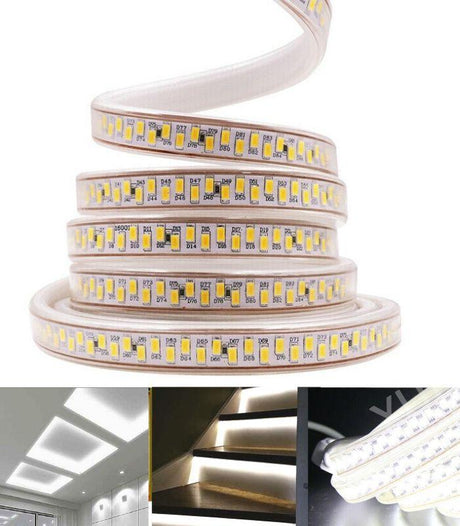
Cool White LED Strip 220V 240V 180LEDs/m SMD5730 IP65 with UK Plug
SKU: CW220V5730D180From £15.85Unit price /Unavailable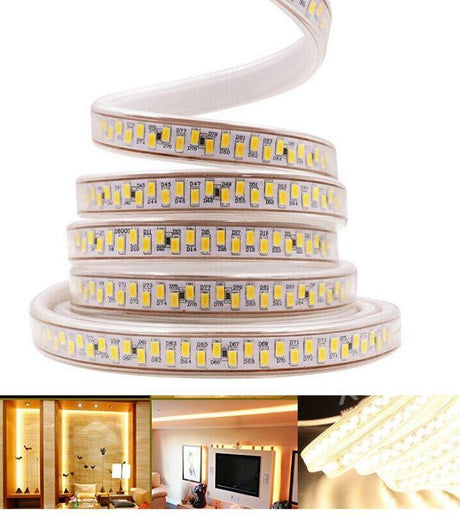
Warm White LED Strip 220V 240V 180LEDs/m SMD5730 IP65 with UK Plug
SKU: WW220V5730D180From £15.80Unit price /Unavailable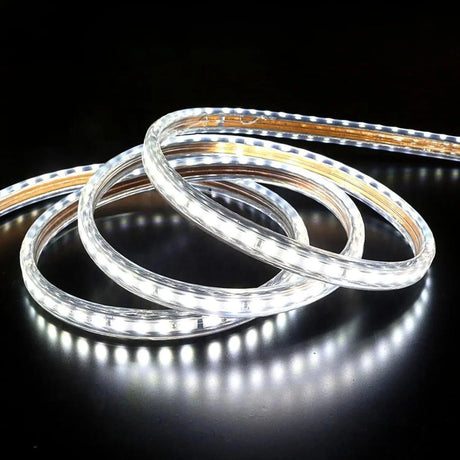
Cool White LED Strip Light 220V 240V 2835 IP65 Waterproof 120LED/m Full Kit
SKU: CW220V2835D120From £12.68Unit price /Unavailable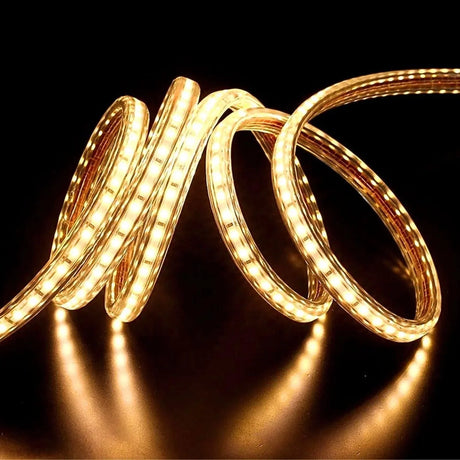
Warm White LED Strip Light 220V 240V 2835 IP65 Waterproof 120LED/m Full Kit
SKU: WW220V2835D120From £12.68Unit price /Unavailable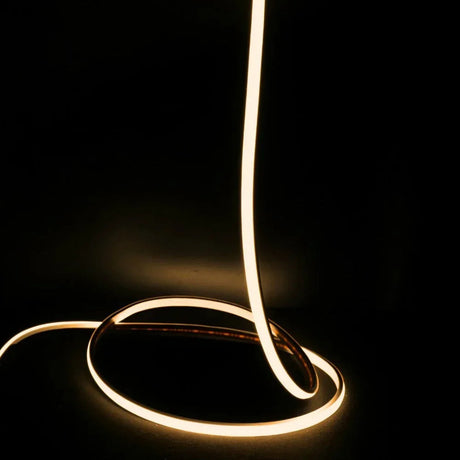
Warm White 3000K COB LED Strip 220V 240V 288 LEDs/m IP65 UK Plug
SKU: COBNFWW220VFrom £16.95Unit price /Unavailable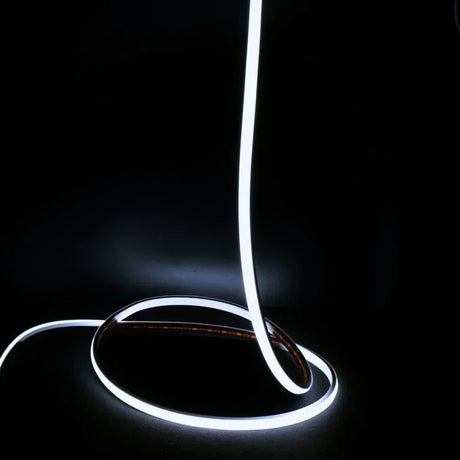
Cool White 6000K COB LED Strip 220V 240V 288 LEDs/m IP65 UK Plug
SKU: COBNFCW220VFrom £16.95Unit price /Unavailable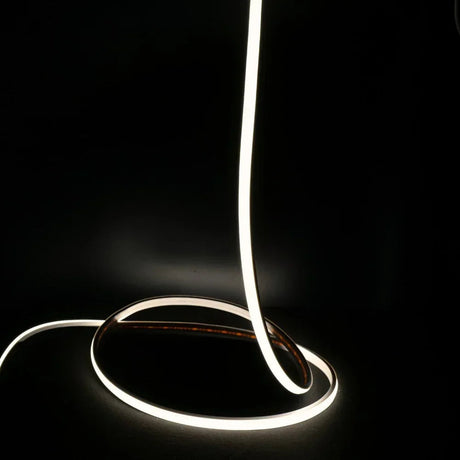
Natural White 4000K COB LED Strip 220V 240V 288 LEDs/m IP65 UK Plug
SKU: COBNFNW220VFrom £16.95Unit price /Unavailable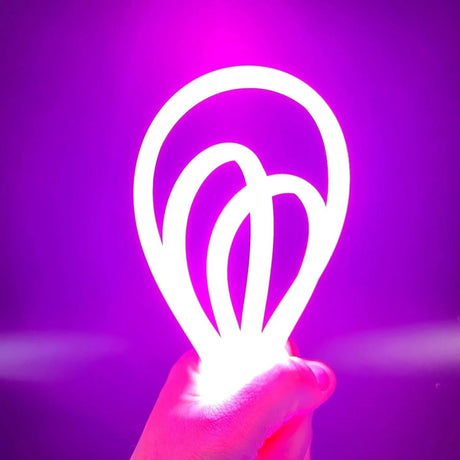
Pink COB LED Strip Light 220V 240V 288 LEDs/m IP65 with UK Plug
SKU: COBNFPINK220VFrom £16.95Unit price /Unavailable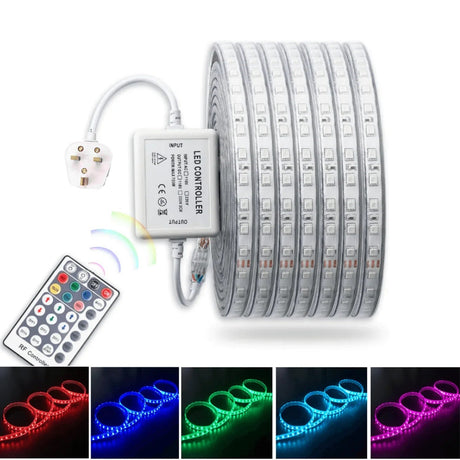
RGB LED Strip 220V 240V IP65 60LED/m Dimmable with Remote Kit
SKU: RGB220V60DFrom £14.95Unit price /Unavailable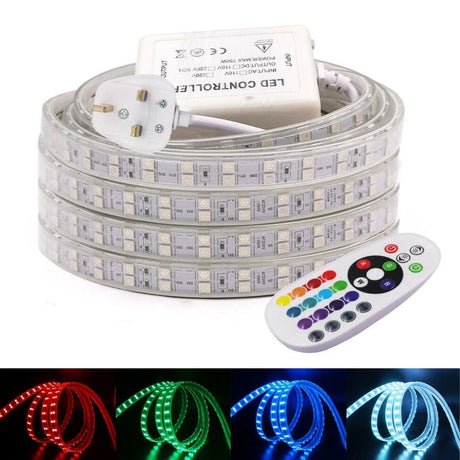
RGB LED Strip Light 220V 240V 120 LEDs/m IP65 Waterproof Kit
SKU: RGB220V120DFrom £17.85Unit price /Unavailable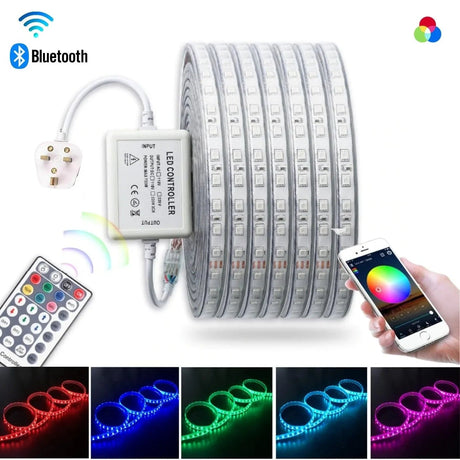
RGB LED Strip 220V 240V 60LEDs/m IP65 Wireless Bluetooth App Control with Remote
SKU: RGB220V60D-BTFrom £35.75Unit price /Unavailable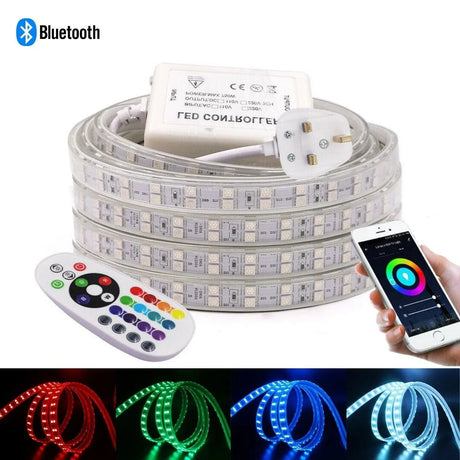
RGB LED Strip 120 LEDs/m 220V IP65 Wireless Bluetooth App Control with Remote
SKU: RGB220V120D-BTFrom £37.85Unit price /Unavailable
RGB LED Strip 5050 220V 240V 144LEDs/m IP65 Dimmable with Remote
SKU: RGB220V144DIP65From £25.85Unit price /Unavailable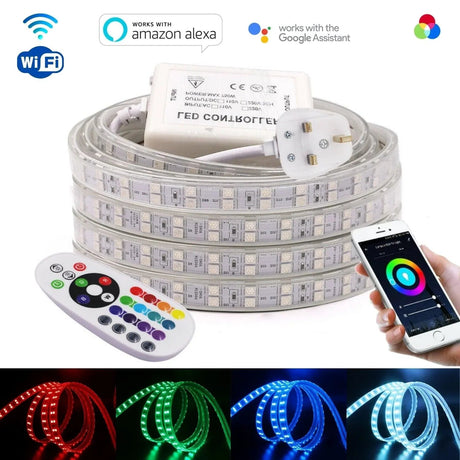
RGB LED Strip 220V 240V 120 LEDs/m IP65 Waterproof WIFI App sync Google & Alexa
SKU: RGB220V120-WIFIFrom £39.85Unit price /Unavailable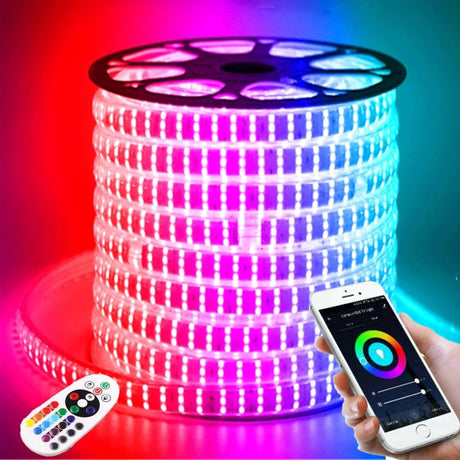
RGB LED Strip 220V 240V 144 LEDs/m IP65 Wireless Bluetooth App Control with Remote
SKU: ALRGB144220VFrom £28.62Unit price /Unavailable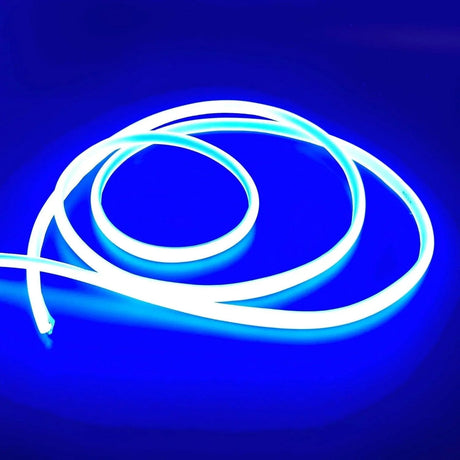
Blue COB LED Strip Light 220V 240V 288 LEDs/m IP65 with UK Plug
SKU: COBNFBLUE220VFrom £16.95Unit price /Unavailable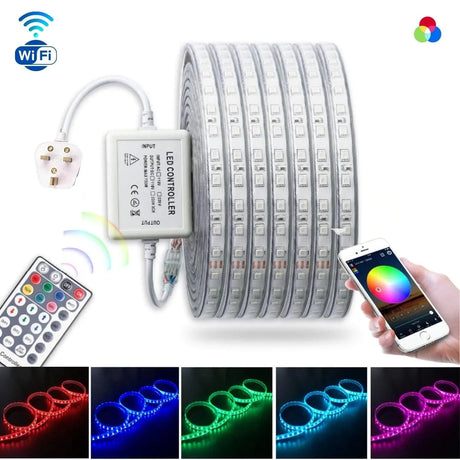
RGB LED Strip Light 220V 240V 60LEDs/m IP65 Waterproof WIFI App sync Google & Alexa
SKU: RGB229V60D-WIFIFrom £45.85Unit price /Unavailable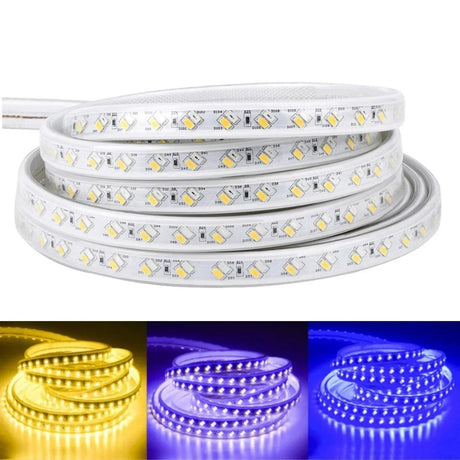
Tricolour LED Strip Light 220V 240V 5730 Warm White, Blue, Purple IP65 120LED/m Kit
SKU: TRI220VWBLPUFrom £15.85Unit price /Unavailable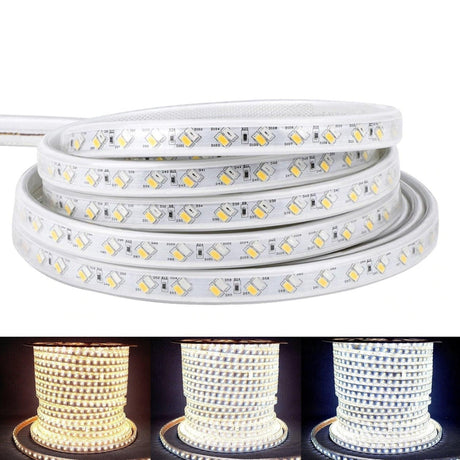
Tricolour LED Strip Light 220V 240V 5730 Warm White, Natural White, Cool White IP65 120LED/m Kit
SKU: TRI220VCWNWWWFrom £15.85Unit price /Unavailable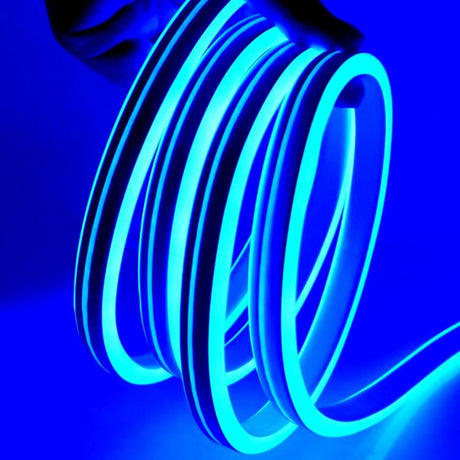
Blue Neon Flex Double Side 220V 240V 120LED/m 8x16mm IP65 Waterproof Full Kit
SKU:From £14.95Unit price /Unavailable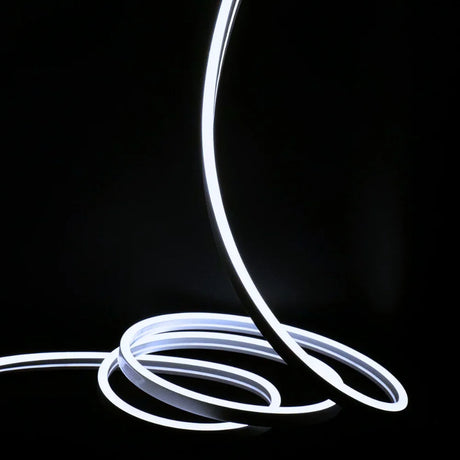
Cool White LED Neon Flex Wireless 8x16mm 120LEDs/m 220V 240V IP65 Waterproof with UK Plug
SKU: ALNFWCW220V816-CWFrom £18.66Unit price /Unavailable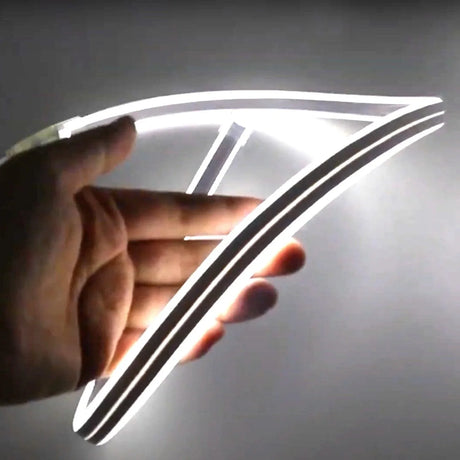
Cool White Neon Flex Double Side 220V 240V 120LED/m 8x16mm IP65 Waterproof Full Kit
SKU: ALNFDSCW220V816-IP67From £14.95Unit price /Unavailable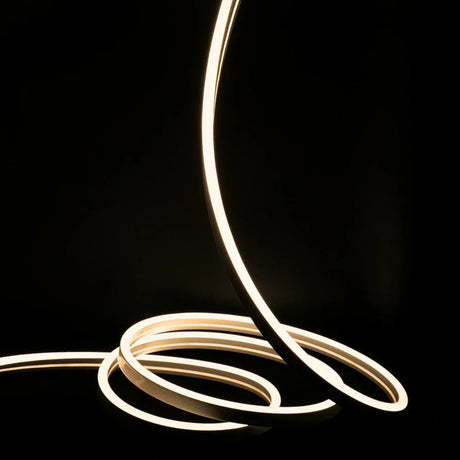
Warm White LED Neon Flex 220V 240V Wireless 8x16mm 120LEDs/m IP65 with UK Plug
SKU: NFWWW220V816-WFrom £18.66Unit price /Unavailable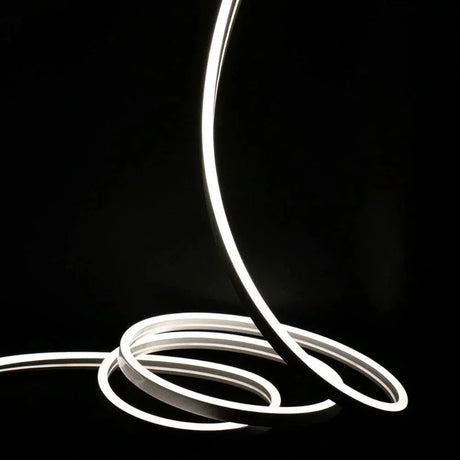
Natural White Neon Flex 220V 240V Wireless 8x16mm 120LEDs/m IP65 Waterproof with UK Plug
SKU: NFWNW220V816-20CMFrom £17.91Unit price /Unavailable
Purple Neon Flex 220V 240V 8x16mm 120LEDs/m IP65 Waterproof with UK Plug
SKU: ALNFPURP220V816-IP65From £13.85Unit price /Unavailable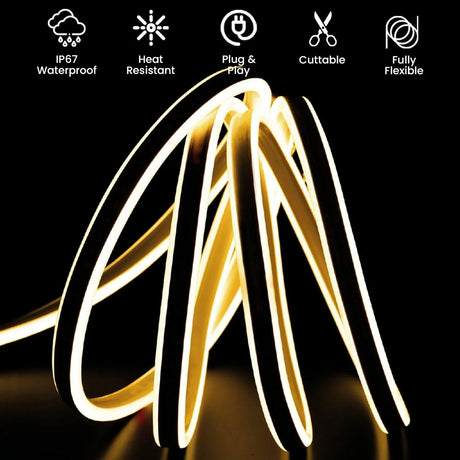
Warm White LED Neon Flex Double Side 220V 240V 120LED/m 8x16mm IP65 Waterproof Full Kit
SKU: NFDSWW220V816-IP67From £14.95Unit price /Unavailable
Pink LED Neon Flex 220V 240V 8x16mm 120LEDs/m IP65 Waterproof with UK Plug
SKU: ALNFPINK220V816-IP65From £13.85Unit price /Unavailable


Frequently Asked Questions
Are mains voltage LED strips safe to install yourself?
Yes! Our mains powered LED strip lights feature UKCA certification, built-in fuses, and overheat protection. Most come as plug-and-play kits requiring no electrical work—perfect for DIY installation in kitchens and cabinets.
What's the advantage of mains LED strips over low voltage strips?
Mains LED strip lights eliminate transformer costs and voltage drop issues. They maintain consistent brightness over longer runs (up to 50m) and offer simpler installation with standard UK plugs.
Can I use mains powered LED strips outdoors?
Absolutely! Our outdoor LED strip lights mains powered feature IP65-IP67 ratings for weather resistance. Choose IP65 for general outdoor use or IP67 for areas with direct water exposure.
Do you offer mains LED strips with motion sensors?
Yes! Our mains-powered LED strip light with motion sensor range includes under-cabinet lighting and security strips. Perfect for automatic lighting in kitchens, wardrobes, and outdoor walkways.
What IP rating do I need for kitchen LED strip lights?
For kitchen LED strip lights mains installation, IP44 rating handles splashes and steam. For areas directly above sinks or hobs, consider IP65 rated mains LED light strips for enhanced protection.
Can I cut mains voltage LED strips to size?
Our mains LED tape features cutting points every 1 meter. Always ensure power is disconnected before cutting, and use appropriate end caps to maintain IP ratings and safety standards.
How long can I run mains LED strips in one continuous length?
LED strip mains solutions can typically run 25-50 meters continuously without voltage drop or dimming. This makes them ideal for commercial installations and large residential projects.
Do mains LED strips work with standard dimmer switches?
Many of our mains strip lights are dimmable when paired with appropriate trailing-edge dimmers rated for LED loads. Check product specifications for dimmer compatibility before installation.
Are mains powered LED strips more expensive to run?
No! Mains powered LED strips are highly energy efficient, typically using 80% less power than traditional lighting. The absence of transformer losses makes them even more economical for longer installations.
What certifications should I look for in mains LED strips?
Always choose 240v mains LED strip lights with UKCA or CE marking, plus BS ENEC certification for quality assurance. Our strips meet all UK safety standards for residential and commercial use.
Can I connect multiple mains LED strips together?
Yes, using appropriate connectors and junction boxes. Our mains powered under cabinet lighting kits include linking cables for seamless multi-section installations while maintaining safety standards.
Do you offer same-day delivery for mains LED strips?
We stock popular LED strip light mains powered solutions in our UK warehouse. Orders placed before 2 PM Monday-Friday qualify for next-day delivery across most UK locations.