FAQs
Compare PWM frequency effects on LED flicker and dimming smoothness
Higher PWM frequency (several kHz and above) reduces visible flicker and produces smoother low-level dimming, while low PWM frequencies can cause perceptible flicker or strobing and colour instability on cameras.
How to calculate required amperage for 12V to 48V controllers
Multiply the strip’s watts-per-metre by the total metres to get total watts, then divide by the operating voltage to find amps (A = W ÷ V) and add ~20–30% headroom for safety.
Wiring diagram for multiple zones with one single-channel controller
Wire the controller output in parallel to each zone’s positive and negative conductors, run separate fused supply feeds or adequately sized trunking to each zone, and ensure total current does not exceed the controller’s rating; inject power locally on long runs to avoid voltage drop.
Which controllers support PUSH dimming and external switch wiring
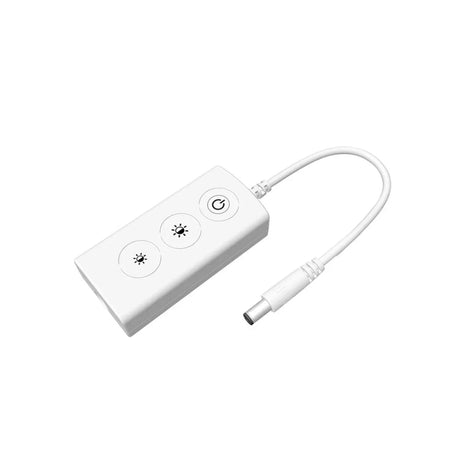
Many single-channel LED controllers list “PUSH” or “momentary switch” inputs in their specs choose units that explicitly state push-button support or wall-switch terminals for external on/off and dim/scene control.
Best power supplies for 12V, 24V and 48V single-colour strips
Use a high-quality, constant-voltage LED driver matched to the strip voltage with 20–30% spare capacity, choosing reliable brands with thermal protection and good efficiency (SMPS drivers for 12/24/48V applications).
What is a 12V–48V Single Colour Controller, and how does it differ from a 12V-only LED dimmer?
A 12V–48V controller accepts a wide input range and auto-adapts to different supply voltages, while a 12V-only dimmer is designed specifically for 12V systems and will not work safely at higher voltages.
Can the same 12V–48V controller be used with 12V, 24V, and 48V single-colour strips and neon flex without changing hardware?
Yes provided the controller’s rated voltage range includes the strip voltage and the strip’s current draw stays within the controller’s limits; ensure driver and wiring are also matched to that voltage.
Are these controllers suitable for both indoor and outdoor single-colour lighting, and what IP ratings are available?
Some models are IP-rated for outdoor use (commonly IP65–IP67); if the controller is indoor-only, place it inside a weatherproof IP-rated enclosure for outdoor installations.
How do you calculate maximum wattage and current for a 12V–48V single-channel controller at different voltages?
Multiply the controller’s maximum output current (A) by the operating voltage (V) to get maximum wattage (W = A × V), and ensure total strip wattage does not exceed this value.
What wiring practices (cable size, fusing, RCDs) are recommended when using 48V single-colour neon flex with these controllers?
Use appropriately sized low-resistance conductors (increase gauge for long runs), fit inline fuses sized per run close to the supply, and protect the mains side with RCDs and MCBs per local regulations.
When should installers add extra controllers instead of putting all load on one high-current 12V–48V dimmer?
Add extra controllers when the cumulative load approaches the single controller’s limits, when zones require independent control, or when long distances would cause excessive voltage drop if fed from one point.
What is the difference between RF remote dimming, PUSH dimming, and wall-mounted 0–10V/DALI dimming?
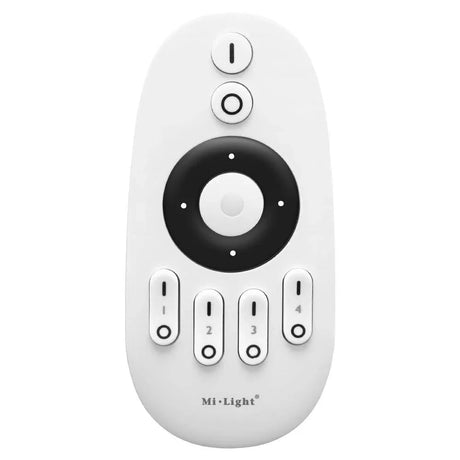
RF remotes provide wireless local control and presets, PUSH dimming uses a wired momentary switch for simple on/off and dim, while 0–10V/DALI are wired, standardised protocols offering robust, centralised and professional dimming integration.
How do adjustable PWM frequency and dimming curves improve flicker performance and low-level dimming quality?
Adjustable PWM lets you select a frequency that avoids visible flicker and camera artefacts, and configurable dimming curves (log/linear) tune perceived brightness at low levels for smoother, more natural fades.
Can 12V–48V single-colour controllers integrate with smart home or building control systems, and what interfaces are needed?
Yes integration is typically via Wi-Fi, Ethernet (Art-Net/HTTP), 0–10V gateways, or DALI/DMX interfaces depending on the controller; confirm the controller supports the desired protocol or use a bridging gateway.
When is a 12V–48V single-colour controller better than a mains-dimmable LED driver for coves, neon flex, and strip runs?
Use 12V–48V controllers when you prefer low-voltage distribution, mixed-voltage runs, remote/zone control, or easier DIY-friendly wiring; mains-dimmable drivers are preferred where long mains runs or existing infrastructure make mains dimming more practical.
How can these controllers be used to dim long 48V single-colour neon flex runs on façades, driveways, and gardens from a single remote?
Install a weatherproof 12V–48V controller with sufficient output capacity in a protected enclosure, feed the neon flex with appropriately sized cables and power-injection points, and pair the controller with an RF or Wi-Fi remote for single-point control.
What setups work best for using a single-colour controller in joinery, display cabinets, and furniture lighting?
Use a compact 12V controller with soft-start/PUSH support, small fingerprint-free diffused profiles, and a local fuse near the driver; low-voltage 12V systems are ideal for furniture and cabinet work for safety and neat installation.
What should buyers compare when choosing a 12V–48V Single Colour Controller (max A, W, PWM frequency, control type, warranty)?
Compare maximum current per channel, total wattage at your operating voltage, PWM frequency/options, supported control methods (RF, Wi-Fi, PUSH, 0–10V), IP rating, certifications, and warranty/service terms.
How do UK suppliers like UK LED Lights, Hi-Line, and others present 12V–48V single-colour controllers as universal dimmers for strip and neon flex ranges?
Suppliers typically market them as flexible, trade-friendly solutions that reduce SKUs and simplify installations by supporting multiple voltages, offering multi-zone features, and bundling compatible drivers and accessories.