
Professional LED lighting
Addressable Digital Pixel RGB & Digital Pixel RGBW COB 24V
5 products
Discover our high-quality addressable digital pixel COB LED strip lights, available in both RGB and RGBW options with a safe and efficient 24V input. Designed for dynamic lighting effects, our digital pixel COB strips...
Read more Show less
Discover our high-quality addressable digital pixel COB LED strip lights, available in both RGB and RGBW options with a safe and efficient 24V input. Designed for dynamic lighting effects, our digital pixel COB strips offer smooth color transitions, vibrant brightness, and precise pixel-level control for stunning visual displays. Perfect for modern lighting projects, our addressable COB strips are ideal for home décor, gaming setups, retail displays, and architectural lighting. Choose from IP20 non-waterproof COB strips for indoor use or IP68 waterproof COB strips for outdoor and wet area installations. These versatile digital COB LED strips are compatible with popular SPI controllers, making them easy to integrate into custom lighting designs. Whether you need seamless, dot-free illumination indoors or durable, weatherproof lighting outdoors, our addressable digital pixel COB strips deliver superior performance and flexibility. Shop today for premium quality, fast shipping, and expert support on all your LED lighting projects.
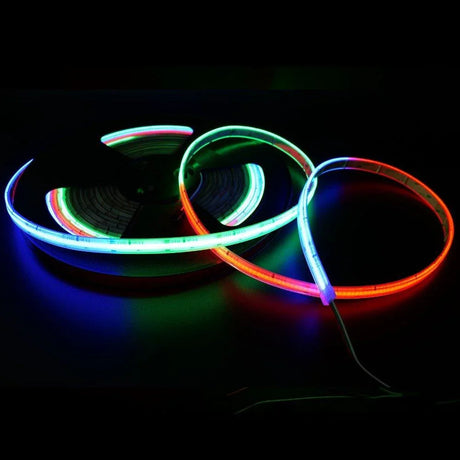
Addressable Digital Pixel RGB COB Strip 24V IP68 Waterproof 720 LEDs/m WS2811
SKU: DPCOBRGB10M24V-IP68From £117.50Unit price /Unavailable
Digital Pixel COB RGBW (Warm White 3000K) LED Strip 24V SPI IP68 Waterproof 784 LEDs/m WS2811
SKU: DPCOBRGB10M24V-IP68-5MFrom £145.25Unit price /Unavailable
Digital Pixel RGB CCT COB Strip 24V IP20 840 LEDs/m WS2805 15mm Wide
SKU: DPRGBCCTCOBIP20-15MMFrom £25.76Unit price /Unavailable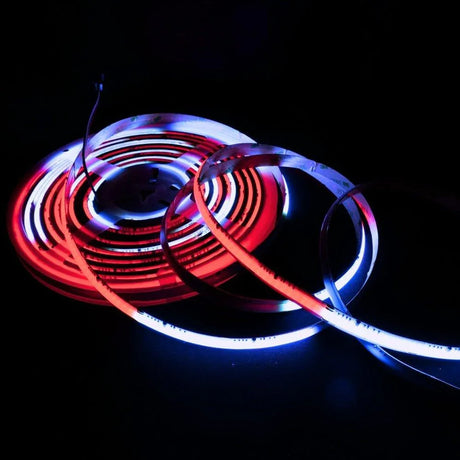
Digital Pixel RGB COB Strip 24V IP20 720 LEDs/m WS2811
SKU: DPRGBCOBIP20-10MMFrom £17.85Unit price /Unavailable
Digital Pixel RGBW (3000K) COB Strip 24V IP20 784 LEDs/m WS2814 10mm wide
SKU: DPRGBWCOBIP20-10MMFrom £23.85Unit price /Unavailable


What are typical power consumption values per metre for 24V RGB COB strips?
Power varies with LED density and how many channels are driven at full; typical 24V digital RGB COB strips can range widely (check the product datasheet), so always confirm watts/m for the specific SKU before specifying a PSU.
How do I choose a WS2811 versus WS2805 controller for 24V COB strips?
Choose a controller that explicitly supports the strip’s IC/protocol (WS2811, WS2805, etc.), and match the controller’s voltage, pixel count and update-rate capabilities to the strip and the effects you want to run.
What power supply size is recommended for 6 m runs of 24V RGB COB?
Multiply the strip’s watts per metre by 6 to get total watts, convert to amps at 24 V, then select a PSU with at least ~20% headroom to ensure reliable operation.
How do I calculate voltage drop for 24V COB LED strips?
Calculate voltage drop from conductor resistance, current draw (amps = watts ÷ 24V) and cable length (Vdrop = I × R), and mitigate it by using thicker conductors or injecting power more frequently.
What is the best waterproofing rating for kitchen or outdoor 24V COB installations?
For kitchens and general outdoor use IP65 is a common minimum for splash resistance, while IP67/IP68 is recommended where immersion or heavy exposure to water is possible.
How do I connect WS2811 digital 24V RGB COB strips to SPI controllers like an ESP8266 or Arduino?
Use a supported library (e.g., FastLED or NeoPixel-style libraries), ensure the microcontroller timing and protocol match the strip IC, and add a proper level shifter or data driver if the strip expects a different logic voltage.
What solderless connectors work for cutting and rejoining high-density (720–840 LEDs/m) RGB COB strips?
Use purpose-made high-density PCB adapter connectors, IP-rated screw terminal blocks or manufacturer-approved solderless clips designed for high-pin-count COB strips to avoid stressing the phosphor layer.
Which 24V power supplies and data injectors are needed for 10 m runs of digital RGB COB without flickering?
Use a high-current 24V supply sized above the total wattage, inject power at regular intervals (and both ends), and install data repeaters/level shifters if data integrity degrades over distance.
How do I program pixel effects like chases or rainbows on WS2805 RGB COB 24V using apps or DMX?
Use a controller or microcontroller that supports WS2805 protocol and offers effect libraries, or use a DMX-to-addressable-LED gateway to map DMX channels to pixels and run app-based effect presets.
Can IP65 digital 24V RGB COB strips be used for waterproof outdoor decking or perimeter lighting?
IP65 strips are splash-proof and can be used for many outdoor applications, but for decking or areas exposed to standing water or heavy spray choose higher IP ratings and ensure all connectors are sealed.
What aluminum profiles diffuse light best for 15 mm–wide digital RGB COB installs in retail coves?
Narrow aluminum channels with an opal diffuser provide the best balance of light smoothing and concealment for 15 mm strips, while deeper profiles help with heat dissipation for high-density runs.
Why do pixels fail or show wrong colors on long 24V digital RGB COB chains, and how do I fix it?
Common causes are insufficient power, voltage drop, poor grounding, or degraded data signals; fix by adding power injection points, improving grounding, shortening data runs or using signal repeaters/level shifters
How do I choose a 24V RGB COB controller for addressable strips?
Pick a controller that supports the strip’s protocol, total pixel count, update rate, and the control interfaces you need (Wi-Fi, DMX, app, or microcontroller), and ensure its current/voltage ratings match your PSU and strip.
How do I calculate power supply amperage for 24V RGB COB runs?
Sum watts (W/m × metres), then divide by 24V to get amps, and select a supply with at least 20–30% extra capacity to avoid running it at maximum load continuously.
What is the best wiring layout to minimize voltage drop on 24V RGB COB installations?
Use thicker gauge trunk wires, feed power in a star or parallel topology (multiple injection points), shorten high-current runs, and avoid long daisy-chained power feeds.
How should I inject power along a 5 m 24V RGB COB strip for even brightness?
Inject power from both ends and optionally at the midpoint, or run short parallel feeds from the PSU to multiple injection points to keep voltage stable along the strip.
Which MOSFETs or driver components are recommended for high-wattage 24V RGB COB setups?
Use low-Rds(on), logic-level MOSFETs or dedicated LED drivers rated above the expected current with good thermal management (heatsinking) and protection features; choose components with safety margins above calculated peak currents.