
Professional LED lighting
220V 240V RGB Controller
19 products
We have wide range of RGB LED Strip & RGB Neon Flex 220V 240V IR Controller, Bluetooth controller and WIFI Controller. Our 220V 240V RGB WIFI controller works with Google Home & Alexa.
Read more Show less
We have wide range of RGB LED Strip & RGB Neon Flex 220V 240V IR Controller, Bluetooth controller and WIFI Controller. Our 220V 240V RGB WIFI controller works with Google Home & Alexa.
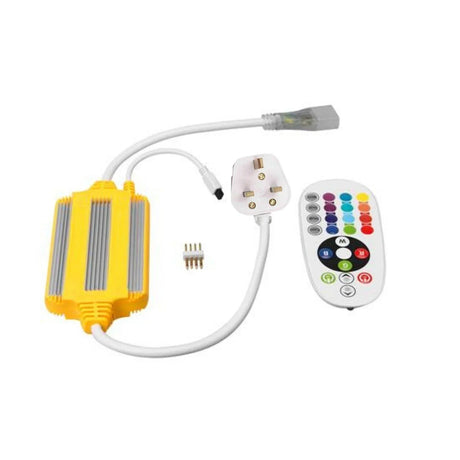
RGB LED Strip 220V 1500W IR Controller for 120 led/m LED Strip with Remote
SKU: ALNFACLIPS-1-1£26.09Unit price /Unavailable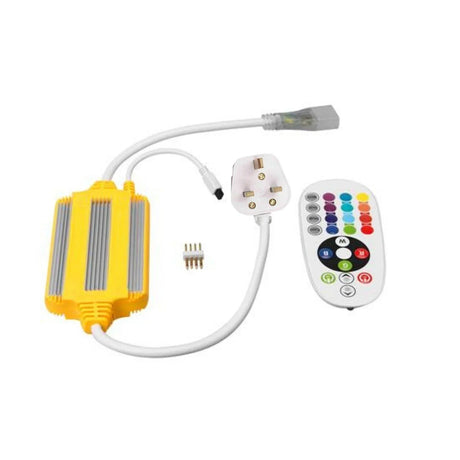
RGB LED Strip 220V 1500W IR Controller for 60 led/m LED Strip with Remote
SKU: ALCONTRGB60£24.85Unit price /Unavailable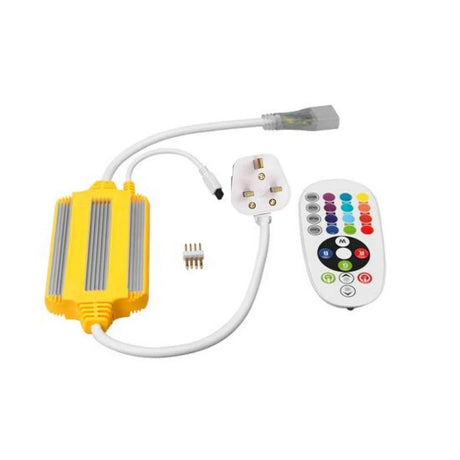
RGB Neon Flex 220V 240V 10x18mm 1500W IR Controller
SKU: RGBNF10181500W-1From £26.09Unit price /Unavailable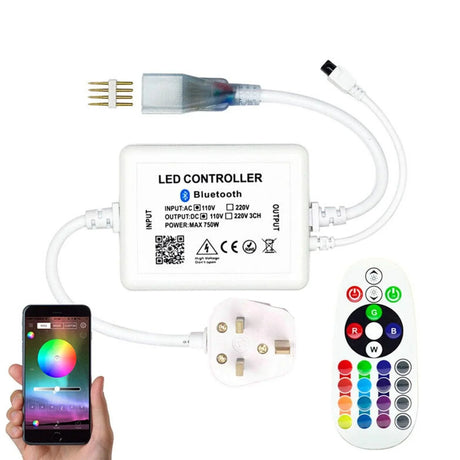
RGB LED Strip 120 LEDs/m 220V 240V Bluetooth Controller with Remote
SKU: RGBCON120L220V-BT£30.85Unit price /Unavailable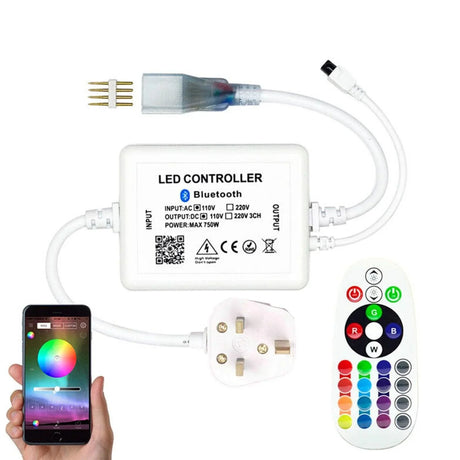
RGB Neon Flex 220V 240V 10x18mm Bluetooth Controller with Remote
SKU: ALNFCONT10X20-WIFI£30.85Unit price /Unavailable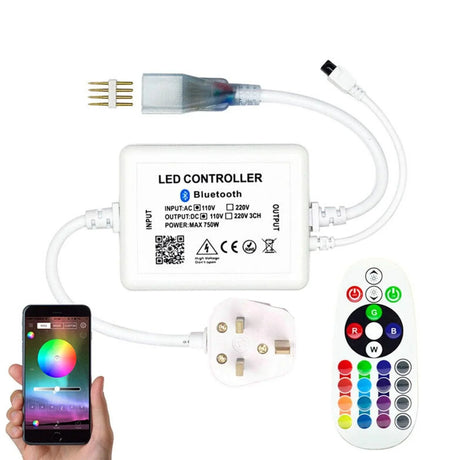
RGB Neon Flex 220V 240V 10x20mm Bluetooth Controller with Remote
SKU: ALNFCONT10X20-BT£30.85Unit price /Unavailable
RGB Neon Flex 220V 240V 14x25mm Bluetooth Controller with Remote
SKU: ALNFCONT1425-BT£34.85Unit price /Unavailable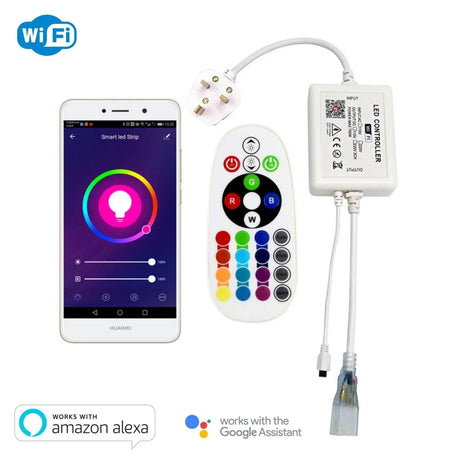
RGB LED Strip 220V 240V 120LEDs/m WiFi Tuya APP LED controller with 24key Remote
SKU: RGBCONT120D220V-WIFI£36.85Unit price /Unavailable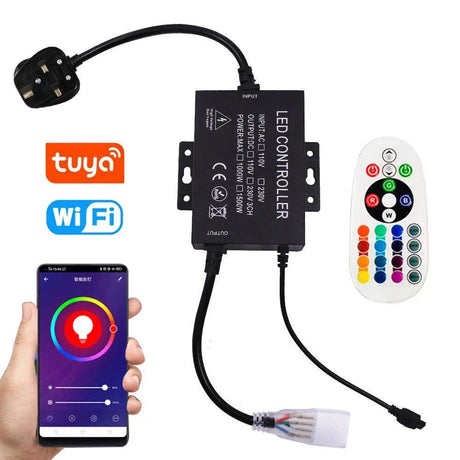
RGB LED Strip 220V 240V 60LEDs/m WIFI Controller with Remote Works with Google Home & Alexa
SKU: RGB60220V-WIFICO£42.85Unit price /Unavailable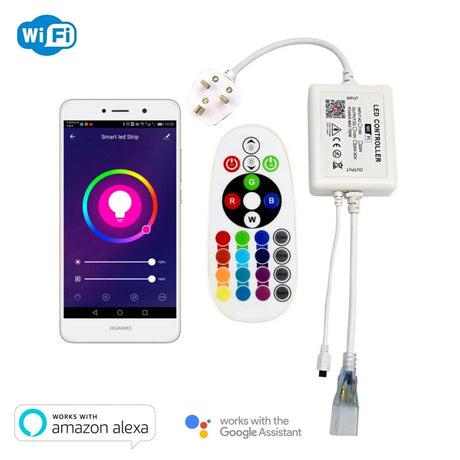
RGB LED Strip 220V 240V 60LEDs/m WiFi Tuya APP LED controller with 24key Remote
SKU: RGBCONT60D220V-WIFI£36.85Unit price /Unavailable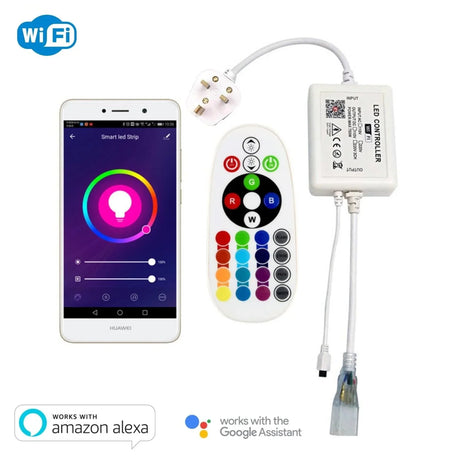
RGB Neon Flex 10x18mm 220V 240V WiFi Tuya APP LED controller with 24key Remote
SKU: ALNFCONT10X18-WIFI£38.85Unit price /Unavailable
RGB Neon Flex 220V 240V 14x25mm WiFi APP LED controller work with Google & Alexa with 24key Remote
SKU: ALNFCONT14X25-WIFI£39.85Unit price /Unavailable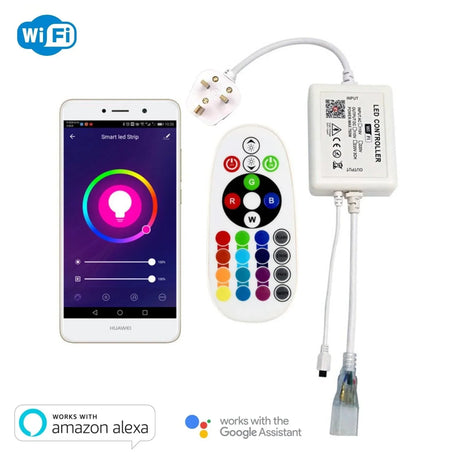
RGB Neon Flex 10x20mm 220V 240V WiFi Tuya APP LED Controller with 24key Remote
SKU: ALNFCONT1020-WIFI£38.85Unit price /Unavailable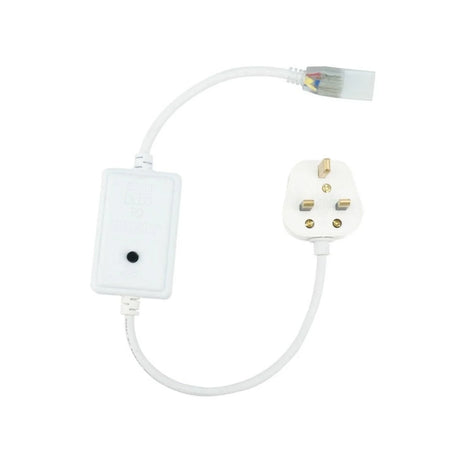
RGB LED Strip 220V 240V Controller for 120 led/m LED Strip
SKU: ALRGB120LED220V-15M£9.85Unit price /Unavailable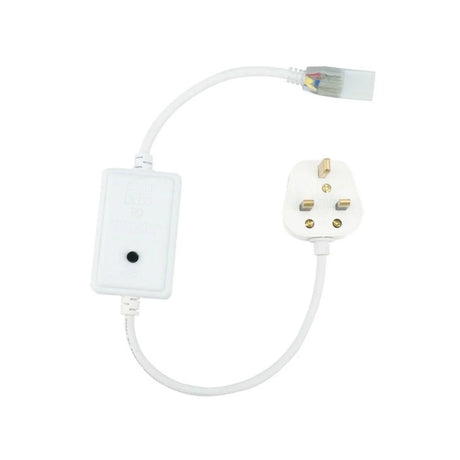
RGB LED Strip 220V 240V Controller for 60 led/m LED Strip
SKU: ALRGB60LED220V-15M£9.85Unit price /Unavailable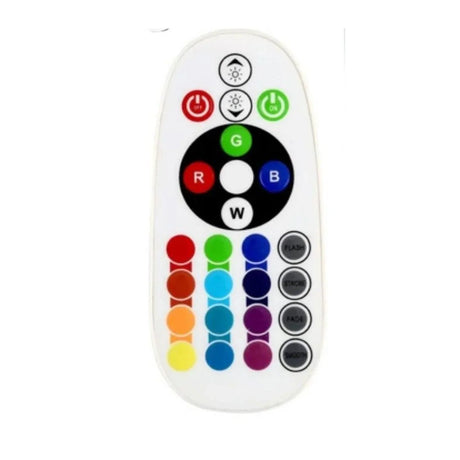
RGB Neon Flex 10x18mm Remote for 1500W RGB Controller
SKU: REMOTE1018220V£10.85Unit price /Unavailable
RGB LED Strip 60 LEDs/m 220V 240V Accessories 4pin T/ L/ Corner Straight Connector
SKU: ALNFACCE220V1018From £7.50Unit price /Unavailable
RGB LED Strip 120 LEDs/m 220V 240V Accessories 4pin T/ L/ Corner Straight Connector
SKU: ALNFACCE220V1018From £7.50Unit price /Unavailable
RGB Neon Flex 10x18mm 220V 240V Accessories 4pin T/ L/ Corner Straight Connector
SKU: ALNFACCE220V1018From £7.50Unit price /Unavailable


FAQs
How many metres of 220V RGB strip can one controller safely drive?
The safe length depends on the strip’s wattage per metre and the controller’s maximum wattage divide the controller’s wattage rating by the strip W/m to get metres (e.g., a 600 W controller can drive 60 m of a 10 W/m strip). For mains-voltage strips also follow manufacturer max-run guidance and segmenting advice to avoid overheating.
How to calculate power requirement for 220V RGB strips
Multiply the strip’s wattage per metre by the planned length to get total watts, then ensure the controller/driver and cabling are rated above that figure (allowing safety margin). For three-channel RGB, use the strip’s full-white (all channels on) wattage for worst-case calculations.
Wiring diagram for connecting multiple 220V RGB controllers in parallel
Each controller should be connected to the mains via its own fused feed and RCD-protected supply, with separate outputs driving their allocated strip runs; parallel controllers should have isolated outputs and be installed in appropriate IP-rated enclosures. For safety and compliance use a qualified electrician to produce a site wiring diagram.
Which 220V RGB controllers support Wi-Fi or app control?
There are mains-voltage controllers with integrated Wi-Fi or that pair with smart relays/hubs; look for controllers explicitly marked “Wi-Fi” or “Smart” (often with Tuya/Smart Life integration) or use a mains-rated smart controller module from reputable manufacturers.
Differences between 220V and low voltage RGB controllers for long runs
220V controllers run the LEDs on mains voltage or through integrated step-down segments, allowing much longer continuous runs with lower current in the wiring, whereas low-voltage (12/24V) controllers require more frequent power injection or segmentation to avoid voltage drop. Mains systems require stricter protection, earthing, and installer competence.
What is a 220V–240V RGB controller and how does it differ from low-voltage (12V/24V) RGB controllers in design and safety requirements?
A 220–240V RGB controller is designed to switch and drive mains-voltage LED products or built-in step-down modules and includes high-voltage safety features, isolation and earthing requirements; low-voltage controllers switch low-voltage DC and are inherently lower risk but limited in run length.
Which types of products are compatible with 220V–240V RGB controllers (RGB LED strip, RGB neon flex, rope light), and which are not?
Compatible products are specifically manufactured as 220–240V mains-voltage LED strip, RGB neon flex and rope lights; standard 12V/24V LED strips and most low-voltage neon flex are not compatible and must not be connected without the correct driver/transformer.
Can the same 220V–240V RGB controller be used with different LED densities and lengths, and what are the limits?
Yes if the total wattage and thermal limits of the controller aren’t exceeded higher-density strips draw more watts per metre so allowable length falls accordingly; always observe the controller’s maximum wattage and manufacturer guidance for continuous run lengths.
How do you calculate the maximum safe strip length and wattage for a 220V–240V RGB controller rated at 200–1500 W?
Divide the controller’s wattage rating by the strip’s W/m to get the theoretical maximum metres (e.g., 1000 W ÷ 10 W/m = 100 m), then apply manufacturer segmentation limits and derating (temperature, enclosure) to determine the practical safe length.
What wiring practices (RCDs, enclosures, cable size, earthing) are recommended when installing 220V–240V RGB strips and controllers outdoors in the UK?
Use RCD protection on the supply, IP-rated metal or plastic enclosures, correctly sized mains cable, earth connections where required, and weatherproof glands; follow BS 7671 and have mains work carried out or inspected by a qualified electrician.
Why is it dangerous to connect 12V/24V RGB strips directly to a 220V–240V RGB controller, and what equipment is needed instead?
12V/24V strips will be destroyed and present a fire/electrical shock hazard if fed with mains; use the correct low-voltage driver/transformer and a compatible low-voltage controller or a mains-to-low-voltage converter specified for the strip type.
How do IR-remote 220V RGB controllers compare with RF or touch-panel versions in range, reliability, and ease of use?
IR remotes are cheap but require line-of-sight, RF remotes offer better range and non-line-of-sight control, and touch-panel or Wi-Fi/app controllers provide richer UI and integration at higher cost choose based on site complexity and user needs.
What built-in modes (static colours, fades, jumps, auto-runs) do typical 220V RGB controllers offer, and can they be customised?
Typical controllers include static colours, gradients/fades, jumps, strobes and auto sequences; some models allow custom mode programming or presets via an app or advanced interface, while simpler units are fixed-mode only.
Are there smart (Wi-Fi/app) 220V RGB controllers for direct-mains strips, or is smart control usually done on the low-voltage side only?
There are mains-rated smart controllers (Wi-Fi or Ethernet) designed for 220–240V strips, though many installers still implement smart control on the low-voltage side using smart drivers/relays for finer control and compatibility.
When is a 220V–240V RGB controller the best option for long façades, rooflines, or perimeter lighting compared with 24V RGB systems?
Use 220V systems when very long continuous runs or minimal power feeds are required and where compliance with mains wiring can be ensured, since they reduce cable/cable gauge and power-injection complexity versus 24V systems.
How can 220V RGB controllers be used with RGB neon flex to create colour-changing outlines on commercial buildings and signage?
Pair mains-rated RGB neon flex (IP-rated and specified for 220–240V) with a compatible controller in weatherproof enclosures, segment or feed long runs per manufacturer instructions, and use DMX/Art-Net gateways if synchronised architectural control is needed.
What layouts and segmentation strategies work best when controlling multiple 220V RGB runs from one or more controllers on large sites?
Break long runs into manageable segments each within a controller’s wattage, locate controllers near load clusters, use parallel feeds or zoned controllers for redundancy, and map runs logically for maintenance and DMX/addressing when used.
What should buyers look for when choosing a 220V–240V RGB controller (max W, IP rating, remote type, number of modes, warranty)?
Prioritise adequate maximum wattage, suitable IP/enclosure rating for location, preferred control interface (IR/RF/Wi-Fi/DMX), number and flexibility of modes, UK safety certifications, and a clear warranty and support policy.
How do UK suppliers like UK LED Lights and others present 220V RGB controller + strip/neon kits for plug-and-play installation?
Suppliers typically offer mains-rated kits with pre-terminated leads, IP-rated controllers, clear wattage limits, and installation instructions aimed at contractors or competent installers, emphasising convenience while noting mains safety and compliance.