
Professional LED lighting
Addressable Digital Pixel RGB Neon Flex 24V Indoor & Outdoor Use
8 products
Introducing our Digitally Addressable Pixel Colour Chasing Horizontal / Side Bend and Vertical / Top Bend Neon flexible lighting in various. The Digital Neon Utilises the WS2811 Protocol. Our Professional Digitally Ad...
Read more Show less
Introducing our Digitally Addressable Pixel Colour Chasing Horizontal / Side Bend and Vertical / Top Bend Neon flexible lighting in various. The Digital Neon Utilises the WS2811 Protocol. Our Professional Digitally Addressable RGB Neon comes complete with a 3 Year warranty for outdoor use and 5 years warranty for indoor use.

Digital Pixel RGB Neon Flex Addressable 24V 10x20mm IP68 Waterproof WS2811
SKU: ALNFDRGB24V1020-IP68From £39.95Unit price /Unavailable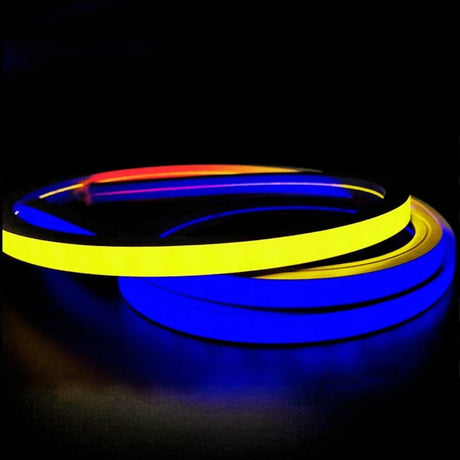
Addressable Digital Pixel RGB Neon Flex 16x16mm WS2811 App Control 10 metre Kit
SKU:From £75.85Unit price /Unavailable
Addressable Digital Pixel RGB Neon Flex 24V 12x20 WS2811 IP65 Waterproof
SKU: NFDPRGB24V1220From £25.85Unit price /Unavailable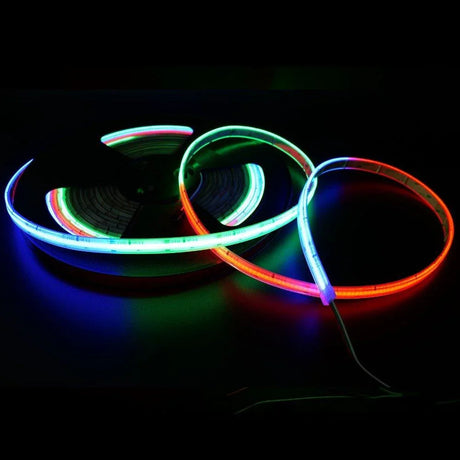
Addressable Digital Pixel RGB COB Strip 24V IP68 Waterproof 720 LEDs/m WS2811
SKU: DPCOBRGB10M24V-IP68From £117.50Unit price /Unavailable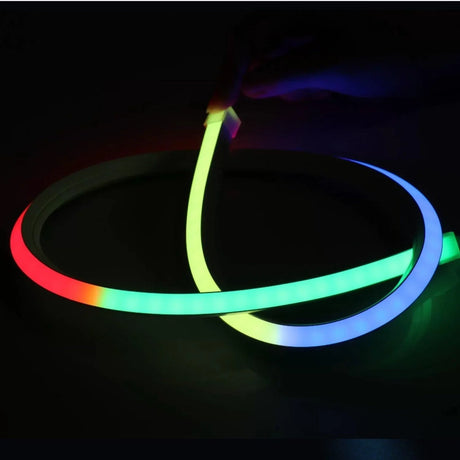
Digital Pixel RGB Neon Flex 24V Addressable 16x16mm IP65 Waterproof WS2811
SKU: NFDPRGB161624VFrom £27.85Unit price /Unavailable
Addressable Digital Pixel RGB Neon Flex 24V 12x20mm IP65 WS2811 10cm Cut
SKU: ALNFDRGB24V1220From £25.85Unit price /Unavailable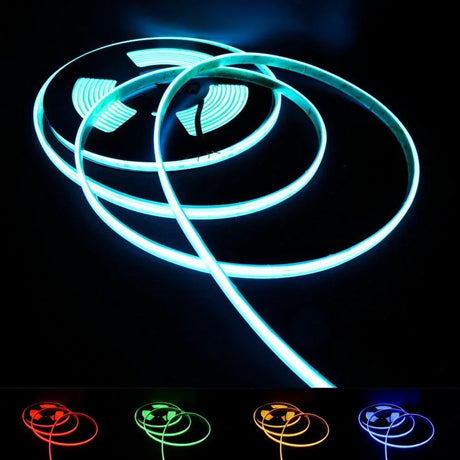
RGB COB LED Strip 24V IP67 Waterproof 840 LEDs/m 5cm Cut
SKU: RGBCOB24V-IP67From £19.85Unit price /Unavailable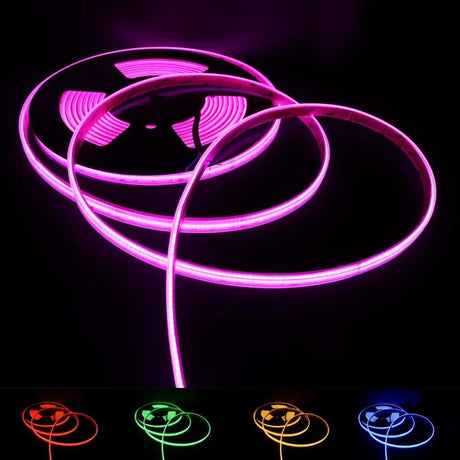
RGB COB LED Strip 24V IP68 Waterproof 840 LEDs/m 5cm Cut
SKU: RGBCOB24V-IP68From £21.24Unit price /Unavailable
What is Addressable RGB Neon Flex, and how does it differ from standard RGB Neon Flex in terms of control and effects?
Addressable RGB Neon Flex allows individual pixels or segments to be controlled independently, enabling animations and dynamic effects, while standard RGB Neon Flex changes colour uniformly along the entire length.
How do chips like WS2811 and COB work inside Addressable RGB Neon Flex to control individual pixels or segments?
WS2811 chips receive digital data signals that control colour and brightness per segment, while COB-based addressable designs integrate control elements more densely for smoother visual output.
What are the typical pixel densities (pixels per metre) and how do they affect resolution for text, waves, and animations?
Higher pixel density provides smoother animations and sharper effects but increases power and data requirements, while lower densities suit simple chases and colour transitions.
How does data signal integrity limit the maximum run length before boosters or repeaters are needed?
Signal degradation occurs over long distances, so data amplifiers or repeaters are required to maintain reliable control beyond the controller’s maximum supported length.
Which controllers (Wi-Fi, SPI, DMX, Art-Net) are compatible with WS2811 Addressable RGB Neon Flex?
WS2811 Neon Flex is compatible with SPI-based controllers, including Wi-Fi app controllers, DMX decoders, and Art-Net systems when paired with appropriate interfaces.
How do controllers for Addressable RGB Neon Flex differ for architectural versus stage lighting?
Architectural lighting typically uses app-based or DMX systems for scenes and schedules, while stage lighting relies on Art-Net or DMX for real-time control and synchronization.
How do you plan power injection for long Addressable RGB Neon Flex runs to maintain colour consistency and avoid overheating the strip?
Power should be injected at regular intervals based on voltage and wattage to prevent voltage drop, reduce heat buildup, and maintain consistent brightness and colour.
What cutting points and soldering techniques are required for Addressable RGB Neon Flex?
Addressable Neon Flex can only be cut at marked cut points, and soldering must maintain correct data direction and polarity to avoid signal failure.
How do data direction arrows and pixel mapping affect installation and controller configuration?
Data must flow in the correct direction from the controller, and pixel mapping ensures effects align correctly with physical strip placement.
Which software options enable pixel-mapped content creation compared with traditional RGB controllers?
Pixel-mapping software such as Madrix, WLED, and controller-specific apps allow complex animations, text, and effects that standard RGB controllers cannot achieve.
How can Addressable RGB Neon Flex be used to create dynamic shopfronts and signage that stand out more than standard RGB lighting?
Independent pixel control enables moving patterns, gradients, and animations that attract attention and create a premium visual impact.
What are best-practice layouts for using Addressable RGB Neon Flex in coves, ceilings, and wall outlines in hospitality projects?
Even mounting, consistent bending direction, concealed power injection points, and proper diffusion ensure smooth visuals and professional results.
How is Addressable RGB Neon Flex rated for outdoor UK installations in terms of IP rating, UV resistance, and mechanical protection?
Outdoor-rated Addressable Neon Flex typically uses IP65–IP67 silicone housings with UV resistance and impact protection for long-term durability.
What should buyers compare when choosing Addressable RGB Neon Flex (chip type, pixel count, voltage, waterproof rating)?
Key factors include controller compatibility, pixel density, operating voltage, IP rating, and suitability for the intended environment and effects.
How do UK suppliers like UK LED Lights and Atom LED position their Addressable RGB Neon Flex ranges for installers and designers?
Ranges are usually tiered by voltage, pixel density, and control complexity to suit DIY users, professional installers, and commercial designers.