
Professional LED lighting
Extra Long COB LED Strip 48V, COB Strip 12V 24V 48V
46 products
Pick the wrong strip and you are stuck with dots, dim ends, or the wrong white — pick a single colour COB LED strip from UK LED Lights and you get one unbroken line of light from the first millimetre to the last. We s...
Read more Show less
Pick the wrong strip and you are stuck with dots, dim ends, or the wrong white — pick a single colour COB LED strip from UK LED Lights and you get one unbroken line of light from the first millimetre to the last. We stock 12V, 24V, and 48V single colour COB strip in warm white 2700K–3000K, natural white 4000K, and cool white 6000K, with continuous runs up to 30 metres from a single power point, CRI 90+ across every option, and FreeCut available on 24V for trimming at any point along the strip.
Our 2026 single colour COB range covers 24V runs up to 20 metres with typically no visible voltage drop, 48V extra-long runs up to 30 metres from one-side power, and 12V options for compact, low-power applications. IP20 for dry interiors, IP67 for permanent outdoor installations, IP68 for full submersion. Every strip is 8–10mm wide, fits standard aluminium profiles, and dims smoothly with a trailing-edge dimmer and triac driver. Bespoke cut lengths available — call 01952 370008 or email sales@ukledlights.co.uk.
Single Colour COB · Warm White 2700K–3000K · Natural White 4000K · Cool White 6000K · 12V · 24V · 48V · FreeCut (24V) · IP20 · IP67 · IP68 · CRI 90+ · 8–10mm Width · Up to 30m Run · Triac Dimmable · Bespoke Lengths · Free UK Delivery
Quick decision — which single colour COB strip do you need?
- Kitchen under-cabinet or worktop task lighting: 24V warm white 3000K in IP20, inside a slim aluminium profile, paired with a triac dimmable driver and trailing-edge dimmer.
- Garden border or patio run over 20 metres: 48V warm white in IP67 — one driver, 30 metres of consistent brightness, no mid-point injection.
- Bathroom mirror surround or shower niche: 24V warm white 2700K in IP67 minimum. IP68 if directly exposed to water.
- Home office or retail display: 24V natural white 4000K in IP20 — balanced, colour-accurate light for task areas.
- Garage or workshop: 24V cool white 6000K in IP20 — maximum visibility for detailed work.
- Short furniture or display case run: 12V warm white where a small driver and low total wattage are the priority.
Who single colour COB strip is for: Homeowners who want clean, dot-free white light for kitchens, bathrooms, and living spaces. Interior designers specifying cove and under-cabinet lighting that looks finished. Electricians and kitchen fitters who need a strip that dims without flickering and runs up to 30 metres from one feed point. Commercial specifiers lighting hotel corridors, restaurant counters, retail displays, and offices where consistent colour temperature matters.
Who single colour COB strip is NOT for: If you need colour-changing effects, browse our RGB and RGBW COB strip. If you need tuneable white that shifts from 2700K to 6500K throughout the day, you need RGB CCT COB strip, not fixed single colour. And if the strip is completely hidden from view and budget is tight, standard SMD strip from our LED strip lights range costs less per metre.
Common buying mistakes to avoid:
- Selecting the wrong colour temperature: 3000K looks orange under daylight; 6000K looks clinical in a bedroom. Match to room function — 2700K–3000K for living spaces, 4000K for task areas, 6000K for workshops.
- Choosing IP65 for outdoor use: IP65 covers surface splashes only — it fails under sustained UK rainfall and frost-thaw cycling. IP67 is the minimum for any permanent outdoor installation under BS7671 guidance.
- Using a leading-edge dimmer: The most common cause of LED strip flickering. Swapping to trailing-edge costs approximately fifteen pounds and typically resolves the problem.
- Running strip while coiled: Heat cannot dissipate from coiled strip. Adhesive fails, LEDs overheat, fire risk. Always uncoil and mount before powering on.
- Mounting on bare uninsulated metal: Exposed copper traces on the PCB short-circuit against conductive surfaces. Mount inside an anodised aluminium profile or apply an insulating barrier.
What is a single colour COB LED strip and how does it produce dot-free light?
A single colour COB LED strip places hundreds of micro LED chips directly onto the flexible circuit board in a dense, continuous line — producing one unbroken ribbon of white light with no visible dots, no hotspots, and no dark gaps. Unlike SMD strip which mounts chips at fixed intervals creating a repeating dot pattern, COB technology delivers an even glow that looks uniform from any viewing distance and any angle.
"Single colour" means the strip emits one fixed white temperature rather than RGB colour-changing or tuneable white. This simplicity is an advantage: fewer components, lower cost per metre, thinner 8–10mm widths, and compatibility with standard trailing-edge dimmers without a separate controller.
- Inside aluminium profiles: COB strip produces a perfectly uniform glow through a milky diffuser. SMD strip shows a dot pattern through the same cover — visible to the eye even after diffusion reduces it by 60–70 percent.
- Reflected on glossy surfaces: Polished worktops, glass splashbacks, and lacquered cabinetry reflect SMD dots back at the viewer. COB reflects as one clean line of light.
- Close viewing under 2 metres: Under-shelf, headboard cove, and display cabinet lighting all place the strip within arm's reach, where SMD dots are very difficult to overlook.
- Even heat distribution: COB spreads thermal load across the full PCB rather than concentrating it at individual chip locations, reducing peak temperatures and extending adhesive bond life inside enclosed profiles.
| Feature | Single Colour COB Strip | Single Colour SMD Strip |
|---|---|---|
| Light output | Continuous, dot-free unbroken line | Visible dots with darker gaps |
| Beam angle | 180 degrees | 120 degrees typical |
| Typical CRI | 90+ across all options | 80–90 |
| Width | 8–10mm | 8–12mm |
| Profile appearance | Uniform glow through diffuser | Dot pattern partially visible |
| Cost per metre | Higher | Lower |
| Best for | Kitchens, profiles, close-range, commercial | Budget installs, hidden locations |
Which colour temperature should you choose — warm, natural, or cool white?
Warm white 2700K–3000K suits living rooms, bedrooms, and hospitality spaces where comfort matters most. Natural white 4000K is the choice for kitchens, bathrooms, and retail displays where accurate colour rendering is the priority. Cool white 6000K serves garages, workshops, and industrial areas that demand maximum visibility. Every single colour COB strip from UK LED Lights achieves CRI 90+, so colours beneath the light render accurately at any temperature.
- 2700K warm white: Closest to traditional incandescent. Soft, amber-toned. Ideal for bedrooms, living rooms, and restaurant lighting.
- 3000K warm white: Slightly cleaner than 2700K. The default recommendation for kitchen under-cabinet lighting in 2026 — warm enough for dining, bright enough for food preparation.
- 4000K natural white: Neutral and balanced. Best for bathrooms, home offices, retail display cases, and any task where seeing true colours matters — makeup, food prep, fabric selection.
- 6000K cool white: Crisp with a slight blue undertone. Maximum contrast for workshops, garages, and commercial kitchens. Not recommended for bedrooms or living spaces.
| Colour Temperature | Character | Best Rooms | Avoid In |
|---|---|---|---|
| 2700K | Soft amber, relaxed | Bedrooms, living rooms, dining, restaurants | Workshops, task-critical areas |
| 3000K | Warm but clean | Kitchens, hallways, hotel corridors | High-contrast work areas |
| 4000K | Neutral, balanced | Bathrooms, offices, retail, displays | Bedrooms for relaxation |
| 6000K | Crisp, energising | Garages, workshops, industrial kitchens | Bedrooms, living rooms, dining |
If you are installing in a kitchen that doubles as a dining space, 3000K is typically the safest default — warm at 30 percent for evening meals, clear at full brightness for morning prep. For guidance, call 01952 370008 or email sales@ukledlights.co.uk.
What voltage do you need — 12V, 24V, or 48V?
Choose 24V for the vast majority of residential and short commercial installations — runs up to 20 metres, one of the widest driver and accessory ecosystems, and FreeCut availability. Choose 48V for long commercial runs up to 30 metres from single-side power. Choose 12V only for compact applications where a small driver footprint matters more than run length. Approximately 90 percent of 2026 residential projects use 24V.
- 24V — residential and light-commercial standard: Twenty metres covers a full kitchen perimeter, a bedroom ceiling cove, or a complete living room shelf run. FreeCut trimming at any point. Largest selection of drivers, connectors, and profile accessories.
- 48V — long-distance commercial: Thirty metres from one feed point. At identical wattage, 48V drops voltage at approximately half the rate of 24V. The standard for hotel corridors, restaurant perimeters, retail shopfronts, and office open-plan coves.
- 12V — compact and specialist: Limited maximum run. Practical for short furniture runs, display cases, caravan and marine installations where 12V DC is already the system voltage.
| Specification | 12V | 24V | 48V |
|---|---|---|---|
| Max one-side run | ~5 metres | Up to 20 metres | Up to 30 metres |
| Voltage drop rate | Highest | Standard | ~Half of 24V |
| FreeCut | No | Yes | No — marked intervals |
| Driver selection | Moderate | Widest | Specialist range |
| SELV (BS7671) | Yes | Yes | Yes |
| Ideal for | Compact, battery, marine | Residential, kitchens, bathrooms | Long commercial, hospitality |
All three voltages fall within the SELV voltage threshold under BS7671 (120V DC ripple-free maximum), provided they are supplied from a suitably isolated, safety-rated driver. SELV is a system classification that depends on correct installation — not simply the voltage number. Need help choosing? Call 01952 370008.
How far can single colour COB strip run without voltage drop?
UK LED Lights 24V single colour COB strip delivers up to 20 metres of consistent brightness from a single power point. Our 48V extra-long COB extends this to 30 metres from one-side power — one of the longest single-feed runs from any UK supplier in 2026. 12V is limited to approximately 5 metres. All figures assume correct driver sizing and appropriate cable gauge between driver and strip.
Three factors control when drop becomes visible on single colour COB strip:
- Strip voltage: Higher voltage means proportionally less drop. 48V drops at approximately half the rate of 24V at identical wattage.
- Wattage per metre: A 5W/m strip runs further before dimming than a 14W/m strip on the same voltage.
- Cable gauge: Use 0.75mm minimum for under 10 metres. Step up to 1.0mm or 1.5mm for longer distances.
For runs exceeding 30 metres, split into multiple sections, each powered from a separate driver or a mid-point injection tap. Wire in parallel — not in series, which multiplies drop across every joint. Email sales@ukledlights.co.uk with your total run length and we will specify the correct configuration.
What is FreeCut COB strip and when do you need it?
FreeCut COB strip can be cut at any point along its entire length — no fixed cut marks, no minimum segment, no rounding to the nearest 50mm. This is a 24V-only feature on select single colour COB products in the UK LED Lights 2026 range. Standard COB strip cuts at marked intervals, typically every 50–100mm. Choose FreeCut when precision fitting matters and even a short dark gap at the end of a run would be visible.
- Glass shelf lighting: The strip end is visible through the glass — a 30mm dark gap looks like a mistake. FreeCut trims to your exact measurement.
- Bespoke joinery: Custom wardrobes, alcove shelving, and fitted cabinetry rarely conform to round numbers.
- Kitchen segments wrapping corners: FreeCut helps ensure every section fits tightly between corner connectors with no dark spots at transitions.
- Retail display cases: Museum cabinets and jewellery displays demand precision where every millimetre matters.
We also offer a bespoke cutting service — send your measurements and we cut and prepare strips before dispatch. Call 01952 370008 for bespoke orders.
Which IP rating does your installation need?
IP20 for dry interior rooms — kitchens inside profiles, bedrooms, living rooms, offices. IP67 for permanent outdoor installations and bathroom wet zones under BS7671. IP68 for continuous submersion in ponds, fountains, and water features. Do not use IP65 for permanent outdoor use in UK weather — it covers surface splashes only and fails under sustained rainfall, frost, and ground-level damp.
- IP20: No water protection. Thinnest, most flexible, best thermal performance. The default for every dry interior location.
- IP67: Temporary immersion rated. Correct for permanent outdoor UK weather — gardens, patios, decking, driveways — and bathroom Zone 1 and Zone 2 under BS7671.
- IP68: Continuous submersion. Required for ponds, fountains, pool surrounds. Full silicone encapsulation adds width to approximately 15mm.
A common 2026 customer question: "Is IP65 good enough for my garden?" The honest answer is no. IP65 does not protect against hours of steady rain, frost expanding through seams, or ground-level damp wicking along the strip. For any outdoor installation through a British winter, IP67 is the minimum. For advice on the right rating, call 01952 370008.
How do you dim single colour COB strip without flickering?
Pair a triac dimmable LED driver with a trailing-edge wall dimmer — this is the correct configuration for flicker-free dimming of single colour COB strip. Leading-edge dimmers are the most common cause of LED strip flickering in UK homes. Replacing a leading-edge model with trailing-edge costs approximately fifteen pounds and typically resolves the problem. No separate controller is needed — the dimmer and triac driver handle everything.
This is a key advantage of single colour over RGB: the dimming system is simple. A triac dimmable driver wired through a trailing-edge wall dimmer provides smooth brightness control from full output to approximately 5 percent — no app, no remote, just a switch on the wall.
If flickering occurs after installation, check in this order:
- Dimmer type: Replace leading-edge with trailing-edge. Fixes roughly 80 percent of domestic flickering.
- Driver compatibility: Check the driver specification sheet for confirmed dimmer pairings.
- Connections: Re-strip cable ends and retighten every terminal — loose wires cause intermittent contact.
- Driver headroom: Ensure the driver is rated to at least 120 percent of total strip wattage.
- Mains voltage: Older UK properties may have voltage fluctuation. A quality driver with 200–240V AC input tolerance handles this.
How do you install single colour COB strip step by step?
Clean the surface with isopropyl alcohol, mount inside an aluminium profile for heat dissipation, peel the 3M adhesive backing in 30cm sections, press firmly for ten seconds per section, wire to a correctly sized driver matched to the strip voltage, and test before making connections permanent. Never power single colour COB strip while coiled on the reel — heat damage is immediate and irreversible.
- Calculate total wattage and select your driver: Multiply strip wattage per metre by total run length, then add 20 percent. Example: 8m of 10W/m = 80W, plus 20 percent = 96W minimum. Choose a 100W or 120W LED driver. For dimmable installations, select a triac model.
- Plan the layout: Position the driver within 2 metres of the strip start. For runs over 5 metres or multiple sections, plan parallel wiring back to the driver. Mark cut points before removing strip from the reel.
- Prepare the surface: Wipe the full length with isopropyl alcohol. The 3M adhesive bonds permanently to clean, dry, degreased surfaces — it fails on dusty, oily, or uncured painted surfaces.
- Mount inside an aluminium profile: Profiles act as a heatsink and protect the strip from damage. Peel adhesive backing in 30cm sections and press firmly into the channel. Use corner connectors for tight bends — do not stretch or force the strip.
- Wire the driver: Mains input: brown (live), blue (neutral), green-yellow (earth) per BS7671. Low-voltage output: red to positive, black to negative. Use 0.75mm cable for under 10m, 1.0mm or 1.5mm for longer runs.
- Bare metal rule: Never mount directly on uninsulated metal. Exposed copper traces on the PCB underside short-circuit against conductive surfaces. An anodised aluminium profile provides the insulation layer.
- Test: Power on, walk the full run, check for consistent brightness end to end. If the far end is dimmer, check cable gauge or upgrade to 48V. If flickering occurs, verify the dimmer is trailing-edge.
Which driver do you need for single colour COB strip?
A constant-voltage LED driver matched to the strip voltage — 12V, 24V, or 48V — rated to a minimum of 120 percent of total strip wattage. For dimmable rooms, use a triac dimmable driver paired with a trailing-edge wall dimmer. For non-dimmable installations, a standard constant-voltage driver is the simplest option. No separate controller is required — the driver powers single colour strip directly.
- Triac dimmable (most rooms): Smooth brightness control from a standard wall dimmer. The most popular choice for kitchens, living rooms, and bedrooms in 2026. Browse our triac dimmable driver range.
- Standard constant-voltage (non-dimmable): On or off only. Ideal for garages, workshops, utility rooms, and commercial displays. See the full LED driver collection.
- DALI or 0–10V (commercial): For building management systems and architectural dimming protocols. Contact 01952 370008 for specification.
Worked example: 6 metres at 14W/m = 84W. Add 20 percent = 100.8W minimum. Select a 120W triac driver. Budget twenty to forty pounds depending on wattage — a reliable driver is not the place to save on a kitchen installation that will run for a decade.
What makes CRI 90+ worth the investment?
CRI (Colour Rendering Index) measures how accurately a light source reveals the true colours of objects beneath it, on a scale to 100. Every single colour COB strip in the UK LED Lights 2026 range achieves CRI 90+. Skin tones, food, fabrics, and wood grains appear natural and vivid rather than flat or washed out. Budget LED strip at CRI 80 visibly distorts reds, oranges, and earth tones — noticeable in any well-lit room.
- Kitchen worktops: You need to see the true colour of food — whether meat is cooked, vegetables are fresh, a sauce has reduced correctly. Professional kitchen designers specify CRI 90+ as standard for 2026 projects.
- Bathroom vanity lighting: Makeup applied under CRI 80 looks different in daylight. CRI 90+ closes that gap. Natural white 4000K at CRI 90+ is the most requested bathroom specification from our customers.
- Retail and hospitality display: Product colours under CRI 90+ look truthfully represented — not artificially enhanced, but accurate. Budget lighting with low CRI costs less per metre but costs sales per customer.
UK LED Lights does not stock single colour COB strip below CRI 90. Every colour temperature in our range meets this threshold — you do not need to filter by CRI because we have already made that decision.
Where does single colour COB strip perform best — room by room?
Single colour COB strip is the professional standard for any location needing consistent, dot-free white light at a fixed colour temperature. The most popular 2026 installations are kitchen under-cabinet, bathroom cove, bedroom headboard, living room shelf, commercial retail display, hotel corridor, and outdoor garden border — each requiring specific voltage, IP, and colour temperature selections.
- Kitchen: 24V warm white 3000K or natural 4000K, IP20, inside slim profiles. Triac dimmable for adjustable brightness. Typical run: 4–10 metres. Browse our kitchen LED strip range.
- Bathroom: IP67 minimum in wet zones (Zone 1 and Zone 2 under BS7671). Warm white 2700K for spa atmosphere, 4000K for colour-accurate task lighting. Typical run: 2–6 metres.
- Bedroom: IP20, warm white 2700K, dimmable. Headboard coves, under-bed float, wardrobe interiors. Typical run: 3–8 metres.
- Living room: Shelf accents, alcove features, ceiling coves. 3000K with a dimmer for adjustable ambience. Typical run: 5–15 metres.
- Garden and outdoor: 48V IP67 for runs over 20m. 24V IP67 for shorter sections. Mount in outdoor-rated profiles with sealed end caps. Browse our outdoor LED strip collection. Typical run: 10–30 metres.
- Commercial: Hotel corridors, retail displays, restaurant counters, offices. 48V for long runs. CRI 90+ renders product colours accurately. Typical run: 15–30 metres.
Why buy single colour COB strip from UK LED Lights?
UK LED Lights is a specialist LED supplier based in Telford, Shropshire, holding one of the widest single colour COB LED strip ranges available from any UK retailer in 2026. We stock 12V, 24V, and 48V across every white colour temperature, in IP20, IP67, and IP68 — with free UK delivery, bespoke cut lengths, and direct technical support from our own team.
- UK stock, UK dispatch: Every product ships from our Telford warehouse — Unit D4, Stafford Park 4, TF3 3BA. No overseas dropshipping, no multi-week waits.
- Free UK delivery: Standard delivery free on all mainland UK orders.
- Bespoke custom lengths: Send us your measurements and we cut to your specification before dispatch.
- CRI 90+ on every product: No single colour COB strip below CRI 90 in our range.
- Technical team on hand: Call 01952 370008 (Monday–Friday, 9am–5pm) or email sales@ukledlights.co.uk. We specify strip, driver, dimmer, profile, and accessories for your project.
- 5-year warranty on single colour COB strip: UK LED Lights single colour COB strip carries a 5-year warranty — one of the longest in the UK LED strip market in 2026.
- Trade and bulk pricing: Electricians, kitchen fitters, designers, and commercial teams — contact us for project pricing on larger orders.
- Full ecosystem: Strip, drivers, triac dimmable drivers, profiles, accessories, and our full COB range — everything from one supplier, delivered together.
- Single-colour COB strip carries our 5-year warranty — the longest cover on dot-free strip from any UK supplier.
- This is the range kitchen fitters and interior designers specify most — CRI 90+ across every colour temperature.
UK LED Lights Ltd · Company No: 12301805 · Unit D4, Stafford Park 4, Telford, Shropshire, TF3 3BA · 01952 370008 · sales@ukledlights.co.uk
How does single colour COB strip compare to RGB and RGBW COB strip?
Single colour, RGB, and RGBW COB strip all use the same chip-on-board technology, but they serve different purposes and require different control equipment.
| Feature | Single Colour COB | RGB COB | RGBW COB |
|---|---|---|---|
| Light output | One fixed white temperature | Millions of colours, no clean white | Millions of colours + dedicated white |
| CRI | 90+ standard | Not applicable (colour mode) | White channel typically 85-90 |
| Controller needed | No — dimmer and driver only | Yes — dedicated RGB controller | Yes — dedicated RGBW controller |
| Driver type | Triac dimmable or non-dimmable | Non-dimmable only | Non-dimmable only |
| Strip width | 8-10mm | 8-10mm | 12mm |
| Best for | Kitchens, bathrooms, task lighting | Gaming, cinema, decorative only | Multi-purpose rooms needing colour + white |
| 5-year warranty | Yes | Check product page | Check product page |
Single colour COB strip is the professional standard for task and ambient lighting where consistent white light quality matters most. Choose RGB or RGBW only when colour-changing effects are a specific requirement. Call 01952 370008 for advice.
Frequently Asked Questions
Can single colour COB strip be used outdoors in the UK?
- Yes — in IP67 or IP68 only. IP67 handles permanent outdoor weather including sustained rain, frost, and ground moisture.
- IP68 for submersion — ponds, fountains, water features.
- Do not use IP20 or IP65 outdoors. IP65 covers surface splashes only and does not withstand continuous UK rainfall.
Is single colour COB strip dimmable?
- Yes — triac dimmable driver plus trailing-edge wall dimmer for smooth control from 100 percent to approximately 5 percent.
- No separate controller needed. The driver and dimmer handle everything.
- Avoid leading-edge dimmers — they cause visible flicker with LED drivers.
What is the difference between 2700K and 3000K?
- 2700K is softer and more amber — closest to traditional incandescent. Best for bedrooms and dining.
- 3000K is slightly cleaner while still warm. The recommended default for kitchens and hallways.
- If uncertain, choose 3000K — versatile for living spaces and functional for kitchens.
How many metres can one driver power?
- Divide driver wattage by strip wattage per metre, then reduce by 20 percent. Example: 150W driver with 10W/m strip = 12 metres after headroom.
- Wire multiple runs in parallel — never series, which multiplies voltage drop.
Can I cut single colour COB strip to custom lengths?
- Standard COB strip cuts at marked intervals — typically every 50–100mm.
- FreeCut 24V COB strip cuts at any point along its length.
- Bespoke cutting service available: send measurements to sales@ukledlights.co.uk and we prepare strips before dispatch.
Does single colour COB strip need an aluminium profile?
- Strongly recommended for every installation. Profiles act as a heatsink and protect the strip from damage.
- Without a profile, heat builds up on wood or plaster and adhesive can release over months.
- Inside a profile with diffuser, COB strip produces an architectural-quality light line. Browse our profile range.
Is 48V single colour COB strip safe?
- 48V DC falls within the SELV voltage threshold under BS7671 (120V DC ripple-free maximum), provided it is supplied from a suitably isolated, safety-rated driver.
- SELV is a system classification requiring correct installation — not just a voltage number.
- 48V does not mean "no shock risk." SELV means significantly reduced shock risk under dry conditions — not zero.
What colour temperature is best for kitchens?
- 3000K warm white is the most popular kitchen choice in 2026. Warm for evening dining, clear for morning prep.
- 4000K suits kitchens where food colour accuracy is the top priority.
- Avoid 6000K unless the space is exclusively a commercial prep area.
How long does single colour COB strip last?
- 30,000 to 50,000 hours typical — approximately 10 to 17 years at 8 hours per day (L70 standard).
- Mounting inside an aluminium profile is the single biggest factor in achieving full rated lifespan.
- Running coiled, on bare metal, or without ventilation shortens lifespan significantly.
Do you offer bespoke lengths?
- Yes — all voltages, all colour temperatures, all IP ratings. Email sales@ukledlights.co.uk or call 01952 370008.
- Orders include soldered wire tails ready for direct connection.
- Trade and bulk bespoke orders welcome.
Can I use single colour COB strip in a bathroom?
- Yes — use IP67 minimum in Zone 1 and Zone 2 under BS7671 bathroom zoning requirements.
- IP68 for Zone 0 (inside a shower or bath) where continuous water contact is expected.
- Do not use IP20 or IP65 in wet bathroom zones. IP65 covers surface splashes only and is not suitable for sustained moisture exposure.
What happens if I wire single colour COB strip in series instead of parallel?
- Series wiring multiplies voltage drop across every joint. The last section of strip receives noticeably less voltage and appears dimmer.
- Parallel wiring feeds each strip section independently from the driver, ensuring consistent brightness across the entire installation.
- Always wire in parallel for any installation with multiple strip sections or runs exceeding 10 metres.
Can single colour COB strip be used with smart home systems like Alexa or Google Home?
- Yes — pair a WiFi controller between the driver and strip for voice control, app dimming, and scheduling.
- Miboxer and Skydance controllers connect via the Tuya platform and work natively with Alexa and Google Home.
- The driver should be non-dimmable when using a PWM controller — the controller handles all brightness adjustment.
How do I compare single colour COB strip to neon flex for the same application?
- COB strip in a profile: Higher lumen output per watt, slimmer profile, better thermal management. Requires an aluminium profile for a finished appearance.
- Neon flex: Self-contained flexible body with built-in diffusion. No profile required. Better for curves and outdoor applications.
- For straight indoor runs, COB strip in a profile is typically the professional specification. For curved or exposed outdoor work, neon flex is more practical.
Does UK LED Lights deliver single colour COB strip free of charge?
- Yes — free UK mainland delivery on every order. No minimum spend required.
- Orders before 2pm Monday to Friday dispatch same day from our Telford warehouse — Unit D4, Stafford Park 4, TF3 3BA.
- For delivery queries, call 01952 370008 or email sales@ukledlights.co.uk.
Can I return single colour COB strip if I order the wrong colour temperature?
- Uncut strip in original packaging can be returned. Contact sales@ukledlights.co.uk to arrange a return.
- Cut or installed strip cannot be returned — always confirm colour temperature before cutting.
- Free advice before ordering: Call 01952 370008, Monday to Friday, 9am–5pm, and our team will help you select the correct Kelvin for your room.
Is it safe to run single colour COB strip in an enclosed ceiling void?
- Not recommended without adequate ventilation. Enclosed voids trap heat, raising LED junction temperatures and shortening lifespan.
- If the void has no airflow, mount strip inside an aluminium profile to act as a heatsink and keep temperatures within safe operating limits.
- Never power strip while coiled in any location — heat builds up immediately and causes permanent damage.
What is the warranty on UK LED Lights single colour COB strip?
- UK LED Lights single colour COB strip carries a 5-year warranty — one of the longest in the UK LED strip market in 2026. The warranty covers manufacturing defects on all single colour COB strip products in the range.
- Warranty does not cover: Damage from incorrect installation, use of incompatible drivers, mounting on bare metal without insulation, or running strip while coiled.
- Contact: Call 01952 370008 or email sales@ukledlights.co.uk for warranty enquiries. UK LED Lights Ltd, Company No: 12301805.
Can RGB strip produce the same white light as single colour COB?
- No — RGB strip cannot produce clean white. Mixing red, green, and blue channels produces a cold, violet-tinged white that looks unnatural compared to a dedicated white LED chip.
- RGBW strip adds a dedicated white channel that produces true warm or cool white alongside colour effects — but CRI is typically lower than dedicated single colour strip.
- For pure white light quality, single colour COB strip at CRI 90+ is the correct specification.
How do I prevent flickering when dimming single colour COB strip?
- Replace any leading-edge dimmer with a trailing-edge model. This costs approximately £15 and fixes the problem immediately in the majority of cases.
- Ensure the driver is TRIAC dimmable and rated for trailing-edge operation. Check the driver datasheet for confirmed dimmer compatibility.
- Verify total strip wattage meets the dimmer's minimum load threshold. If total wattage is too low, the dimmer cannot regulate the circuit correctly and flicker occurs at low levels.
Browse our full single colour COB LED strip range above, or contact our technical team for help with your project.
01952 370008 · sales@ukledlights.co.uk · All COB Strip · LED Strip Lights · LED Drivers · Triac Dimmable Drivers · LED Profiles · Accessories
Last reviewed: March 2026 — UK LED Lights technical team, Telford, Shropshire. Specifications current as of 2026.
🏭 UK LED specialist, Telford, Shropshire · ☎️ 01952 370008 · 🚚 Free UK delivery
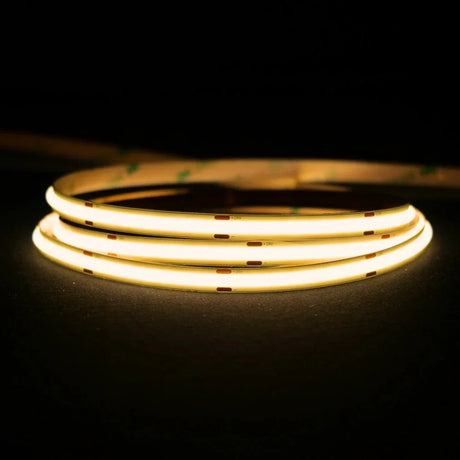
Warm White 3000K COB LED Strip 24V 480LEDs/m IP20 20m Run
SKU: ELCOBWW24VIP20From £9.75Unit price /Unavailable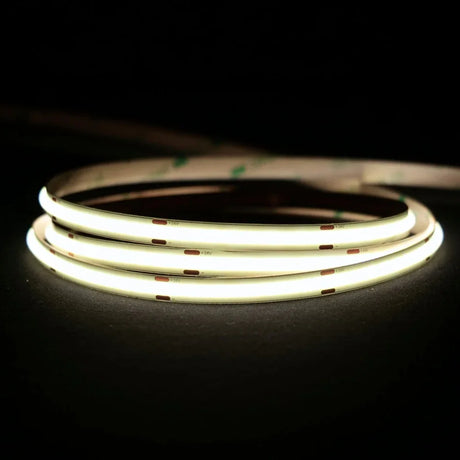
Natural White 4000K COB LED Strip 24V 480LEDs/m IP20 20m Run
SKU: COBNW24VIP20-20MFrom £9.75Unit price /Unavailable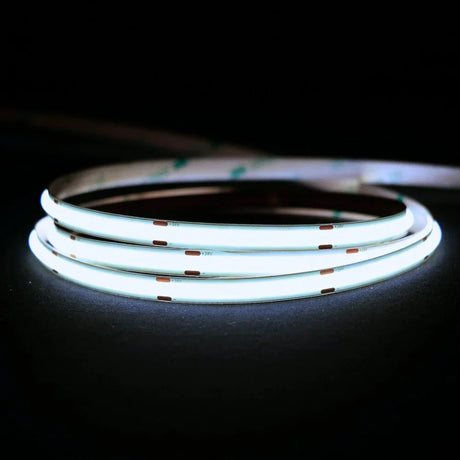
Cool White 6000K COB LED Strip 24V 480LEDs/m IP20 20m Run
SKU: COBCW24VIP20-20MFrom £9.75Unit price /Unavailable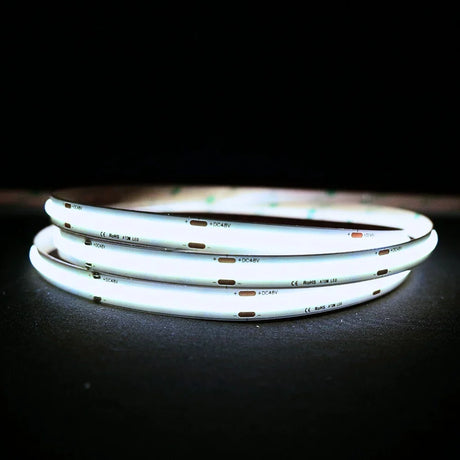
Extra Long Cool White 6000K COB LED Strip 48V 480LEDs/m IP20
SKU: ULCOBCW48VIP20From £11.86Unit price /Unavailable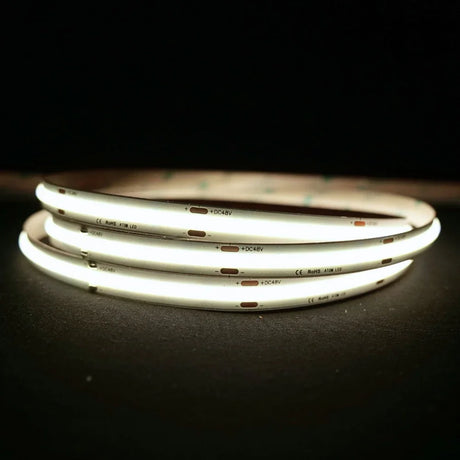
Extra Long Natural White 4000K COB LED Strip 48V 480LEDs/m IP20
SKU: ULCOBNW48VIP20From £11.86Unit price /Unavailable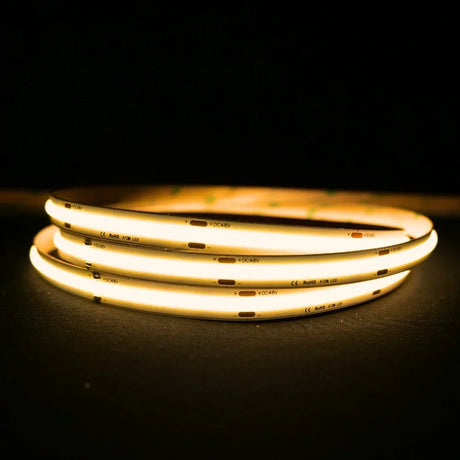
Extra Long Warm White 3000K COB LED Strip 48V 480LEDs/m IP20
SKU: ULCOBWW48VIP20From £11.86Unit price /Unavailable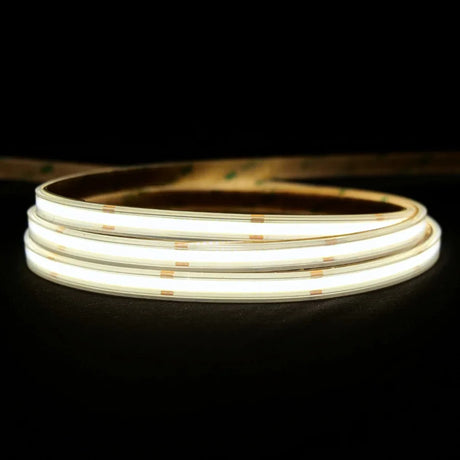
Natural White 4000K COB LED Strip 48V 480LEDs/m IP67 Waterproof 30m Run
SKU: COBNW48V-30M-IP67From £16.45Unit price /Unavailable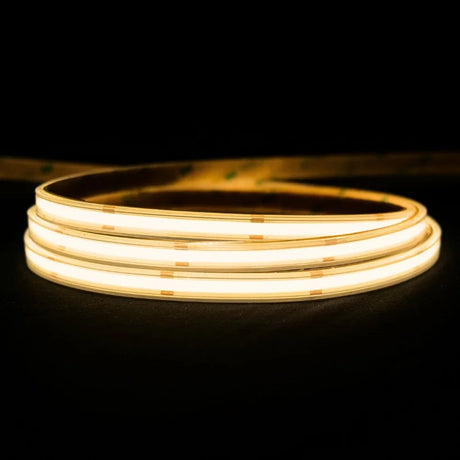
Warm White 3000K COB LED Strip 48V 480LEDs/m IP67 Waterproof 30m Run
SKU: COBWW48V-30M-IP67From £16.45Unit price /Unavailable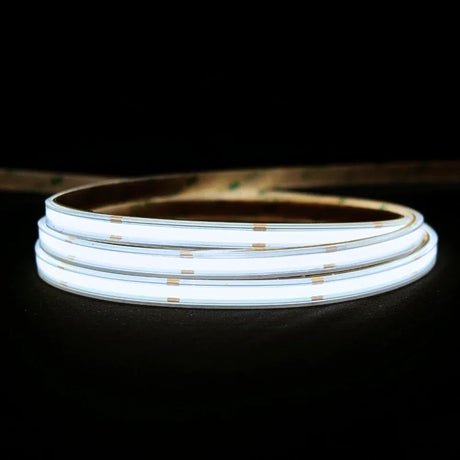
Cool White 6000K COB LED Strip 48V 480LEDs/m IP67 Waterproof 30m Run
SKU: COBCW48V-30M-IP67From £16.45Unit price /Unavailable-
Cool White 6000K COB LED Strip 24V 480LEDs/m IP67 Waterproof 20m Run
SKU: COBCW24V-20M-IP67From £14.85Unit price /Unavailable 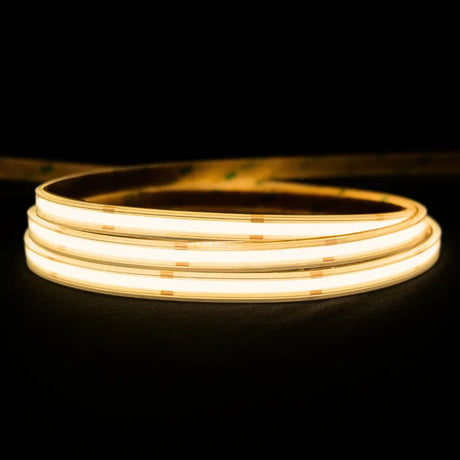
Warm White 3000K COB LED Strip 24V 480LEDs/m IP67 Waterproof 20m Run
SKU: COBWW24V-20M-IP67From £14.85Unit price /Unavailable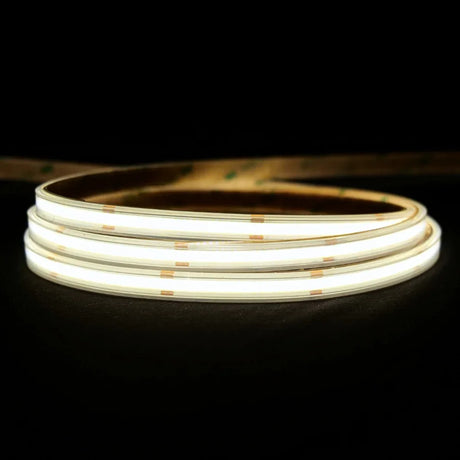
Natural White 4000K COB LED Strip 24V 480LEDs/m IP67 Waterproof 20m Run
SKU: COBNW24V-20M-IP67From £14.85Unit price /Unavailable
Tunable CCT COB LED Strip 24V 10mm 2700K to 6500K IP20
SKU: CCTCOB24VIP20From £15.85Unit price /Unavailable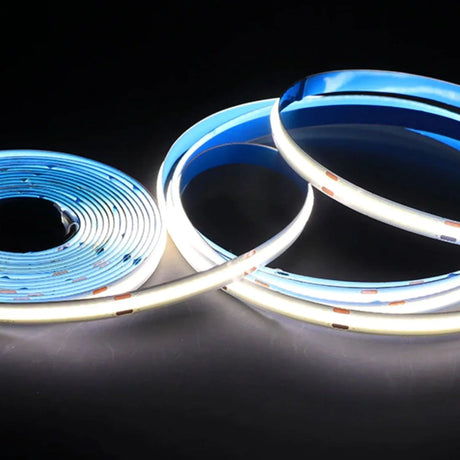
COB LED Strip Light Cool White 6000K 24V 352 LEDs/m IP20 Waterproof
SKU: ALCOBCW24V5M£55.95Unit price /Unavailable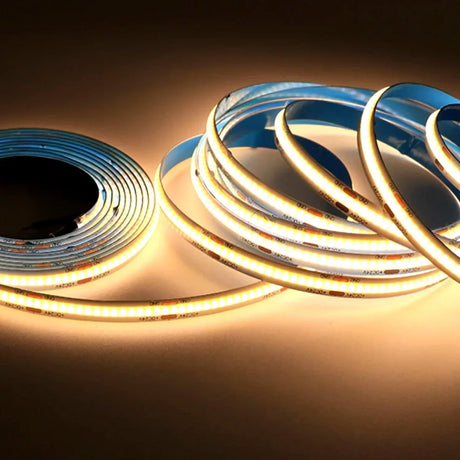
COB LED Strip Light Warm White 3000K 24V 352 LEDs/m IP20 Waterproof
SKU: ALCOBWW24V5M£55.95Unit price /Unavailable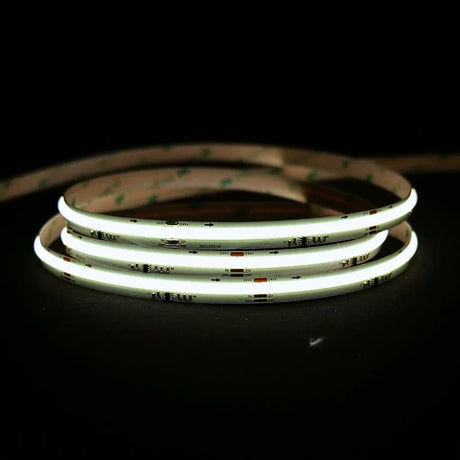
Digital Pixel SPI 2811 COB Strip Natural White 4000K 24V IP20
SKU: SPICOBNW24VIP20-20MFrom £9.95Unit price /Unavailable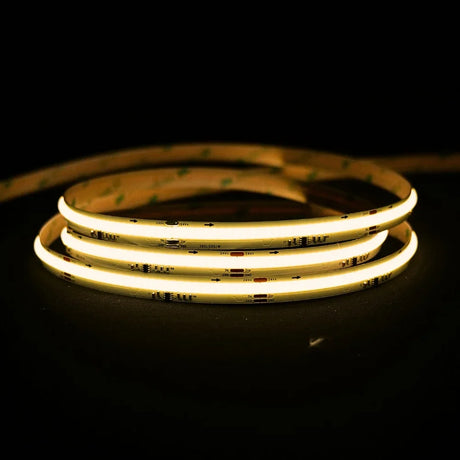
Digital Pixel SPI 2811 COB Strip Warm White 3000K 24V IP20
SKU: SPICOBWW24VIP20-20MFrom £9.95Unit price /Unavailable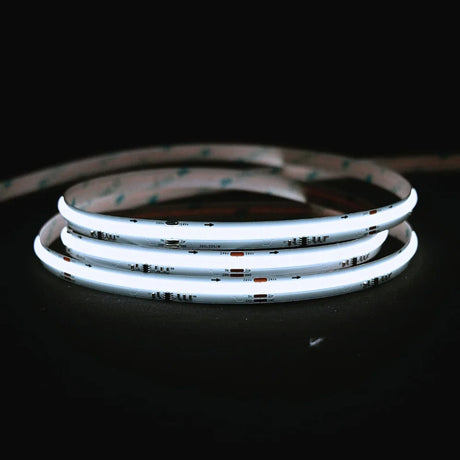
Digital Pixel SPI 2811 COB Strip Cool White 6000K 24V IP20
SKU: SPICOBCW24VIP20-20MFrom £9.95Unit price /Unavailable
Natural White 4000K COB LED Strip 24V 8mm 528LEDs/m IP20 FreeCut
SKU: COB24V-40K-FC-8From £14.95Unit price /Unavailable
Warm White 3000K COB LED Strip 24V 8mm 528LEDs/m IP20 FreeCut
SKU: COB24V-30K-FC-8From £14.95Unit price /Unavailable
Cool White 6500K COB LED Strip 24V 8mm 528LEDs/m IP20 FreeCut
SKU: COB24V-65K-FC-8From £14.95Unit price /Unavailable
Natural White 4000K COB LED Strip 24V 384 LEDs/m IP68 Waterproof
SKU: COBNW24V-10MM-IP68From £18.30Unit price /Unavailable
Warm White 3000K COB LED Strip 24V 384 LEDs/m IP68 Waterproof
SKU: COBWW24V-10MM-IP68From £18.30Unit price /Unavailable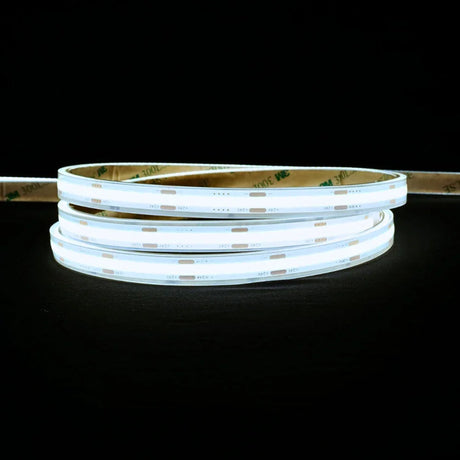
Cool White 6000K COB LED Strip 24V 384 LEDs/m IP68 Waterproof
SKU: COBCW24V-10MM-IP68From £18.30Unit price /Unavailable
Warm White 2700K COB LED Strip 24V 10mm 480LEDs/m IP20 20m Run
SKU: COB24V20M-27K-10MM-IP20From £10.85Unit price /Unavailable
Natural White 4000K COB LED Strip 24V 10mm 480LEDs/m IP20 20m Run
SKU: COB24V20M-40K-10MM-IP20From £10.85Unit price /Unavailable
Warm White 3000K COB LED Strip 24V 10mm 480LEDs/m IP20 20m Run
SKU: COB24V20M-30K-10MM-IP20From £10.85Unit price /Unavailable
Cool White 6500K COB LED Strip 24V 10mm 480LEDs/m IP20 20m Run
SKU: COB24V20M-65K-10MM-IP20From £10.85Unit price /Unavailable
Daylight 5000K COB LED Strip 24V 10mm 480LEDs/m IP20 20m Run
SKU: COB24V20M-50K-10MM-IP20From £10.85Unit price /Unavailable
Warm White 2700K COB LED Strip 24V 10mm 480LEDs/m IP20 8.33mm Cut Points 15m Run
SKU: COB24V15M-27K-IP20From £13.85Unit price /Unavailable
Daylight 5000K COB LED Strip 24V 10mm 480LEDs/m IP20 8.33mm Cut Points 15m Run
SKU: COB24V15M-50K-IP20From £13.85Unit price /Unavailable
Natural White 4000K COB LED Strip 24V 10mm 480LEDs/m IP20 8.33mm Cut Points 15m Run
SKU: COB24V15M-40K-IP20From £13.85Unit price /Unavailable
Cool White 6500K COB LED Strip 24V 10mm 480LEDs/m IP20 8.33mm Cut Points 15m Run
SKU: COB24V15M-65K-IP20From £13.85Unit price /Unavailable
Warm White 3000K COB LED Strip 24V 10mm 480LEDs/m IP20 8.33mm Cut Points 15m Run
SKU: COB24V15M-30K-IP20From £13.85Unit price /Unavailable
Warm White 2700K SCOB LED Strip 24V 10mm 280LEDs/m IP20 25mm Cut 10m Run
SKU: SCOB24V10M-27K-IP20From £15.30Unit price /Unavailable
Warm White 3000K SCOB LED Strip 24V 10mm 280LEDs/m IP20 25mm Cut 10m Run
SKU: SCOB24V10M-30K-IP20From £15.30Unit price /Unavailable
Natural White 4000K SCOB LED Strip 24V 10mm 280LEDs/m IP20 25mm Cut 10m Run
SKU: SCOB24V10M-40K-IP20From £15.30Unit price /Unavailable
Daylight 5000K SCOB LED Strip 24V 10mm 280LEDs/m IP20 25mm Cut 10m Run
SKU: SCOB24V10M-50K-IP20From £15.30Unit price /Unavailable
Cool White 6500K SCOB LED Strip 24V 10mm 280LEDs/m IP20 25mm Cut 10m Run
SKU: SCOB24V10M-65K-IP20From £15.30Unit price /Unavailable
Green SCOB LED Strip 24V 10mm 280LEDs/m IP20 25mm Cut 10m Run
SKU: SCOB24V10M-GRE-IP20From £15.30Unit price /Unavailable
Red SCOB LED Strip 24V 10mm 280LEDs/m IP20 25mm Cut 10m Run
SKU: SCOB24V10M-RED-IP20From £15.30Unit price /Unavailable
Blue SCOB LED Strip 24V 10mm 280LEDs/m IP20 25mm Cut 10m Run
SKU: SCOB24V10M-BLU-IP20From £15.30Unit price /Unavailable
Pink SCOB LED Strip 24V 10mm 280LEDs/m IP20 25mm Cut 10m Run
SKU: SCOB24V10M-PNK-IP20From £15.30Unit price /Unavailable


Free Cut COB LED Strip 24V 10mm IP20 | 2700K–6500K
SKU: COB24V-27K-FC-10From £15.37Unit price /Unavailable
Warm White 2700K COB LED Strip 24V 8mm 528LEDs/m IP20 FreeCut
SKU: COB24V-27K-FC-8From £14.95Unit price /Unavailable
Daylight 5000K COB LED Strip 24V 8mm 528LEDs/m IP20 FreeCut
SKU: COB24V-50K-FC-8From £14.95Unit price /Unavailable


Best applications for 48V single-color COB strips
48V COB strips are ideal for long linear runs like commercial cove lighting, retail fascias, and architectural outlines where minimal voltage drop and fewer feed points are desired.
How to calculate maximum run length for 12V vs 24V vs 48V single-color COB strips before voltage drop occurs
Higher supply voltage lets you run longer lengths — 12V runs are usually limited to a few metres per feed, 24V can double that, and 48V often supports still longer continuous runs — but exact limits depend on watts per metre and acceptable voltage drop, so calculate per-case using strip current and conductor resistance.
Recommended drivers for 48V COB strips
Use a regulated constant-voltage 48V LED driver sized at or above the strip’s total wattage (with ~20% headroom) and featuring protection (short-circuit, thermal) suitable for continuous operation.
How to prevent voltage drop on long 48V COB runs
Use 48V to reduce current, run heavier-gauge supply cables, and inject power at multiple points or run parallel feeds from the driver to maintain even brightness.
Cutting and joining single-color COB strips safely at 12V, 24V and 48V
Always cut only at the manufacturer-marked cut points, use correct-voltage-rated connectors or soldered joints, and fully insulate/seal connections to prevent shorts and preserve the strip’s electrical rating.
How to calculate power supply amperage for a 5 m, 24 W/m single-color COB strip at different voltages
Total power = 24 W/m × 5 m = 120 W; amperage = watts ÷ voltage, so expect ~10 A at 12V, ~5 A at 24V, and ~2.5 A at 48V, then add ~20% headroom when choosing the PSU.
Does higher voltage like 48V reduce wiring thickness needs for commercial COB projects?
Higher voltage lowers current for the same power, which often lets you use thinner wiring or longer cable runs for the same voltage drop target, but mechanical and local-code requirements still dictate minimum conductor sizes.
Can I mix 12V and 24V single-color COB strips in the same aluminum channel setup?
Physically you can mount different-voltage strips in the same channel, but they must be powered and controlled separately — never connect different voltages to the same feed or driver.
What dimmers or controllers work with 48V single-color COB strips for tunable white?
Use constant-voltage 48V PWM dimmers or purpose-built 48V tunable-white controllers that match the strip’s voltage and total current rating.
Why do 48V COB strips maintain brighter output over distance compared to 12V versions?
Because the higher voltage results in lower current for the same power, reduced I²R losses mean less voltage drop and therefore more consistent brightness along longer runs.
Are IP65 single-color COB strips at 24V suitable for waterproof gardening in humid climates?
IP65 protects against splashes and rain but not full immersion, so IP65/67 strips can work for humid outdoor environments if connections are sealed and mounting prevents standing water; use higher IP ratings for harsher conditions.
How to calculate power supply size for 12V, 24V and 48V COB strips
Sum each strip’s watts (W/m × length), then choose a power supply for each voltage rated at least 20% higher than the total watts to allow safe continuous operation.
Best wiring method to minimize voltage drop on long 48V runs
Run multiple parallel feeds from the driver, use appropriately sized conductors, and minimize run length of the highest-current segments to keep voltage drop within acceptable limits.
How to choose between constant-voltage and constant-current COB strips
Choose constant-voltage (12/24/48V) strips for simple, flexible installations with standard controllers, and constant-current solutions when precise current regulation per LED is required for very high-power or specialty lighting.
Recommended LED drivers for high-wattage 24V COB strips
Select a high-quality 24V constant-voltage driver rated above the combined wattage with protections (overload, short-circuit, thermal) and good efficiency; for very long or segmented runs consider multiple smaller drivers to reduce voltage drop.
How to inject power along long COB strips for even brightness
Inject power from the supply at intervals (e.g., both ends and midpoints) or run parallel trunk cables that feed the strip at multiple positions to equalize voltage and color consistency.