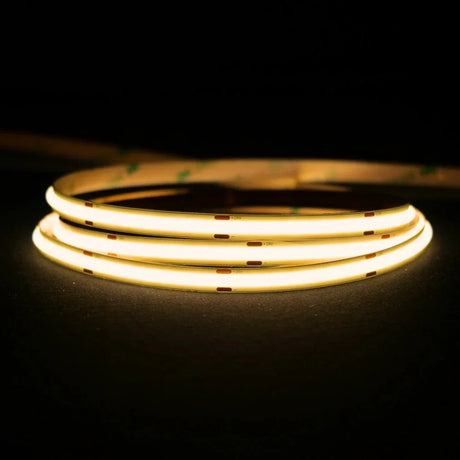
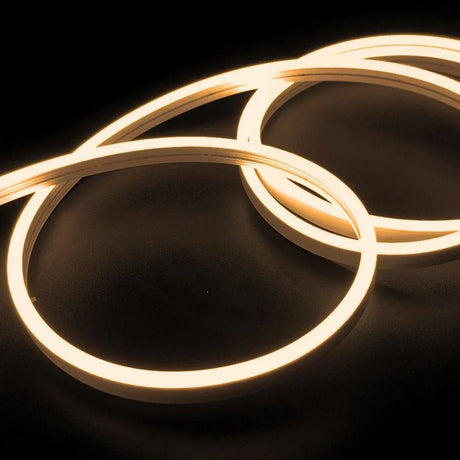
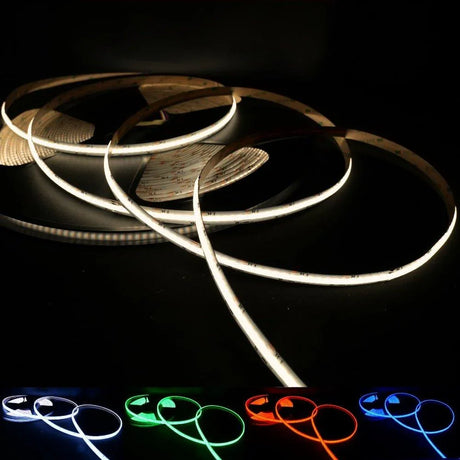
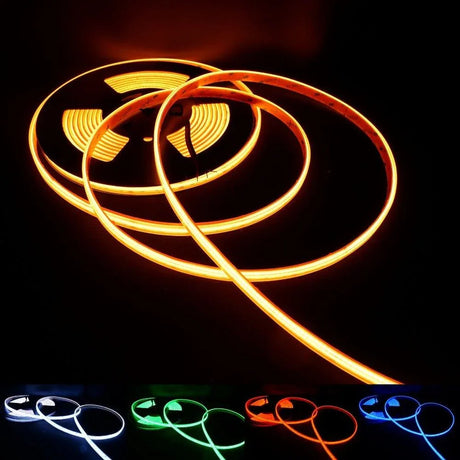
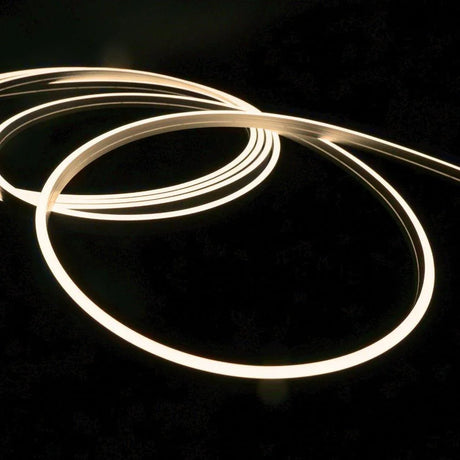
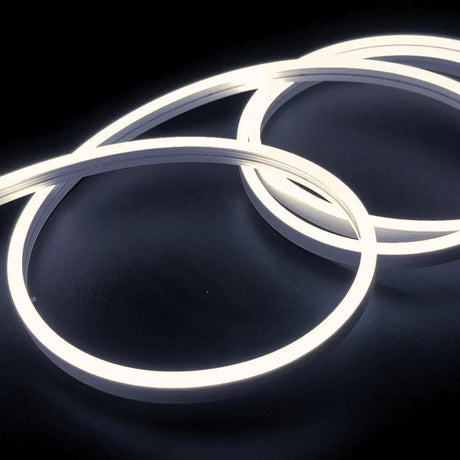
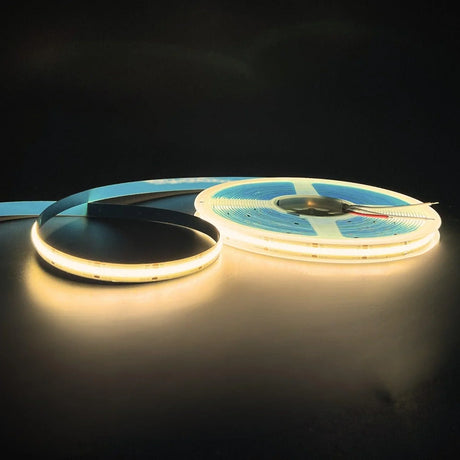
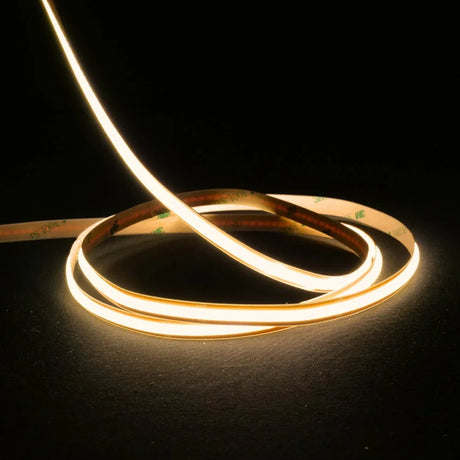
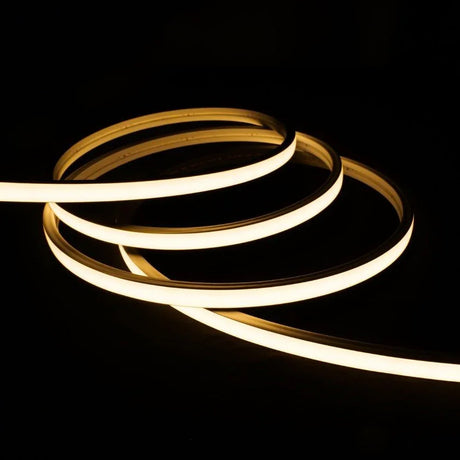
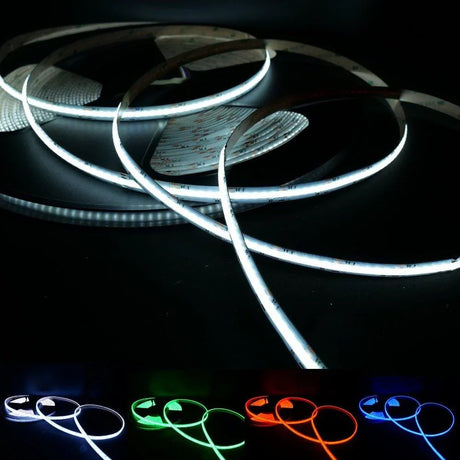
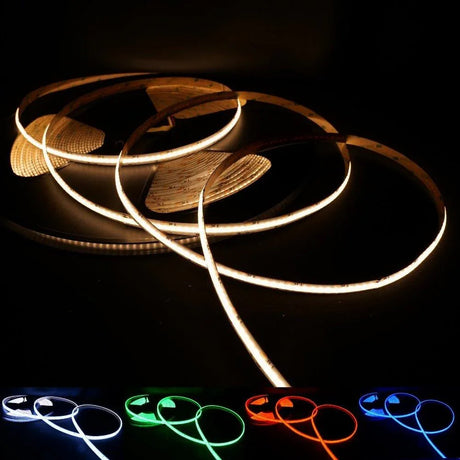
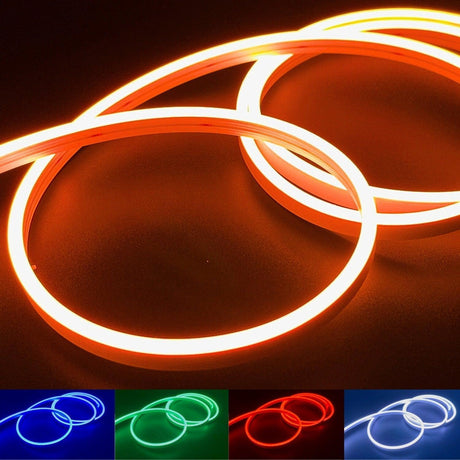
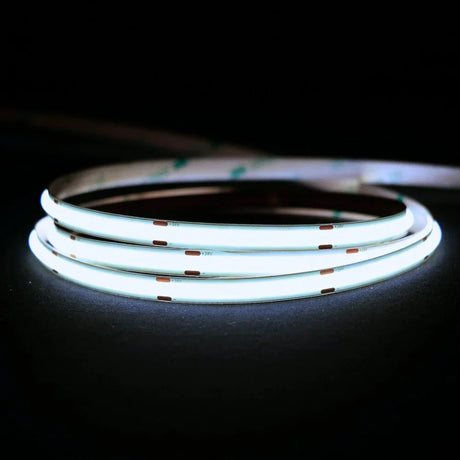
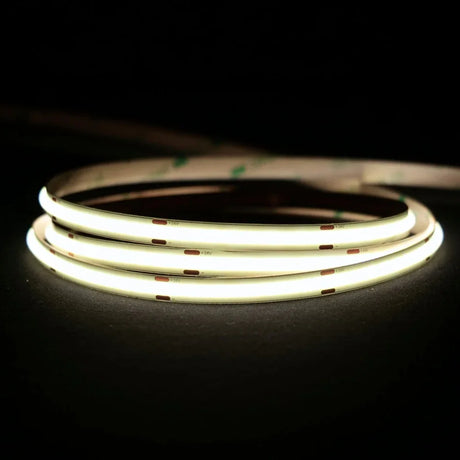
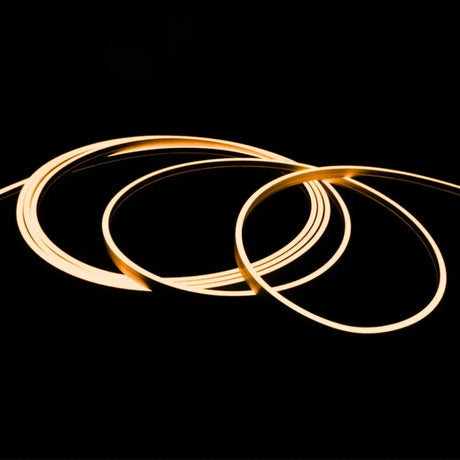
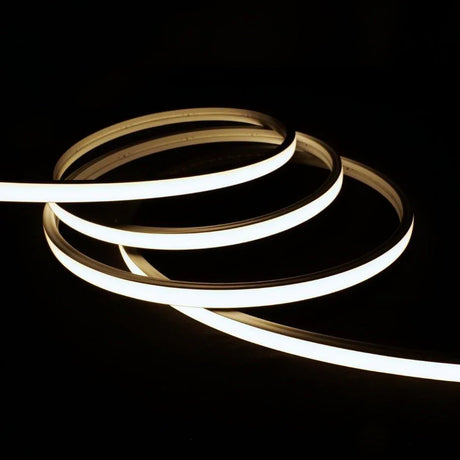
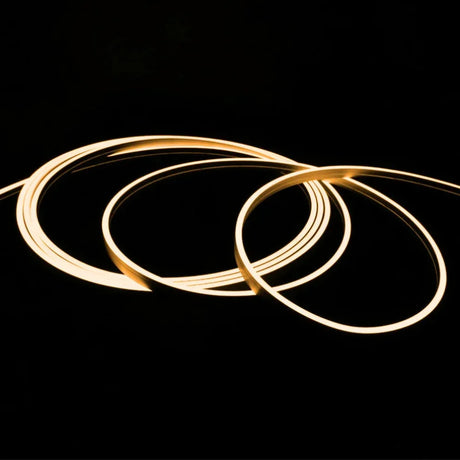
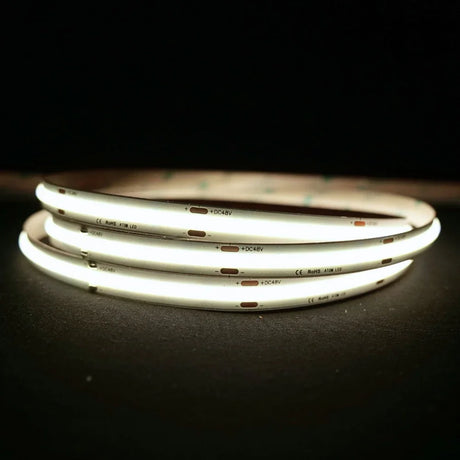
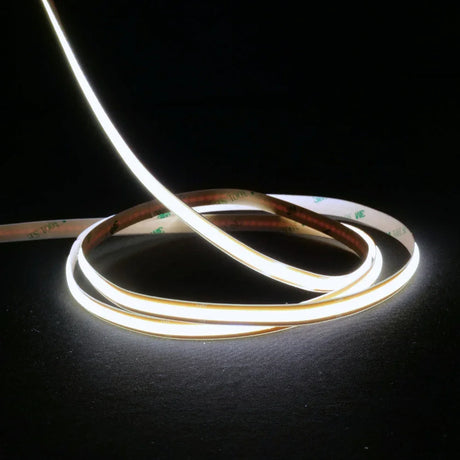
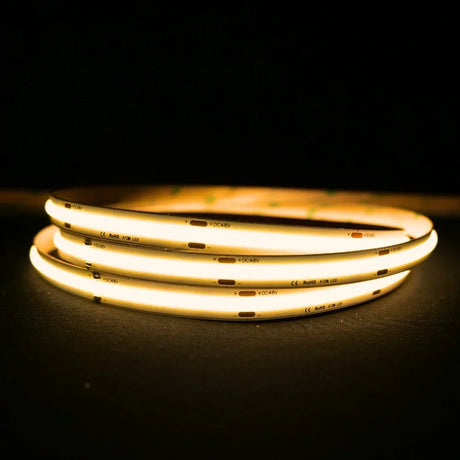
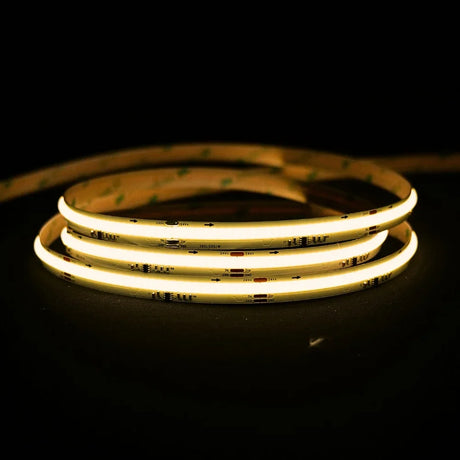
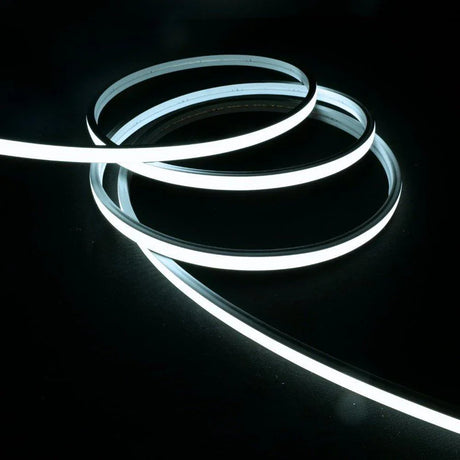
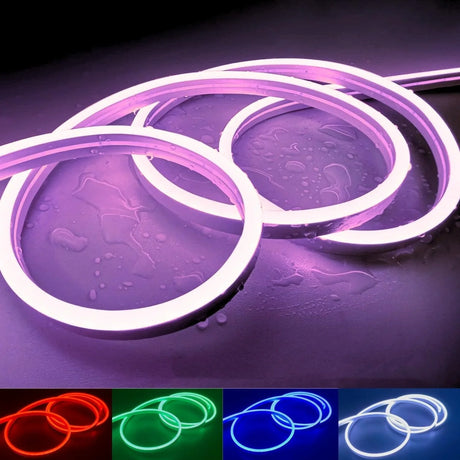
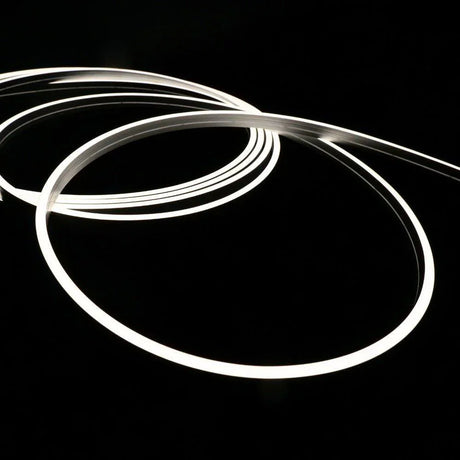
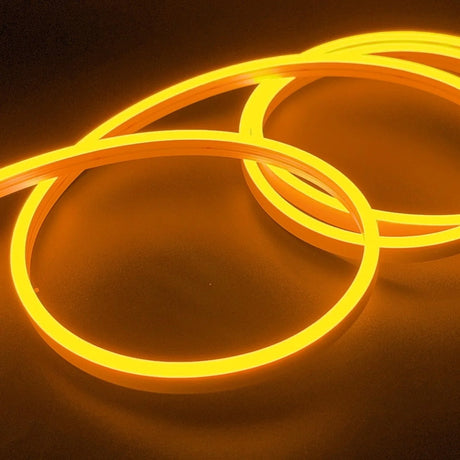
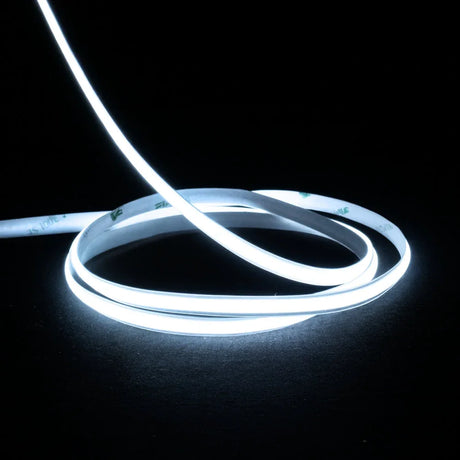
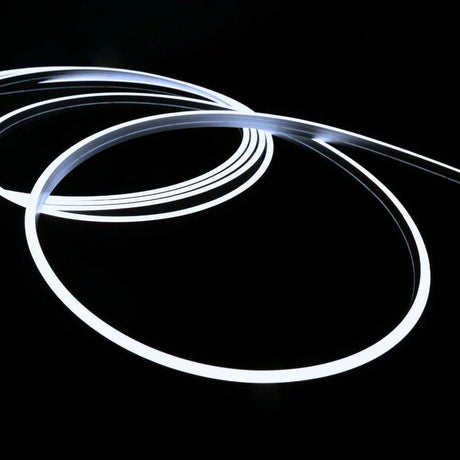
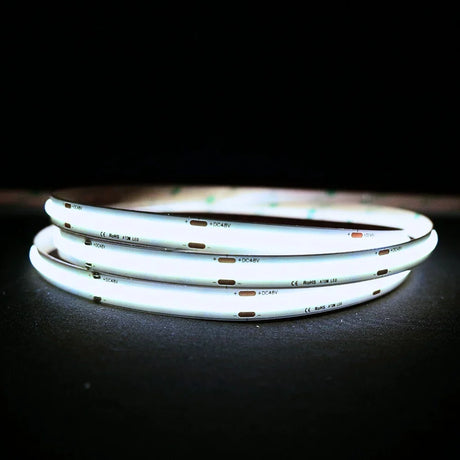
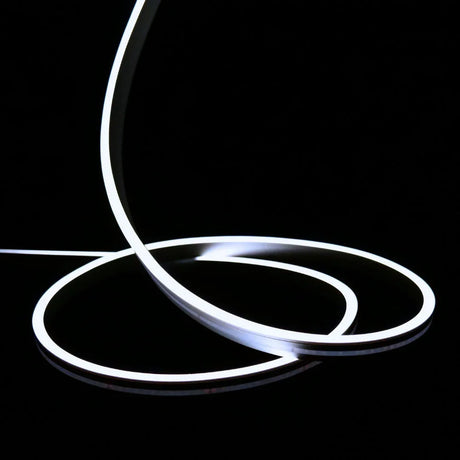
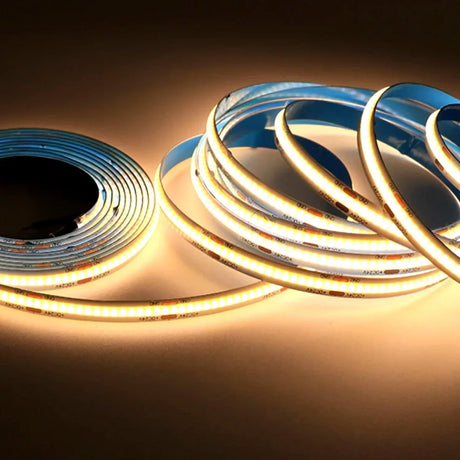
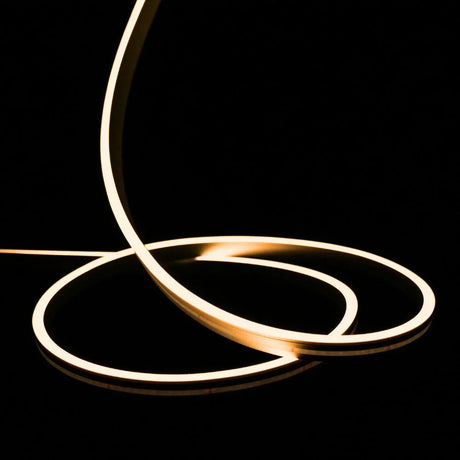
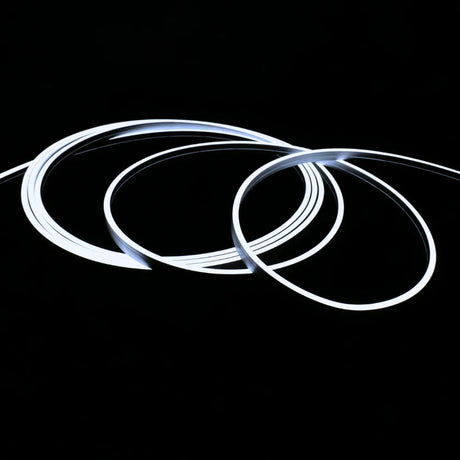
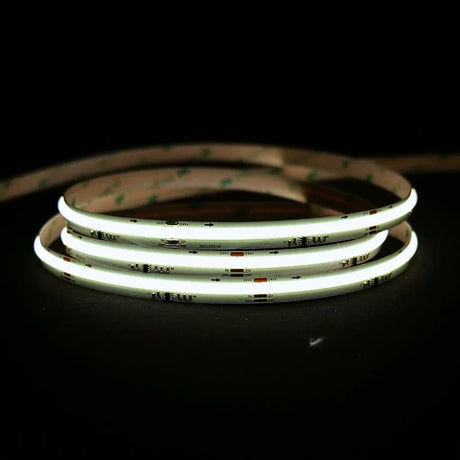
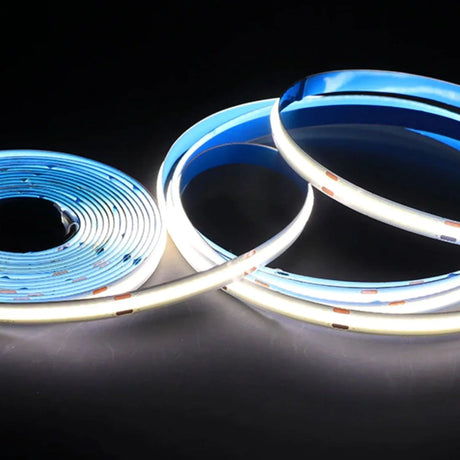
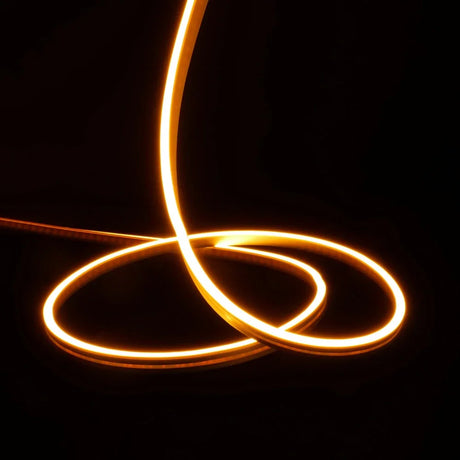
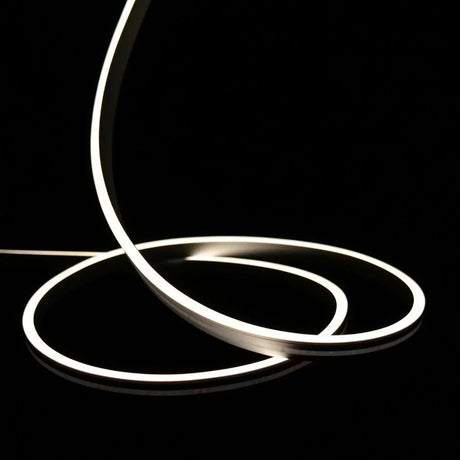
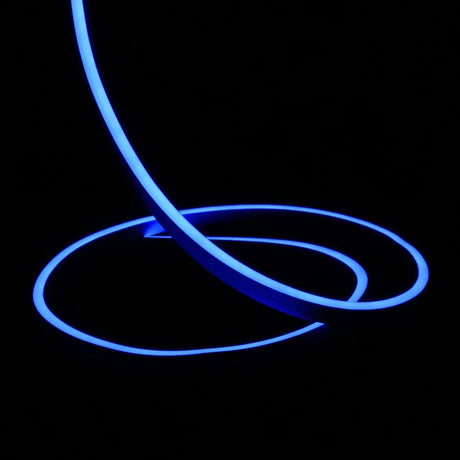
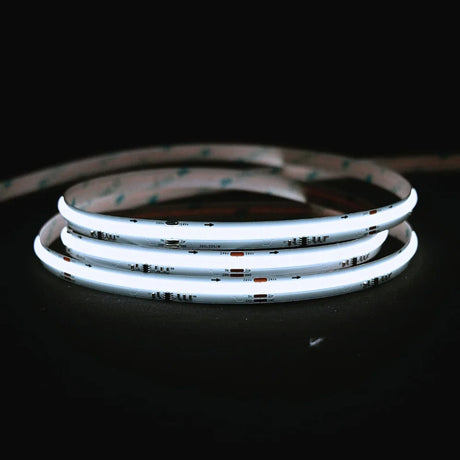
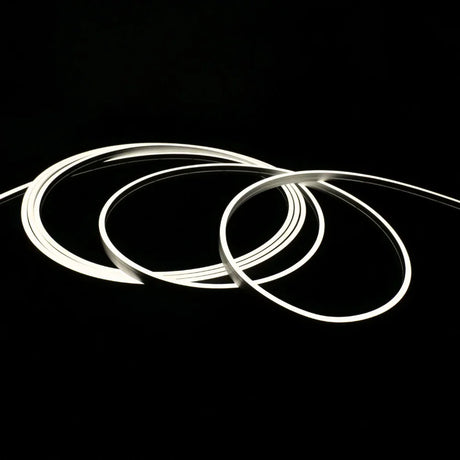
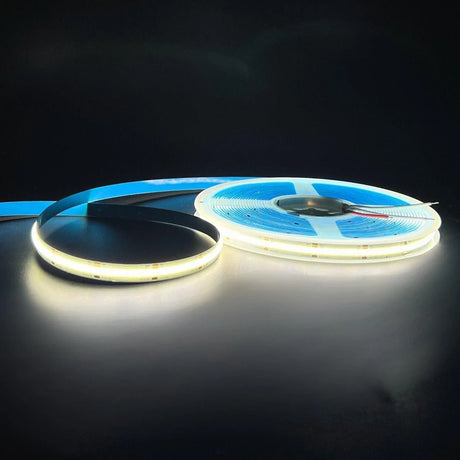
Stop squinting at worktops in your own shadow — under cabinet LED strip lights fix the single biggest lighting problem in every UK kitchen. UK LED Lights stocks over 50 under-cabinet-ready products in 2026: COB dot-free strip, warm white and natural white, Triac dimmable, CRI 90+, slim aluminium profiles, and complete wiring kits for any cabinet layout from a straight galley run to a full U-shaped perimeter.
Our under cabinet LED strip lights collection includes COB strip that reflects as one clean line on worktops — zero dots, slim surface-mount and recessed profiles from 7mm deep, and Triac-compatible drivers for smooth dimming from any trailing-edge switch. Runs from 1 metre to 8 metres covered without mid-point power injection. Need help planning your layout? Call 01952 370008 or email sales@ukledlights.co.uk.
COB Dot-Free · 24V · Warm White 3000K · Natural White 4000K · CRI 90+ · IP20 · Triac Dimmable · Slim Profiles · Surface Mount · Recessed · Parallel Wiring Kits · Free UK delivery
Quick decision guide:
-
Standard worktop task lighting: 24V COB strip in natural white 4000K, IP20, inside a slim surface-mount profile — the most specified under-cabinet LED strip in UK kitchens in 2026.
-
Cooking and food prep areas: 24V COB strip in warm white 3000K for softer tones that reduce glare on stainless steel appliances and polished worktops.
-
L-shaped or U-shaped kitchen runs: Two or three separate COB strip lengths wired in parallel from one driver — eliminates voltage drop across corners and keeps brightness even on every run.
-
Flush-mounted professional finish: Recessed aluminium profile routed into the underside of wall cabinets — sits completely flush, invisible from eye level.
-
Quick retrofit without rewiring: Surface-mount profile with adhesive backing fixed to the cabinet underside — connects to a plug-in driver for immediate installation with no permanent wiring.
Who under cabinet LED strip lights are for: Homeowners upgrading kitchen lighting or fitting a new kitchen, kitchen designers specifying concealed task lighting, electricians wiring to BS7671 standards, and landlords adding functional lighting to rental properties. If you want a professional result that shows zero LED dots on glossy worktops, quartz surfaces, or tiled splashbacks, COB strip inside a slim profile is the standard specification for 2026.
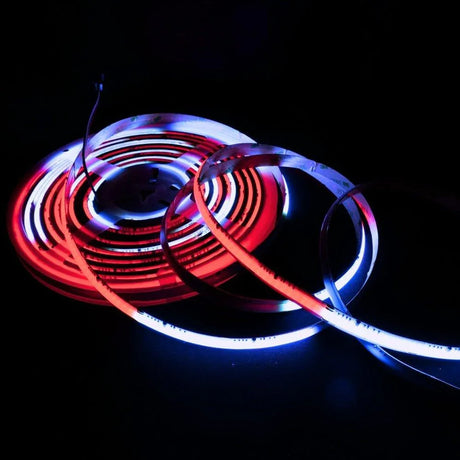
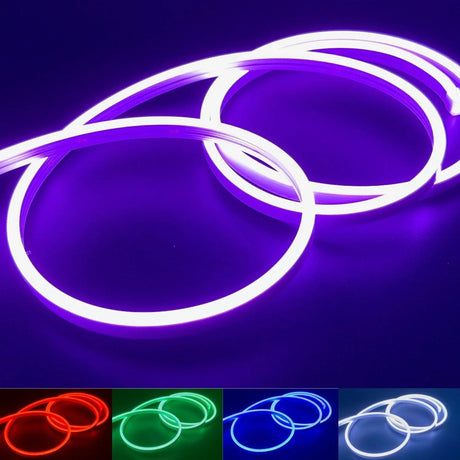
Who this is NOT for: If you want colour-changing effects under your cabinets, our RGB COB strip range with a dedicated controller is the correct starting point. If you only need temporary lighting for a rented property and do not want any installation, battery-powered puck lights may be more practical — but they cannot match the output, evenness, or longevity of wired LED strip.
Common buying mistakes to avoid:
-
Skipping the aluminium profile: Bare strip stuck directly under a cabinet shows every individual LED chip as a dot on glossy worktops. A profile with a milky diffuser spreads the light evenly and adds a heatsink that doubles the strip lifespan — the single most worthwhile upgrade in any under-cabinet installation.
-
Using a leading-edge dimmer: Leading-edge dimmers cause visible flicker with most LED drivers. Swap to a trailing-edge dimmer for approximately £15 and the flicker typically disappears.
-
Mounting strip onto bare metal brackets: Exposed metal inside cabinet bases will short-circuit unprotected strip. Always mount inside an insulated aluminium profile or ensure no bare metal contacts the strip PCB.
-
Running strip while still coiled: Heat builds up in coiled strip, softening the adhesive and overheating the LEDs. Always uncoil, mount on a profile, and secure before powering on.
-
Wiring long L-shaped runs in series: Series wiring multiplies voltage drop — the far end of the run dims noticeably. Parallel wiring from a central driver keeps brightness consistent on every leg. Call 01952 370008 if you need help planning a multi-leg layout.
- Why is COB strip the best choice for under-cabinet lighting?
- What colour temperature works best under kitchen cabinets?
- Which aluminium profile fits under wall cabinets?
- How do you install under cabinet LED strip lights step by step?
- What driver and dimmer setup do under-cabinet strips need?
- How do you wire LED strip in an L-shaped or U-shaped kitchen?
- How much LED strip do you need for a typical UK kitchen?
- What IP rating is required for under-cabinet strip?
- Why buy under cabinet LED strip lights from UK LED Lights?
Why is COB strip the best choice for under-cabinet lighting?
COB LED strip produces one continuous ribbon of light with zero visible dots, which matters under cabinets because worktops reflect everything mounted above them. Standard SMD strip projects a repeating dot pattern onto granite, quartz, and gloss laminate surfaces. COB strip reflects as a single clean line — the difference between a professional kitchen and one that looks half-finished.
Under-cabinet mounting places LED strip closer to the work surface than almost any other residential application — typically 400mm to 550mm above the worktop. At that short distance, the individual chips on SMD 2835 or 5050 strip are clearly visible as bright dots separated by darker gaps. Move along the counter and the dot pattern follows you across the surface. In 2026, COB technology has become the default specification for under-cabinet installations across the UK for precisely this reason.
Three additional advantages make COB strip particularly well suited to cabinet-mounted positions:
-
180-degree beam angle: COB strip throws light wider than the 120-degree output of SMD strip, reducing shadow gaps at the junction between the wall cabinet face and the rear worktop edge — a common complaint with narrower-beam alternatives.
-
Even heat distribution: Heat spreads across the full board surface rather than concentrating at individual chip points. Inside a slim profile tucked under a cabinet, this reduces peak temperatures in a space where ventilation is already limited.
-
CRI 90+ as standard: Every under-cabinet COB strip in the UK LED Lights range delivers CRI 90 or above, ensuring food, chopping boards, and worktop materials appear in their true colours under artificial light — not the washed-out tones that lower-CRI strip produces.
What colour temperature works best under kitchen cabinets?
Natural white at 4000K is the most popular choice for under-cabinet task lighting in UK kitchens in 2026 — it renders food and worktop colours accurately without the yellow cast of warm white. Warm white at 3000K is better suited for breakfast bars, display shelving, or cabinet interiors where a relaxed atmosphere matters more than task visibility.
Most kitchens benefit from using both colour temperatures in different zones. The section of counter where you prepare food, read recipes, and check cooking needs clear, neutral 4000K light. Cabinets above a seating area or a glass-fronted display unit look better with the softer, more inviting tone of 3000K. UK LED Lights stocks both in identical COB strip formats, so switching between zones requires only a different reel — same driver, same profile, same installation method.
| Colour Temperature |
Kelvin Rating |
Best Under-Cabinet Use |
Appearance |
| Warm white |
3000K |
Display cabinets, breakfast bars, seating areas |
Soft yellow-white, relaxed |
| Natural white |
4000K |
Worktops, chopping areas, food prep zones |
Clean neutral white, task-focused |
| Cool white |
5000K–6500K |
Commercial kitchens, clinical prep areas |
Blue-white, high contrast |
A common error is choosing cool white (5000K+) for a residential kitchen. While it provides maximum contrast, it creates a clinical feel that most homeowners find uncomfortable after 30 minutes. For domestic under-cabinet use in 2026, 4000K natural white consistently scores highest in customer satisfaction across our order data at UK LED Lights.
Which aluminium profile fits under wall cabinets?
Slim surface-mount profiles between 7mm and 12mm deep are the most specified option for under-cabinet LED strip in 2026 — they sit flat against the cabinet underside, add a milky diffuser that eliminates any remaining dot visibility, and act as a heatsink that extends strip lifespan by up to 50 percent compared to bare-mounted strip.
Two mounting styles cover virtually every under-cabinet scenario:
-
Surface-mount profile: Fixes directly to the underside of the wall cabinet with screws or adhesive. Profile depth typically 7mm to 12mm. Visible from below as a slim aluminium bar with a glowing diffuser face. The fastest option to install — no routing or rebating required. Suitable for retrofits and new kitchens alike.
-
Recessed profile: A channel is routed into the underside of the cabinet base, and the profile sits flush with the surrounding surface. From worktop level, you see only the diffuser face — the aluminium housing is completely hidden. This is the premium specification for bespoke and handleless kitchens where a flush finish is part of the design intent.
Both types accept the same 8mm and 10mm wide COB strip that UK LED Lights stocks for under-cabinet applications. The milky diffuser cover is critical — it turns the already-smooth COB light into a perfectly uniform glow with zero hotspots, even at close viewing distance. Browse our full aluminium profile range to match the right housing to your cabinet depth and strip width.
| Profile Type |
Typical Depth |
Mounting Method |
Visibility From Below |
Best For |
| Surface mount |
7–12mm |
Screws or adhesive to cabinet base |
Slim bar visible |
Retrofits, standard kitchens, fast install |
| Recessed |
7–15mm |
Routed channel in cabinet base |
Flush — diffuser only visible |
Bespoke kitchens, handleless designs |
| Corner mount |
15–18mm |
45-degree bracket at wall-cabinet junction |
Angled bar at rear |
Rear-of-cabinet wash lighting |
How do you install under cabinet LED strip lights step by step?
Installing under cabinet LED strip lights takes approximately 2 to 3 hours for a straight kitchen run and involves five core stages: planning the layout, mounting the aluminium profile, fitting the strip inside, wiring to the driver, and connecting a dimmer. The same method applies whether you are fitting a 2-metre galley run or an 8-metre U-shaped perimeter.
-
Step 1 — Measure and plan the layout: Measure the total under-cabinet run in metres. For straight kitchens, one continuous length of COB strip and one driver is typically sufficient for runs up to 8 metres on 24V. For L-shaped or U-shaped kitchens, measure each leg separately — you will wire each leg in parallel back to one central driver. Mark where the driver will sit (usually inside a tall cabinet or above the wall units) and plan the cable route through the cabinet backs. Allow 200mm extra strip at each end for connection tails.
-
Step 2 — Mount the aluminium profile: Cut the profile to match each measured section using a fine-tooth hacksaw or mitre saw. Deburr the cut ends with fine sandpaper. For surface-mount profiles, fix to the cabinet underside using the pre-drilled screw holes or adhesive tape. Position the profile 30mm to 50mm back from the front edge of the cabinet — this hides the strip from direct sight lines when standing at the worktop. For recessed profiles, rout a channel to the correct width and depth, press-fit the profile, and secure with clips.
-
Step 3 — Fit the COB strip inside the profile: Peel back 100mm of the 3M adhesive backing, align the strip centrally inside the profile channel, and press firmly. Continue peeling and pressing in sections — do not peel the entire backing at once, as the strip becomes difficult to align. At corners or breaks between cabinets, cut the strip at the nearest cut mark and use a solderless connector or short wire bridge to link sections. Snap the milky diffuser cover into place along the full length.
-
Step 4 — Wire to the driver: Route low-voltage cable from each strip section through the cabinet backs to the driver location. Use 0.75mm twin cable for runs under 5 metres and 1.0mm for runs up to 8 metres. Connect all strip sections to the driver output terminals in parallel — positive to positive, negative to negative. Connect the driver mains input to a fused spur or plug, depending on whether the installation is permanent or temporary. If in doubt about mains wiring, use a Part P registered electrician.
-
Step 5 — Connect the dimmer and test: Wire a Triac trailing-edge dimmer on the mains side of the driver for smooth, flicker-free brightness control. Power on and check each section for even brightness end to end. If any section appears dimmer at the far end, check cable connections and confirm parallel wiring is correct. Adjust the dimmer minimum threshold if the driver supports it — this prevents the strip cutting out at very low levels.
Need help planning wire routes or selecting the correct driver wattage for your layout? Our technical team has specified hundreds of under-cabinet installations — call 01952 370008 or email sales@ukledlights.co.uk with your kitchen dimensions and we will recommend the right combination.
What driver and dimmer setup do under-cabinet strips need?
Under-cabinet COB strip on 24V requires a constant-voltage LED driver rated at least 20 percent above the total strip wattage, paired with a Triac trailing-edge dimmer on the mains input side. This combination delivers smooth, flicker-free dimming from full brightness down to approximately 5 percent — the standard specification for residential under-cabinet lighting in 2026.
Sizing the driver correctly is the most common point where DIY installations go wrong. Calculate total wattage by multiplying the strip wattage per metre by the total length in metres, then add a 20 percent headroom margin. Running a driver at 100 percent capacity generates excess heat, shortens its lifespan, and can cause intermittent dimming issues at low levels.
-
Example — 6-metre straight run at 14W/m: 6 x 14 = 84W. Add 20 percent headroom = 100.8W minimum. Select a 100W or 120W constant-voltage 24V driver from our LED driver range.
-
Trailing-edge dimmer: Compatible with most Triac-dimmable LED drivers. Costs approximately £15 from any electrical wholesaler. Eliminates the flicker that leading-edge dimmers cause with capacitive LED driver loads.
-
Dimmer minimum threshold: Set the low-end trim on the dimmer so the strip fades smoothly to its lowest level without cutting out abruptly. Most quality trailing-edge dimmers include this adjustment.
For RGB or RGBW under-cabinet strip (less common but available), use a non-dimmable constant-voltage driver with a dedicated RGB controller — never a dimmable driver. Dimmable drivers cause colour shifting and flicker with multi-channel strip. Contact 01952 370008 if you need help matching driver, dimmer, and controller for a mixed-colour installation.
How do you wire LED strip in an L-shaped or U-shaped kitchen?
L-shaped and U-shaped kitchens require parallel wiring — each leg of strip connects independently back to the driver output terminals rather than daisy-chaining from one leg to the next. Parallel wiring keeps voltage consistent on every leg, prevents brightness drop-off on the furthest run, and is the standard wiring method recommended for any multi-leg under-cabinet installation in 2026.
Here is how it works in practice. A U-shaped kitchen with three legs — left wall (3 metres), rear wall (4 metres), and right wall (2.5 metres) — needs three separate strip lengths. Each length runs inside its own profile section. Low-voltage cable from each strip routes through the cabinet backs to one central driver, typically located inside a tall larder unit or mounted above the wall cabinets. At the driver, all three positive wires connect to the positive terminal and all three negative wires connect to the negative terminal.
-
Why not series wiring? Series wiring runs the full current through one continuous length. At 9.5 metres total, voltage drop on 24V strip becomes visible — the far end of the run looks noticeably dimmer than the start. Parallel wiring helps ensure each leg receives full voltage directly from the driver.
-
Cable routing: Drill small holes through the backs of adjacent wall cabinets to pass cable between sections. Use cable clips inside the cabinets to keep wiring tidy and away from shelving. A 6mm hole accommodates standard 2-core low-voltage cable comfortably.
-
Corner junctions: Where two profile sections meet at a 90-degree cabinet corner, use a flexible wire bridge between strip ends rather than trying to bend the strip around the corner. COB strip is more flexible than SMD, but tight 90-degree bends stress the copper traces and reduce lifespan.
How much LED strip do you need for a typical UK kitchen?
A typical UK kitchen requires between 4 metres and 8 metres of under-cabinet LED strip in total, depending on the kitchen layout. A straight galley kitchen uses 2 to 4 metres along one wall. An L-shaped kitchen typically needs 5 to 7 metres across two walls. A U-shaped kitchen uses 7 to 10 metres across three walls. UK LED Lights supplies strip in 5-metre reels that can be cut to any length at marked intervals.
Measure only the sections of wall cabinet that have worktop below them. Do not include cabinets above the hob (range hoods typically have their own lighting) or above the sink unless you specifically want task lighting there. For sink-adjacent sections, check whether any strip will be directly above the basin — if so, consider IP67-rated strip rather than standard IP20 for added moisture protection.
-
Galley kitchen (one wall): 2–4m total. One strip length, one driver, one dimmer.
-
L-shaped kitchen (two walls): 5–7m total. Two strip lengths wired in parallel, one driver, one dimmer.
-
U-shaped kitchen (three walls): 7–10m total. Three strip lengths wired in parallel, one driver, one dimmer.
-
Island unit (if applicable): Add 1.5–3m per island side. Requires a separate driver and cable route through the ceiling void or floor.
Not sure how much strip or what driver wattage your kitchen needs? Send your kitchen plan or dimensions to sales@ukledlights.co.uk and our team will calculate the exact quantities — free of charge, no obligation.
What IP rating is required for under-cabinet strip?
IP20 is the standard rating for under-cabinet LED strip lights in dry kitchen zones — it provides no water protection but keeps cost lower and allows maximum heat dissipation from the strip surface. IP20 is suitable for all cabinet interiors and any position that is not directly above a sink or within a BS7671-defined wet zone.
The underside of a wall cabinet is a dry, enclosed environment in most kitchen layouts. Steam and cooking vapour rarely reach the strip inside a profile mounted 400mm to 550mm above the worktop, especially when an extractor hood is operating above the hob. IP20 strip mounted inside an aluminium profile with a snap-on diffuser cover is effectively shielded from incidental moisture by the profile housing itself.
-
IP20: Standard for all dry under-cabinet zones. No silicone coating — maximum heat dissipation, easiest to cut and connect, lowest cost per metre.
-
IP67: Use for any strip section mounted directly above a sink basin, adjacent to a boiling water tap, or in a utility room where splashing is frequent. Silicone sleeve adds moisture protection but slightly reduces heat dissipation — always mount in a profile to compensate.
-
IP65: Covers surface splashes only and does not meet BS7671 requirements for zones with direct water contact. Not recommended as a compromise between IP20 and IP67 for under-cabinet use — choose one or the other based on the zone classification.
Why buy under cabinet LED strip lights from UK LED Lights?
UK LED Lights is a specialist LED strip supplier based in Telford, Shropshire, stocking over 50 under-cabinet-ready products with same-day dispatch on orders placed before 2pm Monday to Friday. Every COB strip we sell for under-cabinet use is CRI 90+, Triac dimmable, and compatible with our full aluminium profile range — one supplier for strip, profiles, drivers, and connectors with no compatibility guesswork.
-
Technical support from people who install: Our team has specified under-cabinet LED strip for hundreds of kitchens — from 2-metre galley runs to 15-metre open-plan layouts. Call 01952 370008 Monday to Friday 9am–5pm and speak to someone who knows the product range, wiring methods, and driver calculations.
-
Free UK delivery: Every order ships free to mainland UK addresses.
-
Complete system from one supplier: Strip, profiles, diffusers, drivers, dimmers, connectors, and cables — all tested together and confirmed compatible. No sourcing components from three different suppliers and hoping they work together.
-
Cut-to-length service: Need a specific length that does not match a standard reel? We cut to your exact measurement and terminate ready for connection.
-
5-year warranty on single colour COB strip: UK LED Lights single colour COB strip carries a 5-year warranty — one of the longest in the UK LED strip market in 2026.
-
UK stock, UK warehouse: Everything ships from our Telford warehouse — no waiting for international freight or customs clearance.
-
Under-cabinet strip is the single most popular residential application in our range — we have supplied thousands of UK kitchens.
-
We recommend 8mm slim profiles for under-cabinet work because standard 17mm profiles are visible below most cabinet rails.
Ready to order or need help planning your under-cabinet installation? Call 01952 370008, email sales@ukledlights.co.uk, or browse the full under cabinet LED strip lights collection to find the right strip, profile, and driver for your kitchen.
How does COB strip compare to puck lights for under-cabinet kitchen lighting?
COB strip in a profile and puck lights both mount under cabinets, but they produce very different results on the worktop below.
| Feature |
COB Strip in Profile |
LED Puck Lights |
| Light distribution |
Continuous even line across full worktop |
Individual pools with dark spots between |
| Dot visibility on worktops |
Zero — dot-free technology |
Single bright disc per unit |
| Installation |
Profile fixed to cabinet, strip inside |
Individual units screwed or stuck at intervals |
| Dimming |
Smooth wall dimmer control |
Often on/off only or limited dimming |
| Appearance from below |
Clean architectural line |
Visible individual discs |
| Cost |
Higher upfront, lower cost per lumen |
Lower upfront for small installs |
COB strip in a profile is the professional standard for under-cabinet kitchen lighting in 2026. Puck lights are a simpler option for renters or temporary installations. Call 01952 370008 for kitchen lighting advice.
Frequently Asked Questions — Under Cabinet LED Strip Lights
-
Do under-cabinet LED strips get hot enough to damage cabinets? No — COB strip inside an aluminium profile typically operates at 35–45 degrees Celsius on the profile surface, well below the threshold that would affect MDF, solid wood, or laminated cabinet materials. The profile acts as a heatsink, drawing heat away from the strip and dispersing it safely.
-
Can I retrofit under-cabinet strip without rewiring my kitchen? Yes — use a plug-in LED driver connected to an existing socket inside or behind a cabinet. The low-voltage strip and cable can be routed through cabinet backs without any mains rewiring. For a permanent hardwired installation, a Part P registered electrician can connect the driver to a fused spur.
-
How long does LED strip last under cabinets? Quality COB strip rated at L70 50,000 hours retains 70 percent of its original brightness after approximately 11 years of use at 12 hours per day. Mounting inside an aluminium profile extends this by improving thermal management.
-
What width of strip fits inside under-cabinet profiles? Most slim under-cabinet profiles accept 8mm or 10mm wide strip. The UK LED Lights range includes both widths in COB format. Check the profile internal channel width before ordering — our product pages list compatible strip widths for every profile we sell.
-
Is 24V or 48V better for under-cabinet runs? 24V is the standard for under-cabinet strip in 2026. Most kitchen runs are 4–8 metres, well within the 24V range before visible voltage drop. 48V strip is designed for longer commercial runs of 15–30 metres and is unnecessary for typical residential under-cabinet installations.
-
Can I dim under-cabinet LED strip with a smart home system? Yes — use a Triac-dimmable driver with a smart trailing-edge dimmer module (Zigbee, Z-Wave, or WiFi). The strip dims smoothly through your smart home app, voice assistant, or wall switch. Our LED controller range includes smart-compatible options for 2026.
-
Do I need an electrician to install under-cabinet strip? For a plug-in driver installation, no — the entire low-voltage side is safe for competent DIY installation. For permanent hardwired installations involving a fused spur or connection to the mains consumer unit, a Part P registered electrician is required under Building Regulations in England and Wales.
-
Where should I position the strip under the cabinet — front or back? Position the profile 30mm to 50mm back from the front edge of the cabinet. This hides the strip from direct sight lines when you stand at the worktop, while still providing full coverage across the work surface. Mounting at the very front edge creates glare at eye level.
-
Can under-cabinet LED strip be used above a kitchen sink? Yes — use IP67 rated strip for any section mounted directly above the sink basin where steam and splashing are frequent. Mount inside an aluminium profile for additional protection. IP20 strip is suitable for dry zones away from the sink area. The driver must be located outside any direct splash zone.
-
How much does under-cabinet LED strip cost to run per month? A typical 6-metre kitchen installation at 10W/m draws 60W total. At 2026 UK electricity rates of approximately 24.5p per kWh, running for 5 hours daily costs roughly £2.20 per month — significantly less than halogen under-cabinet puck lights, which draw 3–5 times more power for similar output.
-
Can I install under-cabinet strip in a rented property without permanent wiring? Yes — use a plug-in LED driver connected to an existing socket behind or inside a cabinet. The strip and low-voltage cable can be routed without any permanent modification. Surface-mount profiles with adhesive backing fix to the cabinet underside without screws. Remove the entire installation when you move out.
-
What CRI rating should I look for in under-cabinet kitchen strip? CRI 90+ is the minimum recommended specification for kitchen task lighting in 2026. Higher CRI means food, chopping boards, and worktop materials appear in their true colours under the light. All under-cabinet COB strip in the UK LED Lights range delivers CRI 90 or above as standard.
-
Can under-cabinet strip be linked to a kitchen extractor fan switch? Yes — wire the strip driver to the same switched circuit as the extractor fan so both activate together. This is a common configuration in 2026 kitchen designs. Alternatively, use a separate wall switch, motion sensor, or smart switch for independent control of the lighting circuit.
-
Does the aluminium profile really make a difference to LED lifespan? Yes — an aluminium profile acts as a heatsink, drawing heat away from the COB chips and dissipating it into the surrounding air. This can extend rated LED lifespan by up to 50 percent compared to bare-mounted strip on timber or MDF surfaces. For under-cabinet installations where ventilation is naturally limited, a profile is considered standard best practice.
-
What is the difference between surface-mount and recessed profiles for under-cabinet use? Surface-mount profiles fix directly to the cabinet underside — fastest to install, no routing required. Recessed profiles sit flush inside a routed channel in the cabinet base — invisible from below, premium appearance. Both accept the same COB strip and diffuser covers. Choose based on your budget and desired finish quality.
-
Can I add under-cabinet strip to an existing kitchen without removing cabinets? Yes — surface-mount profiles with adhesive or screw fixing attach directly to the underside of wall cabinets already in place. Route low-voltage cable through drilled holes in the cabinet backs. The entire installation can be completed around an existing kitchen without disturbing countertops, splashbacks, or cabinet interiors.
-
Does UK LED Lights offer free delivery on under-cabinet strip and profiles? Yes — free UK mainland delivery on every order with no minimum spend. Strip, profiles, drivers, dimmers, and connectors all ship from our Telford, Shropshire warehouse. Orders placed before 2pm Monday to Friday typically dispatch same day. Call 01952 370008 for order queries.
-
What warranty covers under-cabinet LED strip from UK LED Lights? Warranty terms are listed on each product page — check the specific strip and profile you are ordering for coverage details. Warranty applies to manufacturing defects and premature LED failure under normal operating conditions. It does not cover damage from incorrect installation, wrong voltage drivers, or bare metal mounting. Contact 01952 370008 for warranty claims.
-
Can under-cabinet strip be used with a door-activated switch? Yes — a magnetic reed switch or micro push switch mounted inside the cabinet activates the strip when the door opens and turns it off when closed. This is a practical solution for display cabinets, pantries, and glass-fronted kitchen units where the light only needs to be on when the cabinet is in use.
Last reviewed: March 2026 — UK LED Lights technical team, Telford, Shropshire. Specifications current as of 2026.
UK LED specialist, Telford, Shropshire · 01952 370008 · Free UK delivery