Choose the wrong LED strip and you will rip it off the wall within six months — choose well and it transforms every room. UK LED Lights carries the full 2026 range of LED strip lights in stock at our Telford warehouse: COB dot-free strip, SMD tape, RGB colour-changing, RGBW, single colour in every white temperature, and outdoor-rated options from IP20 through to IP68. From a 600mm kitchen shelf to a 30-metre hotel corridor, we hold the stock, technical knowledge, and cutting service to get it right first time.
Our LED strip lights range spans 12V, 24V, 48V, and 240V mains voltage, widths from 8mm to 15mm, and colour temperatures from 2700K warm white through to 6500K daylight cool. Every strip ships from Telford with free UK delivery — call 01952 370008 or email sales@ukledlights.co.uk for bespoke cut lengths and project advice.
12V · 24V · 48V · 240V Mains · COB · SMD 2835 · SMD 5050 · RGB · RGBW · RGB CCT · FreeCut · IP20 · IP65 · IP67 · IP68 · CRI90+ · 8mm–15mm Widths · Warm · Natural · Cool · Bespoke Lengths · Free UK Delivery
Quick decision — which LED strip light do you need?
-
Kitchen under-cabinet with no visible dots: 24V COB single colour strip in 3000K warm white, mounted inside a slim aluminium profile — the professional standard for 2026 kitchen refits.
-
Living room ceiling cove or shelf accent: 24V COB strip in IP20, paired with a trailing-edge dimmer for smooth brightness control from 100% down to approximately 1%.
-
Garden decking, patio, or fence perimeter: IP67 minimum for any permanent outdoor installation — browse our outdoor-rated LED strip lights for suitable options.
-
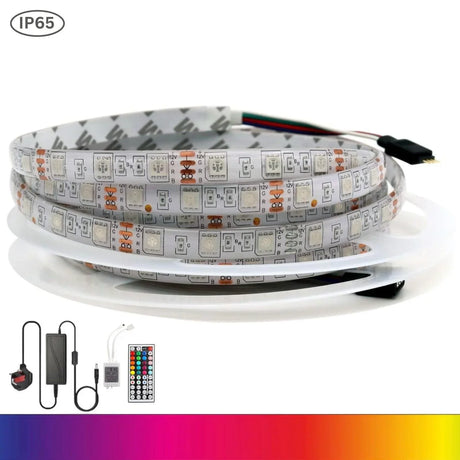
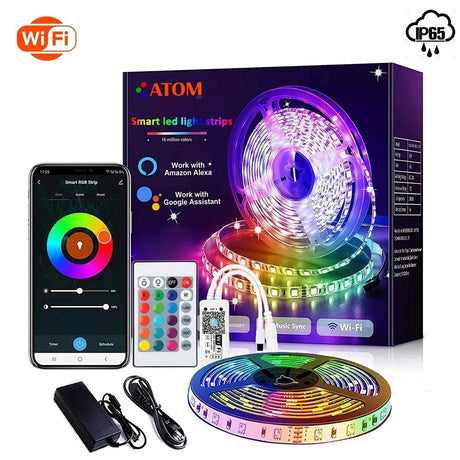
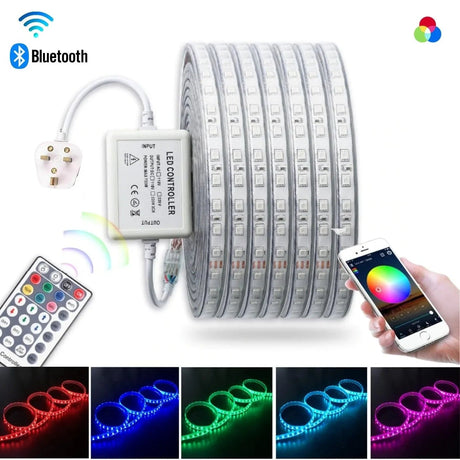
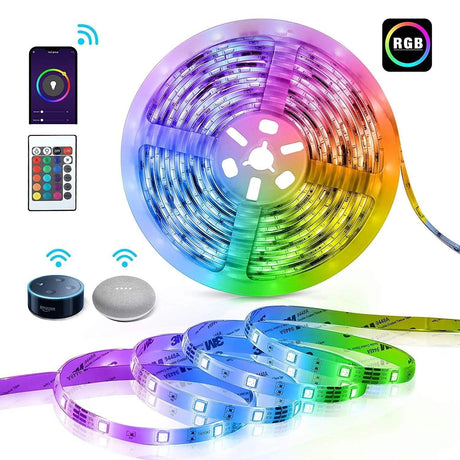
Home cinema RGB colour effects: RGB LED strip with a WiFi controller for app and voice control — remember that RGB alone cannot produce a clean warm white.
-
Commercial run over 20 metres: 48V extra-long strip — runs up to 30 metres from a single feed point without visible brightness drop.
-
Budget background lighting behind a TV or desk: SMD 2835 strip in IP20 — lower cost per metre, perfectly adequate where the strip itself is hidden from direct view.
Who LED strip lights are for: Homeowners upgrading kitchens, bathrooms, bedrooms, and living spaces. Interior designers specifying cove, shelf, and display lighting. Electricians and kitchen fitters who need a reliable UK supplier with same-week dispatch. Commercial fit-out teams lighting hotels, restaurants, retail displays, and offices. Anyone who wants flexible, cuttable linear lighting that installs in hours, not days.
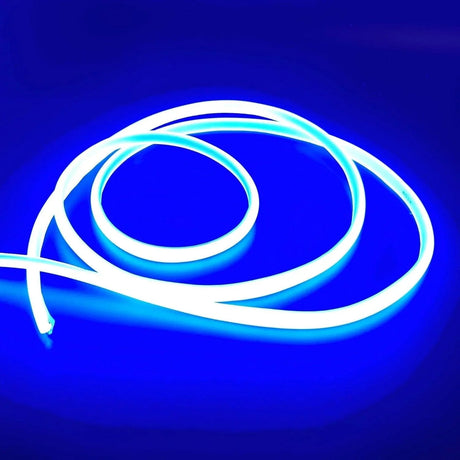
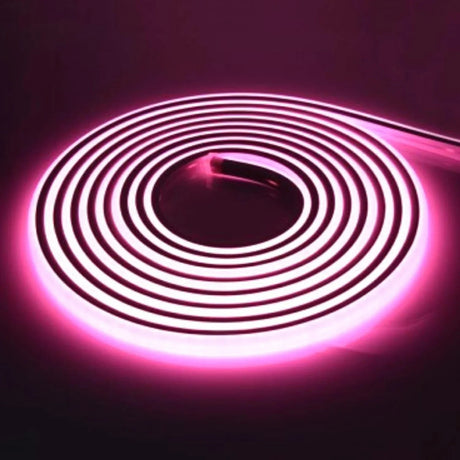
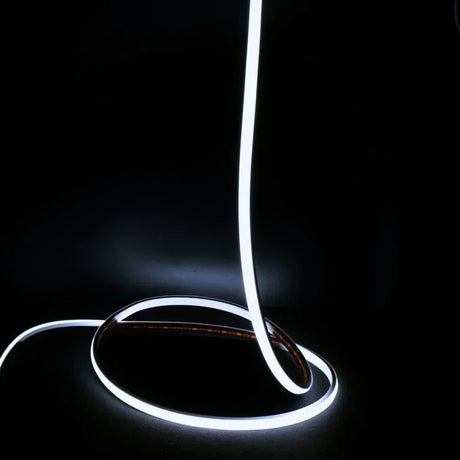
Who LED strip lights are NOT for: If you want a rigid light bar with built-in housing and no installation work, LED strip is not the right product — look at integrated LED battens instead. If you need a thick, neon-style glow line for signage or architectural features, our LED neon flex range is purpose-built for that application. And if you need colour-changing effects that also produce a true, clean warm white from one strip, standard RGB will disappoint you — you need RGBW with a dedicated white channel.
Common buying mistakes to avoid:
-
Choosing IP65 for permanent outdoor use: IP65 handles surface splashes only — not sustained UK rainfall or frost-thaw cycles. IP67 is the minimum for year-round outdoor installation under BS7671.
-
Using a dimmable driver with RGB or RGBW strip: RGB and RGBW requires a non-dimmable constant-voltage driver paired with a dedicated RGB controller. Dimmable drivers cause flicker, colour shifting, and shortened lifespan.
-
Powering strip while still on the reel: Coiled strip cannot dissipate heat — adhesive softens, LEDs overheat, fire risk in extreme cases. Always uncoil fully before connecting power.
-
Sticking strip directly onto bare metal: Exposed copper pads on the strip back short-circuit against uninsulated metal. Use an aluminium profile with anodised finish, or apply an insulating barrier.
-
Undersizing the driver: Size your driver to at least 120% of total strip wattage. A 10-metre run of 14.4W/m strip (144W) needs a minimum 175W driver.
- What types of LED strip light are available in the UK in 2026?
- COB vs SMD strip — which technology produces better results?
- Which voltage do you need — 12V, 24V, 48V, or 240V mains?
- How do you choose the right colour temperature for each room?
- What IP rating do LED strip lights need for kitchens, bathrooms, and outdoors?
- How do you install LED strip lights step by step?
- What driver and power supply does LED strip need?
- How do you dim LED strip lights without flickering?
- What is the maximum run length before voltage drop becomes visible?
- Where do LED strip lights work best — room-by-room guide?
- What accessories and profiles do you need for a complete installation?
- Why do UK trade and retail buyers choose UK LED Lights?
What types of LED strip light are available in the UK in 2026?
The UK LED strip market in 2026 divides into two core technologies — COB (Chip on Board) for continuous dot-free light, and SMD (Surface Mounted Device) for cost-effective general-purpose lighting. Within each technology, you choose between single colour white, RGB colour-changing, RGBW, and tuneable RGB CCT, across four voltages and multiple IP ratings from dry-area to fully submersible.
Here is every type currently available in the UK LED Lights 2026 range, categorised by technology and function:
COB LED strip lights
-
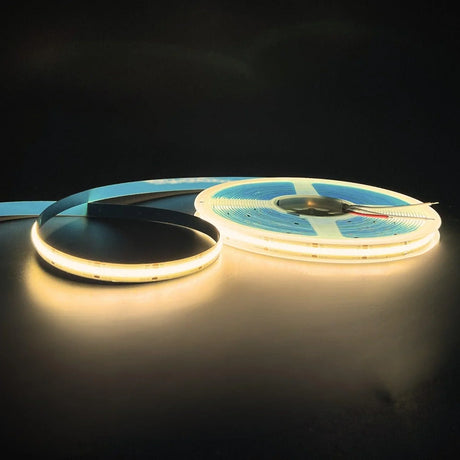
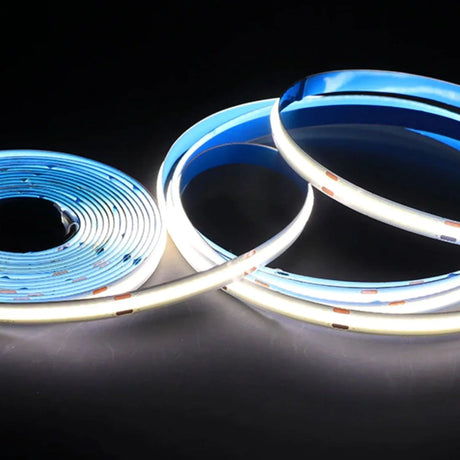
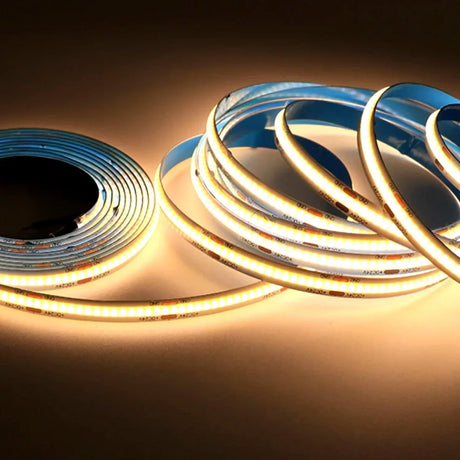
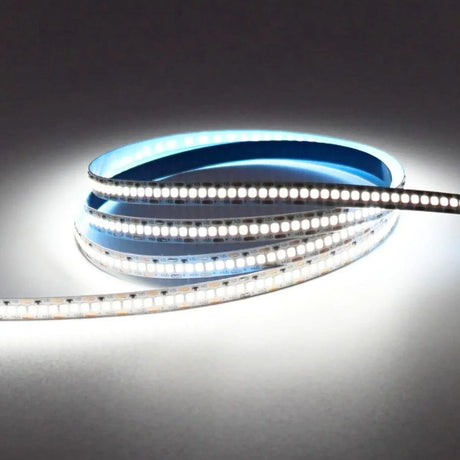
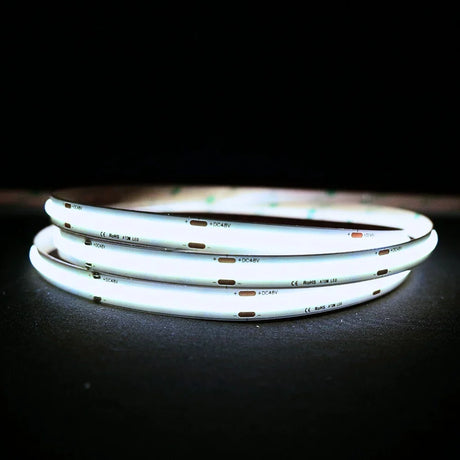
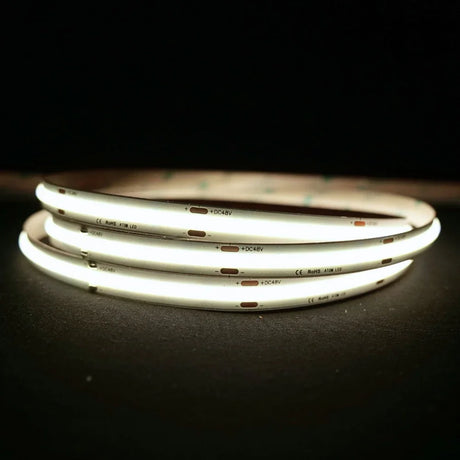
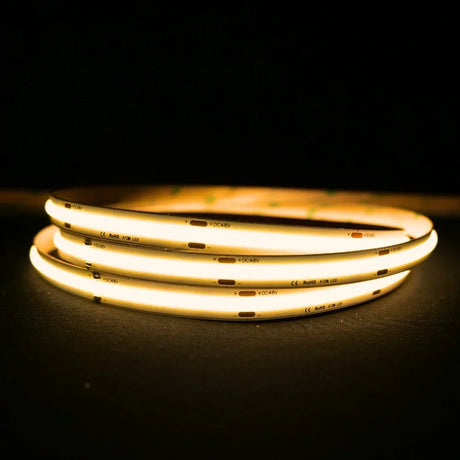
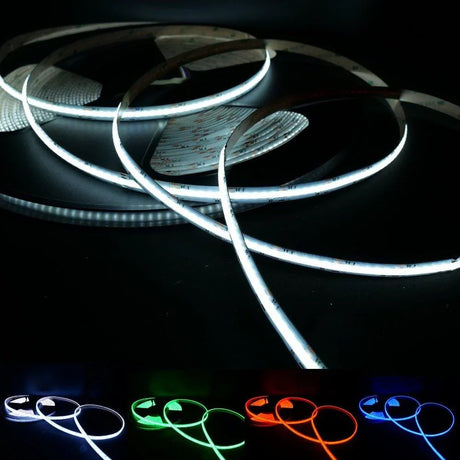
Single colour COB: The choice for professional kitchen, bathroom, and commercial installations where visible LED dots are unacceptable. Hundreds of micro-chips placed directly onto the flexible circuit board produce one unbroken line of light with a 180-degree beam angle. Available in 24V (up to approximately 20-metre runs) and 48V (up to approximately 30-metre runs). Browse the full COB LED strip range.
-
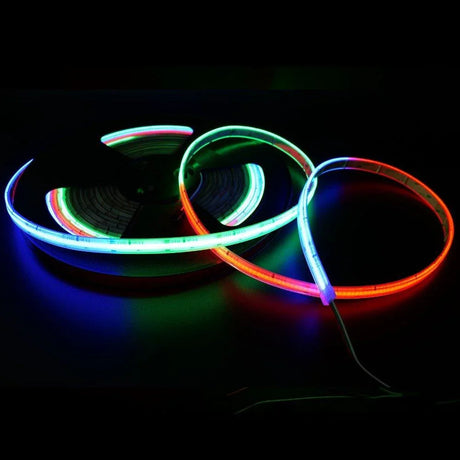
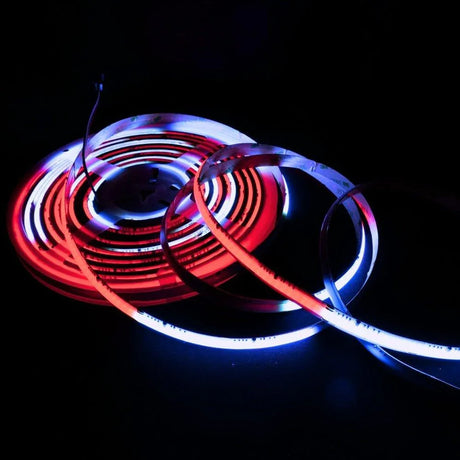
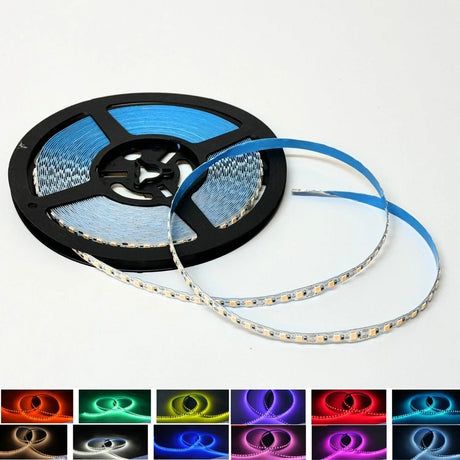
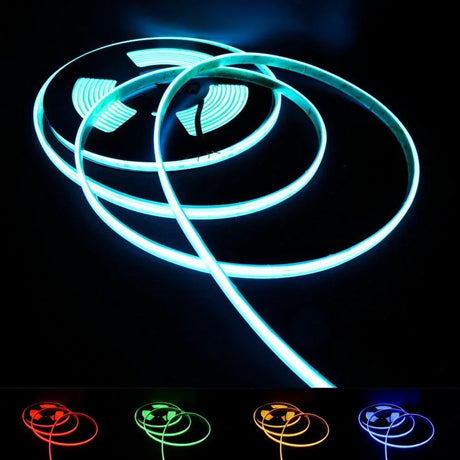
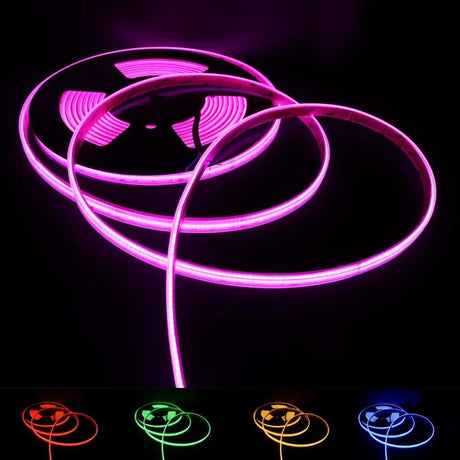
RGB COB: Colour-changing COB with the same dot-free output. Requires a dedicated RGB controller — not a standard dimmer. Cannot produce a clean warm white; the white output has a noticeable cool violet tinge.
-
RGBW COB: Adds a dedicated white LED channel to the RGB COB, solving the white-quality problem. Produces both saturated colours and a true warm, natural, or cool white from one strip.
-
RGB CCT COB: The most versatile option — full RGB colour plus tuneable white from 2700K to 6500K. Five channels, larger controller requirement, higher cost per metre, but removes the need for separate colour and white circuits.
COB costs more per metre than SMD. That premium is justified where the strip is visible or reflected — inside profiles, under glass shelves, along polished worktops. Where the strip is completely hidden (inside a pelmet, behind coving, above a wardrobe), the COB visual advantage is wasted.
SMD LED strip lights
-
SMD 2835: Compact chip, efficient output, moderate brightness. The workhorse for residential background lighting — TV backlighting, wardrobe interiors, staircase underlighting, and any location where the strip is hidden from direct view.
-
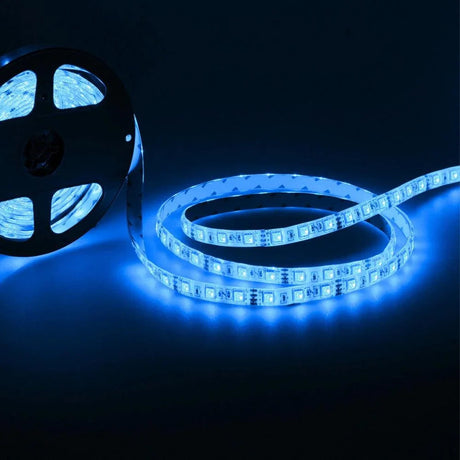
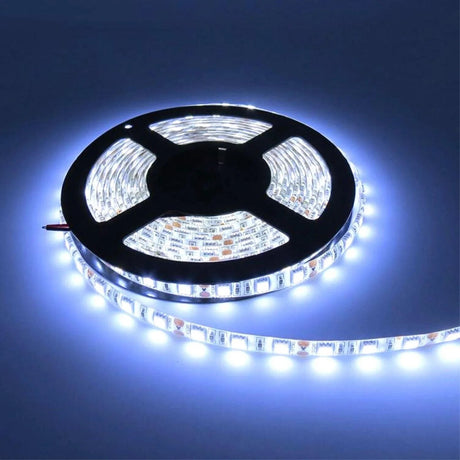
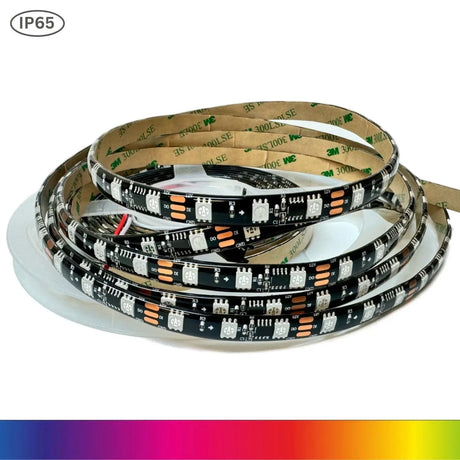
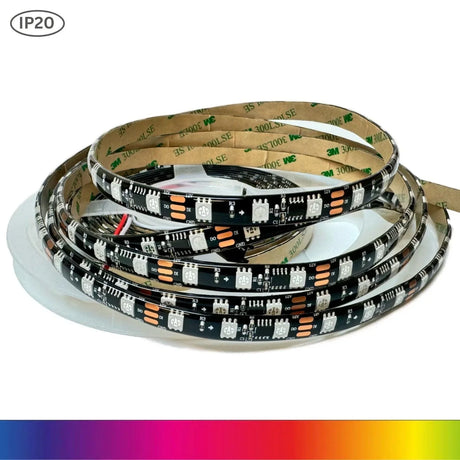
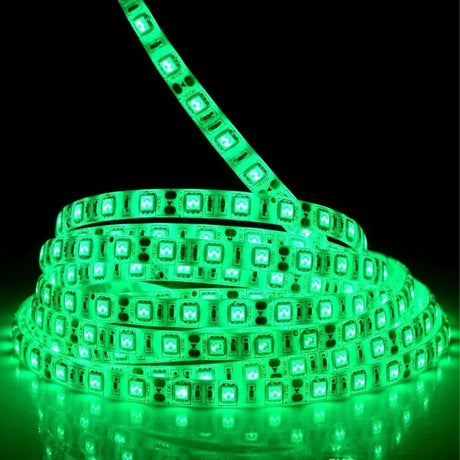
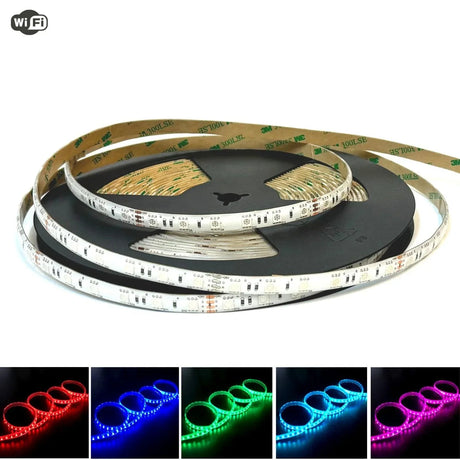
SMD 5050: Larger chip, higher output per LED, and the standard package for RGB colour strips. Visible dots are more prominent than 2835 at close range, but output per metre is typically higher.
-
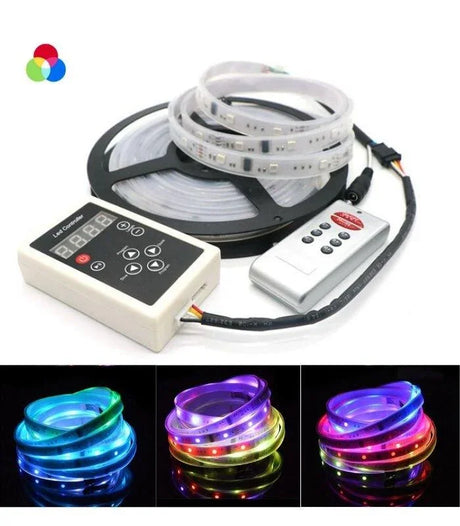
RGB SMD (5050): The original colour-changing LED strip — widely available, competitively priced, and compatible with the broadest range of controllers. Dot visibility is the trade-off.
-
RGBW SMD: Adds a white channel to the 5050 RGB package. Same clean-white benefit as RGBW COB, at a lower price point, with visible dot spacing as the compromise.
| Strip Type |
Dot Visibility |
Best Application |
White Quality |
Relative Cost |
| COB single colour |
None — dot-free |
Kitchens, profiles, close-range |
Excellent (dedicated white) |
Higher |
| COB RGB |
None — dot-free |
Feature walls, hospitality |
Poor — violet-tinged |
Higher |
| COB RGBW |
None — dot-free |
Dual-purpose colour + white |
Excellent (dedicated channel) |
Highest |
| SMD 2835 |
Visible at close range |
Hidden locations, budget installs |
Good (dedicated white) |
Lowest |
| SMD 5050 RGB |
Visible |
Colour effects, gaming rooms |
Poor — violet-tinged |
Moderate |
| SMD 5050 RGBW |
Visible |
Colour + white, budget |
Good (dedicated channel) |
Moderate |
COB vs SMD strip — which technology produces better light quality?
COB strip produces a continuous, dot-free line of light with a 180-degree beam angle and typically CRI90+ colour rendering. SMD strip produces visible individual dots at 120 degrees with CRI80–90 in most products. For any installation where the strip is visible to the eye or reflected on a surface, COB delivers a noticeably superior finish. Where the strip is fully concealed, SMD performs adequately at a lower cost.
The question is not which technology is objectively better — it is which is right for your installation. Paying the COB premium for strip hidden above a pelmet is wasted money. Running SMD inside a clear-lens profile on a polished worktop is a visible compromise. Match the technology to the mounting position and viewing distance.
A practical test: mount COB and SMD 5050 side by side inside identical milky-diffuser profiles at matched lumen output and step back two metres. The COB profile shows a single even glow. The SMD profile still shows a faint repeating dot pattern — reduced by 60–70 percent compared to bare strip, but not eliminated. At 300mm under-cabinet viewing distance, the difference is impossible to miss.
-
Heat distribution: COB spreads thermal load evenly across the board width, reducing peak surface temperature by approximately 8–12°C compared to SMD at equivalent wattage. This extends adhesive life and reduces hotspot risk inside profiles.
-
Flexibility: COB uses a thinner substrate without raised chip packages, allowing tighter bend radii around curves and irregular surfaces where SMD would kink or lift.
-
Colour consistency: Dense chip spacing in COB virtually eliminates colour variation along the run — a problem on SMD strip beyond 5 metres, particularly on lower-cost products with less precise bin matching.
-
Cost reality: COB typically costs 30–50% more per metre than equivalent-output SMD in 2026. On a 10-metre kitchen installation, that difference is £40–£70 — a fraction of total project cost including profiles, drivers, and labour.
Which voltage do you need — 12V, 24V, 48V, or 240V mains?
Most UK residential LED strip installations in 2026 use 24V — it offers one of the widest product ranges, strong accessory compatibility, and single-feed runs up to approximately 20 metres. Choose 48V for commercial or architectural runs up to 30 metres. Use 12V only for short automotive or compact installations under 5 metres. 240V mains strip suits specific outdoor or industrial situations where low-voltage wiring is impractical.
Voltage determines three things: maximum run length before brightness drops, the range of compatible drivers and controllers, and safety classification under UK wiring regulations.
Voltage comparison — the numbers that matter
| Specification |
12V |
24V |
48V |
240V Mains |
| Max single-feed run (typical) |
5 metres |
20 metres |
30 metres |
50–100 metres |
| Voltage drop rate |
Highest |
Moderate |
Half of 24V |
Negligible |
| Driver required |
Yes — 12V DC |
Yes — 24V DC |
Yes — 48V DC |
No (direct mains) |
| Product range (UK 2026) |
Limited |
Widest |
Growing |
Limited |
| Controller compatibility |
Moderate |
Widest |
Limited |
Very limited |
| Cut intervals |
25mm typical |
33–50mm typical (FreeCut: any point) |
Fixed intervals |
500–1000mm |
| Safety classification |
SELV range |
SELV range |
Within SELV threshold* |
Mains voltage |
| Typical use case |
Automotive, display |
Residential, light commercial |
Commercial, architectural |
Outdoor rope, industrial |
*48V DC falls within the SELV voltage threshold under BS7671 (120V DC ripple-free maximum), provided it is supplied from a suitably isolated, safety-rated driver. SELV is a system classification — not a voltage label — and correct installation is required for the protection to apply.
Every metre of strip adds resistance. At 24V, a 14.4W/m strip typically shows visible brightness reduction beyond 15–18 metres from the feed point. At 48V, drop occurs at roughly half the rate, extending single-feed distance to approximately 28–30 metres.
-
Parallel wiring is best practice: If your run exceeds the comfortable single-feed distance, wire in parallel — feed power to the start and end, or at regular intervals. Series wiring multiplies voltage drop and is the most common cause of uneven brightness.
-
24V FreeCut advantage: UK LED Lights' 24V FreeCut COB strip can be trimmed at any point along its length, not just at marked intervals. This matters in kitchens where cabinet widths vary by millimetres.
-
240V mains caution: Mains-voltage strip simplifies wiring on long outdoor runs but must not be permanently hardwired in most residential applications. Cut intervals are typically 500–1000mm, limiting precision. Not a general-purpose replacement for low-voltage strip.
How do you choose the right colour temperature for each room?
Colour temperature is measured in Kelvin (K) and determines whether your LED strip light produces a warm amber-toned glow, a neutral daylight-balanced white, or a crisp blue-toned cool light. Warm white (2700K–3000K) suits living rooms, bedrooms, and dining areas. Natural white (3500K–4000K) is best for kitchens and bathrooms. Cool white (5000K–6500K) works in garages, workshops, and commercial display settings.
Colour temperature is the second most common reason customers contact our team post-installation. The strip works, brightness is correct, but the room feels clinical when it should feel relaxing — or yellow when it should feel clean. The difference between 3000K and 5000K is dramatic.
-
2700K (extra warm): Deep amber tone similar to incandescent bulbs. Ideal for period properties, restaurants, hotel bedrooms. Can make a modern white kitchen feel yellow — test a sample first.
-
3000K (warm white): The most popular UK residential choice. Comfortable for living rooms, bedrooms, hallways, dining rooms, and under-cabinet kitchen lighting. Pairs well with oak, walnut, and warm-toned surfaces.
-
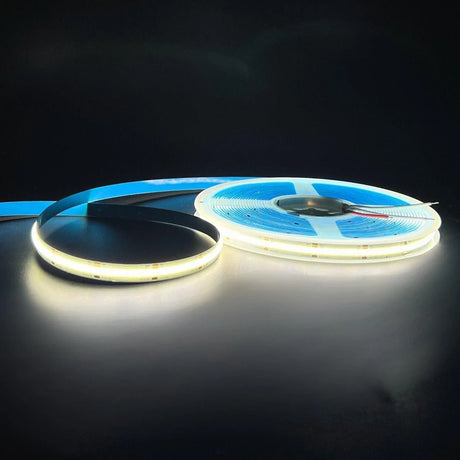
4000K (natural white): Clean, balanced daylight tone with no yellow or blue cast. Preferred for kitchen task lighting, bathroom mirror surrounds, utility rooms, and home offices where colour rendering matters.
-
5000K–6500K (cool white to daylight): Crisp, high-energy tone that maximises contrast. Suits garages, workshops, commercial kitchens, retail displays. Rarely comfortable in residential living spaces.
If undecided, match the strip to within 300K of existing light sources in the room. Mixing 3000K ambient with 5000K strip creates a jarring contrast. For spaces needing both warm and cool light, tuneable white or RGB CCT strip adjusts from 2700K to 6500K via controller — the trade-off is higher cost and a multi-channel controller requirement. For most rooms, fixed colour temperature is simpler.
What IP rating do LED strip lights need for kitchens, bathrooms, and outdoors?
IP20 is suitable for dry interior locations only — living rooms, bedrooms, wardrobes, and shelving. IP67 is the minimum for permanent outdoor installations and bathroom wet zones under BS7671 guidance. IP68 is required for submersion in ponds, fountains, or water features. IP65, despite common marketing claims, handles surface splashes only and is not rated for sustained UK outdoor weather exposure.
The IP rating is a two-digit code — the first digit rates dust protection, the second rates liquid protection. For strip buyers, the liquid digit determines where you can safely install.
-
IP20 — dry interiors only: No moisture protection. Suitable for living rooms, bedrooms, wardrobes, display cabinets, and any indoor location away from water sources. The most common rating and the lowest cost. Do not use in kitchens near sinks or hobs where steam and splashes occur regularly.
-
IP65 — surface splash protection: Silicone coating resists direct splashes. Often marketed as "outdoor rated" — misleading for UK conditions. Sustained rainfall and frost-thaw cycling exceed IP65 capabilities. Use for indoor locations with occasional moisture only.
-
IP67 — temporary immersion rated: Fully enclosed silicone sleeve protects against rain, frost, condensation, and brief submersion. The correct minimum for permanent outdoor lighting, decking, patio perimeters, and bathroom zones 1 and 2 under BS7671.
-
IP68 — continuous submersion: Sealed for permanent underwater use in ponds, fountains, and water features. Also suitable for fully exposed coastal locations where driving rain and standing water are routine.
Bathroom zoning under BS7671: Zone 0 (inside bath/shower) requires IP67 minimum. Zone 1 (above bath to 2.25m) requires IP67 on a low-voltage circuit. Zone 2 (0.6m beyond Zone 1) requires IP65 minimum, IP67 recommended. Outside all zones, IP20 is permitted. If in doubt, call 01952 370008 for advice.
How do you install LED strip lights step by step?
A standard LED strip installation involves seven steps: plan the layout and measure precisely, select and mount the driver in a ventilated location, prepare the mounting surface or aluminium profile, apply the strip, make the wiring connections, test the full run before final fixing, and connect the dimmer or controller. Most single-room residential installations take 2–4 hours including preparation.
The quality of the finished result depends on preparation. Rushing surface prep or skipping the test-before-fix step causes most rework calls. Follow these steps in order:
-
Step 1 — Measure and plan: Measure every section with a steel tape to the nearest millimetre. Mark driver location, strip start/end points, and connector positions. For kitchens, measure each cabinet individually. Account for 50mm clearance at each end. If the run exceeds 15 metres on 24V, plan parallel feed points now.
-
Step 2 — Position and wire the driver: Mount the driver in a ventilated, accessible location. Never seal inside an airtight box. Size to at least 120% of total strip wattage. Fixed wiring to a spur or connection unit requires a qualified electrician under Part P.
-
Step 3 — Prepare the mounting surface: Clean with isopropyl alcohol and dry fully — grease or moisture causes adhesive failure within weeks. If using a profile, secure it first with screws or clips at 300mm intervals.
-
Step 4 — Cut and apply the strip: Cut at marked points (or anywhere on FreeCut COB). Peel 100mm of backing at a time, press firmly into the profile channel. Do not stretch — lay straight with gentle pressure.
-
Step 5 — Make electrical connections: Use solderless push-fit connectors or solder joints for permanent installs. Match polarity carefully. For RGB/RGBW, match colour channels precisely. Route cables neatly through the profile or cable path.
-
Step 6 — Test before final fixing: Power on and inspect every section before fitting diffuser covers. Check for even brightness, correct colour, no flickering, no dead sections. Fixing faults after final installation means pulling everything apart.
-
Step 7 — Connect dimmer or controller: Single colour: trailing-edge dimmer on mains side, or PWM dimmer on low-voltage side. RGB/RGBW: dedicated controller between driver and strip. Fit diffuser covers, tidy cables, label the driver.
Tools required: steel tape measure, wire strippers, multimeter, screwdriver set, isopropyl alcohol, cable clips, and optionally a soldering iron. All connectors and accessories are available in our range.
What driver and power supply does LED strip light need?
Every low-voltage LED strip (12V, 24V, or 48V) requires a constant-voltage LED driver that converts 240V AC mains to the strip's rated DC voltage. The driver must match the strip voltage exactly and provide at least 120% of the strip's total wattage to avoid overheating. Single colour strip uses a dimmable or non-dimmable driver. RGB and RGBW strip must use a non-dimmable constant-voltage driver paired with a separate controller.
An undersized driver overheats, shortens its lifespan, and may trigger thermal protection — causing intermittent cut-outs. An oversized driver wastes money but causes no problems. When in doubt, go larger.
How to calculate the correct driver size:
-
Find the strip wattage per metre: This is printed on the product specification — for example, 14.4W/m.
-
Multiply by total run length: 10 metres × 14.4W/m = 144W total.
-
Add the 20% safety margin: 144W × 1.2 = 172.8W minimum driver rating.
-
Round up to next available size: The nearest standard driver is typically 200W. Use that.
-
Single colour dimming: Use a mains-dimmable driver with trailing-edge dimmer, or a non-dimmable driver with a low-voltage PWM dimmer. Leading-edge dimmers frequently cause flicker — replacing with trailing-edge costs approximately £15.
-
RGB and RGBW — critical rule: Must use a non-dimmable constant-voltage driver. All dimming and colour mixing is handled by the RGB controller. A dimmable driver with an RGB controller causes flicker, colour shift, and premature failure.
-
Multiple zones from one driver: A single high-wattage driver can power multiple runs via a distribution block, provided total load stays within 80% of rated capacity. Wire each run in parallel — never in series.
Browse the complete range of LED drivers matched to every strip type in our collection. If you are unsure which driver suits your project, email your layout sketch to sales@ukledlights.co.uk and our technical team will specify the correct driver, cabling, and accessories for your run lengths.
How do you dim LED strip lights without flickering?
Most LED strip flickering is caused by one of three issues: a leading-edge dimmer instead of trailing-edge, an incompatible driver, or a dimmable driver connected to an RGB controller. For single colour strip, use a trailing-edge mains dimmer with a mains-dimmable driver, or a PWM dimmer on the low-voltage side. For RGB and RGBW strip, all dimming must be handled by the controller — never the driver.
Flickering is the top complaint in LED strip installations and is almost always fixable without replacing the strip. In most cases, the strip is functional — the problem sits upstream in the dimming chain.
-
Leading-edge vs trailing-edge: Leading-edge dimmers switch power on at a sharp voltage spike, causing flicker with LED drivers. Trailing-edge dimmers switch off gradually, which LED drivers handle cleanly. Swapping costs under £15 for a standard UK wall plate dimmer.
-
Minimum load problems: Some dimmers require 10–25W minimum connected wattage. Below the minimum, the dimmer cannot regulate properly and flicker occurs at low levels. Ensure total strip wattage exceeds the dimmer's stated minimum.
-
PWM dimming: A non-dimmable driver feeds constant voltage to a PWM dimmer between driver and strip. The PWM dimmer switches thousands of times per second at varying duty cycles — perceived as smooth brightness control. Avoids mains dimmer compatibility issues entirely.
-
Smart home dimming: WiFi and Zigbee controllers provide app, voice, and scene-preset dimming on the low-voltage side. Most 2026 WiFi controllers are compatible with Alexa, Google Home, and Apple HomeKit.
If you have an existing installation that flickers and you are not sure where the fault lies, call our technical line on 01952 370008. In most cases, we can diagnose the issue over the phone within a few minutes and suggest the correct fix — which is usually a dimmer swap, not a strip replacement.
What is the maximum run length before voltage drop becomes visible?
On 24V strip, expect visible brightness reduction beyond approximately 15–18 metres from a single feed point on a 14.4W/m strip. On 48V strip, the same wattage maintains even brightness to approximately 28–30 metres. On 12V, the practical limit is around 4–5 metres. These are real-world figures — not laboratory specifications — and vary with strip wattage, ambient temperature, and cable gauge.
Voltage drop is an electrical reality, not a product defect. Every centimetre of conductor adds resistance, reducing voltage and brightness along the length. The eye detects as little as 10% brightness difference between near and far ends.
At identical wattage, 48V strip draws half the current of 24V (Power = Voltage x Current). Half the current through the same resistance produces half the voltage drop — extending single-feed distance by approximately 50%. This is Ohm's law applied to a flexible circuit board.
-
Parallel wiring solution: Feed power to both ends of the strip, or inject at the midpoint. This halves the maximum current path and keeps brightness even. Standard approach for professional kitchen, retail, and commercial installations.
-
Cable gauge matters: The cable between driver and strip also contributes to drop. Use 1.5mm² minimum for most residential runs, 2.5mm² for higher-wattage or longer-distance cable paths.
-
Real-world test: Power the full run and stand at the far end. If the start looks noticeably brighter, voltage drop needs addressing with parallel wiring, higher voltage, or mid-point injection.
Where do LED strip lights work best — room-by-room guide?
LED strip lights suit almost every room in a home and most commercial spaces, but the correct strip type, voltage, IP rating, and colour temperature differ for each application. Kitchen under-cabinet lighting is the single most popular residential use in the UK, followed by bedroom cove lighting, bathroom mirror surrounds, living room shelf accents, and outdoor garden perimeters.
Each room has specific requirements. Here is what works — and what does not — in each space:
-
Kitchen: Under-cabinet task lighting is the primary application. Use 3000K or 4000K single colour COB strip in an aluminium profile with a milky diffuser — the profile eliminates dots, improves heat management, and protects the strip from cooking grease. IP20 is acceptable for above-counter positions away from the sink; use IP65 minimum directly above the hob. Browse kitchen LED strip options. Kickboard lighting, island perimeter, and in-cabinet accent lighting are growing applications in 2026 kitchen designs.
-
Bathroom: IP rating is non-negotiable here. IP67 minimum for zones 0, 1, and 2 around baths, showers, and basins. 4000K natural white around mirrors provides the most accurate colour rendering for grooming. Cove lighting around a freestanding bath in 3000K warm white creates the relaxed atmosphere most homeowners want. See our bathroom LED strip selection for IP-rated options.
-
Bedroom: Headboard cove lighting, wardrobe interiors, under-bed floating effect, and ceiling perimeter lighting are all proven applications. 2700K–3000K warm white is preferred for bedrooms. Dimming to very low levels (under 5%) for nighttime use is important — ensure your dimmer supports a smooth low-end range. Visit our bedroom LED strip collection for warm-tone options.
-
Living room: Shelf accent lighting, TV backlighting (reduces eye strain during evening viewing), ceiling cove perimeter, and display cabinet illumination. RGB or RGBW strip adds atmosphere for film nights — pair with a WiFi controller for scene presets.
-
Outdoor — garden, patio, decking: IP67 minimum for all permanent outdoor installations. 3000K or 4000K for general pathway and perimeter lighting. Ensure the driver is housed in a weatherproof enclosure rated to at least IP65. IP67 and IP68 rated products are available in the outdoor section of our range.
-
Staircase: Under-nosing strip lights along each tread provide safety lighting and a dramatic visual effect. 3000K warm white, IP20, controlled by a motion sensor at top and bottom for automatic activation. Use a strip width of 8mm to fit within the nosing overhang.
-
Commercial — retail, hospitality, office: Display case lighting (4000K–5000K for accurate product colour), bar and restaurant cove lighting (2700K–3000K), office task lighting (4000K), and wayfinding perimeter lighting. 48V strip is the preferred voltage for commercial runs exceeding 20 metres.
What accessories and profiles do you need for a complete installation?
A complete LED strip installation typically requires four components beyond the strip itself: a driver (power supply), a mounting profile with diffuser, connectors and wiring accessories, and a dimmer or controller. Omitting any one of these results in either a non-functional system or a visibly inferior finish. Most customers underestimate the importance of the profile — it is the difference between a DIY-looking result and a professional one.
The strip is the light source. Everything around it determines whether the finished installation looks professional, lasts its full rated lifespan, and performs reliably for years. Here is what you need and why each component matters:
-
Aluminium profiles: Mount the strip inside a profile with a milky polycarbonate diffuser to eliminate visible dots (even on COB strip, a diffuser softens the light further), manage heat dissipation, and protect the strip from physical damage, dust, and moisture. Profiles are available in surface-mount, recessed, corner-mount, and suspended configurations. A 2-metre kitchen under-cabinet installation using a slim surface-mount profile adds approximately £10–£18 in material cost — a minor fraction of the total project. Browse the full aluminium profile range.
-
Connectors: Solderless push-fit connectors join strip sections, connect strip to cable, and create corners without soldering. Available in 2-pin (single colour), 4-pin (RGB), and 5-pin (RGBW) configurations. For permanent installations in commercial settings, soldered joints are more reliable long-term. See our strip accessories range for all connector types.
-
Cable and wiring: Use cable rated for the voltage and current of your installation. 0.75mm² is adequate for short residential runs under 5 metres at moderate wattage. 1.5mm² for longer runs or higher wattage. All fixed wiring behind walls or in ceiling voids must comply with Part P of the Building Regulations.
-
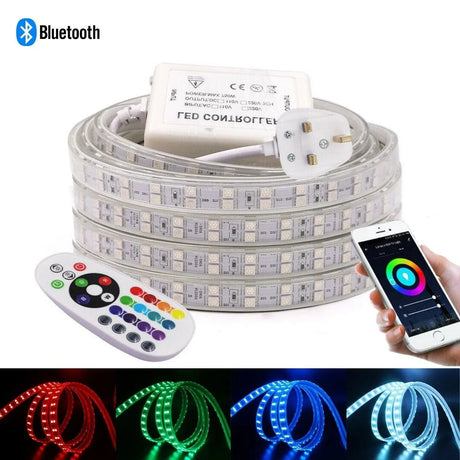
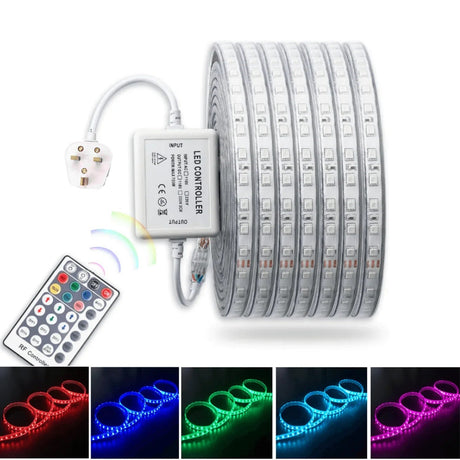
Dimmers and controllers: Single colour strip uses a trailing-edge mains dimmer or a low-voltage PWM dimmer. RGB and RGBW strip uses a dedicated controller — available in manual rotary, touch panel, RF remote, WiFi (app + voice), and Zigbee (smart home hub) configurations. Check our controller range for compatible options.
-
Mounting clips and fixings: For installations without profiles — outdoor runs, temporary displays, or concealed positions — adhesive-backed mounting clips at 300mm intervals secure the strip and prevent sagging or peeling over time.
Not sure what you need for your project? Send a sketch or photo of your installation to our technical team and they will provide a full component list with exact quantities — no charge, no obligation.
Why do UK trade and retail buyers choose UK LED Lights?
UK LED Lights supplies LED strip lights, drivers, profiles, and accessories from our Telford warehouse with free UK delivery on every order. We hold stock year-round — no pre-order waits, no import delays, no minimum order values. Our technical team answers calls on 01952 370008 Monday to Friday, 9am–5pm, with real installation knowledge, not scripted product descriptions. Company registration 12301805, Unit D4, Stafford Park 4, Telford, Shropshire, TF3 3BA.
There are dozens of LED strip suppliers operating in the UK market. Most of them dropship from the same overseas factories, hold no UK stock, and have no in-house technical knowledge beyond the specification sheet. When you need advice on driver sizing, voltage drop across a 25-metre commercial run, or IP rating requirements for a bathroom refit, those suppliers cannot help you.
-
UK-held stock: Every product listed on ukledlights.co.uk is held in our Telford warehouse. Orders placed before 2pm on a working day dispatch the same day in the majority of cases. No "3–6 week lead time from manufacturer" delays.
-
Technical advice included: Call 01952 370008 or email sales@ukledlights.co.uk with your project details. We will specify the correct strip type, driver, profile, and accessories for your installation — whether it is a single kitchen shelf or a multi-zone commercial fit-out.
-
Bespoke cut-to-length service: We cut strip to your exact measurements in-house. No waste, no guesswork, no paying for lengths you do not use.
-
Full ecosystem: Strip, drivers, profiles, controllers, connectors, and accessories all available from one supplier. No compatibility guesswork between products from different sources.
-
Trade accounts: Regular trade buyers — electricians, kitchen fitters, interior designers, and commercial contractors — can open an account for simplified ordering and project pricing. Call the team for details.
-
Honest guidance: We will tell you when a cheaper product suits your application perfectly well. We will also tell you when a particular product is wrong for your project, even if it means a lower-value sale. That approach builds trust, repeat orders, and referrals — which is how the majority of our trade business operates.
-
Used in over 2,000 UK installations in 2025 alone — from hotel lobbies to home cinemas. Our Telford team has specified strip for runs from 600mm to 30 metres.
-
Every order ships with a wiring diagram matched to your driver and controller combination — not a generic PDF.
Call 01952 370008, email sales@ukledlights.co.uk, or browse the full LED strip lights collection to find the right product for your project. Free UK delivery on every order.
How do 12V, 24V, 48V, and 240V LED strip lights compare?
Voltage is the single most important choice when specifying LED strip — it determines maximum run length, driver options, and SELV safety classification.
| Specification |
12V |
24V |
48V |
240V Mains |
| Max single run |
~5 metres |
Up to 20 metres |
Up to 30 metres |
Up to 50 metres |
| Driver required |
Yes — 12V DC |
Yes — 24V DC |
Yes — 48V DC |
No — inline rectifier |
| SELV classification |
Yes |
Yes |
Yes (with isolated driver) |
No — full mains voltage |
| Cut intervals |
25-50mm |
50-100mm (FreeCut available) |
50-100mm |
500mm-1000mm |
| COB dot-free available |
Yes (limited) |
Yes — widest range |
Yes — single colour |
No |
| RGB/RGBW available |
Yes |
Yes — widest range |
No |
RGB only (basic) |
| Profile compatible |
Yes |
Yes |
Yes |
No |
| Best application |
Compact, marine, caravan |
Residential, kitchens, most rooms |
Long commercial, hospitality |
Temporary outdoor, events |
| Permanent hardwiring |
Yes |
Yes — most popular |
Yes |
Not recommended (BS7671) |
For approximately 80% of UK residential LED strip projects in 2026, 24V is the correct voltage. It offers the widest driver, controller, and accessory ecosystem alongside every colour type in COB format. Call 01952 370008 for voltage advice specific to your project.
Recommended setup for a 4-metre bedroom ceiling cove installation
-
Strip: 24V COB single colour warm white 2700K, 10W/m, IP20 — relaxed amber tone for evening use
-
Driver: 24V 60W triac dimmable constant voltage (40W load + 20% headroom)
-
Profile: Surface-mount or recessed aluminium with milky diffuser, set 50-80mm back from cove lip
-
Dimmer: Trailing-edge triac wall dimmer — smooth control from full brightness to approximately 5%
-
Total cost guide: Approximately £30-50 for strip + £20-30 for driver + £10-20 for profile per metre + £15 for dimmer
Every LED strip project has different run lengths, mounting conditions, and control requirements — we will adjust this recommendation to fit yours. Call 01952 370008 or email sales@ukledlights.co.uk for a free bespoke specification.
When should you choose a different product instead of LED strip lights?
This range covers most residential and commercial lighting projects — but not every one. Here are the situations where you should look elsewhere.
-
You need a thick, visible neon-tube-style glow: LED strip produces a slim line of light. For a bold, rounded, neon-style effect, browse our LED neon flex range instead.
-
You need a single bright downlight or spotlight: LED strip provides linear ambient and accent lighting, not concentrated directional beams. Recessed downlights or track lighting serve that purpose better.
-
You need permanent outdoor lighting with zero maintenance: While IP67 and IP68 strip handle UK weather, fully sealed outdoor luminaires may be more practical for front-of-house applications where maintenance access is limited.
-
Your entire project is temporary and disposable: For one-off events lasting a single evening, battery-powered or solar options avoid the wiring entirely.
If you are unsure whether this product suits your project, call 01952 370008 — our technical team will recommend the correct alternative if this is not the right match.
Frequently asked questions about LED strip lights
Answers to the most common questions our technical team receives from UK homeowners, electricians, designers, and trade buyers in 2026. If your question is not listed below, get in touch — our Telford team is happy to help.
1. Why is my LED strip light flickering?
-
Most common cause: A leading-edge dimmer instead of a trailing-edge dimmer — swapping costs approximately £15 and resolves the flicker in the majority of cases.
-
Second most common: An undersized driver running above 85% of its rated capacity, triggering thermal protection cycling.
-
Third possibility: A dimmable driver connected to an RGB controller — RGB strip requires a non-dimmable constant-voltage driver with all dimming handled by the controller.
-
Quick test: Bypass the dimmer temporarily and connect the driver directly to the mains supply. If the flicker stops, the dimmer is the cause.
2. Can LED strip lights be cut to any length?
-
Standard strip: Can be cut at marked intervals only — typically every 25mm (12V), 33–50mm (24V), or at wider intervals on 48V and 240V strip.
-
FreeCut COB strip: Can be cut at any point along its length, not just at fixed intervals. This is unique to certain 24V COB products in the UK LED Lights range and allows exact measurements to the millimetre.
-
Important: Always cut with clean, sharp scissors or a craft knife directly through the marked cut line. Cutting between marks will damage the circuit and leave a non-functional section.
3. What is the difference between RGB and RGBW LED strip?
-
RGB strip: Contains red, green, and blue LEDs that mix to produce a wide colour spectrum. However, the "white" produced by mixing all three channels has a noticeable cold, violet tinge — it does not look like a proper white light source.
-
RGBW strip: Adds a fourth, dedicated white LED channel. This produces true warm, natural, or cool white light alongside full RGB colour effects.
-
Recommendation: If you need colour effects and white light from the same strip, RGBW is the correct choice. If you only need colour effects and have separate white lighting, standard RGB is adequate and costs less.
4. Are LED strip lights safe to use in bathrooms?
-
Yes, with the correct IP rating and zoning compliance. BS7671 defines electrical zones around water sources in bathrooms.
-
Zone 0 (inside bath or shower): IP67 minimum, low-voltage circuit only.
-
Zone 1 (above bath to 2.25m): IP67 minimum.
-
Zone 2 (0.6m beyond Zone 1): IP65 minimum, IP67 recommended.
-
Outside zones: IP20 is technically permitted, but IP65 provides sensible moisture protection in a humid bathroom environment.
-
All bathroom electrical work must comply with Part P of the Building Regulations. Consult a qualified electrician if you are unsure about zoning.
5. How long do LED strip lights last?
-
Rated lifespan: Most quality LED strip is rated to approximately 50,000 hours — that is over 11 years at 12 hours of daily use.
-
Real-world factors that reduce lifespan: Overheating (no profile, poor ventilation, strip left on reel), undersized drivers causing thermal stress, exposure to moisture beyond the IP rating, and poor-quality adhesive allowing the strip to detach and overheat.
-
Driver lifespan: The driver typically has a shorter rated lifespan than the strip itself — approximately 30,000–50,000 hours depending on quality, ventilation, and loading. Replacing a driver is significantly easier than replacing mounted strip.
6. Can I use LED strip lights outdoors in the UK?
-
Yes — with IP67 minimum for any permanent outdoor installation. IP65 handles surface splashes only and does not withstand sustained UK rainfall, frost-thaw cycling, or ground-level moisture accumulation.
-
Driver housing: The LED driver must be enclosed in a weatherproof housing rated to at least IP65, mounted in a sheltered position where possible.
-
Cable protection: All outdoor wiring should be run through conduit or rated outdoor cable. Underground runs require armoured cable or suitable conduit at a minimum depth of 450mm.
- All IP67 and IP68 rated options are available in our outdoor-rated LED strip collection.
7. What is the difference between 24V and 48V LED strip?
-
Run length: 24V supports approximately 20-metre single-feed runs. 48V supports approximately 30-metre single-feed runs at equivalent wattage.
-
Voltage drop: 48V loses voltage at approximately half the rate of 24V over the same distance and wattage — a direct result of drawing half the current for the same power output.
-
Product range: 24V has one of the widest selections of compatible drivers, controllers, and accessories in the 2026 UK market. 48V range is growing but more limited.
-
Cost: 48V strip and drivers typically cost more than 24V equivalents.
-
Best fit: 24V for most residential and short commercial runs. 48V for commercial, architectural, and extended runs over 20 metres.
8. Do LED strip lights get hot?
-
LED strip produces heat, but significantly less than halogen or incandescent alternatives. Surface temperatures typically reach 40–55°C depending on wattage per metre, ventilation, and ambient temperature.
-
Aluminium profiles act as heatsinks: Mounting strip inside an aluminium profile reduces surface temperature by approximately 10–15°C compared to adhesive-mounting directly to a surface, extending both LED and adhesive lifespan.
-
Critical safety rule: Never power LED strip while it is still wound on the reel. The concentrated heat cannot dissipate, the adhesive softens and fails, and in extreme cases the temperature build-up is a fire risk.
9. How much does it cost to run LED strip lights?
-
Example calculation: A 5-metre run of 14.4W/m strip consumes 72 watts. At the 2026 UK average electricity rate of approximately 24.5p/kWh, running that strip for 8 hours per day costs around £5.15 per month.
-
Compared to alternatives: An equivalent halogen under-cabinet light producing similar lumen output would consume approximately 250–350 watts for the same 5-metre run — roughly 4–5 times the electricity cost.
-
Dimming saves further: Dimming the strip to 50% brightness reduces power consumption by approximately 50%, halving the running cost.
10. Can LED strip lights work with Alexa and Google Home?
-
Yes — with a WiFi-enabled controller. WiFi controllers in the 2026 range connect directly to your home network and pair with Alexa, Google Home, or Apple HomeKit (model dependent).
-
Voice commands: Turn on/off, dim to percentage, change colour (RGB/RGBW), set colour temperature (tuneable white), and activate scene presets.
-
App control: Most WiFi controllers include a smartphone app for full control, scheduling, timer programming, and colour scene creation.
-
Zigbee alternative: For integration with existing smart home hubs (Philips Hue bridge, SmartThings, Hubitat), Zigbee controllers offer local network control without cloud dependency.
11. Is 48V LED strip SELV rated?
- 48V DC falls within the SELV voltage threshold under BS7671 (120V DC ripple-free maximum), provided it is supplied from a suitably isolated, safety-rated driver.
-
SELV is a system classification, not a voltage label. The driver, cabling, and installation must all meet the requirements for the SELV protection to apply.
-
48V does not mean "no shock risk." SELV significantly reduces shock risk under dry conditions. Wet conditions, damaged insulation, or non-isolated drivers change the risk profile. A qualified electrician should assess any fixed 48V installation.
12. How do I connect multiple LED strip runs together?
-
Parallel wiring is best practice. Run separate cables from the driver (or a distribution block) to each strip section. This helps ensure even voltage delivery to every section and helps prevent cumulative voltage drop.
-
Avoid series wiring: Connecting the end of one strip to the start of the next in a chain multiplies voltage drop with each section. The final section receives the lowest voltage and appears visibly dimmer.
-
Connection methods: Solderless push-fit connectors for quick installations, or soldered joints for maximum reliability on permanent commercial work.
-
Maximum connections per driver: Limited by the driver's total wattage capacity. Keep total connected load below 80% of the driver rating for optimal thermal management.
13. Can LED strip lights be used for main room lighting?
-
LED strip is typically used as accent, task, or feature lighting — not as the sole light source in a room. A 5-metre run of high-output strip produces approximately 1,500–3,000 lumens depending on specification, which is adequate for accent or task purposes but not for full room illumination in most spaces.
-
Exception: In smaller rooms (under 8m²) such as bathrooms, utility rooms, or walk-in wardrobes, a full perimeter run of high-output strip inside a suitable profile can provide sufficient general illumination.
-
Best approach: Use LED strip as a complementary layer alongside ceiling downlights or pendant fittings that provide the room's primary illumination.
14. What warranty do UK LED Lights LED strip lights carry?
- Warranty terms vary by product — check the individual product listing for the specific warranty period.
-
Warranty coverage typically includes: Manufacturing defects, premature LED failure, and adhesive-back failure under correct mounting conditions.
-
Not typically covered: Physical damage, incorrect wiring, use of incompatible drivers or dimmers, installation in conditions exceeding the rated IP protection, and operation while coiled on the reel.
-
Claims process: Contact our team on 01952 370008 with your order number, photos of the issue, and a description of the installation. Most claims are assessed within 48 hours.
15. Do I need an electrician to install LED strip lights?
-
Plug-in installations: If your driver plugs into a standard 13A socket, no electrician is required. This covers the majority of residential accent and feature lighting.
-
Fixed wiring installations: If the driver is permanently wired to a fused spur, connection unit, or lighting circuit, the work must comply with Part P of the Building Regulations. In England and Wales, this means either using a qualified electrician registered with a competent person scheme, or obtaining building control sign-off.
-
Bathroom and outdoor installations: Electrical work in these locations carries specific requirements under BS7671. A qualified electrician is strongly recommended for any bathroom or outdoor fixed-wiring LED strip project.
16. How do I choose between LED strip and LED neon flex?
-
LED strip: Flat, flexible tape that produces directional light (120° for SMD, 180° for COB). Best for linear task lighting, cove lighting, shelf accents, and under-cabinet installations where light is directed at a surface.
-
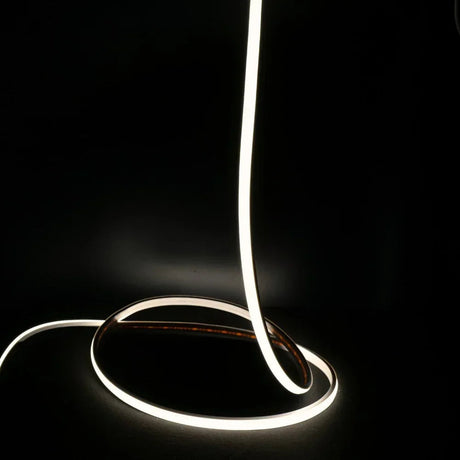
LED neon flex: A flexible silicone or PVC tube that produces a thick, even glow line visible from the side. Best for signage, architectural outlines, feature shapes, and anywhere you want to see the light source itself as a decorative element.
-
Key difference: Strip illuminates a surface. Neon flex is the visual feature. They serve different purposes and are not interchangeable.
- Browse our LED neon flex collection for side-emitting glow options.
17. Can LED strip lights be mounted on bare metal surfaces?
-
No — never mount LED strip directly onto bare uninsulated metal. The underside of the strip PCB has exposed copper traces that will short-circuit against conductive metal surfaces such as steel brackets, metal ducting, or aluminium window frames.
-
Always use an aluminium profile with an anodised finish as an intermediary, or apply an insulating layer between the strip and the metal surface.
-
This applies to all strip types — COB, SMD, single colour, and RGB — regardless of voltage or IP rating.
18. What happens if I power LED strip while it is still coiled on the reel?
-
Heat builds up rapidly because air cannot circulate through coiled strip. Surface temperatures can exceed safe limits within minutes.
-
The 3M adhesive softens and fails, LEDs overheat, and in extreme cases the concentrated heat poses a fire risk.
-
Always uncoil strip fully and mount it onto a surface or inside a profile before connecting power — no exceptions.
19. Can I use LED strip lights with a smart home system like HomeKit or Home Assistant?
-
Yes — with the correct controller. WiFi controllers from Miboxer and Skydance connect through Tuya or Smart Life apps to Alexa and Google Home. GLEDOPTO Zigbee controllers work natively with Apple HomeKit via a compatible hub.
-
Home Assistant users can integrate both WiFi and Zigbee controllers for local control without cloud dependency.
-
All smart controllers sit on the 24V DC side between the driver and the strip — the driver itself does not need smart functionality.
20. Is IP65 LED strip suitable for outdoor use in the UK?
-
No — IP65 is not recommended for permanent outdoor installations in UK weather. IP65 protects against surface splashes only, equivalent to a garden hose spray.
-
It does not withstand sustained rainfall, frost-thaw cycling, or ground-level damp — all standard conditions during a British autumn and winter.
-
IP67 is the minimum safe rating for any LED strip installed permanently outdoors in the UK under BS7671 guidance. IP68 is required for strips submerged in water.
Last reviewed: March 2026 — UK LED Lights technical team, Telford, Shropshire. Specifications current as of 2026.
🏭 UK LED specialist, Telford, Shropshire · ☎️ 01952 370008 · 🚚 Free UK delivery



 £29.08Unit price /Unavailable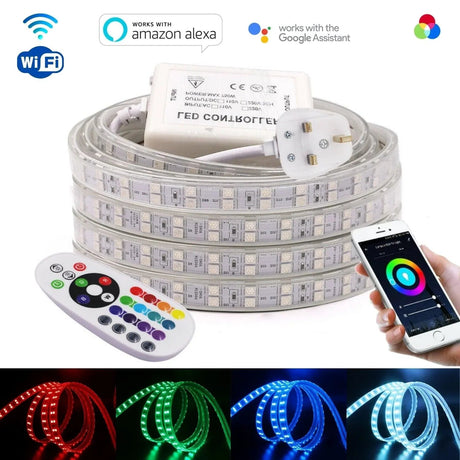
 £114.85Unit price /Unavailable
 £45.08Unit price /Unavailable


