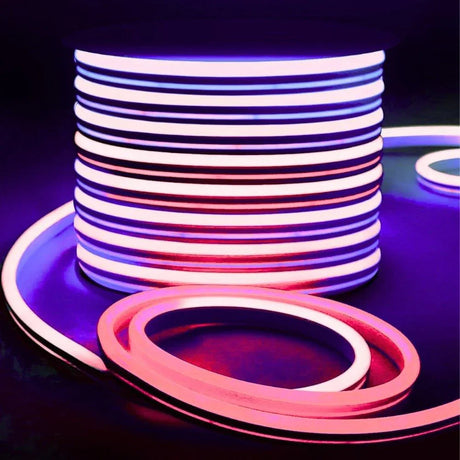
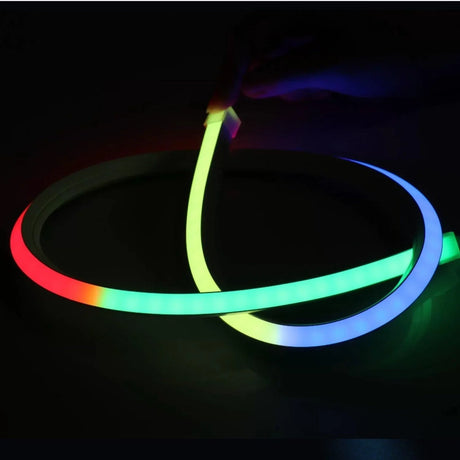
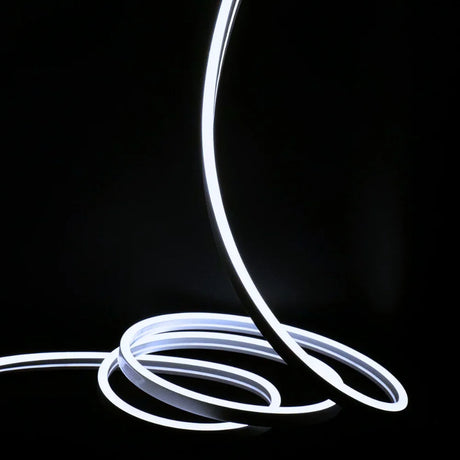
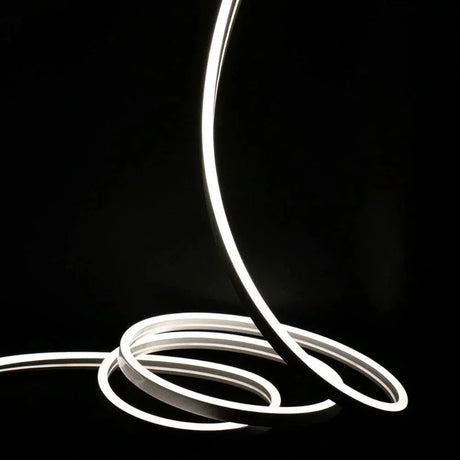
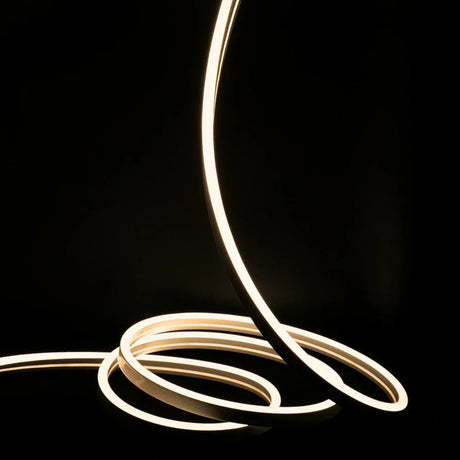
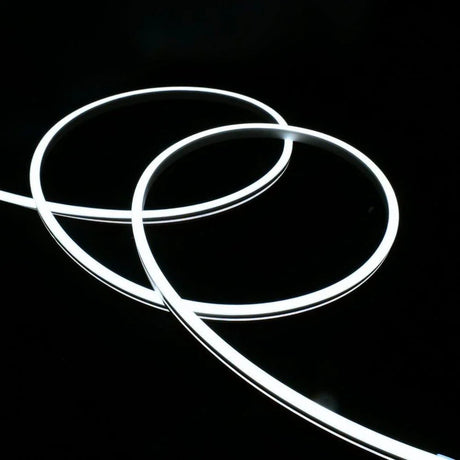
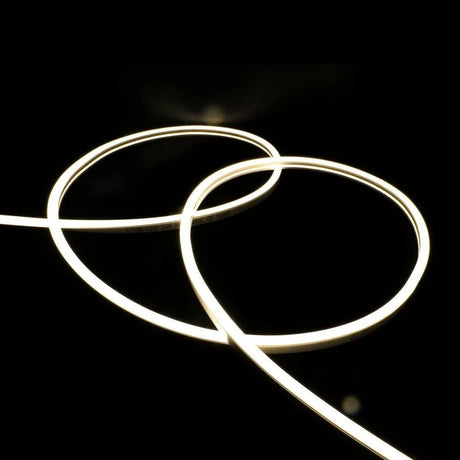
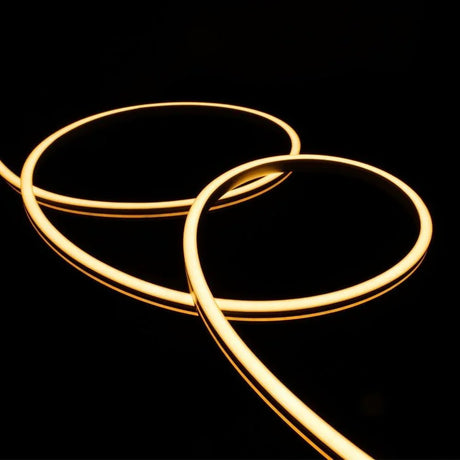
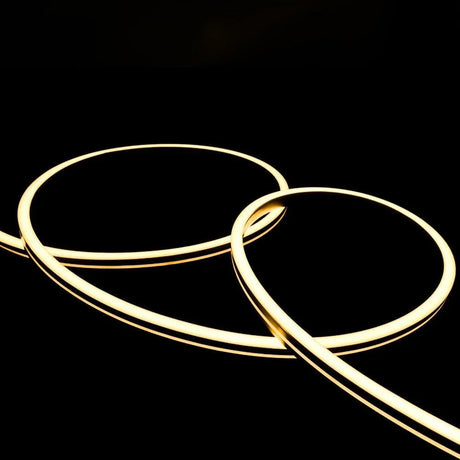
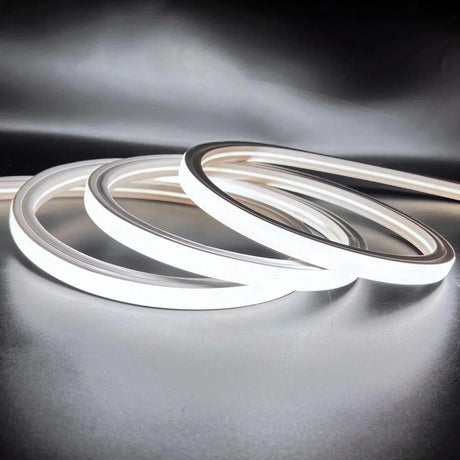
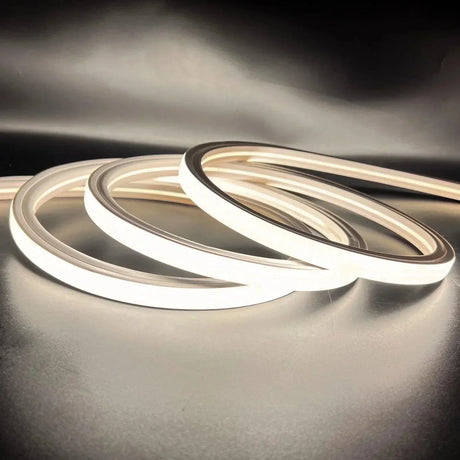
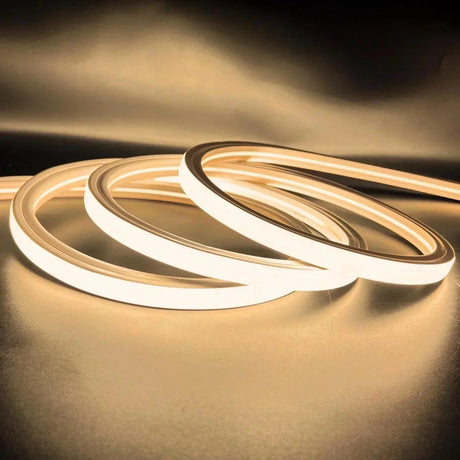
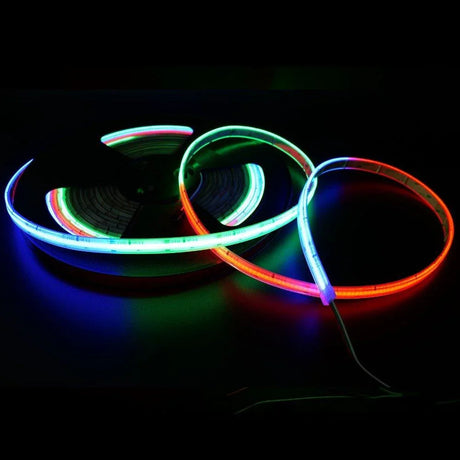
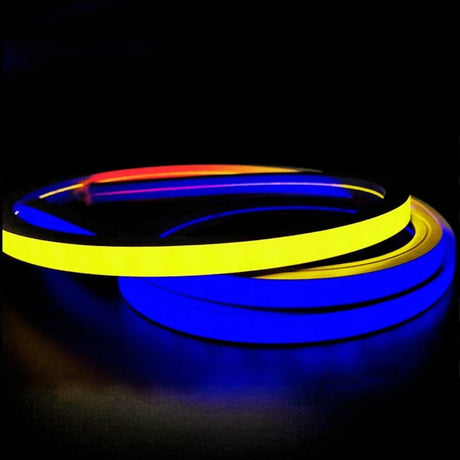
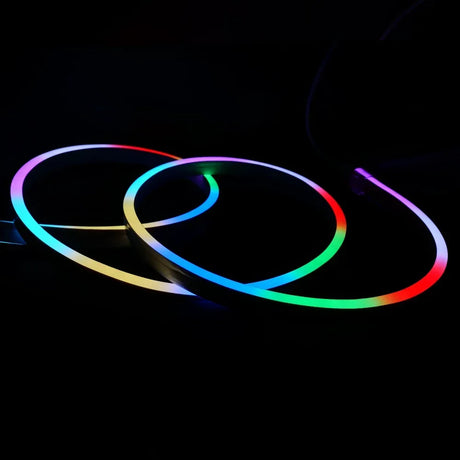
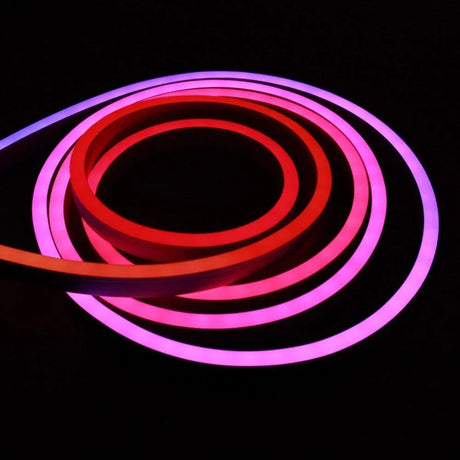
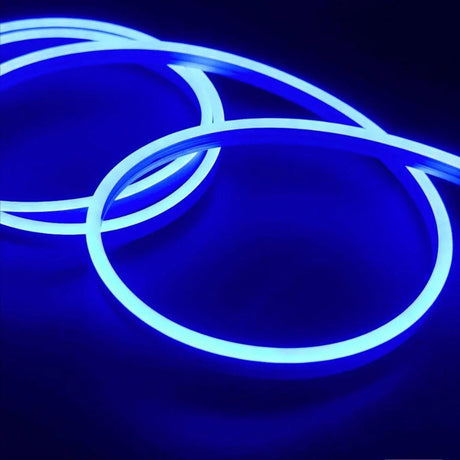
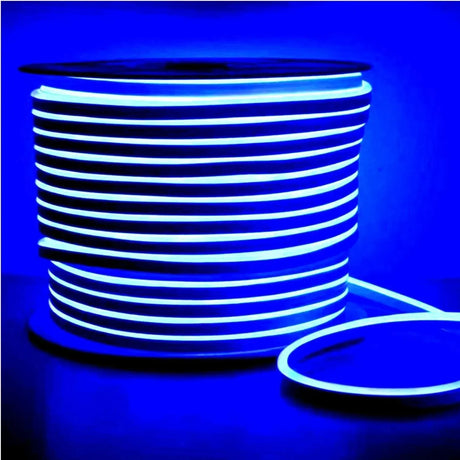
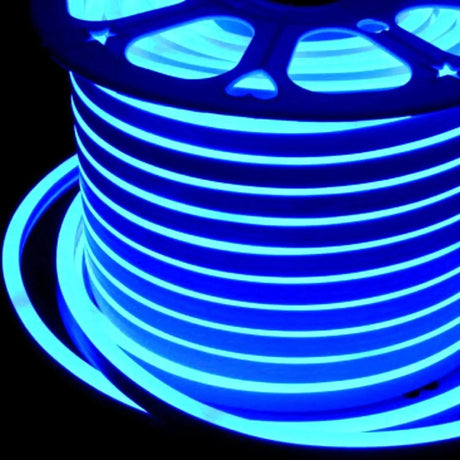
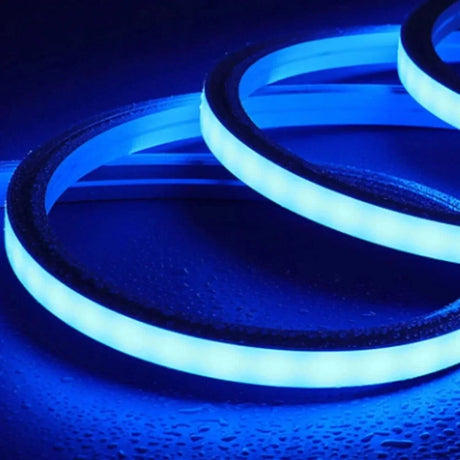
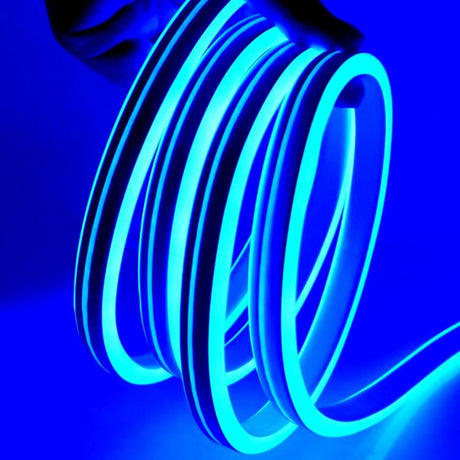
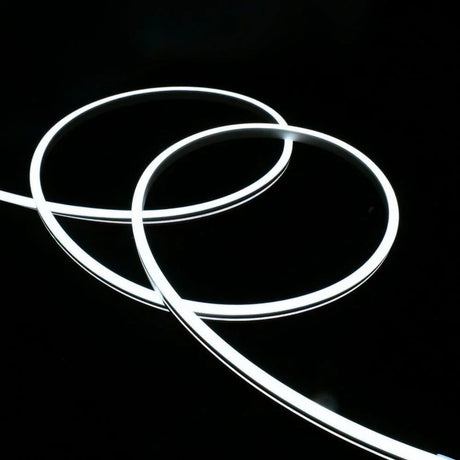
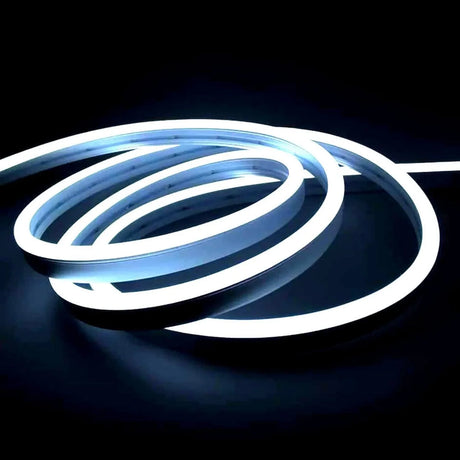
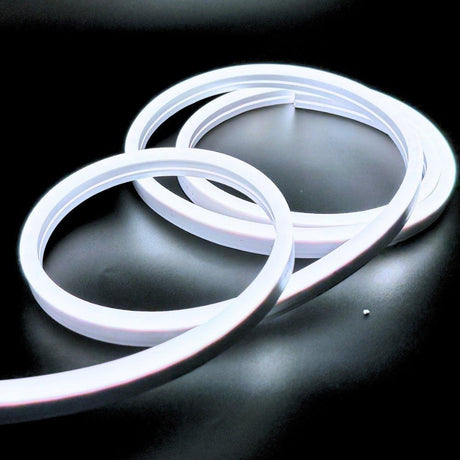
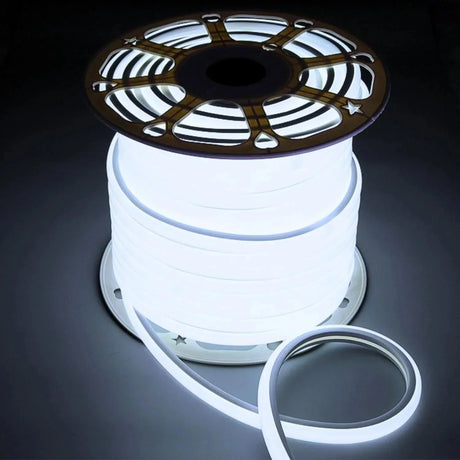
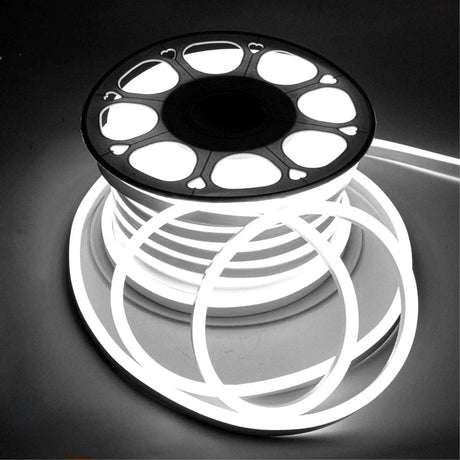
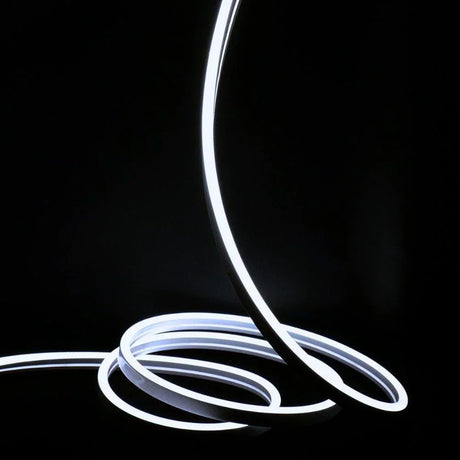
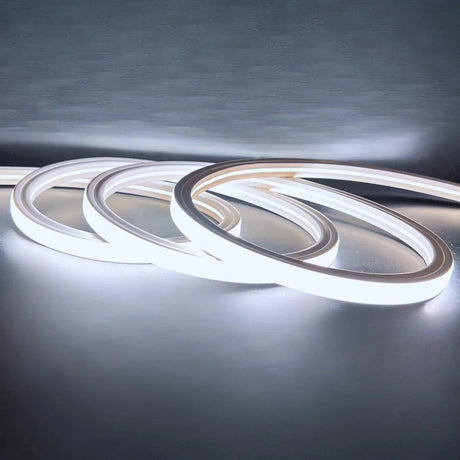
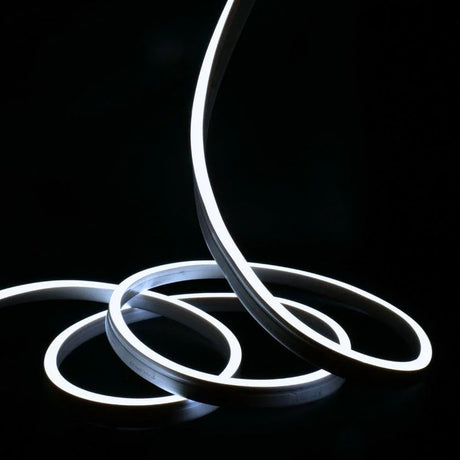
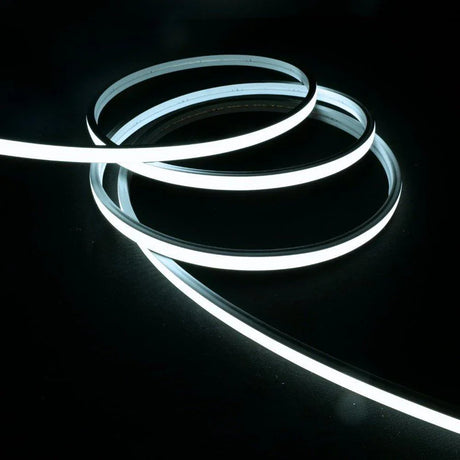
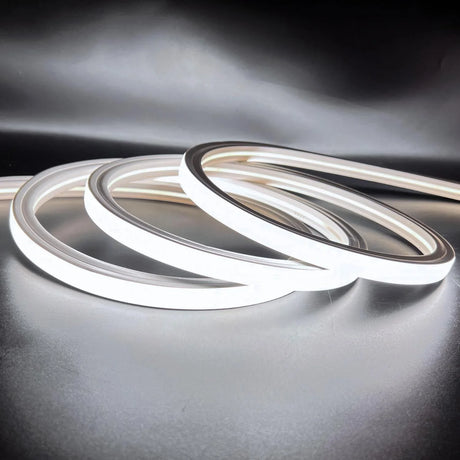
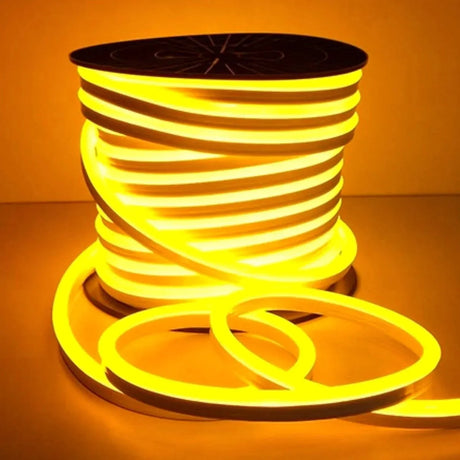
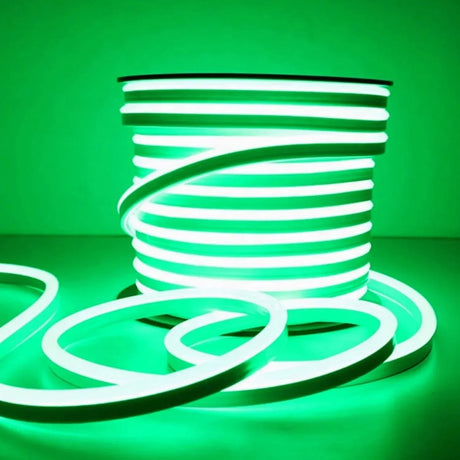
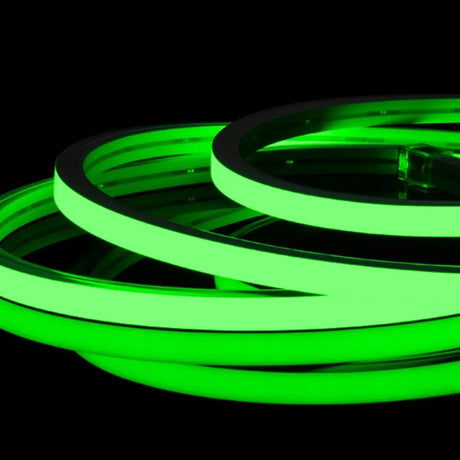
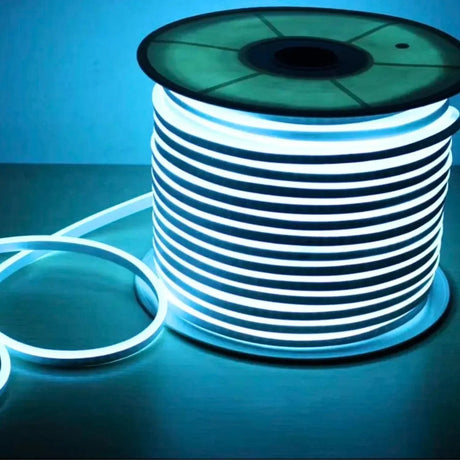
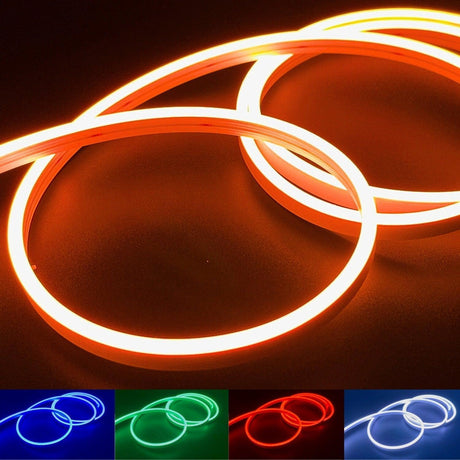
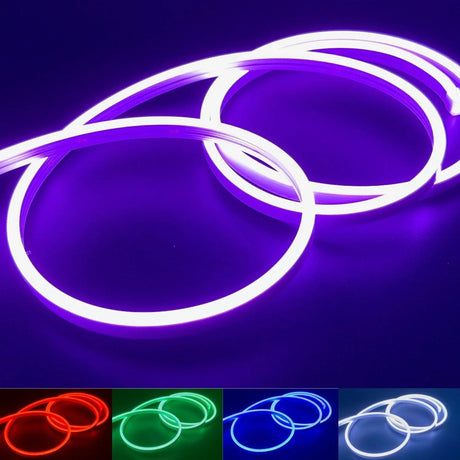
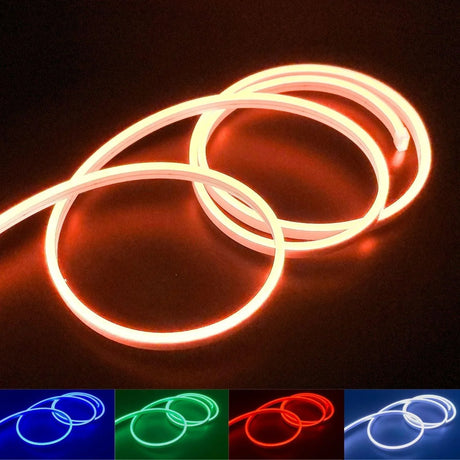
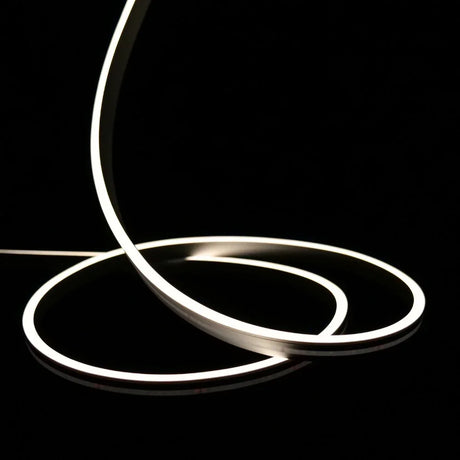
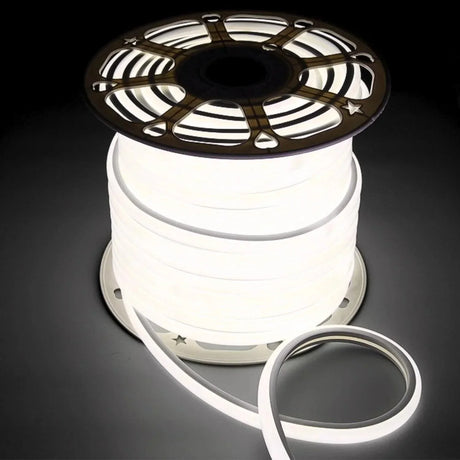
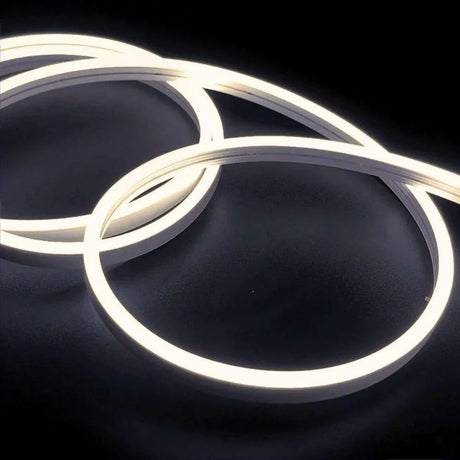
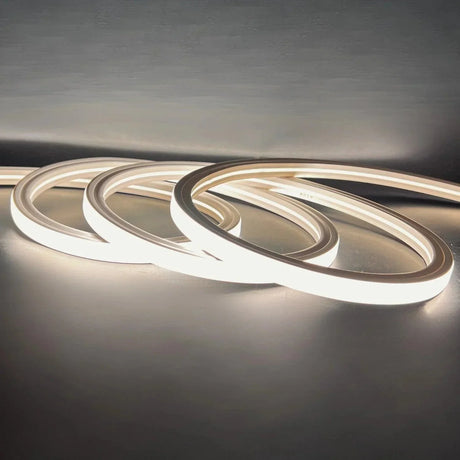
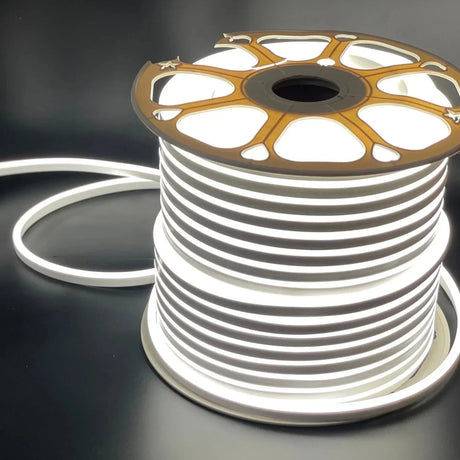
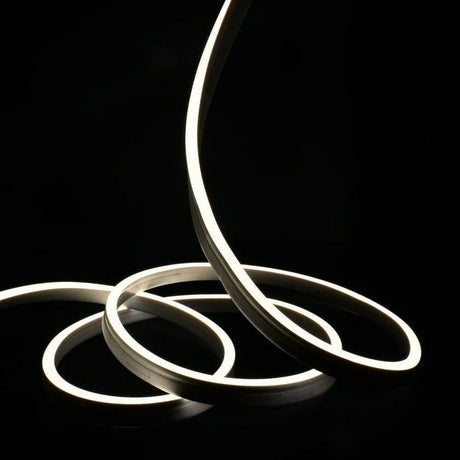
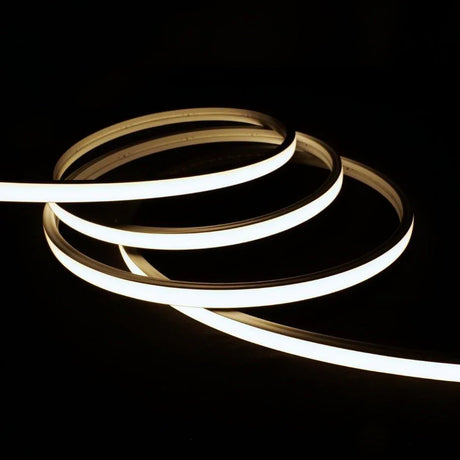
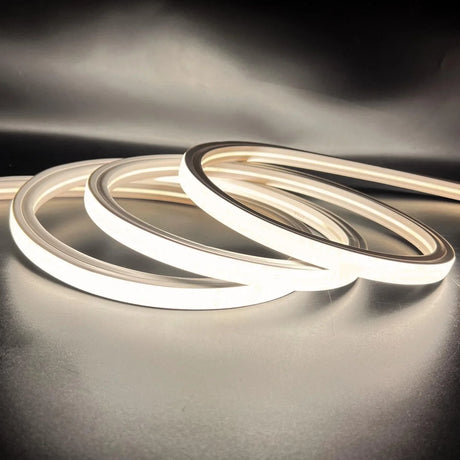
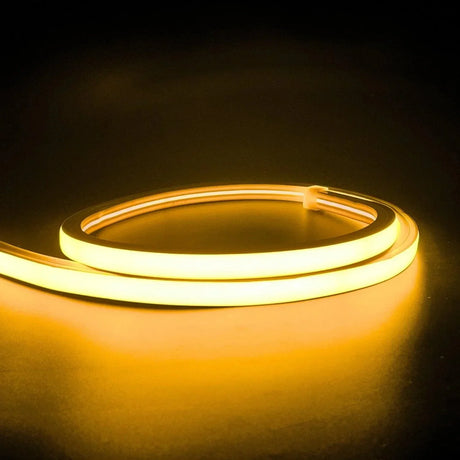
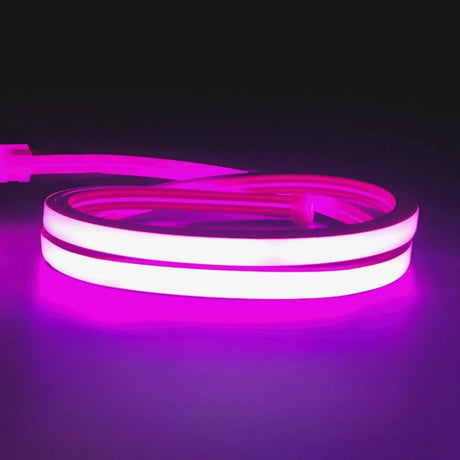
Replace exposed LED strip with a clean, continuous glow — that is what LED neon flex does for any installation. UK LED Lights carries the full neon flex range for 2026: single colour, RGB, and RGBW, in 12V, 24V, and mains-voltage options, with IP67 and IP68 silicone construction built to handle permanent UK outdoor exposure year-round. If you have been comparing options for signage, garden borders, architectural features, or decorative accents, this collection covers every application.
Our LED neon flex lights range includes front-emitting and side-emitting profiles, mini neon flex for tight-radius bends down to 20mm, and full-size profiles for architectural runs up to 50 metres. Available in IP67 for outdoor and wet-zone installations, IP68 for full submersion in ponds and water features, and a range of colour temperatures from warm 2700K through to cool 6500K. Custom lengths cut to your project dimensions — call 01952 370008 or email sales@ukledlights.co.uk.
12V · 24V · 240V Mains · Single Colour · RGB · RGBW · Mini Neon Flex · Front-Emitting · Side-Emitting · IP67 · IP68 · Horizontal & Vertical Bend · Custom Lengths · Free UK Delivery
Quick decision guide:
-
Garden border or pathway edging: Single colour 24V neon flex in IP67, warm white 3000K — mount using surface clips at 300mm intervals along the border edge.
-
Shop signage or logo: Mini neon flex 12V in your brand colour — the 20mm bend radius allows tight lettering and curves that standard neon flex cannot follow.
-
Architectural cove or ceiling perimeter: Single colour 24V front-emitting neon flex — produces a wider, more even wash across the cove surface than bare LED strip.
-
Decking perimeter or step nosing: IP67 side-emitting neon flex 24V, warm white — recessed into a mounting channel at the deck edge for a clean, unbroken line.
-
Pond surround or water feature: IP68 neon flex rated for continuous submersion — silicone body resists algae build-up and UV degradation.
-
Home cinema or gaming room accent lighting: RGB or RGBW 24V neon flex — pair with a WiFi controller for app and voice control through Alexa or Google Home.
-
Driveway edge or parking area delineation: IP67 neon flex in cool white 6000K — high visibility for vehicle guidance, UV-stable silicone withstands tyre spray and de-icing salt.
Who LED neon flex is for: Homeowners, garden designers, signage fabricators, architects, hospitality fit-out teams, electricians, and commercial lighting specifiers who need a smooth, continuous light line without visible LED dots. If the light source will be visible — not hidden inside a profile — neon flex is the professional choice because the silicone diffuser body eliminates hotspots entirely.
Who LED neon flex is NOT for: If you need maximum lumen output for task lighting (under-cabinet kitchen work surfaces, workshop benches), LED strip inside an aluminium profile will deliver higher brightness per watt. If your installation is entirely indoors, in a dry location, and hidden from view inside a profile, standard COB strip is more cost-effective. Neon flex is purpose-built for visible, decorative, and outdoor applications — not high-output functional lighting. Browse our COB LED strip range for task and profile-based applications.
Common buying mistakes to avoid:
-
Choosing IP65 neon flex for outdoor UK installations: IP65 covers surface splashes only — it will not withstand sustained UK rainfall, frost-thaw cycling, or ground-level standing water. IP67 is the minimum for any permanent outdoor neon flex installation. Every outdoor-rated product in our 2026 range is IP67 or IP68.
-
Using a dimmable driver with RGB or RGBW neon flex: RGB and RGBW neon flex requires a non-dimmable constant-voltage driver paired with a dedicated RGB controller. Dimmable drivers cause flicker, colour shift between channels, and premature LED failure.
-
Attempting tight bends with standard-size neon flex: Standard neon flex has a minimum bend radius of approximately 50–80mm depending on the profile. Forcing tighter curves cracks the internal PCB and creates dead spots. For lettering, logos, or tight decorative curves, use mini neon flex with its 20mm minimum radius.
-
Powering neon flex while still coiled on the reel: The silicone body retains heat more than bare strip. Coiled neon flex cannot dissipate heat effectively — the adhesive fails, LEDs overheat, and there is a genuine fire risk. Always uncoil, mount, and secure before powering on.
-
Leaving cut ends unsealed outdoors: Every cut end must be sealed with a silicone end cap and waterproof adhesive. An unsealed end allows moisture ingress that will corrode the copper tracks within weeks in UK conditions, voiding any IP rating.
- What is LED neon flex and how does it differ from traditional glass neon?
- Which LED neon flex voltage is right for your project — 12V, 24V, or mains?
- What IP rating does outdoor neon flex need in the UK?
- What is the difference between front-emitting and side-emitting neon flex?
- When should you use mini neon flex instead of standard neon flex?
- What colour options are available in LED neon flex?
- How do you install LED neon flex correctly?
- What driver and controller does LED neon flex need?
- Where does LED neon flex work best — application by application?
- How does LED neon flex compare to LED strip in aluminium profiles?
- Can LED neon flex be cut to custom lengths and joined on site?
- Why buy LED neon flex from UK LED Lights?
What is LED neon flex and how does it differ from traditional glass neon?
LED neon flex is a flexible silicone extrusion housing a continuous strip of LEDs that replicates the smooth, even glow of traditional glass neon tubing — without the fragility, high voltage, gas handling, or specialist installation that glass neon requires. The silicone body is shatterproof, UV-stable, and rated for outdoor use at IP67 or IP68, making it the default replacement for glass neon in both commercial signage and residential decorative lighting across the UK in 2026.
Traditional glass neon has been a staple of commercial signage since the early twentieth century. It produces light by passing electrical current through gas sealed inside hand-bent glass tubes — typically argon for blue-white colours or neon gas for red-orange. The result is a distinctive, even glow with no visible hotspots. The problem is everything else: glass neon operates at 3,000–15,000 volts, requires a specialist gas bender to manufacture, breaks if knocked or flexed, and consumes 3–5 times the energy of an equivalent LED replacement.
LED neon flex solves every one of these problems while preserving the visual effect:
-
Safety: LED neon flex operates at 12V, 24V, or mains voltage through an isolated driver. Glass neon requires thousands of volts and exposed high-voltage wiring at the tube electrodes. A cracked glass neon tube is both an electrocution hazard and a laceration risk — LED neon flex is shatterproof silicone that can be bent, dropped, and handled without danger.
-
Energy consumption: A typical LED neon flex installation consumes 8–14 watts per metre. An equivalent glass neon run producing similar brightness consumes 40–60 watts per metre. Over a 10-metre shopfront sign running 12 hours daily, the annual electricity saving is approximately 120–170 kWh — a measurable reduction in running cost from day one.
-
Lifespan: Quality LED neon flex delivers 50,000+ hours of rated life at L70 (the point where output drops to 70 percent of original). Glass neon tubes typically require gas replacement or electrode repair after 8,000–15,000 hours. Over a five-year period, LED neon flex requires no maintenance beyond occasional cleaning.
-
Colour range: Glass neon produces colour through gas type and phosphor coatings — each colour requires a separate tube. LED neon flex in RGB or RGBW produces millions of colours from a single length, controlled wirelessly from a phone, remote, or voice assistant.
-
Installation: Glass neon requires a certified neon installer, transformer mounting, and high-voltage wiring. LED neon flex can be mounted by any competent person using surface clips and a low-voltage driver — or by a qualified electrician for permanent hardwired installations.
| Feature |
LED Neon Flex |
Traditional Glass Neon |
| Operating voltage |
12V, 24V DC or 240V AC via isolated driver |
3,000–15,000V AC |
| Body material |
UV-stable silicone — shatterproof |
Glass — fragile |
| Energy per metre (typical) |
8–14W |
40–60W |
| Rated lifespan |
50,000+ hours (L70) |
8,000–15,000 hours |
| Colour options |
Single colour, RGB, RGBW from one unit |
One colour per tube |
| Minimum bend radius |
20mm (mini) / 50mm (standard) |
Depends on glass bender skill |
| IP rating |
IP67 / IP68 |
Not inherently rated — requires housing |
| Installation complexity |
Low — clips, driver, controller |
High — specialist bender + HV wiring |
| Maintenance |
Minimal — clean only |
Gas refill, electrode repair |
Which LED neon flex voltage is right for your project — 12V, 24V, or mains?
Choose 12V for short signage runs and detailed lettering under 5 metres. Choose 24V for the majority of residential and commercial installations up to 15–20 metres. Use 240V mains-voltage neon flex only for very long continuous decorative runs — typically building perimeters or large-scale commercial frontages — where low-voltage cabling would be impractical. Each voltage has distinct advantages and limitations that match specific project types.
The voltage you select determines maximum run length, driver requirements, bend behaviour, and installation method. Getting this wrong at the specification stage causes problems that are expensive to fix after installation.
-
12V neon flex: The lowest voltage option, producing the least heat and offering the tightest bend radius — particularly in mini neon flex format. Best suited for indoor signage, small logos, and detailed decorative work where tight curves are essential. Maximum practical run length before visible voltage drop is approximately 5 metres from a single feed point. Beyond that distance, you need a second feed or a step up to 24V.
-
24V neon flex: The most popular voltage for 2026 installations and the one we recommend for most projects. Runs up to 15–20 metres from a single feed without visible drop (depending on wattage per metre). Covers the vast majority of garden borders, architectural coves, decking perimeters, commercial signage, and hospitality lighting projects. The 24V accessory ecosystem — drivers, controllers, connectors, dimmers — is one of the widest available.
-
240V mains-voltage neon flex: Designed for long continuous runs of 50 metres or more without any driver mid-point. Connects directly to mains supply through a rectifier plug. Used for building perimeters, car park delineation, large commercial frontages, and event lighting where running low-voltage cable over long distances would require impractically heavy gauge wire. Note: 240V mains neon flex must not be permanently hardwired in most residential settings — use 24V for permanent home installations.
Both 12V and 24V fall within the SELV voltage threshold under BS7671 (120V DC ripple-free maximum), provided they are supplied from a suitably isolated, safety-rated driver. SELV is a system classification that depends on correct installation — not simply the voltage figure. A qualified electrician should confirm compliance for any permanently wired installation. If you are unsure which voltage suits your project, call our technical team on 01952 370008 — we specify neon flex projects daily and can advise based on your exact run lengths and application.
| Specification |
12V Neon Flex |
24V Neon Flex |
240V Mains Neon Flex |
| Max practical run (single feed) |
~5 metres |
15–20 metres |
50+ metres |
| Best application |
Signage, logos, small detail |
Gardens, coves, decking, commercial |
Building perimeters, long runs |
| Driver required |
12V constant voltage |
24V constant voltage |
Rectifier plug (supplied) |
| SELV classification |
Yes — with isolated driver |
Yes — with isolated driver |
No — mains voltage |
| Permanent hardwire residential |
Yes |
Yes |
Not recommended |
| Accessory range |
Moderate |
Widest |
Limited — proprietary connectors |
| Heat output |
Lowest |
Low |
Moderate |
What IP rating does outdoor neon flex need in the UK?
IP67 is the minimum rating for any LED neon flex installed permanently outdoors in the UK. IP65 covers surface splashes only and will not survive sustained rainfall, frost-thaw cycling, or ground-level standing water — all standard conditions in British winters. For installations submerged in ponds, fountains, or water features, IP68 is required. Every outdoor neon flex product in the UK LED Lights 2026 range is rated IP67 or IP68.
The IP (Ingress Protection) rating tells you exactly what level of water and dust exposure a product can withstand. Many suppliers sell IP65 neon flex as "outdoor rated" — technically it resists water jets from a nozzle in laboratory conditions, but real UK outdoor exposure is far more demanding than a lab test.
Consider what outdoor neon flex actually faces during a typical British winter:
-
Sustained heavy rain: Not a brief splash but hours of continuous downpour. IP65 silicone seals can wick moisture through the end caps and connection points over repeated exposure cycles. IP67 is rated for temporary immersion up to 1 metre — sustained rain is well within its capability.
-
Frost-thaw cycling: Water that penetrates even slightly through IP65 seals freezes, expands, and forces the seal open further. After 20–30 frost-thaw cycles through a typical UK winter, an IP65 product can have significantly compromised water resistance. IP67 silicone construction is solid-body — no seams or wrapped layers for water to penetrate.
-
Ground-level standing water: Garden borders, driveways, and decking edges sit at ground level where water pools after rain. IP65 is not rated for any submersion. IP67 handles standing water up to 1 metre depth for 30 minutes — more than adequate for puddle exposure.
-
De-icing salt and chemical exposure: Driveway and parking area neon flex encounters road salt, which accelerates corrosion of any exposed copper or connection point. UV-stable silicone body construction used in our IP67 range resists salt, most common garden chemicals, and UV degradation.
For pond surrounds, fountains, and water features where the neon flex will be partially or fully submerged during operation, step up to IP68. This rating covers continuous submersion at depths specified by the manufacturer — typically 1–3 metres. Our IP68 neon flex uses a fully encapsulated silicone body with sealed end caps designed for permanent underwater operation.
What is the difference between front-emitting and side-emitting neon flex?
Front-emitting neon flex projects light outward from the flat face of the silicone body — ideal for wall-mounted signs, cove lighting, and any application where the viewer looks directly at the lit surface. Side-emitting neon flex projects light from the narrow edge — used for recessed channels, step nosing, decking edges, and applications where the neon flex is viewed from the side rather than head-on. The choice depends entirely on mounting orientation and viewing angle.
Both types use the same LED technology and silicone construction — the difference is the position of the LED strip inside the extrusion and the shape of the diffuser surface.
-
Front-emitting (top-view): LEDs face upward through a wide, flat diffuser surface. Produces a broad wash of light visible from directly in front. Mount against a wall or inside a ceiling cove with the flat face pointing toward the viewer. Typical beam angle: 120 degrees from the face. Most signage, wall-mounted decorative features, and architectural cove applications use front-emitting neon flex.
-
Side-emitting (edge-view): LEDs face sideways through a narrow diffuser edge. Produces a focused line of light visible from the side. Mount recessed into a channel or along an edge where the thin profile faces outward. Typical beam angle: 120 degrees from the edge. Decking perimeters, stair nosing, shelf edges, and floor-recessed runs typically use side-emitting neon flex.
A common specification error is selecting front-emitting neon flex for a recessed deck channel — the wide face ends up buried in the channel and only the thin silicone edge is visible, resulting in a dim, narrow light line. Similarly, mounting side-emitting neon flex on a flat wall wastes most of the light output into the mounting surface rather than into the room. Confirm your mounting method and viewing angle before ordering. If you are unsure which orientation suits your project, send a photo or sketch to sales@ukledlights.co.uk and our team will recommend the correct profile.
When should you use mini neon flex instead of standard neon flex?
Use mini neon flex when your design requires bend radii tighter than 50mm — typically signage lettering, small logos, detailed decorative curves, and compact architectural features. Standard neon flex bends to approximately 50–80mm minimum radius depending on profile. Mini neon flex achieves radii as tight as 20mm, allowing it to follow the curves of individual letters, small circular motifs, and intricate decorative patterns that standard profiles physically cannot form.
The trade-off for the tighter bend radius is a smaller body cross-section, which means slightly lower maximum brightness compared to full-size neon flex. For signage and decorative detail work, this is rarely a limitation — these applications prioritise shape fidelity over raw light output.
Typical 2026 applications where mini neon flex is the correct choice:
-
Custom signage and lettering: Business names, quotes, house numbers, and personalised text signs. The 20mm bend radius allows lower-case letters at heights as small as 60–80mm — standard neon flex cannot form letters smaller than approximately 150mm height without cracking the internal PCB.
-
Small logos and brand marks: Circular, oval, and complex-shaped logos for shop interiors, offices, and exhibition stands. The tight radius lets the neon flex follow the exact contour of the design.
-
Compact decorative accents: Mirror frames, headboard outlines, bar front details, and feature wall accents where the neon flex follows curves in a small space.
-
Architectural detail in tight spaces: Small alcove outlines, narrow shelf edges, and compact niche lighting where standard neon flex would be too bulky to bend cleanly.
For straight runs, gentle curves, and anything with a bend radius above 50mm, standard neon flex is the better choice — it delivers higher brightness per metre, a wider diffuser surface, and greater mechanical rigidity for long unsupported spans. Our collection includes both sizes across multiple voltages and IP ratings. Call 01952 370008 to discuss which size fits your specific project.
What colour options are available in LED neon flex?
UK LED Lights stocks LED neon flex in single colour whites (warm 2700K, 3000K, natural 4000K, cool 6000K), a range of fixed single colours (red, green, blue, amber, pink, purple), plus colour-changing RGB and RGBW. RGBW neon flex adds a dedicated white LED channel alongside the RGB channels, solving the problem that RGB alone cannot produce clean white light — only a cold, violet-tinged approximation.
Selecting the right colour type is a functional decision, not just an aesthetic one:
-
Single colour warm white (2700K–3000K): The most popular choice for residential garden borders, decking perimeters, and architectural coves. Produces a soft, warm glow that matches the colour temperature of most interior lighting — creating a consistent visual transition between indoor and outdoor spaces.
-
Single colour natural white (4000K): A balanced, neutral white preferred for commercial signage, retail window displays, and hospitality exteriors where accurate colour rendering of products or branding materials is important.
-
Single colour cool white (6000K): A crisp, high-visibility white used for driveway delineation, parking area lighting, security perimeter marking, and industrial wayfinding where maximum contrast against the surroundings is the priority.
-
Fixed single colours (red, green, blue, amber, pink, purple): Permanent colour for brand signage, themed installations, and decorative accents that never need to change. Fixed-colour neon flex typically delivers higher colour saturation than the same colour produced by an RGB unit, because the LEDs are optimised for that specific wavelength.
-
RGB neon flex: Produces millions of colour combinations controlled wirelessly via app, remote, or voice assistant. Ideal for mood lighting, event spaces, gaming rooms, and seasonal decorative changes. Important: RGB alone produces a cold, violet-tinged white that most people find unnatural — if you need white light from the same neon flex, choose RGBW.
-
RGBW neon flex: Adds a dedicated white LED channel (warm or natural) to the RGB channels. This delivers clean, accurate white light alongside the full RGB colour spectrum. The most versatile option for installations that need both colour effects and functional white illumination — home cinemas that double as living rooms, restaurants that shift from dining ambience to event lighting, and gardens that need warm white borders with occasional colour for celebrations.
All RGB and RGBW neon flex requires a dedicated RGB or RGBW controller — not a standard dimmer. The controller manages individual colour channels independently. Pair with a WiFi-enabled controller for smartphone app control, Alexa, or Google Home voice commands. Browse our LED controllers range for compatible options.
How do you install LED neon flex correctly?
LED neon flex installation follows five core steps: plan and measure the run, mount the fixing clips or channel, lay the neon flex into position, make electrical connections to the driver, and seal all cut ends and joints with silicone end caps. Proper installation ensures rated IP performance, prevents premature failure, and delivers the clean visual line that neon flex is designed to produce. A typical single-colour garden border installation takes 1–2 hours for a competent installer.
Follow these steps for a professional-standard neon flex installation:
-
Plan the run and measure precisely: Walk the installation route and measure the total length including any returns, corners, and connection tails. Add 100–150mm at each end for connection clearance. Mark the positions of the driver, any power injection points, and the start and end of the neon flex run. For 24V installations, confirm the total length does not exceed the maximum run for your chosen product — typically 15–20 metres from a single feed.
-
Mount the fixing clips or channel: Install surface-mounting clips at 250–300mm intervals along the planned route. For recessed installations, route the aluminium or plastic channel first and verify alignment before committing with screws. On masonry, use appropriate wall plugs rated for the substrate. On timber decking, pre-drill pilot holes to prevent splitting. Ensure all clips are aligned — a single misaligned clip creates a visible kink in the finished line.
-
Lay the neon flex into the clips or channel: Uncoil the neon flex fully before mounting — never power neon flex while still on the reel. Starting from the driver end, press the neon flex into each clip in sequence. At corners, bend gently to the minimum radius — do not force. If you need a 90-degree corner sharper than the minimum bend radius, use a corner connector fitting rather than bending the neon flex itself.
-
Connect to the driver and controller: Strip the silicone from the connection end to expose the copper pads. Solder or use push-fit connectors to link the neon flex to the driver output cable. For RGB and RGBW, connect each colour channel to the matching controller output — red to red, green to green, blue to blue, white to white. Verify polarity before powering on. An incorrect connection will not damage the neon flex, but the strip will not illuminate until polarity is corrected.
-
Seal all cut ends, joints, and connections: Apply silicone end caps to every cut end using waterproof adhesive sealant. For outdoor installations rated IP67 or IP68, this step is critical — an unsealed end allows moisture ingress that corrodes the copper tracks within weeks in UK outdoor conditions. For mid-run joints, use IP-rated inline connectors with heat-shrink or silicone tubing over the joint. Test the complete installation before applying final sealant, so any faulty connections can be accessed without cutting through sealed joints.
For permanently wired installations connected to the mains electrical supply, a qualified electrician should make the final connection from the mains to the LED driver, in compliance with BS7671 and Part P of the Building Regulations. The low-voltage side (driver to neon flex) can be installed by any competent person. If you need guidance on driver placement, cable routing, or connection methods for your specific project, our technical team is available on 01952 370008 during working hours, Monday to Friday, 9am–5pm.
What driver and controller does LED neon flex need?
Single colour LED neon flex needs a constant-voltage LED driver matched to the strip voltage (12V or 24V) with wattage capacity at least 20 percent above the total strip consumption. RGB and RGBW neon flex needs the same constant-voltage driver plus a dedicated RGB or RGBW controller — never a standard dimmer. Using a dimmable driver with RGB neon flex causes flicker, colour shifting between channels, and premature LED failure. Match the driver, match the controller, and size both correctly.
Correct driver and controller specification is the single most important factor in neon flex longevity and performance. These are the rules:
Driver sizing
-
Calculate total wattage: Multiply the wattage per metre of your neon flex by the total installed length. Example: 10 metres of 10W/m neon flex = 100 watts total.
-
Add 20 percent headroom: A driver running at maximum rated capacity runs hotter and has a shorter lifespan. For the example above, specify a driver rated at 120 watts or higher. This 20 percent buffer also accommodates inrush current at power-on.
-
Match voltage exactly: A 24V driver for 24V neon flex. A 12V driver for 12V neon flex. A mismatched voltage will either under-drive the strip (dim, incomplete illumination) or over-drive it (overheating, rapid failure). There is no safe middle ground.
-
Indoor vs outdoor driver: For outdoor installations, specify an IP67-rated driver housed in a weatherproof enclosure. Indoor-rated drivers (IP20) exposed to moisture will fail and may create an electrical hazard.
Controller selection for colour-changing neon flex
RGB and RGBW neon flex requires a controller that sits between the driver and the neon flex, managing each colour channel independently. The controller type determines how you interact with the lighting:
-
RF remote controller: Simple handheld remote with colour wheel and mode buttons. No app or internet required. Reliable and immediate — suitable for installations where the same person operates the lights regularly.
-
WiFi controller: Connects to your home or business WiFi network. Controlled via smartphone app with full colour mixing, scheduling, and scene programming. Compatible with Alexa and Google Home voice commands. The most popular choice for 2026 residential installations.
-
DMX controller: Professional-grade control for commercial, architectural, and entertainment installations. Allows pixel-level control of colour and intensity across multiple zones. Used in hospitality, retail, and event lighting where complex lighting sequences are programmed by a lighting designer.
Browse our LED driver and LED controller collections for compatible options. If you are unsure which combination suits your project, email your neon flex product code and run length to sales@ukledlights.co.uk and we will specify the exact driver and controller.
Where does LED neon flex work best — application by application?
LED neon flex performs best in applications where the light source is visible and a smooth, continuous line is required — garden borders, decking perimeters, signage, architectural coves, step nosing, driveways, water features, and commercial frontages. Unlike bare LED strip, the silicone diffuser body eliminates hotspots entirely, producing an even glow from every angle. This makes neon flex the default choice whenever the lighting itself is a design feature, not just a hidden light source.
Here is where UK LED Lights customers are using neon flex most in 2026, with the specification that works for each:
-
Garden border and pathway edging: IP67 single colour 24V, warm white 3000K, mounted at ground level using surface clips. Creates a continuous warm border that defines planting beds, paths, and lawn edges after dark. The silicone body resists contact with soil, mulch, and garden chemicals.
-
Decking perimeter and step nosing: IP67 side-emitting 24V, warm white, recessed into a routed channel at the deck edge. Provides wayfinding light for steps and level changes while creating a clean architectural border around the deck. Warm white preserves night vision better than cool white for outdoor leisure areas.
-
Commercial signage and shopfronts: Mini neon flex 12V or 24V in brand colours or warm white. Mounted on sign trays, fascia boards, or directly on walls. Replaces glass neon at a fraction of the energy cost and with zero maintenance. RGB versions allow colour changes for seasonal promotions or events.
-
Architectural ceiling coves and wall features: Front-emitting 24V, warm or natural white, laid into a plaster cove or shadow gap. Produces the same soft indirect glow as traditional cove lighting but in a continuous line with no visible dots or breaks — even without an aluminium profile or additional diffuser.
-
Driveway delineation and parking areas: IP67 cool white 6000K, 24V or mains voltage neon flex depending on run length. Marks driveway edges, turning circles, and parking bays with high-visibility light lines. UV-stable silicone resists tyre spray, de-icing salt, and UV exposure from direct sunlight.
-
Pond surrounds and water features: IP68 neon flex for any section that may be submerged. The solid silicone body resists algae adhesion and does not degrade from continuous water contact. Warm white 3000K creates a natural glow around water that complements planting and stonework.
-
Home cinema and entertainment rooms: RGBW 24V neon flex mounted in ceiling coves, behind screens, or along wall features. RGBW delivers full colour effects for film and gaming sessions, plus clean warm white for everyday use. Controlled via app or voice — no need to reach for a switch.
-
Hospitality and restaurant lighting: 24V neon flex in bar fronts, booth outlines, exterior terrace borders, and feature walls. The smooth light line adds visual interest without the maintenance liability of glass neon. RGB or RGBW allows colour changes to match events, seasons, or brand refreshes.
For applications where maximum brightness per watt is the priority and the light source is hidden from view — under kitchen cabinets, inside wardrobes, below shelving — COB LED strip inside an aluminium profile will deliver higher output at lower cost. Neon flex is engineered for visible, decorative, and outdoor applications where appearance matters as much as performance.
How does LED neon flex compare to LED strip in aluminium profiles?
LED neon flex and LED strip in aluminium profiles both produce smooth, continuous light lines — but they achieve it in fundamentally different ways and serve different applications. Neon flex uses its own silicone body as the diffuser, making it self-contained, weatherproof, and suitable for curved outdoor installations. Strip in profiles relies on a separate aluminium housing and polycarbonate diffuser, delivering higher brightness and better thermal management for indoor linear installations. Neither replaces the other — they solve different problems.
| Feature |
LED Neon Flex |
LED Strip in Aluminium Profile |
| Diffuser type |
Integral silicone body |
Separate polycarbonate lens in alu housing |
| Weatherproofing |
IP67 / IP68 as standard |
Requires IP-rated strip + sealed profile |
| Flexibility |
Bends horizontally and vertically |
Rigid — straight runs only (per section) |
| Maximum brightness |
Moderate — 800–1,200 lm/m typical |
High — up to 2,400+ lm/m with high-output strip |
| Thermal management |
Silicone dissipates moderate heat |
Aluminium acts as heatsink — superior cooling |
| Installation method |
Surface clips or recessed channel |
Screwed, recessed, or surface-mounted profile |
| Best environment |
Outdoor, curved, visible, decorative |
Indoor, linear, recessed, task lighting |
| Profile/housing cost |
None — self-contained |
Additional cost for profile + diffuser + endcaps |
| Maintenance |
Wipe clean — sealed unit |
Diffuser can be removed for strip access |
In practice, many projects use both. A 2026 kitchen-garden project might use COB strip in aluminium profiles under the kitchen cabinets for task lighting, then switch to IP67 neon flex for the garden border and step lighting outside — each product in the application it handles best. Our technical team can help you specify the right product for each zone of a mixed project — call 01952 370008 or browse our aluminium profile range alongside this neon flex collection.
Can LED neon flex be cut to custom lengths and joined on site?
Yes — LED neon flex can be cut to length at marked intervals along the strip, and joined on site using soldered connections or IP-rated push-fit connectors. UK LED Lights also offers a pre-cut service where we cut neon flex to your exact dimensions before dispatch, with end caps and connection tails factory-fitted. Custom cutting eliminates the need for on-site tools and ensures a factory-sealed finish on every cut end — particularly important for outdoor IP67 and IP68 installations.
Cutting and joining neon flex on site is more involved than cutting bare LED strip, because the silicone body must be carefully separated to access the copper pads without damaging the diffuser:
-
Cutting: Cut only at the marked cut points indicated on the neon flex body. Use a sharp blade to cut cleanly through the silicone — scissors or blunt tools compress the body and can crack the internal PCB. After cutting, strip back 8–10mm of silicone from the connection end to expose the copper pads.
-
Joining: Solder the exposed copper pads using a temperature-controlled iron (300–350 degrees Celsius, brief contact). Alternatively, use push-fit pin connectors designed for neon flex — these press into the exposed pads without soldering. For outdoor installations, cover every joint with heat-shrink tubing and seal with waterproof silicone adhesive.
-
End caps: Every cut end that is not joined to another section must be sealed with a silicone end cap. Apply waterproof adhesive inside the cap before pressing it onto the neon flex end. For IP68 submersible installations, use a secondary bead of aquarium-grade silicone around the cap-to-body joint.
If you prefer a finished, factory-sealed result, use our pre-cut service. Provide your required lengths and we will cut, fit end caps, and attach connection tails before dispatch. This is particularly valuable for projects with multiple different lengths — a garden with six border sections, a shopfront sign with lettering of varying sizes, or a decking installation with different step widths. Email your measurements to sales@ukledlights.co.uk or call 01952 370008 to place a custom order.
Why buy LED neon flex from UK LED Lights?
UK LED Lights is a specialist LED supplier based in Telford, Shropshire, stocking neon flex, COB strip, drivers, controllers, and accessories in our own UK warehouse for same-day dispatch. We carry IP67 and IP68 silicone neon flex tested to withstand UK outdoor conditions — not rebranded budget imports rated in laboratory conditions that fail after one British winter. Our technical team specifies neon flex projects daily, from single garden borders to multi-zone commercial installations, and is available on 01952 370008 Monday to Friday, 9am–5pm.
-
UK stock, UK dispatch: Every neon flex product on this page is held in our Telford warehouse. Orders placed before 2pm on working days dispatch the same day. No waiting for overseas shipments, no customs delays, no surprise import charges.
-
Free UK delivery: Standard delivery to any UK mainland address at no extra cost. Next-day and pre-12 options available for urgent projects.
-
Technical support from people who install: Our team does not read from a script. They specify LED lighting for electricians, designers, architects, and trade customers every day. Call 01952 370008 with your project details — run lengths, mounting method, environment, control requirements — and we will specify the exact products, driver, and controller you need.
-
Custom cutting service: We cut neon flex to your exact lengths, fit end caps, and attach connection tails before dispatch. No on-site cutting tools needed — just mount and connect.
-
Tested for UK conditions: Our outdoor-rated neon flex is selected for UV stability, frost-thaw resilience, and sustained rain exposure. We do not stock products that pass a lab IP test but fail in a real British garden.
-
Full accessory range: Drivers, controllers, connectors, mounting clips, channels, end caps, and corner fittings — all compatible, all in stock. One order, one delivery, everything you need for a complete installation.
-
Our neon flex has been installed on commercial facades, restaurant frontages, and garden borders that survive full UK winters without seal failure.
-
Every neon flex order includes a cut guide and end-cap sealing instructions specific to the profile you have purchased.
UK LED Lights Ltd · Company No: 12301805 · Unit D4, Stafford Park 4, Telford, Shropshire, TF3 3BA
Ready to order or need help specifying your neon flex project?
How does LED neon flex compare to LED strip in an aluminium profile?
Neon flex and LED strip in an aluminium profile produce very different visual effects from the same LED chips — this table shows where each format fits best.
| Feature |
LED Neon Flex |
LED Strip in Aluminium Profile |
| Appearance |
Thick, round or square glowing tube — neon-style |
Slim, flat architectural light line |
| Dot visibility |
Zero — full silicone diffusion |
Zero with COB strip and milky diffuser |
| Flexibility |
Bends to 20mm radius (mini) — follows curves naturally |
Rigid aluminium — straight runs only without corner connectors |
| Weatherproofing |
IP67/IP68 built in — no additional sealing needed |
Depends on profile sealing and strip IP rating |
| Heat dissipation |
Lower — silicone insulates heat |
Higher — aluminium acts as passive heatsink |
| Lumen output per watt |
Lower — silicone absorbs 20-35% of output |
Higher — clear diffuser transmits 95% |
| Best for |
Signage, curves, outdoor borders, decorative features |
Kitchens, ceilings, commercial task lighting, high output |
| Cost comparison |
Higher per metre (strip + silicone body) |
Strip + profile + diffuser — comparable total cost |
Choose neon flex when curves, outdoor exposure, and a bold neon-style aesthetic matter. Choose strip in a profile when maximum brightness, thermal management, and slim architectural lines are the priority. Call 01952 370008 for project-specific advice.
Recommended setup for a 10-metre garden border neon flex installation
-
Neon flex: 24V single colour warm white 3000K, IP67, front-emitting 10x20mm profile
-
Driver: 24V 150W constant voltage, IP67 weatherproof (100W load + 20% headroom = 120W minimum)
-
Mounting: Aluminium neon flex clips at 300mm intervals, stainless steel screws for outdoor use
-
Accessories: Silicone end caps (1 per cut end), front cap with wire exit, adhesive-lined heat shrink for all joints
-
Total cost guide: Approximately £8-12 per metre for neon flex + £30-50 for driver + £15-20 for clips and end caps
Neon flex projects vary widely in length, bend complexity, and mounting method — we will adjust this recommendation to match your layout. Call 01952 370008 or email sales@ukledlights.co.uk for a tailored specification.
When should you choose a different product instead of LED neon flex?
Neon flex is the right choice for many installations — but knowing when it is the wrong choice saves you time and money.
-
You need maximum brightness for task lighting: Neon flex loses 20-35% of light output through silicone diffusion. For task-critical applications like kitchen worktops or workshop benches, COB strip in an aluminium profile delivers more usable lumens per watt.
-
You need a slim, low-profile light line: Neon flex profiles are 10-25mm thick. If your design requires a 7mm-deep flush installation, a slim recessed aluminium profile with COB strip is the correct specification.
-
You need the strip accessible for future maintenance: Neon flex encapsulates the LEDs permanently in silicone. If you want the ability to swap the strip without replacing the entire housing, an aluminium profile with clip-in strip is more serviceable.
-
Your installation is purely indoor and straight: For straight indoor runs where weather protection is unnecessary, strip in an aluminium profile costs less and outperforms neon flex on brightness, CRI, and thermal management.
If you are unsure whether this product suits your project, call 01952 370008 — our technical team will recommend the correct alternative if this is not the right match.
Frequently asked questions about LED neon flex
Answers to the most common LED neon flex questions from our customers, electricians, designers, and trade buyers in 2026.
1. Is LED neon flex waterproof?
-
IP67 neon flex: Withstands temporary immersion up to 1 metre for 30 minutes — more than sufficient for permanent outdoor UK installations including rain, frost, and ground-level water pooling.
-
IP68 neon flex: Rated for continuous submersion — suitable for ponds, fountains, and water features.
-
IP65 is not adequate for permanent UK outdoor use — surface splash rating only.
2. Can you bend LED neon flex in any direction?
-
Horizontal bend: Most neon flex profiles bend freely in the horizontal plane along the flat face of the silicone body.
-
Vertical bend: Some profiles also support vertical bending — check the product specification for confirmed bend directions.
-
Minimum radius: Standard neon flex bends to approximately 50–80mm. Mini neon flex bends to 20mm.
-
Do not force bends tighter than the stated minimum — this cracks the internal PCB and creates dead spots.
3. How long does LED neon flex last?
-
Rated lifespan: 50,000+ hours at L70 — the point at which output drops to 70 percent of original brightness.
-
At 8 hours daily use: Approximately 17 years before reaching L70.
-
Factors that reduce lifespan: Overdriving with a mismatched driver, inadequate heat dissipation, powering while coiled, and unsealed cut ends allowing moisture ingress.
4. Does LED neon flex get hot?
-
Operating temperature: LED neon flex typically reaches 40–55 degrees Celsius at the silicone surface during normal operation — warm to the touch but not a burn risk.
-
Never power while coiled: Heat cannot dissipate from coiled neon flex. The silicone retains heat, the adhesive fails, and LEDs overheat — creating a fire risk.
-
Ventilation: For enclosed installations (recessed channels with covers), ensure some air circulation to prevent sustained heat build-up.
5. Can LED neon flex be dimmed?
-
Single colour neon flex: Yes — use a trailing-edge dimmer or a PWM (Pulse Width Modulation) dimmer matched to the driver type. Trailing-edge dimmers cost approximately £15 and are compatible with most LED drivers.
-
RGB and RGBW neon flex: Dimming is controlled through the RGB/RGBW controller — not a wall dimmer. The controller adjusts brightness and colour independently per channel.
-
Avoid leading-edge dimmers: Leading-edge dimmers frequently cause visible flicker with LED loads.
6. What is the difference between neon flex and neon rope light?
-
Neon flex: Flat or shaped silicone extrusion with a wide diffuser face producing a smooth, even light line. Professional-grade product for permanent installations.
-
Rope light: Round PVC tube with LEDs spaced at intervals — visible dots, lower brightness, lower IP ratings, and shorter lifespan. A budget decorative product, not a professional lighting solution.
-
For any permanent installation, neon flex is the correct choice — rope light is suitable for temporary decorative use only.
7. Can LED neon flex be used in bathrooms?
-
Yes — with correct IP rating for the zone. UK bathroom installations are classified into zones under BS7671. Zone 0 (inside bath or shower tray) requires IP67 minimum. Zone 1 (above bath to 2.25m) requires IP65 minimum, but we recommend IP67 for all bathroom wet zones.
-
Use 12V or 24V only — mains-voltage neon flex is not suitable for bathroom wet zones.
-
All connections must be made outside the wet zone or fully sealed to IP67 standard.
8. How do you connect multiple lengths of neon flex together?
-
Soldered joint: Strip back silicone, solder copper pads, cover with heat-shrink and sealant. Most reliable for permanent outdoor installations.
-
Push-fit connector: Pin connector presses into exposed pads — no soldering required. Faster but slightly less durable for outdoor use unless fully sealed.
-
Maximum total run: Respect the maximum run length for your voltage — typically 5m (12V), 15–20m (24V). For longer runs, wire sections in parallel back to the driver, not in series.
9. Does LED neon flex work with Alexa and Google Home?
-
Yes — when paired with a WiFi-enabled controller. Our WiFi controllers connect to your home network and appear as devices in the Alexa or Google Home app.
-
Voice commands: "Alexa, set the garden lights to warm white" or "Hey Google, turn the neon flex to 50 percent."
-
App control: Full colour mixing, scheduling, scene programming, and brightness adjustment from your phone.
-
Browse our LED controller range for WiFi-compatible options.
10. Can LED neon flex be mounted on metal surfaces?
-
Not directly on bare metal without insulation. Bare metal contact can cause short circuits if the neon flex silicone body is damaged, nicked, or compressed at a mounting point. Always use plastic mounting clips or apply an insulating layer (PVC tape, plastic channel) between the neon flex and bare metal.
-
Painted or powder-coated metal provides adequate insulation for most installations — the coating acts as a barrier between the neon flex and the conductive substrate.
11. What accessories do I need for an LED neon flex installation?
-
Driver: Constant-voltage, matched to neon flex voltage and wattage plus 20 percent headroom.
-
Controller (RGB/RGBW only): RF remote, WiFi, or DMX — matched to the number of colour channels.
-
Mounting clips: Surface clips at 250–300mm intervals. Available in matching colours to the neon flex body.
-
End caps: Silicone caps for every cut or terminated end — essential for outdoor IP rating integrity.
-
Connectors: Push-fit or solder-type for joining lengths. IP-rated for outdoor use.
-
Sealant: Waterproof silicone adhesive for sealing end caps and joints on outdoor installations.
12. How much electricity does LED neon flex use?
-
Typical consumption: 8–14 watts per metre depending on output level and colour type.
-
10-metre garden border at 10W/m: 100 watts total. Running 6 hours per evening = 0.6 kWh per day = approximately £0.18 per day at 2026 average UK electricity rates.
-
Annual cost for the same border: Approximately £66 per year at 6 hours daily use — roughly the same as running a single 100W incandescent bulb.
13. Is LED neon flex safe for children and pets?
-
12V and 24V neon flex operates at extra-low voltage — within the SELV threshold under BS7671 when supplied from a suitably isolated driver. This represents a significantly reduced shock risk under normal dry conditions.
-
The silicone body is shatterproof — no glass, no sharp edges, no fragile components.
-
Surface temperature is warm, not hot — typically 40–55 degrees Celsius, comparable to a warm radiator. Not a burn risk for brief contact.
-
For installations accessible to children, ensure all connections and drivers are enclosed and inaccessible.
14. Can I use LED neon flex for outdoor signage in the UK?
-
Yes — neon flex is the most common replacement for glass neon in UK outdoor signage as of 2026. Specify IP67 minimum for any sign exposed to weather.
-
Planning permission: Illuminated signs may require planning consent depending on your local authority — check before installation.
-
Electrical regulations: Permanently wired outdoor signs must comply with BS7671 and should be installed or certified by a qualified electrician.
-
UV stability: Our silicone neon flex is UV-stable — colour and clarity do not degrade from sun exposure over the rated lifespan.
15. What warranty does UK LED Lights offer on neon flex?
-
Warranty terms: Contact our team at 01952 370008 or email sales@ukledlights.co.uk for current warranty details on specific products.
-
Warranty conditions: Correct driver specification, proper installation per our guidelines, and sealed connections are required for warranty validity.
-
Technical support: Available Monday to Friday, 9am–5pm for installation guidance and troubleshooting.
16. Do you deliver neon flex to Northern Ireland, Scottish Highlands, or the Channel Islands?
-
UK mainland: Free standard delivery on all orders.
-
Northern Ireland, Scottish Highlands, Channel Islands: Delivery available — contact 01952 370008 for delivery timescales and any surcharge that may apply to your postcode.
-
Trade and bulk orders: Pallet delivery available for large commercial orders — call for a quote.
17. Can I use LED neon flex for outdoor garden borders in the UK?
-
Yes — use IP67-rated neon flex for any permanent outdoor installation. IP67 silicone construction handles sustained UK rainfall, frost-thaw cycling, and ground-level damp year-round.
-
Do not use IP65 neon flex outdoors permanently — it covers surface splashes only and degrades within months under British weather conditions.
-
Mount using surface clips at 300mm intervals and seal all connection points with self-amalgamating silicone tape.
18. What is the minimum bend radius for LED neon flex?
-
Standard neon flex typically bends to a minimum radius of 50–80mm depending on the profile size and type (front-emitting or side-emitting).
-
Mini neon flex bends to approximately 20mm radius, making it suitable for tight lettering, small logos, and detailed decorative shapes.
-
Never bend neon flex tighter than its rated minimum radius — forcing a tighter curve damages the internal LED strip and creates dark spots at the bend point.
19. Can LED neon flex replace traditional glass neon signs?
-
Yes — LED neon flex is the modern replacement for glass neon in 2026. It uses a fraction of the electricity, produces zero heat hazard, requires no gas or high-voltage transformers, and is shatterproof.
-
Mini neon flex at 12V is the preferred choice for signage because its tight bend radius matches the detail requirements of lettering and logos.
-
RGB versions allow colour changes for seasonal promotions or branding updates without replacing the installation.
20. What driver do I need for RGB neon flex?
-
RGB neon flex requires a non-dimmable constant-voltage driver paired with a separate dedicated RGB controller — never a dimmable driver.
-
A dimmable driver causes flicker, colour shifting, and premature failure because it interferes with the controller signal that manages each colour channel independently.
-
Size the driver to at least 120% of total neon flex wattage and pair with a WiFi or RF controller for colour selection and dimming.
Last reviewed: March 2026 — UK LED Lights technical team, Telford, Shropshire. Specifications current as of 2026.
🏭 UK LED specialist, Telford, Shropshire · ☎️ 01952 370008 · 🚚 Free UK delivery