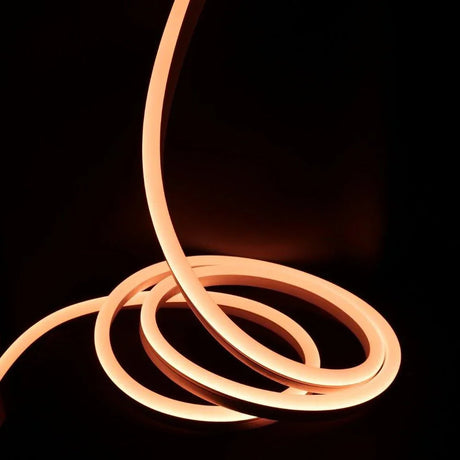
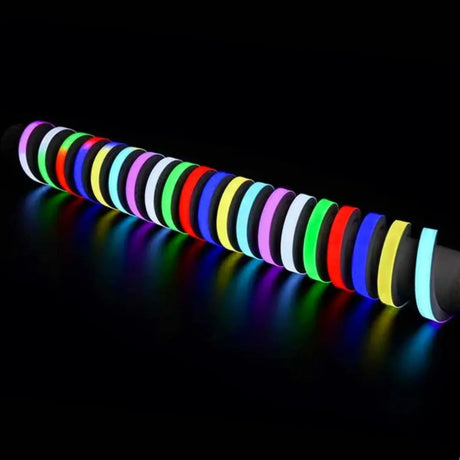
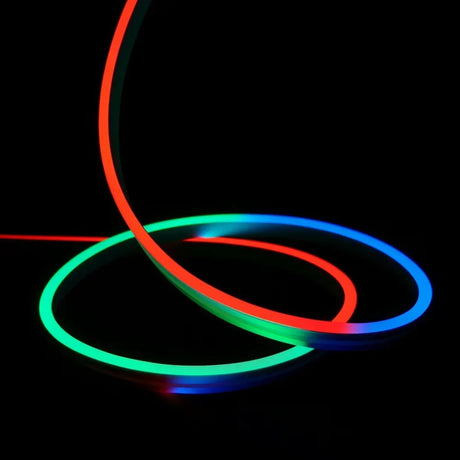
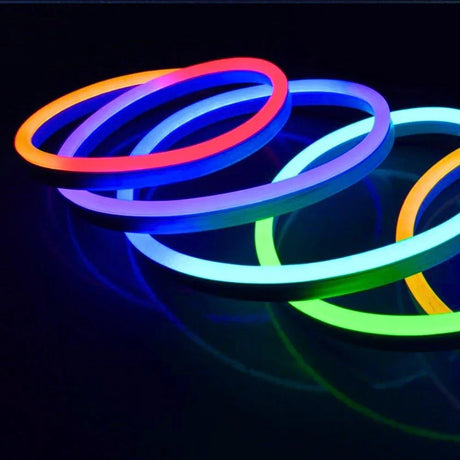
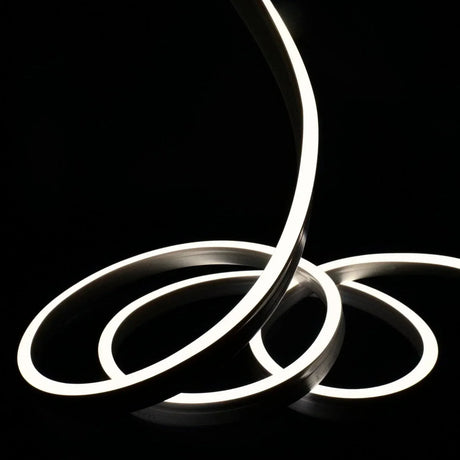
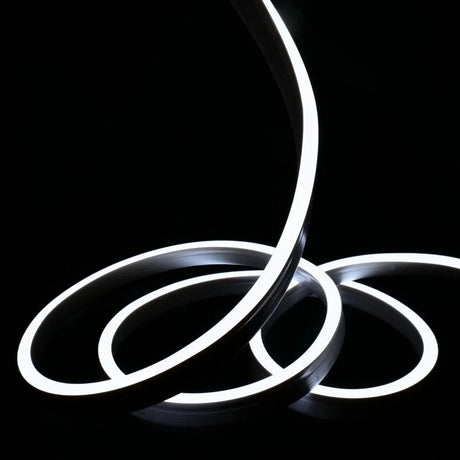
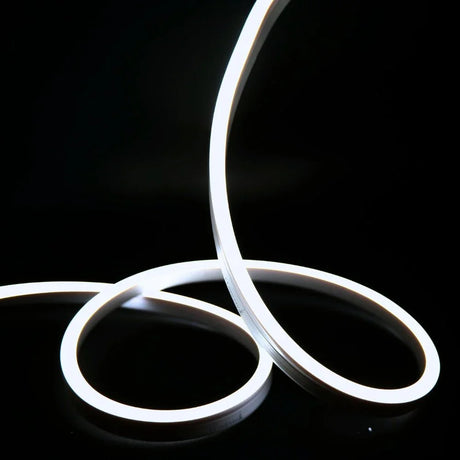
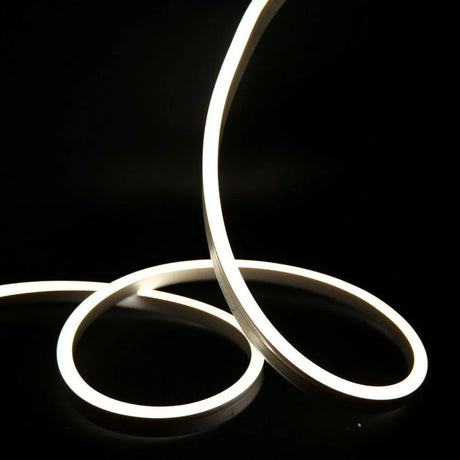
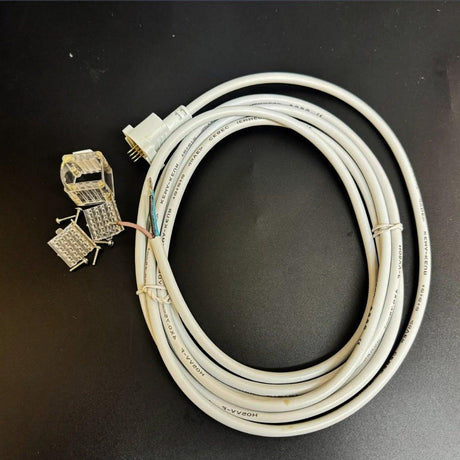
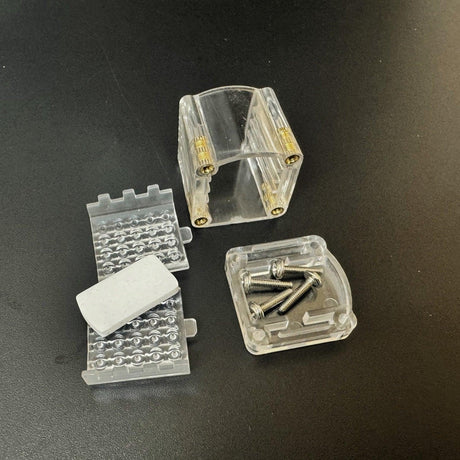
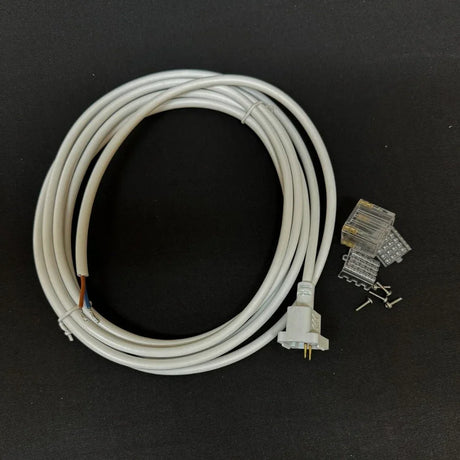
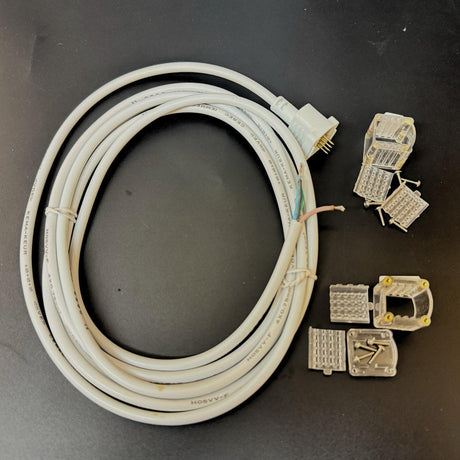
Pond lighting, fountain accents, and water feature illumination demand one thing above all else — a submersion rating that will not fail six months in. UK LED Lights carries 23 IP68 LED neon flex products built for continuous underwater operation: single colour and RGB, 12V and 24V, in full silicone encapsulation tested beyond 1 metre submersion depth. If your project involves water, this is the only neon flex collection that belongs on your shortlist.
Our IP68 neon flex range includes warm white 2700K through cool white 6500K in single colour, RGB colour-changing with dedicated controllers, and mini profiles with bend radii from 20mm for tight water feature contours. Every product uses UV-stable silicone construction that resists algae adhesion, chlorine exposure, and year-round outdoor UV. Call 01952 370008 or email sales@ukledlights.co.uk for project-specific advice.
IP68 Continuous Submersion · Full Silicone Encapsulation · Pond-Safe · Fish-Safe · 12V & 24V · Single Colour · RGB · UV-Stable · CRI90+ · Free UK Delivery · Telford, Shropshire
Quick decision — which IP68 neon flex do you need?
-
Garden pond perimeter or underwater accent: Single colour 24V IP68 neon flex in warm white 3000K — complements planting, stone, and timber pond edging.
-
Fountain or water blade illumination: Single colour 24V in cool white 5000K — maximises visibility of moving water and spray.
-
Colour-changing water feature or pool surround: RGB 24V IP68 neon flex with a dedicated waterproof RGB controller.
-
Small water feature or tight decorative curves: 12V mini IP68 neon flex — tighter bend radius for ornamental fountains and compact features.
-
Not sure which product suits your project? Call 01952 370008 — we will match the right product to your water depth, run length, and installation method.
Who is IP68 neon flex for?
-
Homeowners adding underwater lighting to garden ponds, water features, and fountains in 2026.
-
Landscape designers specifying submersible linear lighting for residential and commercial water features.
-
Pond and koi specialists who need fish-safe, non-toxic lighting that will not leach chemicals into the water.
-
Electrical contractors fitting permanent submerged installations to BS7671.
Who is IP68 neon flex NOT for?
-
Standard garden border and patio lighting: IP67 neon flex handles rain, frost, and damp without the added cost of IP68. Browse our LED neon flex range for IP67 options.
-
Indoor-only decorative projects: IP20 neon flex costs less and performs identically in dry interior applications.
-
Deep swimming pool basin lighting (beyond 2 metres): Purpose-built pool luminaires with transformer isolation are required for permanent deep-water installations.
Five buying mistakes that waste money on submersible neon flex
-
Buying IP67 for underwater use. IP67 withstands temporary immersion to 1 metre for 30 minutes — not continuous submersion. In a pond running 8+ hours daily, IP67 neon flex will fail within months.
-
Leaving connection points unsealed underwater. Every wire entry and junction must use fully potted IP68-rated connectors. A single exposed connection underwater destroys the entire run through electrolysis within weeks.
-
Using a dimmable driver with RGB neon flex. RGB requires a non-dimmable constant-voltage driver paired with a dedicated RGB controller. Dimmable drivers cause colour shifting, flicker, and premature failure.
-
Choosing cheap silicone that leaches into pond water. Low-grade encapsulation can release plasticisers, harming fish and plant life. Our IP68 range uses high-specification silicone tested as fish-safe and non-toxic.
-
Powering neon flex while coiled on the reel. Coiled neon flex cannot dissipate heat — the silicone traps thermal energy, adhesive fails, and LEDs degrade. Always uncoil and mount before connecting power.
What is IP68 LED neon flex and how does it survive underwater?
IP68 LED neon flex is a flexible linear light source fully encapsulated in UV-stable silicone, rated for continuous submersion beyond 1 metre depth. Unlike surface-coated neon flex, IP68 products use complete silicone encapsulation around the entire LED assembly, circuit board, and connection points — creating an unbroken watertight barrier that withstands permanent water contact in ponds, fountains, and water features.
Quality IP68 neon flex achieves its submersion rating through three layers of protection:
-
Full silicone body encapsulation: The LEDs and circuit board sit inside a continuous silicone extrusion formed during production — not a coating applied afterwards. This significantly reduces the seam failures that destroy coated products underwater.
-
Potted end caps: Both ends are sealed with injected silicone resin bonded permanently to the outer body — a single solid barrier between water and circuit termination.
-
Sealed feed-wire entry: The power cable enters through a compression-sealed silicone gland rated to the same IP68 standard as the body.
Every IP68 neon flex product in the UK LED Lights 2026 range uses this full-encapsulation construction. We do not stock coated or sleeved alternatives marketed as IP68.
What is the difference between IP67 and IP68 neon flex?
IP67 neon flex is rated for temporary immersion — up to 1 metre for 30 minutes — suitable for outdoor rain and frost exposure. IP68 neon flex is rated for continuous submersion beyond 1 metre, making it the only correct specification for ponds, fountains, and any application where the product remains permanently in water.
| Specification |
IP67 Neon Flex |
IP68 Neon Flex |
| Water protection |
Temporary immersion to 1m / 30 min |
Continuous submersion beyond 1m |
| Construction |
Silicone sleeve encapsulation |
Full silicone body with potted ends |
| Connection sealing |
Sealed end caps, silicone junctions |
Fully potted connections, resin-sealed wire entry |
| Pond and fountain use |
Not rated for permanent submersion |
Rated for permanent underwater operation |
| Fish and plant safety |
Not tested for permanent water contact |
High-specification silicone — non-toxic |
| Cost comparison |
Lower cost per metre |
Typically 20–35% more than equivalent IP67 |
| Best application |
Garden borders, patios, facades |
Ponds, fountains, pools, water features |
If your neon flex stays above water — even in heavy rain — IP67 is correct. Browse our full LED neon flex range for IP67 options. If any part will be submerged, IP68 is non-negotiable. Call 01952 370008 to confirm.
Is IP68 neon flex safe for fish ponds and koi pools?
Yes — the IP68 neon flex in the UK LED Lights range uses high-specification silicone that does not leach plasticisers, heavy metals, or toxic compounds into the water column. It is safe for fish ponds, koi pools, and planted aquatic environments, provided the product is correctly installed with fully sealed IP68 connections and powered from an isolated low-voltage driver.
-
Material safety: Professional-grade silicone is inert in fresh water at UK pond temperatures (typically 2°C to 25°C year-round). Low-cost PVC or polyurethane alternatives can leach plasticisers, particularly in warmer summer water. Every IP68 product in our 2026 range uses silicone tested for aquatic compatibility.
-
Electrical isolation: The neon flex runs on 12V or 24V DC from an isolated, safety-rated driver. Both voltages fall within the SELV threshold under BS7671 (120V DC ripple-free maximum), provided the driver is suitably isolated — significantly reduced shock risk. SELV is a system classification requiring correct installation, not a guarantee of zero risk.
-
Algae resistance: Smooth silicone surfaces resist algae adhesion more effectively than textured materials and can be wiped clean during routine pond maintenance.
-
Chlorine tolerance: UV-stable silicone withstands standard pool chlorine concentrations (1–3 ppm) and saltwater chlorination without degradation.
How do you install IP68 neon flex in a pond or water feature?
IP68 neon flex installation requires mounting to a stable underwater surface using stainless steel clips, routing the power cable above the waterline to an IP67-rated junction box, and connecting to an isolated low-voltage driver in a dry location. Every underwater connection must use fully potted IP68 connectors — no exceptions.
-
Plan the layout on dry land. Uncoil the neon flex beside the pond, mark clip positions at 200–300mm intervals, confirm total run length, and identify where the cable exits the water.
-
Position the driver in a dry location. Mount above the waterline in a ventilated enclosure — utility box, shed, or IP66 cabinet. Size to at least 120% of total wattage. Browse our LED drivers.
-
Install 316-grade stainless steel mounting clips. Fix to the pond liner shelf, concrete surround, or stone edging. Standard zinc-plated fixings corrode underwater within weeks.
-
Route the power cable to the water entry point. Run through conduit or buried armoured cable. The cable must enter water through a sealed IP68 gland — this is the most critical sealing point in the installation.
-
Make connections above the waterline where possible. Use an IP67-rated junction box at the pond edge. If underwater connection is unavoidable, use fully potted IP68 resin connectors — never heat-shrink or tape.
-
Secure neon flex into clips without kinking. Check minimum bend radius (typically 40–50mm for standard profiles) and ensure even positioning along the route.
-
Test before filling with water. Power on with the pond empty or partially filled. Check brightness consistency, colour accuracy, and every connection point.
-
Fill and monitor for 48 hours. Run a burn-in period and inspect for brightness changes or moisture behind the silicone. Isolate power immediately if any section shows water ingress.
Need installation guidance? Call 01952 370008 with your project dimensions.
Should I choose 12V or 24V for submersible neon flex?
24V is the correct choice for most pond, fountain, and water feature installations because it supports longer run lengths with less voltage drop. 12V IP68 neon flex suits compact water features and short accents under 3 metres where the smaller profile and tighter bend radius matter more than run length.
| Specification |
12V IP68 Neon Flex |
24V IP68 Neon Flex |
| Practical run length |
Approximately 3–5 metres |
Approximately 15–20 metres |
| Voltage drop |
Higher — visible dimming over 5m |
Lower — manageable across pond perimeters |
| Minimum bend radius |
As low as 20mm on mini profiles |
Typically 40–50mm |
| SELV classification |
Within threshold with isolated driver |
Within threshold with isolated driver |
| Best for |
Compact features, small fountains |
Pond perimeters, large features, long runs |
Both voltages fall within the SELV threshold under BS7671 (120V DC ripple-free maximum) with a suitably isolated driver. We recommend 24V as the default for water feature work. Contact 01952 370008 for voltage guidance.
Can I use RGB IP68 neon flex for colour-changing water features?
Yes — RGB IP68 neon flex produces millions of colour combinations underwater, making it ideal for colour-changing pond accents, fountain illumination, and pool perimeter lighting. The RGB controller manages all colour mixing and dimming downstream of the driver and must be housed in a dry or IP-rated enclosure above the waterline.
-
Driver must be non-dimmable constant voltage. The controller handles all dimming and colour mixing. Using a dimmable driver on an RGB circuit causes colour shifting, flicker, and premature failure — the most common mistake in RGB installations.
-
Controller placement: Mount above the waterline in a dry enclosure or IP66/IP67 housing. Low-voltage output cables run to the neon flex at the waterline entry point.
-
White light limitation: RGB cannot produce clean white — it outputs a cold, violet-tinged mix. For both colours and true white, choose RGBW neon flex with a dedicated white channel. Browse our neon flex range for RGBW options.
-
Addressable options: Digital pixel RGB IP68 neon flex allows individual segment control for chasing effects along fountain edges and pool perimeters — a growing specification in 2026 water feature design.
Contact sales@ukledlights.co.uk for help specifying the right RGB combination for your water feature.
How long does IP68 neon flex last when permanently submerged?
Quality IP68 neon flex with full silicone encapsulation typically delivers 30,000 to 50,000 hours of rated output when permanently submerged. For a pond installation running approximately 8 hours per evening year-round, that equates to 10 to 17 years of service — provided the driver is correctly sized and all connections are fully sealed to IP68 standard.
-
Encapsulation quality: Full silicone does not absorb water, degrade in UV, or become brittle at low temperatures. Polyurethane or epoxy coatings marketed as IP68 delaminate in permanent submersion.
-
Connection integrity: The body rarely fails first — connections are the weak point. Fully potted resin connections tested to IP68 are essential. Heat-shrink fails underwater within one to two seasons.
-
Driver headroom: A driver sized to 120%+ of total wattage runs cooler and typically lasts 8–10 years versus 3–5 for an overloaded unit.
-
Water chemistry: Fresh water with normal pH (6.5–8.5) does not degrade silicone. Highly acidic water or chlorine above 5 ppm may reduce lifespan — consult our team.
-
Thermal cycling: Professional-grade silicone remains flexible from -40°C to +200°C, so UK seasonal pond temperatures (2°C to 25°C) have negligible effect.
Replacing submerged neon flex is disruptive — especially in established ponds with fish. Specifying correctly from day one is worth the upfront investment. Call 01952 370008 to discuss.
Where else can IP68 neon flex be used beyond ponds?
IP68 neon flex exceeds the requirements for every above-water outdoor application. Beyond ponds and fountains, it is used in swimming pool perimeters, spa surrounds, flood-prone ground-level pathways, commercial wash-down environments, and bathroom Zone 0 installations where IP67 is not sufficient.
-
Swimming pool perimeter and step lighting: IP68 neon flex in stainless steel clips around the coping or along underwater steps — one of the fastest-growing applications in UK pool design in 2026.
-
Spa and hot tub surrounds: Handles heated water (up to approximately 40°C), chemical treatment, and steam that exceed standard pond conditions.
-
Flood-prone ground-level pathways: In low-lying gardens or poorly drained areas, IP68 provides insurance that IP67 cannot.
-
Bathroom Zone 0 installations: Under BS7671, Zone 0 requires IP68 minimum at SELV voltage. IP68 neon flex at 12V meets this for shower floor perimeter lighting. See our bathroom LED strip lights collection.
Not sure if your installation needs IP68 over IP67? Email sales@ukledlights.co.uk with a description of the location and we will confirm the right specification.
Why UK LED Lights for IP68 submersible neon flex?
-
Full silicone encapsulation on every product: No epoxy coatings, no relabelled IP67. Every product uses genuine full-body silicone with potted end caps and sealed cable entries.
-
Fish-safe, non-toxic materials: High-specification silicone that does not leach into the water column — safe for koi ponds, goldfish ponds, and planted environments.
-
Technical team in Telford: Call 01952 370008 Monday to Friday, 9am–5pm. We help you plan run length, voltage, driver sizing, and connection method for your specific water feature.
-
Free UK delivery: Every order ships free from UK LED Lights Ltd, Unit D4, Stafford Park 4, Telford, Shropshire, TF3 3BA.
-
Trade accounts: Landscape designers, pond builders, and electrical contractors — contact us for volume pricing and project support.
Ready to order or need project advice?
Browse the full IP68 neon flex collection above, or contact our Telford team:
How does IP68 neon flex compare to IP67 neon flex for outdoor use?
The difference between IP67 and IP68 comes down to one factor: whether the flex sits above water or below it.
| Feature |
IP68 Neon Flex |
IP67 Neon Flex |
| Water protection |
Continuous submersion beyond 1m |
Temporary immersion to 1m / 30 min |
| Pond and fountain use |
Yes — rated for permanent underwater |
No — above-water only |
| Fish/plant safety |
High-specification silicone, non-toxic |
Not tested for permanent water contact |
| Construction |
Full silicone body with potted ends |
Silicone sleeve encapsulation |
| Cost per metre |
Typically 20-35% more than IP67 |
Standard outdoor pricing |
| Best for |
Ponds, fountains, pools, submersible features |
Garden borders, facades, patios |
If any part of the installation will be submerged in water, IP68 is non-negotiable. If the neon flex stays above the waterline — even in heavy rain — IP67 is correct and more cost-effective. Call 01952 370008 to confirm.
What are the most common questions about IP68 LED neon flex?
Can IP68 neon flex stay underwater permanently?
-
Yes — rated for continuous submersion: IP68 is rated for continuous submersion beyond 1 metre. UK LED Lights IP68 neon flex is designed for permanent underwater operation — not temporary immersion like IP67.
Will IP68 neon flex harm fish in my pond?
-
No — silicone is fish-safe: The high-specification silicone does not leach plasticisers, heavy metals, or toxic compounds. It is safe for koi, goldfish, and aquatic plants. Always verify the encapsulation material when buying from other suppliers.
Can I use IP68 neon flex in a chlorinated swimming pool?
-
Yes — chlorine-resistant: UV-stable silicone withstands standard residential chlorine (1–3 ppm) and saltwater chlorination. For commercial pool concentrations, contact 01952 370008.
Do I need an electrician to install IP68 neon flex?
-
Professional installation recommended: In England and Wales, permanent outdoor electrical installations must comply with Part P Building Regulations. Pond wiring carries additional BS7671 requirements — professional installation is strongly recommended.
Can I cut IP68 neon flex to length?
-
Yes — cut at designated points only: Cut at marked intervals (typically every 25–50mm). The exposed end must be sealed with an IP68-rated resin cap to maintain the submersion rating. Never cut while submerged or powered.
What colour temperature works best for pond lighting?
-
Warm white 3000K is most popular: It complements natural stone and planting in residential ponds. Cool white 5000K suits fountains where visibility of water movement is the priority. RGB provides colour-changing versatility.
How deep can IP68 neon flex be submerged?
-
Beyond 1 metre continuous submersion: Most products in our 2026 range are rated beyond 1 metre. For typical garden ponds (0.5–1.5m), this is more than adequate. For deeper applications, contact our team to confirm the rated depth.
Can IP68 neon flex connect to smart home systems?
-
Yes — via Wi-Fi or Zigbee controllers: Compatible controllers integrate with Amazon Alexa, Google Home, and other platforms. The controller must be housed in a dry or IP-rated enclosure above the waterline.
Can I use a dimmable driver with RGB IP68 neon flex?
-
No — use a non-dimmable driver: RGB and RGBW neon flex must use a non-dimmable constant-voltage driver paired with a dedicated RGB controller. Dimmable drivers cause colour shift, flicker, and premature failure. The controller handles all dimming and colour mixing.
Can RGB IP68 neon flex produce clean white light?
-
No — RGB produces violet-tinged white: Mixing red, green, and blue channels at full output produces a cold, violet-tinged white. For clean warm white alongside colour effects, choose RGBW neon flex with a dedicated white channel.
What cable gauge should I use for submersible neon flex?
-
0.75mm minimum for 24V under 10 metres: For 12V or longer runs, step up to 1.0mm or 1.5mm. All cable entering the water must pass through sealed IP68-rated cable glands.
Should I mount IP68 neon flex on bare metal in a pond?
-
Avoid bare metal contact where possible: Use 316-grade stainless steel clips designed for underwater use. Standard zinc-plated fixings corrode within weeks underwater. The clips provide a controlled mounting point with minimal direct metal contact.
Can I power IP68 neon flex while it is still coiled?
-
Never power while coiled: Silicone traps heat — thermal build-up causes adhesive failure, LED degradation, and fire risk. Always uncoil and mount fully before connecting power, even for testing.
How do I prevent flickering when dimming IP68 neon flex?
-
Use a trailing-edge dimmer for single-colour: Replace any leading-edge dimmer for approximately £15 to eliminate the most common cause of flickering. For RGB: dimming is handled by the dedicated controller, not a wall dimmer.
Is IP65 neon flex suitable for pond use?
-
No — IP65 is splash-rated only: IP65 is not suitable for any submersible application. It covers surface splashes only. For ponds, fountains, and water features, IP68 is the minimum rating required for continuous submersion.
Does UK LED Lights offer free delivery on IP68 neon flex?
-
Yes — free UK mainland delivery: Every order ships free with no minimum spend. All products ship from our Telford warehouse — Unit D4, Stafford Park 4, TF3 3BA.
What warranty covers IP68 neon flex from UK LED Lights?
-
Manufacturing defects covered: Warranty covers manufacturing defects on all IP68 neon flex products in the 2026 range. Warranty does not cover damage from unsealed connections, incorrect installation, use of dimmable drivers with RGB, or powering while coiled. Contact 01952 370008 or email sales@ukledlights.co.uk.
Can I install IP68 neon flex without an electrician?
-
Professional installation strongly recommended: In England and Wales, permanent outdoor electrical installations — including pond wiring — must comply with BS7671 Part P. Pond installations carry additional requirements for all submerged lighting projects.
How do I calculate the correct driver wattage for IP68 neon flex?
-
Multiply wattage per metre by run length, then add 20 percent: Example: 8m at 8W/m = 64W. Select an 80W or 100W driver minimum. Size the driver to 120 percent or more for reliable performance over years of continuous pond operation.
Can I use IP68 neon flex in a hot tub or spa?
-
Yes — handles heated water to approximately 40°C: UV-stable silicone IP68 neon flex withstands standard spa chemical concentrations. Mount with stainless steel clips rated for submerged use. The controller must be housed above the waterline.
Last reviewed: March 2026 — UK LED Lights technical team, Telford, Shropshire. Specifications current as of 2026.
🏭 UK LED specialist, Telford, Shropshire · ☎️ 01952 370008 · 🚚 Free UK delivery