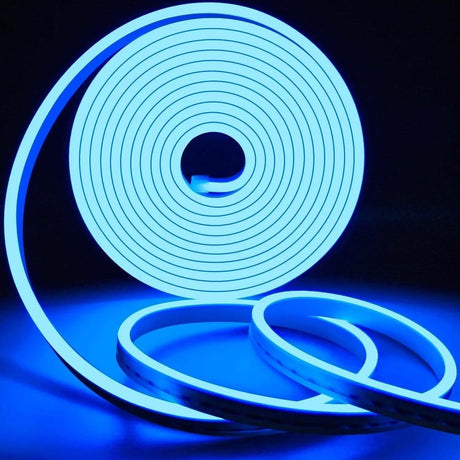
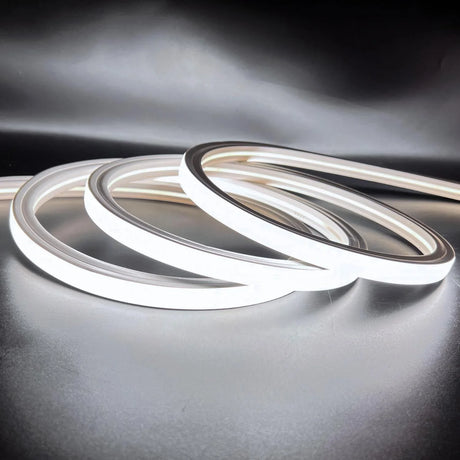
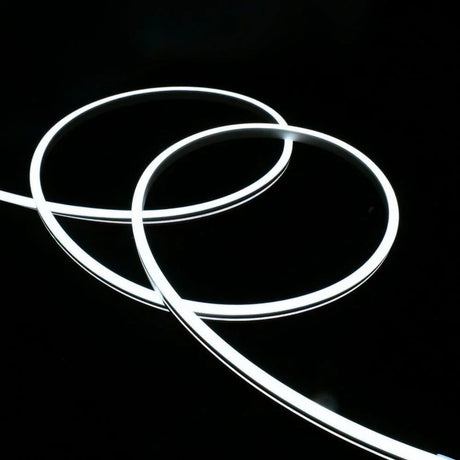
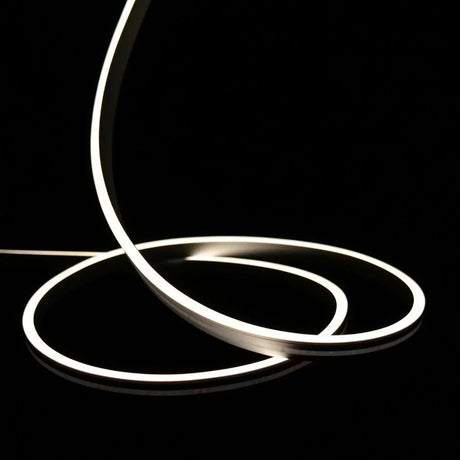
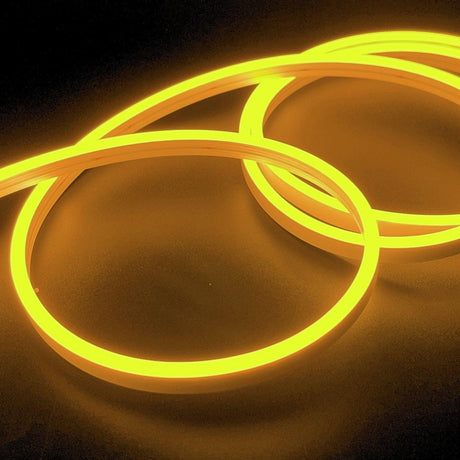
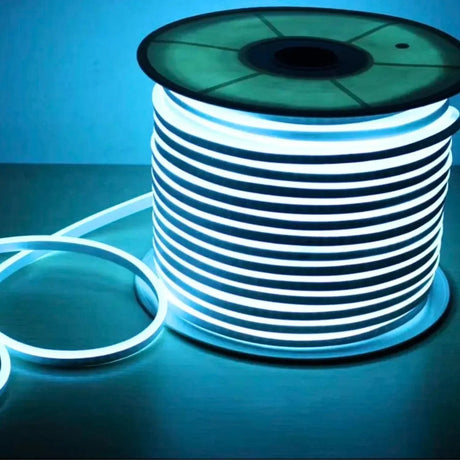
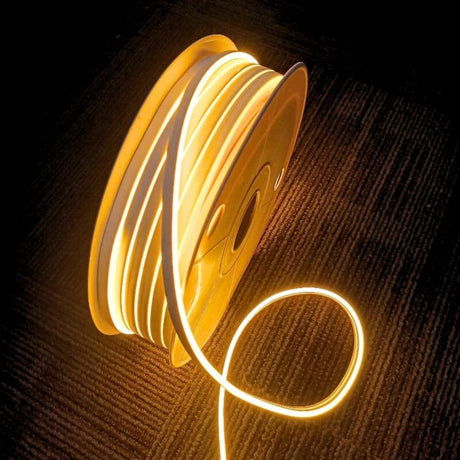
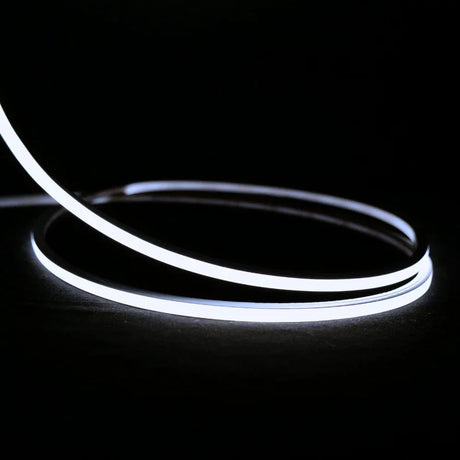
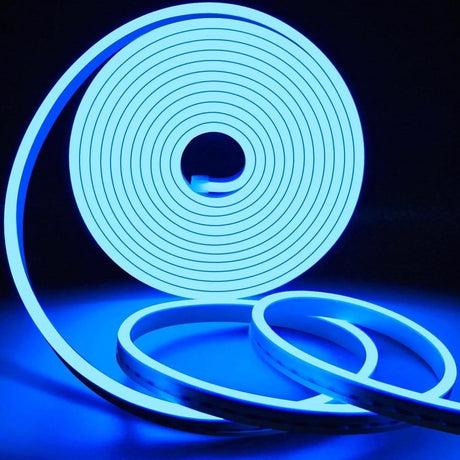
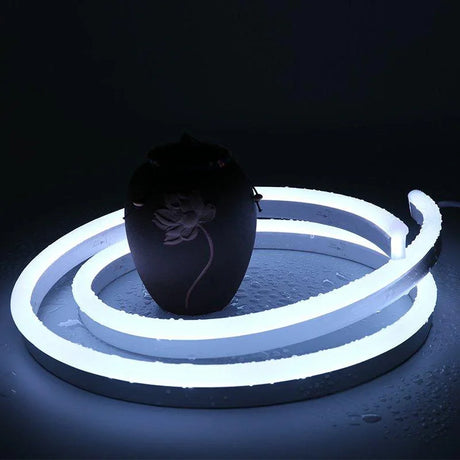
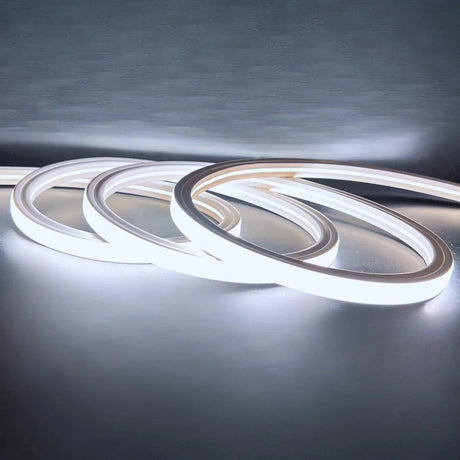
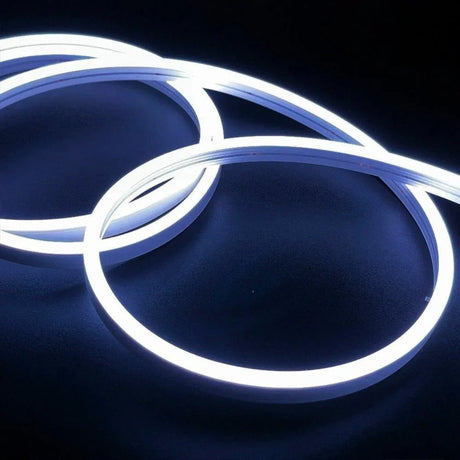
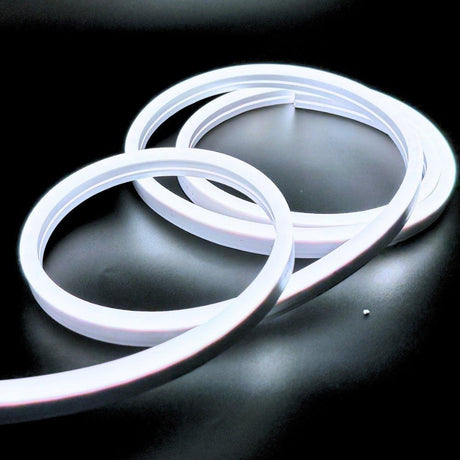
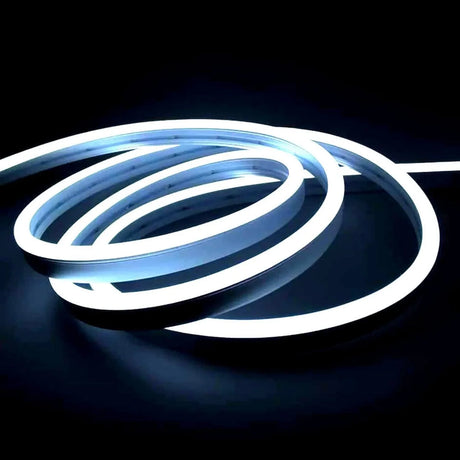
Proper garage lighting changes everything — you find tools faster, work more accurately, and stop squinting at wiring diagrams under a single bare bulb. UK LED Lights stocks 71 garage LED strip lights ready for dispatch in 2026: cool white 6000K for maximum visibility, 48V for long unbroken runs, high CRI for colour-critical work, and IP ratings from IP20 to IP67 to match dry, damp, and unheated garage environments across the UK.
Our garage lighting LED range includes 48V strip for runs up to 20 metres without voltage drop, high-output cool white 6000K strip delivering 300–500 lux on work surfaces, and IP67-rated strip for unheated garages where condensation is a regular problem. Every strip is cuttable, dimmable with a trailing-edge dimmer, and compatible with our surface-mount aluminium profiles. Questions about your garage layout? Call 01952 370008 or email sales@ukledlights.co.uk.
48V · Cool White 6000K · High CRI 90+ · IP20 · IP67 · 300–500 Lux · Surface-Mount Profiles · Parallel Wiring · Dimmable · Cuttable · Free UK delivery
Quick decision guide:
-
General garage lighting for parking and storage: 24V COB strip in cool white 6000K, IP20, ceiling-mounted inside a surface profile — the most cost-effective full-garage option in 2026.
-
Workshop bench and tool wall lighting: 48V high-output strip in cool white 6000K, CRI 90+, mounted at 300–400mm from the wall in a surface profile — delivers 300–500 lux directly onto your work surface.
-
Unheated or damp garage: 48V strip in IP67, ceiling-mounted — sealed against condensation, temperature swings, and airborne dust that would damage exposed IP20 strip over a single winter.
-
Car detailing or paint inspection bay: 48V CRI 95+ strip in cool white 5000K–6000K, mounted in multiple parallel ceiling runs spaced 600mm apart — produces the even, high-CRI light needed to spot swirl marks, orange peel, and colour-match panels accurately.
-
Full-length single or double garage (6–10 metres): 48V strip wired in parallel across two or three ceiling runs with a single driver — 48V halves voltage drop compared with 24V at the same wattage over the same distance. Call 01952 370008 for a free wiring layout.
Who garage LED strip lights are for: Homeowners upgrading a single or double garage from fluorescent tubes to reliable LED strip, DIY enthusiasts fitting a workshop bench with dedicated task lighting, car detailers and mechanics who need high-CRI even light for accurate colour work, electricians specifying garage circuits to BS7671 standards, and property developers adding functional garage lighting to new builds in 2026. If you need consistent, shadow-free light across a full garage ceiling, LED strip in surface profiles is the professional-grade solution.
Who garage LED strip is NOT for: If you only need a single bright light over a parked car and nothing else, a standalone LED batten or floodlight is cheaper and simpler. If you need colour-changing RGB lighting for a garage conversion used as a home cinema or games room, our RGB controllers and strip collection is a better starting point than single-colour garage strip.
Common buying mistakes to avoid:
-
Choosing IP20 for an unheated garage: UK garages without heating or insulation experience condensation throughout autumn and winter. Moisture settles on IP20 strip and corrodes solder joints within months. Use IP67 minimum for any unheated, uninsulated garage space.
-
Running a single strip down the centre of the ceiling: One strip line creates deep shadows on both sides of the garage — exactly where your workbench, shelving, and tool storage sit. Two or three parallel runs spaced evenly across the ceiling width eliminate shadows and distribute light evenly across the floor.
-
Using warm white in a workshop: Warm white (2700K–3000K) reduces contrast on work surfaces and makes it harder to read markings, identify wire colours, and judge paint finishes. Cool white 6000K provides maximum visibility for practical garage tasks.
-
Wiring long runs in series: Series wiring multiplies voltage drop — a 10-metre series run at 24V can lose 15–20% brightness at the far end. Use parallel wiring from the driver to each strip run, or choose 48V strip which halves voltage drop at the same wattage.
-
Mounting strip directly onto bare metal beams or brackets: Exposed steel RSJs, metal shelving frames, and galvanised brackets will short-circuit unprotected strip. Always mount inside an aluminium profile with an insulated base, or use IP67 sleeved strip that provides built-in insulation.
-
Powering strip while still coiled on the reel: Heat cannot escape from coiled strip — the adhesive softens, LEDs overheat, and you risk permanent damage or fire. Always uncoil, mount, and secure before powering on.
- What makes LED strip better than fluorescent tubes for garage lighting?
- Which colour temperature is best for a garage or workshop?
- What IP rating do garage LED strip lights need in the UK?
- Should you choose 24V or 48V LED strip for a garage?
- How do you install LED strip lights in a garage ceiling?
- How many LED strip runs does a garage need for even light?
- Why does high CRI matter for garage and workshop lighting?
- What driver and dimmer setup does garage strip need?
- Why buy garage LED strip lights from UK LED Lights?
- What are the most common questions about garage LED strip lights?
What makes LED strip better than fluorescent tubes for garage lighting?
LED strip lights in aluminium profiles outperform fluorescent tubes in every garage metric that matters in 2026: instant full brightness at any temperature including sub-zero, no flicker at start-up, 50,000+ hour rated lifespan versus 8,000–15,000 hours for T8 fluorescents, lower running costs per lumen, and no mercury disposal requirements. LED strip also mounts flush to the ceiling inside a slim profile, reclaiming headroom that bulky tube battens take up.
Fluorescent tubes are still the most common light source in UK garages built before 2015, and most of them share the same problems. They flicker and take 30–60 seconds to reach full brightness in cold weather — exactly when you need light most. They hum. The starters fail. The tubes yellow with age, dropping lumen output by 30–40% before they finally die.
LED strip in a surface-mount profile solves every one of those problems:
-
Instant on at full brightness: LED strip reaches 100% output in under one second, regardless of ambient temperature — critical for unheated UK garages where temperatures drop below freezing from November to March.
-
No flicker: Properly driven LED strip on a constant-voltage driver produces zero visible flicker, eliminating the stroboscopic effect that makes rotating machinery appear stationary under fluorescent light — a genuine safety concern in any workshop.
-
50,000+ hour rated lifespan: At 3 hours daily use, that is approximately 45 years before replacement. A T8 fluorescent tube lasts 8,000–15,000 hours under the same conditions.
-
Lower profile: A surface-mount aluminium profile sits 15–20mm from the ceiling. A fluorescent batten hangs 50–80mm. In a garage with limited headroom, that difference matters when parking vehicles or storing items overhead.
-
Dimmable: LED strip with a trailing-edge dimmer lets you dial down brightness for general access and dial up for detailed bench work. Fluorescent tubes are either on or off.
| Feature |
LED Strip in Profile |
T8 Fluorescent Batten |
| Start-up time (cold garage) |
Under 1 second |
30–60 seconds to full brightness |
| Rated lifespan |
50,000+ hours |
8,000–15,000 hours |
| Flicker |
None (constant-voltage driver) |
Visible at start-up, stroboscopic risk |
| Mounting depth |
15–20mm (surface profile) |
50–80mm (batten housing) |
| Dimmable |
Yes — trailing-edge dimmer |
No |
| Mercury content |
None |
Contains mercury — WEEE disposal required |
| Energy efficiency (lm/W typical) |
120–160 lm/W |
80–100 lm/W |
| Colour rendering (CRI) |
90+ (UK LED Lights range) |
70–85 typical |
Which colour temperature is best for a garage or workshop?
Cool white at 5000K–6000K is the correct choice for the majority of garage and workshop lighting in 2026. It maximises contrast on work surfaces, makes wire colour identification reliable, and produces the clinical clarity needed for mechanical work, woodworking, and any task where seeing fine detail under artificial light is non-negotiable. Reserve warm white 3000K only for garage conversions used as living spaces.
Colour temperature choice in a garage is not an aesthetic decision — it is a functional one. A garage workbench under 3000K warm white light looks pleasant, but you will struggle to distinguish between brown and red wires, miss hairline cracks in timber, and misjudge paint colour matches. Cool white at 6000K provides the contrast and clarity that practical garage work demands.
-
General garage use (parking, storage, maintenance): Cool white 6000K — maximum visibility across the full space with the highest contrast for spotting hazards, tools, and floor-level obstacles.
-
Dedicated workshop bench: Cool white 5000K–6000K with CRI 90+ — balanced brightness without the slight blue cast that 6500K can produce, combined with accurate colour rendering for detailed work.
-
Car detailing and paint inspection: Cool white 5000K at CRI 95+ — the standard used by professional body shops in 2026 because it reveals surface imperfections without distorting paint colour.
-
Garage conversion (home gym, office, hobby room): Natural white 4000K — a compromise between task clarity and comfortable ambience for extended periods of use.
If your garage serves multiple purposes, consider running two separate circuits — cool white for the work zone and natural or warm white for the living zone — each on its own dimmer. UK LED Lights can help you plan a dual-zone layout. Call 01952 370008 for free specification advice.
What IP rating do garage LED strip lights need in the UK?
IP20 is suitable for heated, insulated garages that remain dry year-round. IP67 is the correct choice for unheated, uninsulated UK garages where condensation, temperature swings, and airborne dust are present — which describes the majority of attached and detached garages in the UK. IP65 is not sufficient for these conditions because it covers surface splashes only and does not protect against the sustained moisture exposure caused by condensation cycles.
The deciding factor is not whether your garage gets wet from rain. It is whether moisture forms on the ceiling and walls when temperatures change — and in most UK garages without insulation, it does. A cold garage that warms up when you run a heater or park a warm car generates condensation on every cold surface, including your LED strip.
-
IP20 — dry garages only: Fully insulated, heated garage workshops with consistent temperature control. Brick-built attached garages with damp-proof courses and no visible condensation at any time of year.
-
IP67 — unheated and uninsulated garages: Detached garages, prefab concrete sectional garages, metal garages, any garage without insulation or heating, garages with visible condensation on walls or ceiling in winter months. IP67 protects against temporary immersion and handles seasonal condensation cycles reliably.
-
IP65 — not recommended for UK garages: IP65 covers surface splashes only. It does not protect against condensation settling on the strip surface over hours or days, which is the real moisture threat in an unheated UK garage. This is a common specification error in 2026 — many buyers assume IP65 means weather-resistant, but under BS7671 guidance it falls short for sustained moisture exposure.
Not sure which IP rating your garage needs? Send a photo of your garage ceiling and walls to sales@ukledlights.co.uk and our technical team will advise within one working day.
Should you choose 24V or 48V LED strip for a garage?
48V LED strip is the better choice for most garage installations in 2026 because it halves voltage drop compared with 24V at the same wattage over the same distance. A typical single garage is 5–6 metres long, a double garage 9–10 metres. At these lengths, 48V strip maintains consistent brightness from start to finish on a single run without the injection points or oversized cabling that 24V requires to compensate for voltage drop.
Voltage drop is the single biggest cause of uneven brightness in long LED strip runs. Every metre of cable and strip between the driver and the far end of the run adds resistance, which reduces voltage. Lower voltage means dimmer LEDs. In a garage ceiling run, the difference between the first metre and the last metre is visible to the naked eye if the voltage drop exceeds 5%.
| Specification |
24V LED Strip |
48V LED Strip |
| Maximum single run (typical) |
5–10 metres |
10–20 metres |
| Voltage drop per metre (same wattage) |
Higher — approximately 2x |
Lower — approximately half of 24V |
| Driver availability |
Widely available, lower cost |
Readily available in 2026, slightly higher cost |
| Connector and accessory range |
Widest range |
Growing range — all standard sizes stocked at UK LED Lights |
| Best for garage runs under 5 metres |
Yes — cost-effective and simple |
Works well but 24V is sufficient |
| Best for garage runs 5–20 metres |
Requires mid-point injection |
Yes — single run, no injection needed |
| SELV threshold (BS7671) |
Falls within SELV threshold with isolated driver |
Falls within SELV threshold (120V DC max) with suitably isolated, safety-rated driver |
For a single garage with one ceiling run under 5 metres, 24V strip is perfectly adequate. For a double garage, an L-shaped garage, or any layout requiring runs above 5 metres, 48V strip avoids the need for mid-point power injection and keeps the installation simpler. Browse our full LED strip lights collection to compare 24V and 48V options side by side.
How do you install LED strip lights in a garage ceiling?
Installing garage LED strip lights involves planning your ceiling layout for even coverage, mounting aluminium profiles to the ceiling surface, wiring the driver and dimmer at the supply end, cutting strip to length, pressing strip into the profiles, and connecting each run in parallel back to the driver. A competent DIYer can complete a single garage ceiling in approximately 2–3 hours. Any work involving connection to a permanent fixed circuit should be carried out by a qualified electrician under Part P of BS7671.
-
Step 1 — Plan your ceiling layout: Measure the garage length and width. For a single garage (approximately 3 metres wide), two parallel strip runs spaced 1 metre apart and 1 metre from each side wall provides even coverage. For a double garage (approximately 6 metres wide), three runs spaced 1.5 metres apart is the standard in 2026. Mark the run positions on the ceiling with chalk lines.
-
Step 2 — Mount aluminium profiles to the ceiling: Fix surface-mount aluminium profiles along each chalk line using appropriate fixings for your ceiling material — masonry screws for concrete, plasterboard fixings for boarded ceilings, self-tapping screws for metal garage roofs. Pre-drill every 400–500mm. Ensure each profile is level along its full length.
-
Step 3 — Position and wire the driver: Mount your constant-voltage LED driver near the mains supply point, typically near the consumer unit or an existing switched spur. The driver converts 240V AC mains to the strip voltage (24V or 48V DC). Keep the driver accessible for future maintenance — do not bury it behind permanent fixtures.
-
Step 4 — Run low-voltage DC cable from driver to each profile: Wire each profile run in parallel back to the driver output terminals. Use appropriately rated 2-core cable — 0.75mm² is sufficient for most garage runs under 10 metres at 48V. Parallel wiring helps ensure each strip run receives the same voltage directly from the driver, preventing cumulative voltage drop.
-
Step 5 — Cut strip to length and mount inside profiles: Measure each profile length and cut the LED strip at the nearest marked cut point (typically every 50–100mm depending on strip type). Peel the adhesive backing and press the strip firmly into the base of each profile. Start from the wired end and work towards the far end, keeping the strip straight and centred.
-
Step 6 — Connect strip to DC cable: Use solderless push-fit connectors or solder each strip end to the DC cable. Observe polarity — positive to positive, negative to negative. Incorrect polarity will not damage the strip but it will not illuminate.
-
Step 7 — Fit diffuser covers and test: Snap or slide the opal diffuser cover into each aluminium profile. Power on at the driver and check every run for consistent brightness from end to end. If the far end of any run appears noticeably dimmer, check your wiring for a series connection error — each run must return to the driver in parallel, not daisy-chained from the previous run.
Need help specifying cable sizes, driver wattage, or profile types for your garage layout? Call 01952 370008 and our technical team will walk you through the specification for free.
How many LED strip runs does a garage need for even light?
A single garage (approximately 3 metres wide) typically needs two parallel ceiling runs spaced 1 metre apart. A double garage (approximately 6 metres wide) needs three runs spaced 1.5 metres apart. This spacing produces 300–500 lux at floor level — the range recommended for general garage tasks and workshop activity in 2026. A single centre-line run creates deep shadows on both sides where workbenches, shelving, and tool storage are usually located.
The number of runs depends on three factors: garage width, the lumen output per metre of your chosen strip, and the mounting height. Most UK garage ceilings sit at 2.2–2.5 metres. At this height, a high-output strip producing 1,200–1,500 lumens per metre in a surface profile with an opal diffuser delivers approximately 250–350 lux directly below. Spacing multiple runs evenly fills in the gaps between them.
-
Single garage — 2 runs: One run at 1 metre from each side wall. Total strip length approximately 10–12 metres for a standard 5–6 metre garage. Delivers 300–400 lux across the floor area.
-
Double garage — 3 runs: One central run plus one run 1.5 metres from each side wall. Total strip length approximately 15–18 metres for a standard 6-metre depth double garage. Delivers 350–500 lux across the floor area.
-
Workshop with dedicated bench zone: Add a fourth run mounted at the front edge of any overhead shelving or cabinets above the workbench, angled downward at 30 degrees in an angled profile. This provides direct task lighting onto the bench surface at 500+ lux without relying solely on ceiling runs.
-
Car detailing bay: Four to five parallel ceiling runs spaced 500–600mm apart, using CRI 95+ strip. The closer spacing eliminates directional shadows that hide surface defects — the same principle used in professional body shop inspection bays.
For a personalised layout plan based on your garage dimensions, email your measurements to sales@ukledlights.co.uk or call 01952 370008.
Why does high CRI matter for garage and workshop lighting?
CRI (Colour Rendering Index) measures how accurately a light source shows the true colour of objects compared to natural daylight. In a garage or workshop, high CRI at 90 or above means you can reliably identify wire colours for electrical work, judge paint and stain matches for woodworking, spot rust and corrosion during vehicle inspections, and distinguish between similar-looking components — tasks where colour accuracy directly affects the quality and safety of your work.
Most cheap garage lighting — including many LED battens sold in DIY sheds — sits at CRI 70–80. At that level, reds look muddy, browns blur into blacks, and blue wires become hard to tell from grey wires. For general parking and storage, CRI 80 is acceptable. For any hands-on work, CRI 90+ is the standard professional workshops have adopted in 2026.
-
Electrical work: UK wiring regulations use brown (live), blue (neutral), and green-yellow (earth). Under CRI 80 light, brown and red appear similar. Under CRI 90+ light, the distinction is clear — a safety-critical difference.
-
Woodworking and finishing: Stain colours, grain patterns, and finish consistency are only accurately visible under CRI 90+ light. Applying stain under CRI 80 light and inspecting it in daylight often reveals colour errors.
-
Car detailing: Swirl marks, orange peel, and paint defects are visible under CRI 95+ light at 5000K–6000K. Professional detailers use this specification because it replicates outdoor viewing conditions.
-
General mechanical work: Distinguishing clean oil from dirty oil, spotting coolant leaks against dark engine bays, and identifying corrosion on brake components all depend on accurate colour rendering.
Every LED strip in the UK LED Lights garage range is rated CRI 90+ as standard. For car detailing or paint inspection, filter for CRI 95+ in our LED strip collection.
What driver and dimmer setup does garage strip need?
Garage LED strip lights need a constant-voltage driver matched to the strip voltage (24V or 48V) with a wattage rating at least 20% above the total connected strip load. For dimming, use a trailing-edge dimmer — leading-edge dimmers cause visible flicker with most LED drivers. A trailing-edge dimmer costs approximately £15 and provides smooth, flicker-free control from 100% down to approximately 5%.
The driver is the most important component after the strip itself, yet it is the part most often undersized or mismatched. Here is how to specify correctly for a garage installation in 2026:
-
Calculate your total strip wattage: Multiply the strip wattage per metre by the total metres installed. Example: 3 runs of 6-metre strip at 14.4W/m = 259.2W total load.
-
Add a 20% headroom margin: 259.2W × 1.2 = 311W minimum driver rating. Running a driver at full rated load reduces its lifespan and increases heat output — the 20% margin is standard practice, not a luxury.
-
Match the voltage exactly: A 24V driver on 48V strip will not power it. A 48V driver on 24V strip will destroy it. Check both the driver output voltage and the strip input voltage before purchasing.
-
Choose a dimmable driver if you want brightness control: Not all constant-voltage drivers accept a dimmer signal. Check the driver specification for trailing-edge or TRIAC compatibility. UK LED Lights marks every dimmable driver clearly in the product listing.
-
Mount the driver in a ventilated, accessible location: Drivers generate heat during operation. Mount on a vertical surface near the ceiling with at least 50mm clearance on all sides. Avoid enclosed, unventilated boxes — trapped heat shortens driver lifespan significantly.
Browse our LED drivers collection to find the correct driver for your garage strip wattage and voltage. If you are unsure which driver to pair with your chosen strip, call 01952 370008 — we match drivers to strip installations every day.
Why buy garage LED strip lights from UK LED Lights?
UK LED Lights is a specialist LED strip supplier based in Telford, Shropshire, stocking all products in our UK warehouse for same-day dispatch. We carry 71 garage-suitable LED strip products in 2026 across 24V, 48V, IP20, and IP67 ratings with CRI 90+ as standard. Every order ships with free UK delivery, and our technical team is available Monday to Friday on 01952 370008 to help you specify the correct strip, driver, profile, and wiring layout for your garage — no charge for technical advice.
-
UK stock, same-day dispatch: Every strip, driver, profile, and connector we sell is held in our Telford warehouse. Orders placed before 2pm Monday to Friday ship the same working day.
-
Free technical support: Call 01952 370008 or email sales@ukledlights.co.uk for free garage lighting layout plans, driver calculations, wiring diagrams, and IP rating advice. We specify garage and workshop lighting projects daily.
-
71 products in this collection: Cool white, natural white, 24V, 48V, IP20, IP67, COB, high-output — if it is suitable for a garage or workshop, we stock it.
-
CRI 90+ as standard: We do not sell low-CRI strip for work environments. Every product in the garage range meets the minimum CRI threshold required for accurate colour work.
-
Compatible profiles, drivers, and connectors: Everything you need for a complete garage installation is available in one order from the same supplier — strip, aluminium profiles, drivers, controllers, and connectors.
-
Real company, real address: UK LED Lights Ltd, Company No: 12301805, Unit D4, Stafford Park 4, Telford, Shropshire, TF3 3BA. We are not a dropshipper or marketplace reseller.
-
We have replaced fluorescent tube lighting in over 300 UK garages — the before-and-after difference in visibility is immediate.
-
Our 6000K cool white strip is the most popular garage specification because it eliminates the shadows that single-bulb setups create.
Recommended setup for a 6-metre single garage ceiling installation
-
Strip: 24V COB cool white 6000K, 14W/m, IP20 (or IP67 for unheated garages) — maximum visibility
-
Driver: 24V 150W constant voltage (84W per run x 2 parallel runs = 168W, plus 20% headroom)
-
Profile: Surface-mount aluminium with clear diffuser for maximum light output, two parallel ceiling runs
-
Wiring: Two 6-metre strips wired in parallel, spaced evenly across ceiling width for shadow-free coverage
-
Total cost guide: Approximately £50-80 for strip (2 runs) + £30-45 for driver + £15-25 for profile per metre
Garage layouts vary in ceiling height, beam spacing, and power supply location — adjust driver wattage and profile length accordingly. Call 01952 370008 or email sales@ukledlights.co.uk for a free garage lighting specification.
When should you choose a different product instead of garage LED strip?
Strip lighting handles most garage and workshop applications, but not every one. Here is when to consider a different product.
-
You only need light directly above a parked car and nothing else: A single LED batten or floodlight is cheaper and simpler for basic parking illumination.
-
You are converting the garage into a living space or games room: Warm white strip with dimming and possibly RGB for mood lighting is more appropriate — not the cool white task lighting specified for workshop use.
-
The garage has very low headroom and no ceiling space for profiles: Wall-mounted LED battens or magnetic-mount strip systems may be more practical in extremely space-constrained garages.
-
You need explosion-proof or ATEX-rated lighting: Garages storing flammable materials require specialist ATEX-certified luminaires — standard LED strip is not rated for hazardous atmospheres.
If you are unsure whether this product suits your project, call 01952 370008 — our technical team will recommend the correct alternative if this is not the right match.
What are the most common questions about garage LED strip lights?
Quick answers to the most common garage LED strip questions we receive at UK LED Lights in 2026. For any question not covered here, call 01952 370008 or email sales@ukledlights.co.uk — our technical team responds within one working day.
Can I install garage LED strip lights myself?
-
Yes, for plug-in installations: Connecting LED strip to a plug-in driver does not require an electrician. Cut the strip, mount it in a profile, plug in the driver, and switch on.
-
No, for hardwired permanent circuits: Connecting a driver to a permanent fixed mains circuit in a garage is notifiable electrical work under Part P of BS7671 in England and Wales. This must be carried out by a qualified, registered electrician or inspected by Building Control.
How much does it cost to run LED strip lights in a garage?
-
Typical running cost: A 12-metre garage installation at 14.4W/m draws approximately 173W. At the 2026 UK average electricity rate, running for 3 hours per day costs approximately £6–£8 per year — roughly 80% less than the equivalent fluorescent tube setup.
Will LED strip lights work in a freezing cold garage?
-
Yes: LED strip operates reliably from approximately -20°C to +50°C. Unlike fluorescent tubes, LED strip reaches full brightness instantly with no warm-up period, regardless of ambient temperature. Use IP67 rated strip in unheated garages to protect against condensation.
Can I cut LED strip to fit my garage length exactly?
-
Yes: Every LED strip we sell has marked cut points at regular intervals — typically every 50–100mm depending on the product. Cut at any marked point with sharp scissors or a craft knife. The strip remains fully functional on both sides of the cut.
Do I need aluminium profiles or can I stick strip directly to the ceiling?
-
Profiles are strongly recommended: Aluminium profiles act as a heatsink, extending strip lifespan by drawing heat away from the LEDs. The opal diffuser cover eliminates visible LED dots and softens the light. Direct adhesive mounting on dusty, uneven garage ceilings typically fails within months as the adhesive loses grip.
What if my garage ceiling is corrugated metal?
-
Mount profiles on timber battens: Fix 25mm × 50mm timber battens across the corrugations, then screw the aluminium profiles to the battens. This creates a flat, stable mounting surface and provides the insulation layer needed to prevent short circuits between strip and bare metal.
Can I use one driver for multiple strip runs?
-
Yes — wire in parallel: Connect each strip run back to the driver output terminals in parallel, not in series. The driver wattage must be at least 20% above the combined wattage of all connected runs. Parallel wiring helps ensure each run receives the full driver voltage.
How bright should garage lighting be?
-
300–500 lux at floor level: 300 lux is sufficient for general garage use — parking, storage, and light maintenance. 500 lux is recommended for dedicated workshop benches where detailed tasks are performed. For car detailing, aim for 750+ lux using high-output strip in closely spaced parallel runs.
Is 48V LED strip safe to work with?
-
Significantly reduced risk: 48V DC falls within the SELV voltage threshold under BS7671 (120V DC ripple-free maximum), provided it is supplied from a suitably isolated, safety-rated driver. SELV classification means significantly reduced shock risk under dry conditions — not zero risk. Always isolate the circuit at the driver before working on any connections.
Can I add LED strip to my existing garage ring main?
-
Not directly: LED strip operates on low-voltage DC (24V or 48V), not 240V AC mains. You need a mains-to-DC driver connected to the supply. A qualified electrician can add a switched spur from your existing garage circuit to power the driver — this is the standard method for permanent garage LED strip installations in 2026.
Can I dim garage LED strip lights?
-
Yes — use a trailing-edge dimmer with a TRIAC dimmable driver for smooth brightness control from full output down to approximately 5 percent.
-
Avoid leading-edge dimmers — they cause visible flicker with LED drivers. Replacing with trailing-edge costs approximately £15.
-
Dimming is practical for garages that serve dual purposes — full brightness for workshop tasks, reduced brightness for general access.
Is IP65 sufficient for an unheated garage?
-
No — IP65 is not recommended for unheated UK garages. IP65 covers surface splashes only and does not protect against the sustained condensation exposure that occurs in unheated, uninsulated garages.
-
Use IP67 minimum for any garage without heating or insulation. IP67 handles condensation cycles, temperature swings, and airborne dust reliably.
-
IP20 is suitable only for heated, insulated garage workshops with consistent temperature control and no visible condensation.
Can I use warm white strip in a garage workshop?
-
Warm white 2700K–3000K is not recommended for workshop tasks. It reduces contrast on work surfaces and makes wire colour identification unreliable.
-
Cool white 5000K–6000K provides maximum visibility for detailed work, wire identification, and paint inspection.
-
Exception: Garage conversions used as living spaces (home gym, office) benefit from 4000K natural white for comfortable extended use.
Should I mount strip directly on bare metal garage beams?
-
Never mount LED strip directly on bare, uninsulated metal. Steel RSJs, metal shelving frames, and galvanised brackets are conductive — direct contact risks short circuits across exposed PCB traces.
-
Mount inside an aluminium profile which provides the insulating barrier. For corrugated metal ceilings, fix timber battens across the corrugations first, then screw profiles to the battens.
-
IP67 sleeved strip provides additional insulation and is an alternative where profile mounting is impractical.
Can I power garage LED strip while it is still coiled?
-
Never power strip while coiled on the reel. Heat cannot escape from coiled strip — adhesive softens, LEDs degrade, and fire risk increases.
-
Always uncoil, mount in profiles, and secure fully before connecting power. Even brief testing while coiled causes damage.
Can I use RGB strip in a garage?
-
RGB strip is not recommended for primary garage lighting. Colour modes reduce visibility, and RGB cannot produce clean white — the mixed white has a cold, violet tinge.
-
For garage conversions (home cinema, games room), RGBW strip provides both colour effects and true warm white from a single installation.
-
RGB and RGBW require a non-dimmable constant-voltage driver paired with a dedicated controller. Never use a standard dimmer or dimmable driver.
Does UK LED Lights offer free delivery on garage strip lighting?
-
Yes — free UK mainland delivery on every order. No minimum spend required.
-
All 71 garage-suitable products ship from our Telford warehouse — Unit D4, Stafford Park 4, TF3 3BA. No overseas drop-shipping.
-
For project specification, call 01952 370008 Monday to Friday, 9am–5pm, or email sales@ukledlights.co.uk with your garage dimensions.
What warranty covers garage LED strip from UK LED Lights?
-
Warranty covers manufacturing defects on all strip, drivers, and profiles in the UK LED Lights 2026 range.
-
Warranty does not cover: Damage from incorrect installation, use of IP20 in condensation-prone garages, mounting on bare metal without insulation, or powering strip while coiled.
-
Contact: Call 01952 370008 or email sales@ukledlights.co.uk. UK LED Lights Ltd, Company No: 12301805.
How much does it cost to run LED strip lights in a garage?
- A 12-metre installation at 14.4W/m draws approximately 173W.
-
Running 3 hours per day costs approximately £6–£8 per year at 2026 UK electricity rates — roughly 80 percent less than equivalent fluorescent tubes.
-
LED strip also eliminates maintenance costs — no starter replacements, no tube changes, and no mercury disposal.
Can I connect garage LED strip to a smart home system?
-
Yes — pair a WiFi controller between the driver and strip for voice control through Alexa, Google Home, or Apple HomeKit.
-
Scheduling is useful for garages: Set strip to turn on automatically when you arrive home and off at a set time to avoid leaving lights running overnight.
-
For smart dimming, use a PWM controller — the driver should be non-dimmable when using a smart controller.
Ready to upgrade your garage lighting? Browse the full collection of 71 garage LED strip lights above, or call 01952 370008 (Monday–Friday, 9am–5pm) for free specification advice from our Telford-based technical team. Email sales@ukledlights.co.uk with your garage dimensions for a personalised layout plan. Free UK delivery on every order.
Last reviewed: March 2026 — UK LED Lights technical team, Telford, Shropshire. Specifications current as of 2026.
🏭 UK LED specialist, Telford, Shropshire · ☎️ 01952 370008 · 🚚 Free UK delivery