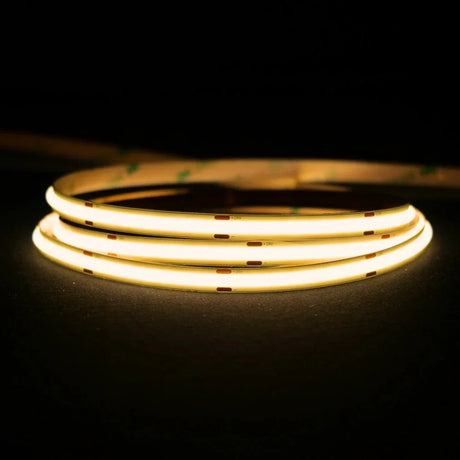
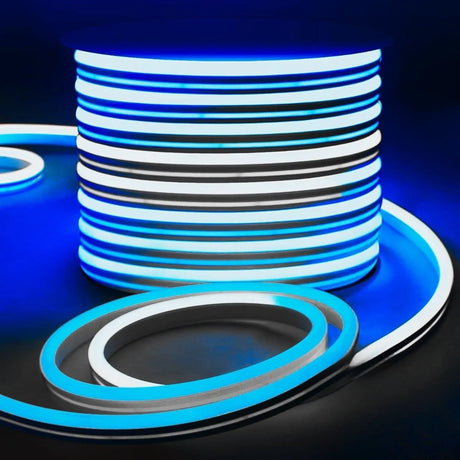
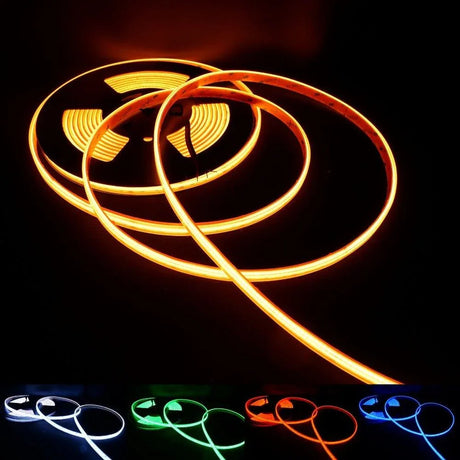
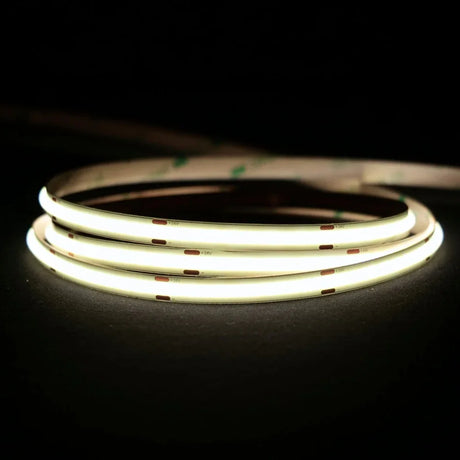
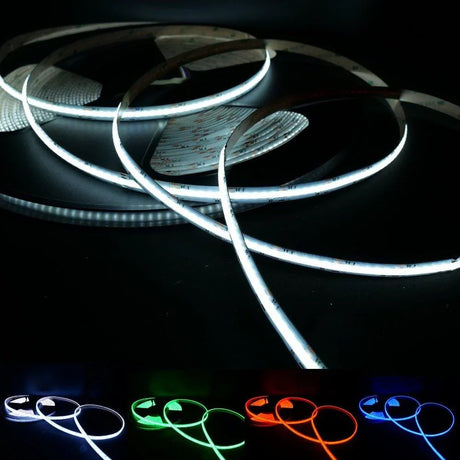
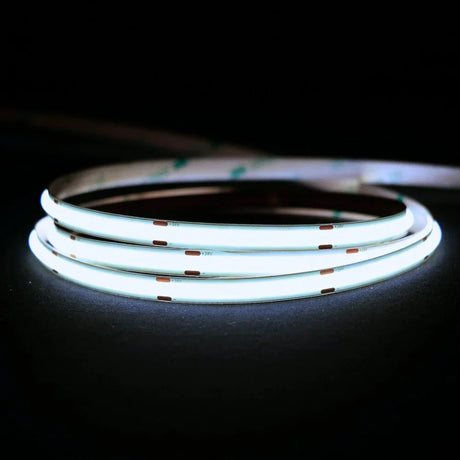
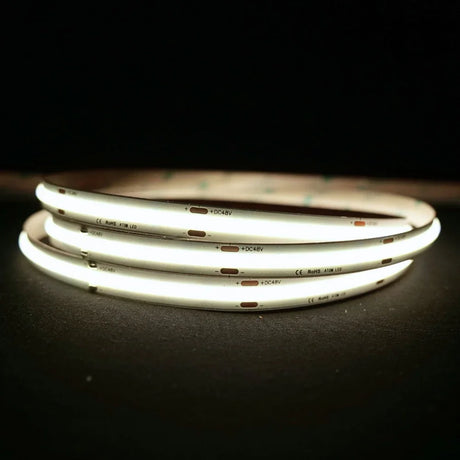
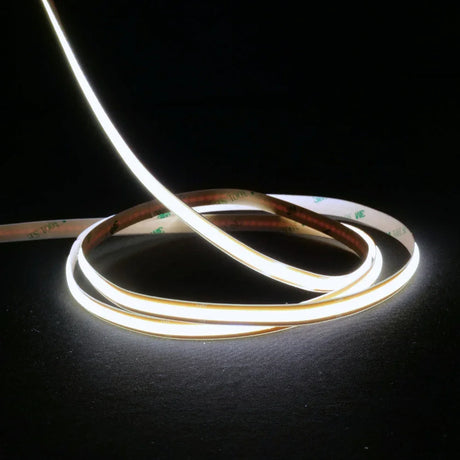
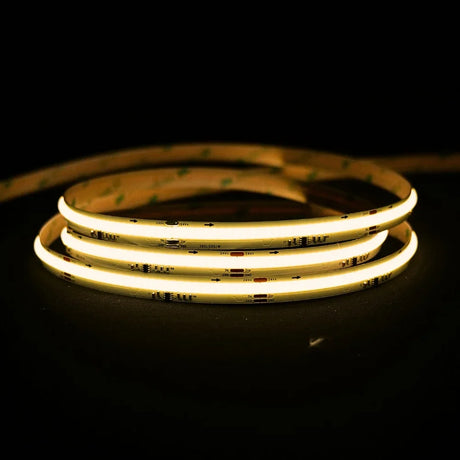
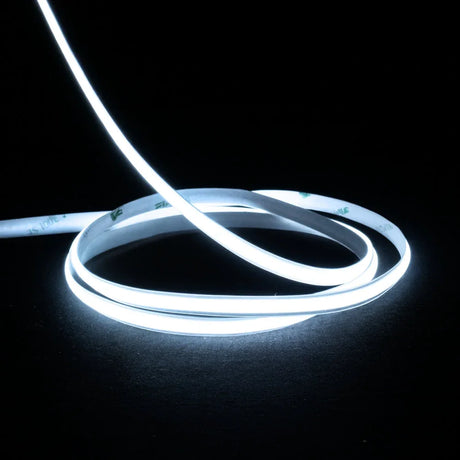
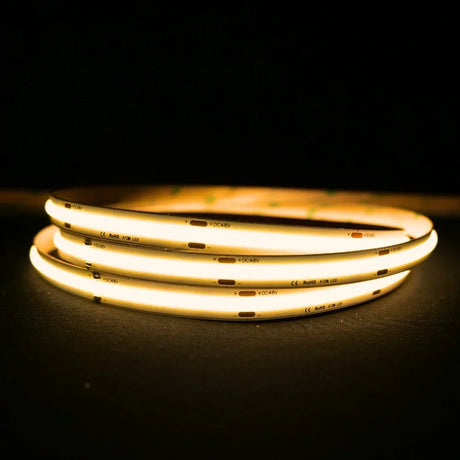
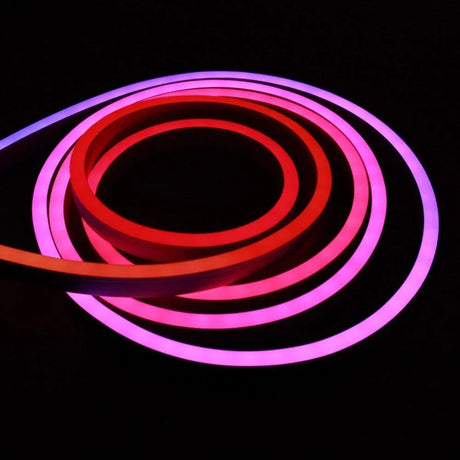
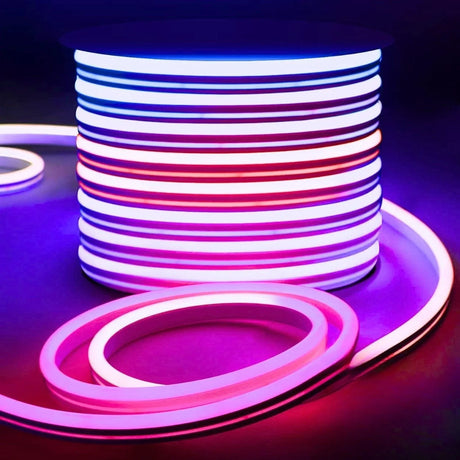
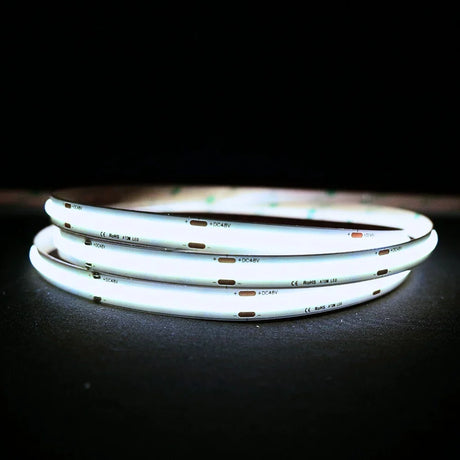
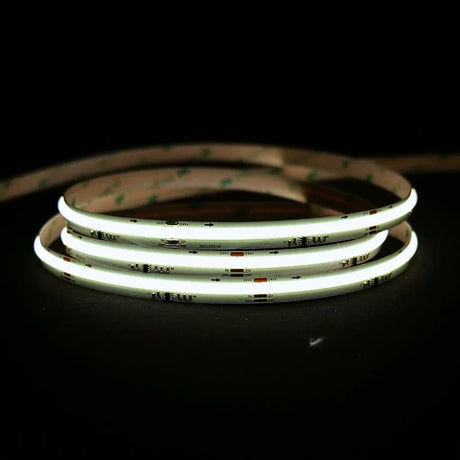
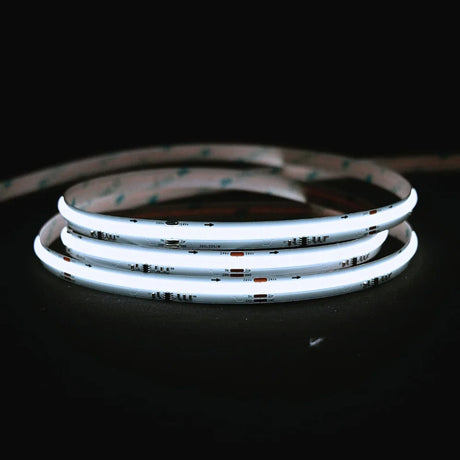
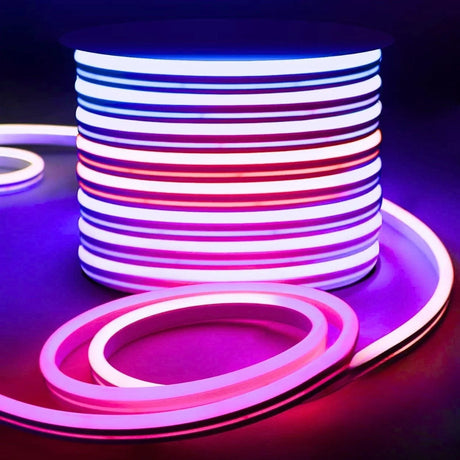
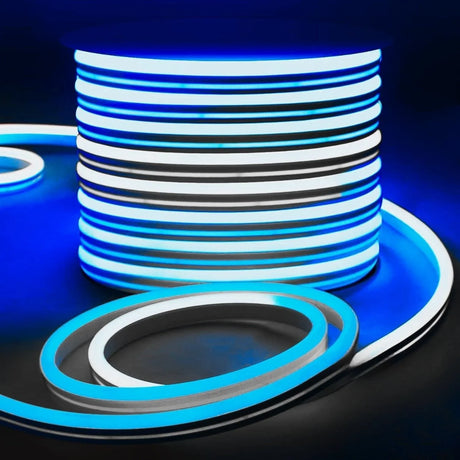
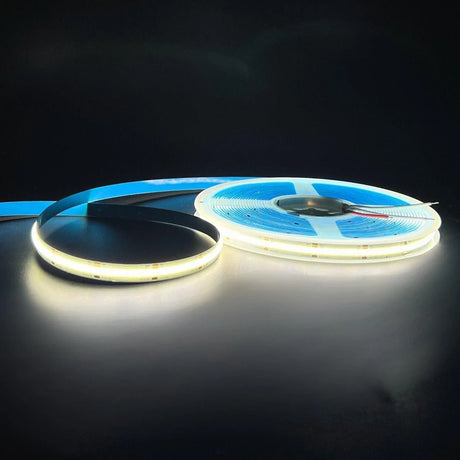
Choosing bedroom lighting is personal — it shapes how you sleep, how the room feels when you walk in, and whether the space actually works after dark. UK LED Lights supplies bedroom LED strip lights in warm white, tuneable white, RGB, and RGBW across 12V and 24V options, with COB dot-free strip for visible runs and standard SMD for concealed installations. Every strip we stock is dimmable and compatible with smart home control in 2026.
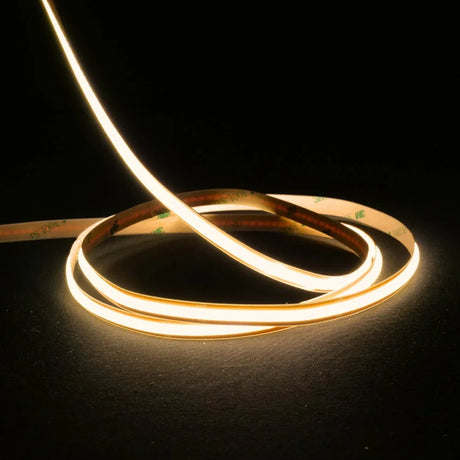
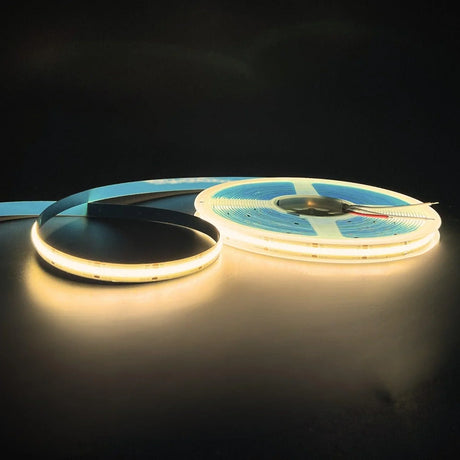
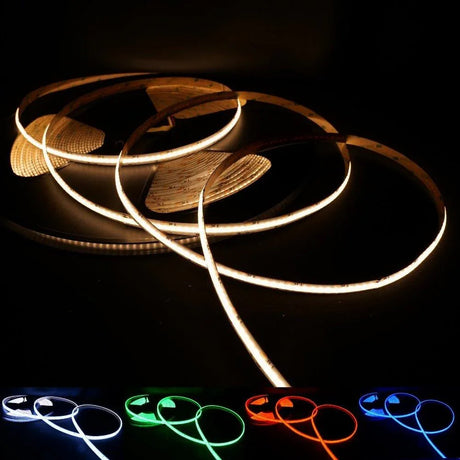
Our bedroom LED strip collection includes 2700K warm white for sleep-friendly lighting, RGBW with dedicated white channel for true colour plus clean white, and COB dot-free strip for headboard and shelf runs where the strip is partially visible. Typical bedroom installations use 3 to 6 metres per feature — headboard, under-bed, wardrobe, or ceiling cove. Call 01952 370008 or email sales@ukledlights.co.uk for help choosing the right strip for your room.
2700K Warm White · COB Dot-Free · RGB · RGBW · 12V · 24V · IP20 · Dimmable · Smart WiFi · Alexa · Google Home · Profiles · Free UK delivery
Quick decision guide:
-
Headboard glow or open shelf accent: 24V COB strip in 2700K warm white — dot-free, dimmable, and clean enough for any installation where the strip is partially visible.
-
Under-bed floating effect: Standard SMD strip in 2700K warm white — concealed beneath the bed frame, so dot visibility is irrelevant and cost per metre is lower.
-
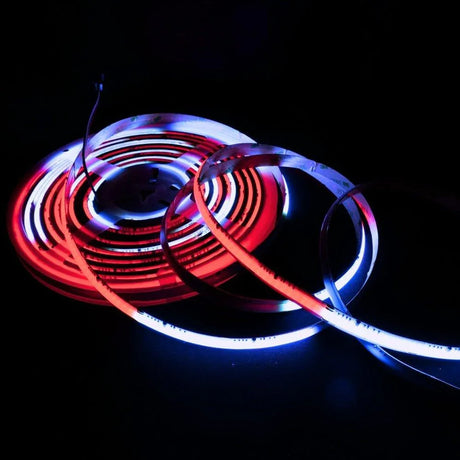
Colour-changing mood lighting: 24V RGBW strip with a dedicated RGB controller — the white channel produces a clean warm white that RGB alone cannot match.
-
Children's bedroom with colour effects: 24V RGB strip with a WiFi controller — controllable via app, Alexa, or Google Home, with scheduling for automated bedtime routines.
-
Wardrobe interior or dressing area: 24V COB or SMD strip in natural white 4000K — accurate colour rendering for choosing clothes and seeing fabrics in their true tones.
-
Full bedroom scheme (headboard + under-bed + wardrobe): Multiple 24V runs on separate drivers wired in parallel — call 01952 370008 for a free layout plan.
Who bedroom LED strip lights are for: Homeowners redesigning a bedroom and wanting layered lighting beyond a single ceiling pendant, renters looking for plug-and-play strip that can be removed without wall damage, parents fitting colour-changing lights for children's rooms, interior designers specifying concealed accent lighting for client bedrooms, and electricians installing hardwired strip to BS7671 standards in new builds or refurbishments. If you want lighting that adjusts to how you actually use the room — bright for dressing, dim for reading, off-timer for sleeping — LED strip is the most flexible option available in 2026.
Who bedroom LED strip is NOT for: If you need a single bright ceiling light and nothing else, a pendant or flush mount is simpler. If you want colour-changing effects but plan to use a standard wall dimmer instead of a dedicated RGB controller, the strip will not produce the results you expect — our controller range is where to start. If you need strip for a bathroom en-suite, see our IP-rated outdoor and wet zone strip collection instead — bedrooms are dry environments and IP20 strip is not suitable for bathrooms.
Common buying mistakes to avoid:
-
Choosing cool white for a bedroom: Cool white (5000K-6500K) suppresses melatonin production and signals daytime to the brain. For sleep quality, 2700K warm white is the correct choice for any bedroom installation — this is not a style preference, it is supported by sleep research published through 2026.
-
Using a leading-edge dimmer with LED strip: Leading-edge dimmers cause visible flicker at low brightness levels, which is exactly when bedroom strip lights are used most. A trailing-edge dimmer costs approximately £15 and removes the problem entirely.
-
Buying RGB strip and expecting clean white light: RGB strip produces a cold, violet-tinged white because it mixes red, green, and blue to approximate white. If you want colour effects and clean white in the same strip, RGBW adds a dedicated white LED chip that solves this — the price difference is minimal for a significantly better result.
-
Running strip while still coiled on the reel: Heat builds up in coiled strip because air cannot circulate. The adhesive softens, LEDs overheat, and permanent damage follows. Always uncoil, mount, and secure strip before powering on.
-
Mounting strip directly onto bare metal bed frames or shelving: Metal surfaces without insulation will short-circuit unprotected strip. Mount inside an aluminium profile, or apply an insulating layer between the strip and any exposed metal surface.
- What colour temperature is best for bedroom LED strip lights?
- Where should you install LED strip lights in a bedroom?
- What is the difference between COB and SMD strip for bedrooms?
- How do you install bedroom LED strip lights step by step?
- Should you choose RGB or RGBW strip for a bedroom?
- Can you control bedroom LED strip lights with Alexa or Google Home?
- How does LED strip lighting affect sleep quality?
- How much LED strip do you need for a typical UK bedroom?
- What driver and dimmer setup does bedroom LED strip need?
- Why buy bedroom LED strip lights from UK LED Lights?
What colour temperature is best for bedroom LED strip lights?
2700K warm white is the best colour temperature for bedroom LED strip lights in 2026. It produces a soft amber-toned light that supports natural melatonin production, matches the warmth of traditional incandescent bulbs, and creates the relaxed atmosphere bedrooms are designed for. Avoid cool white above 4000K in any bedroom sleeping zone.
Colour temperature directly affects how a bedroom feels after dark. The difference between 2700K and 5000K in a bedroom is not subtle — it changes the entire character of the room. Here is how each option performs in real bedroom applications:
-
2700K warm white: The most popular bedroom choice at UK LED Lights. Produces a soft amber glow similar to a 60W incandescent bulb. Ideal for headboard lighting, under-bed strips, ceiling coves, and any installation intended to create a restful atmosphere.
-
3000K warm white: Slightly crisper than 2700K while still in the warm range. Works well for bedside reading nooks and dressing areas where a touch more clarity is useful without crossing into alerting territory.
-
4000K natural white: Best reserved for wardrobe interiors and dressing table surrounds where accurate colour rendering matters for choosing clothes and applying make-up. Not recommended for the sleeping zone.
-
Tuneable white (2700K-6500K): Adjustable colour temperature via controller — allows warm white for evening and brighter natural white for morning. A practical choice for master bedrooms where one strip serves multiple purposes throughout the day.
| Colour Temperature |
Best Bedroom Use |
Effect on Sleep |
UK LED Lights Recommendation |
| 2700K warm white |
Headboard, under-bed, cove lighting |
Supports melatonin — sleep-friendly |
Primary choice for sleeping zones |
| 3000K warm white |
Reading nooks, bedside shelves |
Minimal melatonin suppression |
Good secondary option |
| 4000K natural white |
Wardrobe interiors, dressing areas |
Moderate alerting effect |
Task areas only — not sleeping zones |
| 5000K-6500K cool white |
Not recommended for bedrooms |
Strongly suppresses melatonin |
Avoid in all bedroom installations |
Where should you install LED strip lights in a bedroom?
The five most effective bedroom LED strip positions are behind the headboard for a wall-wash glow, under the bed frame for a floating effect, inside wardrobe interiors for functional task lighting, along ceiling coves for indirect ambient light, and behind a desk or shelving unit for accent illumination. Each position creates a different lighting layer.
Professional bedroom lighting in 2026 works in layers — ambient, task, and accent — rather than relying on a single ceiling fitting. LED strip fills the accent and ambient layers at a fraction of the cost of recessed downlights or wall washers. Here is where each position works best:
-
Behind the headboard: Mount strip along the top edge of the headboard, facing the wall. The wall reflects a soft halo of light upward and outward. This is the single most popular bedroom strip position we supply at UK LED Lights — typically 1.5 to 2.5 metres of 2700K COB strip. Use a profile to keep the strip straight and protect the circuit board from the headboard edge.
-
Under the bed frame: Fix strip to the underside of the bed frame pointing downward, 20-30mm from the outer edge. Creates a floating effect where the bed appears to hover above the floor. Standard SMD strip works well here because the strip itself is hidden — dot visibility is irrelevant. A motion sensor can trigger the strip when you step out of bed at night, providing just enough floor-level light to navigate without fully waking.
-
Ceiling cove or coving channel: Install strip inside a plaster cove or dedicated coving profile mounted 50-100mm below the ceiling. Light washes upward and reflects off the ceiling, producing soft room-wide ambient light with zero glare. Typical run: 8 to 14 metres for a full room perimeter.
-
Wardrobe interiors: Mount strip inside the top of the wardrobe or on vertical side panels. Natural white at 4000K is the correct choice here — accurate colour rendering lets you distinguish between navy and black, charcoal and brown. A door-activated switch turns the strip on when you open the wardrobe.
-
Desk and shelving accents: Run strip behind a desk monitor for bias lighting that reduces eye strain, or along the rear edge of floating shelves for a soft backlight effect. 2700K or 3000K suits evening study and reading.
What is the difference between COB and SMD strip for bedrooms?
COB LED strip produces a continuous, dot-free ribbon of light by placing hundreds of micro chips along a single board, making it the correct choice for any bedroom installation where the strip is visible. SMD strip uses individually spaced LED chips that produce visible dots, which is acceptable for concealed positions like under-bed runs but looks unfinished in open-shelf or headboard installations.
The choice between COB and SMD in a bedroom comes down to one question: can you see the strip from normal viewing positions? If yes, use COB. If the strip is fully hidden behind furniture or inside a closed profile, SMD does the same job for less money.
| Feature |
COB Strip (Bedroom) |
SMD Strip (Bedroom) |
| Light output |
Continuous ribbon — no visible dots |
Individual dot pattern visible |
| Best bedroom position |
Headboard, open shelves, visible runs |
Under-bed, inside wardrobe, concealed coves |
| Beam angle |
180 degrees |
120 degrees typical |
| Appearance without profile |
Clean even glow |
Dotted light pattern |
| Appearance inside profile with diffuser |
Perfectly uniform |
Dots partially smoothed |
| Cost per metre |
Higher |
Lower |
| Minimum order for typical bedroom feature |
2-3 metres |
2-3 metres |
| Recommended for visible 2026 bedroom installs |
Yes — professional standard |
Concealed positions only |
For most bedroom projects we specify at UK LED Lights, the practical recommendation in 2026 is COB strip for the headboard and any visible feature, with SMD strip for under-bed and wardrobe runs. This keeps the overall cost down without compromising the finish where it matters. Call 01952 370008 for advice on mixing strip types in a single bedroom.
How do you install bedroom LED strip lights step by step?
Clean the mounting surface with isopropyl alcohol, cut the strip to length at the nearest marked cut point, mount inside an aluminium profile or apply directly using the adhesive backing, wire runs in parallel back to a constant voltage driver, and connect the driver to a trailing-edge dimmer or smart controller. A typical headboard installation takes approximately 45 minutes.
Step-by-step installation for bedroom LED strip lights in 2026:
-
Plan the layout and measure: Decide which features you are lighting — headboard, under-bed, wardrobe, ceiling cove, or all four. Measure each run in metres. A typical UK double bed headboard is 1.4 to 1.8 metres wide, and an under-bed perimeter run on a king-size frame is approximately 5 to 6 metres. Order 10 percent extra strip for cutting waste.
-
Choose the correct driver: Add up the total wattage of all strip runs. Select a constant voltage driver rated at least 20 percent above that total — this headroom prevents the driver from running at full load, which generates heat and shortens lifespan. For a typical bedroom with a headboard and under-bed run totalling 8 metres of 10W/m strip, that is 80W of strip requiring a 100W driver minimum.
-
Prepare mounting surfaces: Clean every mounting surface with isopropyl alcohol and allow to dry completely. Dust, grease, or paint residue will cause the adhesive to fail within weeks. For a headboard installation, wipe the rear face of the headboard or the wall surface behind it. For under-bed mounting, clean the underside of the bed frame.
-
Cut strip to length: Cut at the nearest marked cut point — these are indicated by a scissor symbol or line printed on the strip at regular intervals. Cutting between marked points will disable the section between the cut and the nearest solder pad. Use sharp scissors or a craft knife for a clean cut.
-
Mount inside profiles or apply directly: For visible runs like headboards and shelves, mount the strip inside an aluminium profile with a frosted diffuser cover. For concealed runs under beds, the self-adhesive backing applied directly to the frame is sufficient. Press firmly along the entire length — do not leave any section unsupported.
-
Wire all runs in parallel: Connect each strip run back to the driver using parallel wiring. This helps ensure consistent brightness across all runs. Series wiring multiplies voltage drop and causes the strip furthest from the driver to appear dimmer — this is the most common wiring mistake in multi-run bedroom installations.
-
Connect driver to dimmer or controller: For single-colour white strip, wire the driver output to a trailing-edge dimmer switch. For RGB or RGBW strip, connect a dedicated RGB or RGBW controller between the driver and the strip — do not use a standard wall dimmer with colour-changing strip. For smart home integration, use a WiFi-enabled controller compatible with Alexa or Google Home.
-
Test before final fixing: Power on every run and check for even brightness, correct colour temperature, and smooth dimming across the full range. Check that no sections are flickering or showing inconsistent colour. Only finalise mounting clips and cable routing once every run is confirmed working.
Need help with driver sizing or wiring layout for your bedroom? Email sales@ukledlights.co.uk with your room measurements and we will send a specification recommendation within one working day.
Should you choose RGB or RGBW strip for a bedroom?
RGBW is the better choice for bedrooms in 2026 because it combines full-spectrum colour-changing capability with a dedicated white LED chip that produces clean, true warm white light. Standard RGB strip mixes red, green, and blue to approximate white, which results in a cold violet-tinged output that looks unnatural in a bedroom setting and is unsuitable for everyday white lighting.
This is one of the most common questions we answer at UK LED Lights, and the answer is simple: if you will ever use your bedroom strip in white mode — and most people do, for reading, dressing, or winding down before sleep — RGBW is the correct choice. The dedicated white chip in RGBW strip operates independently of the RGB channels, producing the same quality warm white as a dedicated single-colour strip.
-
RGB strip: Three colour channels (red, green, blue) that mix to produce colour effects. White mode mixes all three channels simultaneously, producing a pale, violet-tinged output with low CRI. Suitable if you only want colour effects and never intend to use white mode.
-
RGBW strip: Four channels — red, green, blue, plus a separate dedicated white LED. The white channel operates independently, producing a clean 2700K or 3000K warm white identical in quality to single-colour strip. The colour channels still produce the full RGB spectrum. The price difference per metre is minimal for a significantly better result.
Both RGB and RGBW strip require a non-dimmable constant voltage driver paired with a dedicated RGB or RGBW controller. Using a dimmable driver with colour-changing strip causes flicker, colour shift, and premature failure — this is a technical requirement, not a preference. Browse our controller range for compatible options.
Can you control bedroom LED strip lights with Alexa or Google Home?
Yes — bedroom LED strip lights can be fully controlled via Amazon Alexa, Google Home, or Apple HomeKit when paired with a WiFi-enabled LED controller. This allows voice-activated on and off, brightness adjustment, colour changing, timer scheduling, and automated bedtime and wake-up routines — all without touching a switch or picking up a remote.
Smart control has become the standard way to manage bedroom lighting in 2026, and LED strip is one of the easiest fixtures to connect. The setup requires a WiFi-enabled controller installed between the driver and the strip, connected to your home network via the manufacturer's app. Once linked to Alexa or Google Home, you can control every strip in the bedroom by voice or through automated routines.
-
Voice commands: Turn strip on or off, set specific brightness levels, change colour, and select colour temperature — all hands-free from bed.
-
Bedtime routines: Schedule the strip to dim gradually from 50 percent to off over 30 minutes, mimicking a natural sunset. This supports melatonin production and signals the body to prepare for sleep — more effective than an abrupt switch-off.
-
Wake-up routines: Programme the strip to increase brightness slowly over 15 to 20 minutes before your alarm, simulating dawn. Warm white at 2700K rising to 3000K produces a gentle wake signal without the shock of a sudden overhead light.
-
Scene presets: Save named scenes such as "reading" (warm white at 40 percent), "movie" (RGB blue at 10 percent), or "getting ready" (natural white at 80 percent) and activate them with a single voice command.
-
Grouping: Link headboard, under-bed, and wardrobe strips into a single group so one command controls all bedroom lighting simultaneously.
Our WiFi controllers work with the major smart home platforms used in UK homes in 2026. Call 01952 370008 if you need help confirming compatibility with your existing smart home system.
How does LED strip lighting affect sleep quality?
LED strip lighting can either support or disrupt sleep depending on the colour temperature and brightness used before bed. Warm white at 2700K or lower minimises blue-light exposure, supports natural melatonin production, and promotes better sleep onset. Cool white or blue-rich RGB colours above 4000K suppress melatonin and signal alertness, making it harder to fall asleep if used within 60 minutes of bedtime.
This is one of the least-discussed aspects of bedroom lighting, and one where LED strip actually has an advantage over most traditional bedroom fittings. Because strip is dimmable and — with the right controller — programmable, you can adjust both brightness and colour temperature based on the time of day. A standard ceiling pendant offers none of this flexibility.
-
Evening wind-down (60 minutes before bed): Reduce strip brightness to 20-30 percent and ensure the colour temperature is at 2700K or lower. Amber-tinted strip (2200K) is even better for the final 30 minutes if you are particularly sensitive to light before sleep.
-
During sleep: Strip should be off or reduced to the absolute minimum brightness setting via a motion sensor for nighttime navigation only — typically under-bed strip at 5-10 percent brightness triggered by stepping out of bed.
-
Morning wake-up: Gradually increase brightness from 0 to 50 percent over 15-20 minutes before your alarm. This simulates a natural dawn and helps the body transition from sleep to wakefulness without an abrupt light change.
-
Children's bedrooms: Avoid blue and bright white in RGB colour modes after 7pm. Warm white or soft amber provides enough light for bedtime stories and settling without overstimulating. Timer functions on WiFi controllers can automate the switch from colour mode to warm white at a set time each evening.
The circadian impact of bedroom lighting is a key reason we recommend 2700K as the default colour temperature for every bedroom LED strip installation at UK LED Lights. It is not simply about aesthetics — it directly affects how well the room functions as a place to sleep. For advice on circadian-friendly bedroom lighting layouts, email sales@ukledlights.co.uk.
How much LED strip do you need for a typical UK bedroom?
A single bedroom feature like a headboard requires 1.5 to 2.5 metres of strip. A headboard plus under-bed floating effect typically uses 7 to 9 metres total. A full bedroom scheme with headboard, under-bed, ceiling cove, and wardrobe lighting requires 18 to 30 metres depending on room dimensions. UK bedrooms typically range from 8 to 16 square metres, which directly determines cove perimeter length.
Here is a practical breakdown based on the bedroom sizes and features we most commonly specify at UK LED Lights in 2026:
| Bedroom Feature |
Typical Strip Length |
Recommended Strip Type |
Estimated Cost Range |
| Headboard backlight (double bed) |
1.5-1.8 metres |
24V COB 2700K |
£15-£30 |
| Headboard backlight (king bed) |
2.0-2.5 metres |
24V COB 2700K |
£20-£40 |
| Under-bed perimeter (double) |
5.0-5.5 metres |
24V SMD 2700K |
£15-£25 |
| Under-bed perimeter (king) |
5.5-6.5 metres |
24V SMD 2700K |
£18-£30 |
| Ceiling cove (small bedroom 3x3m) |
12 metres |
24V COB 2700K |
£60-£100 |
| Ceiling cove (large bedroom 4x5m) |
18 metres |
24V COB 2700K |
£90-£160 |
| Single wardrobe interior |
1.0-1.5 metres |
24V SMD 4000K |
£8-£15 |
| Desk or shelf accent |
1.0-2.0 metres |
24V COB 3000K |
£10-£25 |
Always order 10 percent more strip than the measured length to account for cutting waste at marked cut points. For multi-feature installations, calculate total wattage across all runs and size your driver at 20 percent above that figure. If you are unsure how to calculate driver sizing for your bedroom layout, call 01952 370008 and we will work it out with you over the phone.
What driver and dimmer setup does bedroom LED strip need?
Single-colour bedroom LED strip requires a constant voltage driver (12V or 24V matching the strip voltage) paired with a trailing-edge dimmer for smooth brightness control. RGB and RGBW bedroom strip requires a non-dimmable constant voltage driver paired with a dedicated RGB or RGBW controller — never a standard wall dimmer. Using a dimmable driver with colour-changing strip causes flicker, colour shift, and premature failure.
The driver and dimmer specification is the part of bedroom LED strip installation that causes the most problems when incorrect. Here is the correct setup for each strip type:
-
Single-colour white strip (2700K, 3000K, or 4000K): Constant voltage Triac-dimmable driver connected to a trailing-edge dimmer switch. The trailing-edge dimmer provides smooth, flicker-free dimming across the full 0-100 percent range. Leading-edge dimmers frequently cause visible flicker at low brightness levels — exactly the brightness range used most in bedrooms. Replacing a leading-edge dimmer with a trailing-edge model costs approximately £15 and is the single most effective fix for flickering bedroom strip in 2026.
-
RGB strip: Non-dimmable constant voltage driver connected to an RGB controller. The controller manages colour mixing and brightness independently. Do not wire an RGB controller through a wall dimmer — it creates conflict between two dimming methods and damages the controller.
-
RGBW strip: Non-dimmable constant voltage driver connected to an RGBW controller (4-channel). The controller manages all four channels — red, green, blue, and dedicated white — independently. Same rule: no wall dimmers in the circuit.
-
Tuneable white strip: Non-dimmable constant voltage driver connected to a CCT (colour-changing temperature) controller that adjusts the mix between warm and cool white channels.
Driver sizing rule: Calculate total strip wattage (metres x watts per metre), then select a driver rated at least 20 percent above that total. For example, 6 metres of 10W/m strip equals 60W — select a 75W or higher driver. Running a driver at full rated load generates excess heat and shortens its lifespan, particularly in enclosed spaces like wardrobe interiors or behind headboards where airflow is limited.
Browse our LED driver range and controller collection for compatible options, or call 01952 370008 for a matched driver and dimmer recommendation for your bedroom.
Why buy bedroom LED strip lights from UK LED Lights?
UK LED Lights is a specialist LED supplier based in Telford, Shropshire, stocking the full range of bedroom-suitable strip in warm white, tuneable white, RGB, and RGBW — all held in UK stock with free delivery and technical support from a team that specifies bedroom lighting layouts daily. We are not a general lighting retailer selling strip as a sideline — LED strip and its supporting components are our core business.
-
Bedroom-specific recommendations: We help customers choose the right colour temperature, strip type, and control method for their bedroom every working day. The advice you receive is based on real bedroom installations across the UK in 2026, not generic product descriptions.
-
Full system supply: Strip, drivers, dimmers, controllers, profiles, diffusers, connectors, and mounting accessories — everything required for a complete bedroom installation from one supplier with matched compatibility. No guesswork on whether components work together.
-
Free UK delivery: All orders ship from our Telford warehouse with free UK mainland delivery. Orders placed before 2pm on weekdays typically dispatch the same day.
-
Technical support by phone and email: Call 01952 370008 (Monday to Friday, 9am-5pm) or email sales@ukledlights.co.uk for help with driver sizing, dimmer compatibility, wiring layout, or any bedroom lighting question. We do not route calls to a general customer service team — you speak directly to people who know the products.
-
UK-registered company: UK LED Lights Ltd, Company No: 12301805, Unit D4, Stafford Park 4, Telford, Shropshire, TF3 3BA. A real business with a physical address, not a dropshipper or marketplace reseller.
-
Bedroom lighting is personal — our team has helped hundreds of customers choose between warm white for sleep quality and RGBW for mood flexibility.
-
We recommend 2700K warm white for bedrooms based on real feedback from customers who tried cool white and switched within months.
Ready to order? Browse our full LED strip lights collection, call 01952 370008 for a personalised bedroom lighting recommendation, or email sales@ukledlights.co.uk with your room dimensions and we will suggest the right strip, driver, and controller for your project.
Recommended setup for a 4-metre headboard cove installation
-
Strip: 24V COB warm white 2700K, 10W/m, IP20 — sleep-friendly amber tone, dot-free
-
Driver: 24V 60W triac dimmable constant voltage (40W load + 20% headroom)
-
Profile: Recessed aluminium with milky diffuser, set into headboard panel or cove channel
-
Dimmer: Trailing-edge triac dimmer or WiFi controller for bedside app control — approximately £15-30
-
Total cost guide: Approximately £30-45 for strip + £20-30 for driver + £10-20 for profile per metre + £15-30 for dimmer/controller
Bedroom installations differ by ceiling cove depth, bed frame design, and dimming preference — call us to fine-tune this specification. Ring 01952 370008 or email sales@ukledlights.co.uk for free bedroom lighting advice.
When should you choose a different product instead of bedroom LED strip?
Before ordering, check whether your bedroom project falls into one of these categories where a different product works better.
-
You only need a bedside reading light: A wall-mounted adjustable reading lamp provides more focused, directional light for reading than ambient strip lighting.
-
You want colour-changing effects but plan to use a standard wall dimmer: RGB strip requires a dedicated controller, not a wall dimmer. If you are not prepared to install a controller, single colour strip with a triac dimmable driver is a simpler setup.
-
The bedroom doubles as a bright home office during the day: Strip lighting provides ambient illumination. For concentrated desk task lighting, a dedicated desk lamp or overhead panel delivers the focused output a workstation needs.
-
Your bedroom lighting budget is under £20: A quality COB strip installation with profile and driver typically costs £60-120 for a single feature. If budget is very limited, a plug-in LED table lamp provides immediate improvement at lower cost.
If you are unsure whether this product suits your project, call 01952 370008 — our technical team will recommend the correct alternative if this is not the right match.
What are the most common questions about bedroom LED strip lights?
Q: Are LED strip lights safe to leave on all night in a bedroom?
-
Yes, when properly installed. LED strip operates at low voltage (12V or 24V DC) and generates minimal heat compared to mains-voltage lighting. Mount strip on a clean, non-metallic surface or inside an aluminium profile, and ensure the driver is correctly rated. For sleep quality, use a timer or smart controller to switch strip off at a scheduled time rather than leaving it on continuously at full brightness through the night.
Q: Can I stick LED strip lights directly to a bedroom wall?
-
The self-adhesive backing on most strip will adhere to smooth, clean painted walls. Clean the surface with isopropyl alcohol first and press firmly along the full length. However, for a professional finish and longer-lasting installation, mounting inside an aluminium profile is recommended — the profile protects the strip, improves heat dissipation, and produces a cleaner light output through the frosted diffuser.
Q: How long do bedroom LED strip lights last?
-
Quality LED strip lasts 30,000 to 50,000 hours when installed correctly. At a typical bedroom usage of 4 hours per evening, that equates to approximately 20 to 34 years before the LEDs degrade to 70 percent of their original brightness. Premature failure is almost always caused by installation errors — incorrect driver sizing, poor thermal management, or running strip while coiled — rather than LED chip failure.
Q: Do I need an electrician to install bedroom LED strip lights?
-
Plug-and-play kits with a mains plug adaptor do not require an electrician. If you are hardwiring the driver into your home's fixed electrical circuit — for example, connecting it to a wall switch — the work should be carried out by a qualified electrician in compliance with BS7671 and Part P building regulations. This applies to all fixed wiring, not just LED strip.
Q: Will bedroom LED strip lights damage paint or wallpaper when removed?
-
Standard 3M adhesive backing can remove cleanly from smooth painted surfaces if peeled slowly at a low angle. On textured wallpaper or freshly painted surfaces (under 4 weeks cure time), there is a risk of surface damage. Mounting inside a clip-fixed aluminium profile avoids adhesive contact with the wall entirely, which is a better option for rented accommodation where you need to restore walls on departure.
Q: What is the best LED strip colour for a child's bedroom?
-
RGB strip with a WiFi controller is the most popular choice for children's bedrooms in 2026. It allows colour changes via app or voice control, and timer scheduling can automatically switch from colour mode to warm white at a set bedtime. Avoid leaving blue or cool white colours active after 7pm — warm white or soft amber supports better sleep patterns for children. RGBW strip adds a dedicated white channel for clean warm white alongside colour effects.
Q: Can LED strip lights be used for bedroom reading light?
-
Yes — mount strip at headboard level or above the bed facing toward the reading position. Choose 3000K warm white at a medium brightness setting for comfortable reading without eye strain. For dedicated reading areas, a strip inside a profile with a narrow-beam diffuser concentrates light more effectively than an open strip. Ensure the strip is dimmable so brightness can be adjusted to personal preference.
Q: How do I stop bedroom LED strip lights flickering?
-
Flickering is almost always caused by an incompatible dimmer. Leading-edge dimmers frequently cause visible flicker with LED drivers, especially at low brightness levels. Replace with a trailing-edge dimmer (approximately £15) and the flicker will stop in most cases. If the strip flickers without a dimmer in the circuit, check that the driver output voltage matches the strip voltage (12V strip requires a 12V driver, 24V strip requires a 24V driver) and that the driver is not overloaded.
Q: Do bedroom LED strip lights use a lot of electricity?
-
No — LED strip is one of the most energy-efficient lighting options available. A typical 3-metre headboard run of 10W/m strip draws 30W total. Running that strip at 50 percent brightness for 4 hours every evening costs approximately 2p per night at 2026 UK electricity rates. A full bedroom scheme with headboard, under-bed, and wardrobe strips running 4 hours per evening costs under 8p per night.
Q: Can I mount bedroom LED strip on a metal bed frame?
-
Never mount LED strip directly on bare uninsulated metal. The PCB underside has exposed copper traces that will short-circuit against conductive surfaces. Use an aluminium profile with an anodised finish as an intermediary, or apply an insulating layer between the strip and the metal frame.
Q: Is IP65 LED strip suitable for a bedroom?
-
IP20 is the correct rating for bedrooms. Bedrooms are dry environments with no moisture exposure, so the additional cost of IP65, IP67, or IP68 is unnecessary. Save the higher IP ratings for bathrooms (IP67 minimum) and outdoor installations (IP67 minimum).
Q: What happens if I power LED strip while it is still coiled on the reel?
-
Heat builds up rapidly because air cannot circulate. The 3M adhesive softens, LEDs overheat, and permanent damage can occur within minutes. Always uncoil strip fully, mount it on a surface or inside a profile, and only then connect to power.
Q: Why does RGB strip not produce clean white light in a bedroom?
-
RGB strip blends red, green, and blue LEDs to approximate white, but the result has a visible cold violet tinge that looks unnatural in a bedroom setting. RGBW strip solves this by adding a dedicated white LED channel that produces accurate, clean warm white independently of the colour channels.
Q: Can I use a trailing-edge dimmer to dim bedroom LED strip?
-
Yes — for single-colour white strip, a trailing-edge dimmer paired with a Triac dimmable driver provides smooth, flicker-free brightness control from full output down to approximately 1-5 percent. This is the dimming range most used in bedrooms — low ambient glow for evening wind-down. A leading-edge dimmer causes visible flicker at these low levels; replacing it with a trailing-edge model costs approximately fifteen pounds.
Q: Can bedroom LED strip be controlled by a motion sensor?
-
Yes — a PIR motion sensor connected to the low-voltage side of the circuit triggers the strip when movement is detected. This is particularly useful for under-bed lighting that activates when you step out of bed at night, providing floor-level navigation light without waking you fully.
-
Set brightness to 5-10 percent and use warm white 2700K to minimise sleep disruption.
Q: What is the best strip type for a bedroom ceiling cove?
-
24V COB strip in 2700K warm white is the professional standard for bedroom ceiling coves in 2026. COB produces a smooth, dot-free light output that washes evenly across the ceiling.
-
Typical ceiling cove runs are 12-18 metres for a full room perimeter — well within 24V capability when wired in parallel.
-
Mount inside a coving profile or dedicated shadow-gap channel to conceal the strip and direct light upward.
Q: Do I need an aluminium profile for bedroom LED strip?
-
For visible installations (headboard, open shelves), an aluminium profile is strongly recommended. It protects the strip, manages heat, and holds a diffuser that produces a clean, even light output.
-
For concealed installations (under-bed, inside wardrobe), the self-adhesive backing applied directly to the mounting surface is acceptable since the strip is hidden from view.
Q: Can I use RGBCCT strip in a bedroom for both colour and tuneable white?
-
Yes — RGBCCT is the most versatile option for bedrooms. It combines full RGB colour effects with tuneable white from 2700K warm to 6500K cool, controlled from a 5-channel controller or smartphone app.
-
Practical use: Cool white for morning dressing, warm white for evening relaxation, colour effects for mood or entertainment — all from one strip.
-
Requires a non-dimmable driver and a 5-channel controller — never a standard wall dimmer.
Q: What warranty covers bedroom LED strip from UK LED Lights?
-
All LED strip carries a manufacturer warranty. Specific terms vary by product — check the individual listing. Warranty covers manufacturing defects and premature LED failure under correct installation conditions.
-
Not covered: Physical damage, incorrect wiring, use of incompatible dimmers or drivers, and operation while coiled on the reel.
-
For claims, call 01952 370008 or email sales@ukledlights.co.uk with your order number and photos.
Q: Can bedroom LED strip be used as a night light for children?
-
Yes — under-bed LED strip at 5-10 percent brightness is one of the safest and most practical night light options. It operates at low voltage (24V DC), produces minimal heat, and provides just enough light for children to navigate without fully waking.
-
Use warm white 2700K or soft amber, which supports melatonin production and avoids the blue-light disruption caused by cool or white-rich colours.
-
A WiFi controller with scheduling can automatically switch from colour mode to dim warm white at a set bedtime.
Last reviewed: March 2026 — UK LED Lights technical team, Telford, Shropshire. Specifications current as of 2026.
UK LED specialist, Telford, Shropshire · 01952 370008 · Free UK delivery