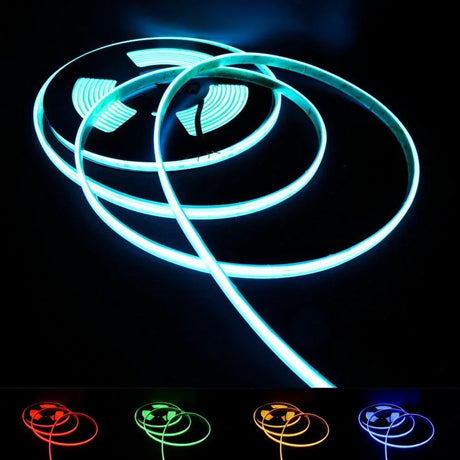
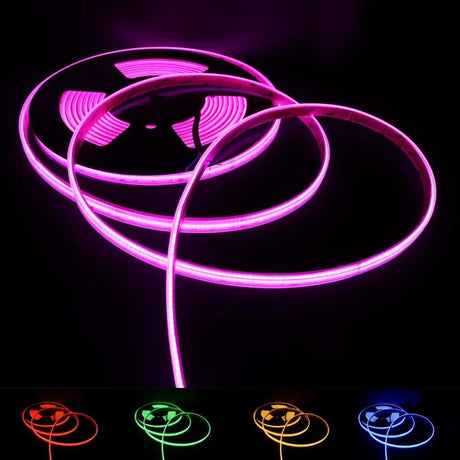
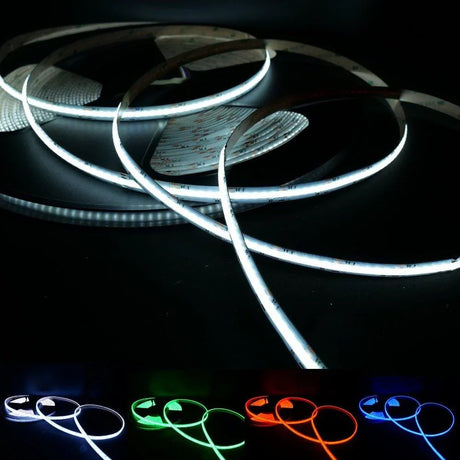
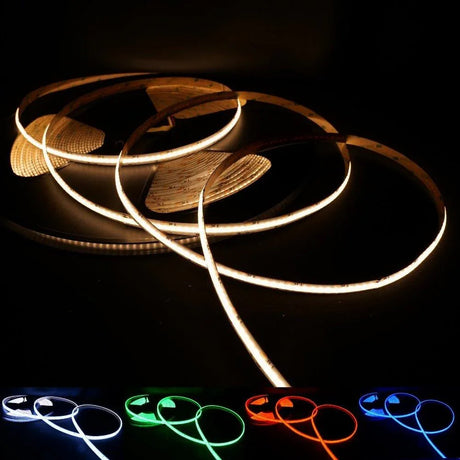
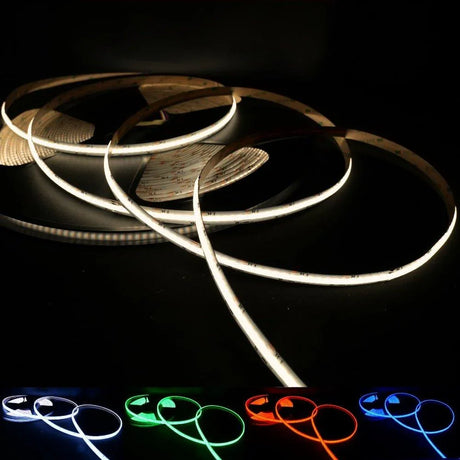
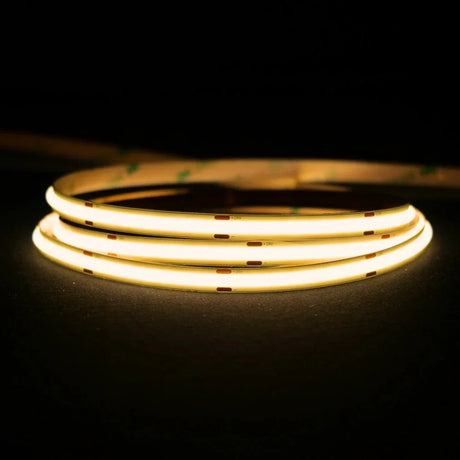
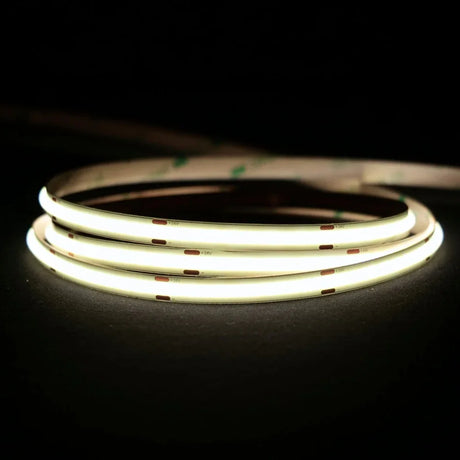
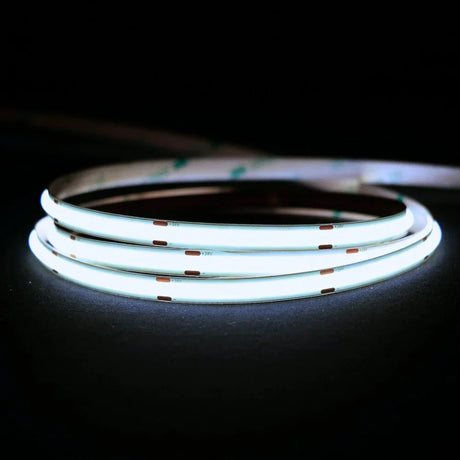
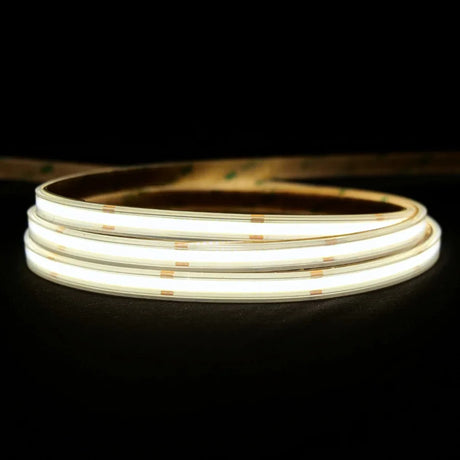
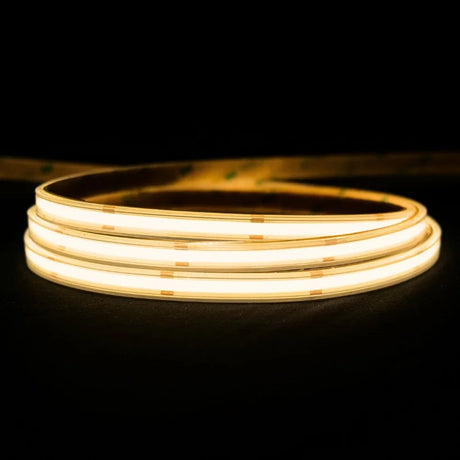
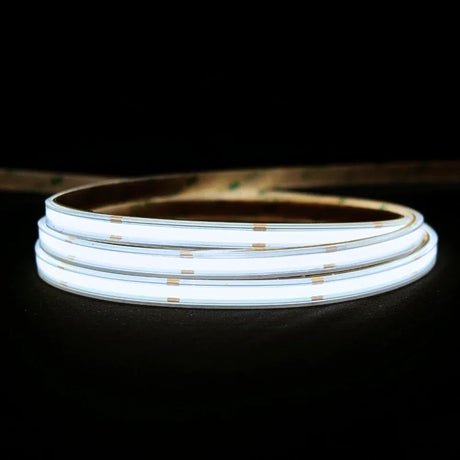
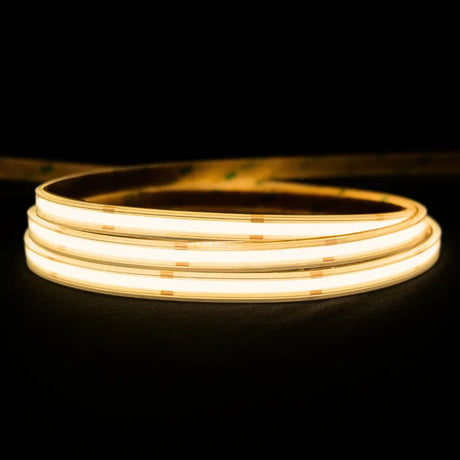
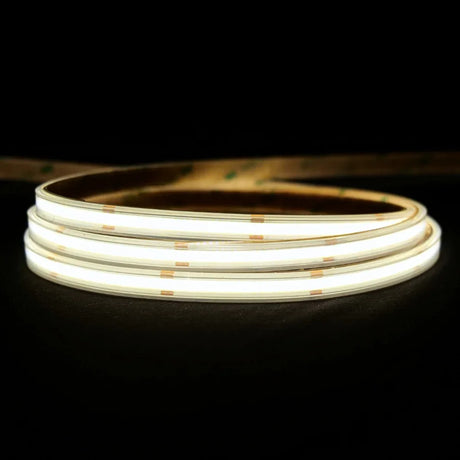
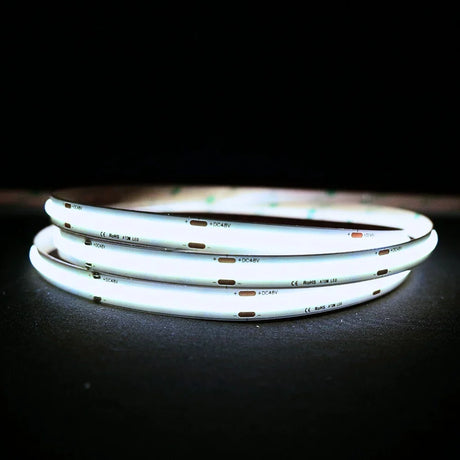
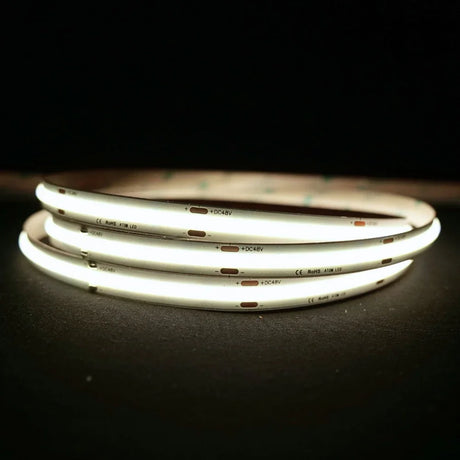
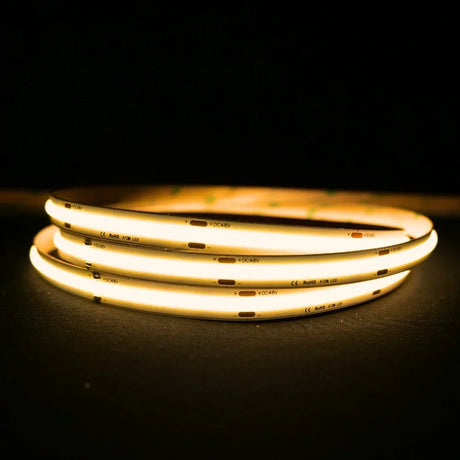
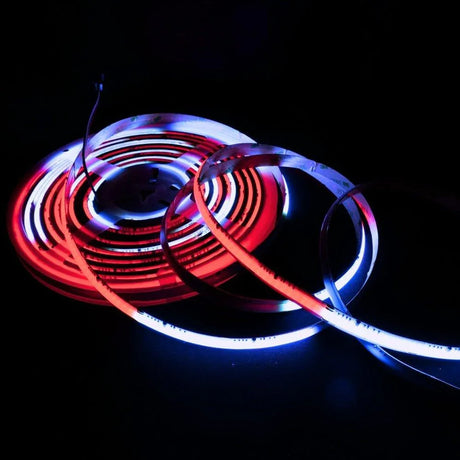
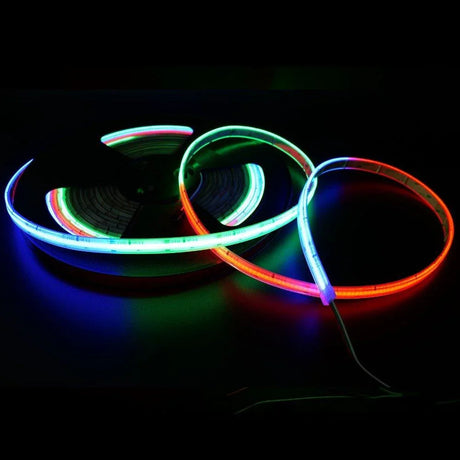
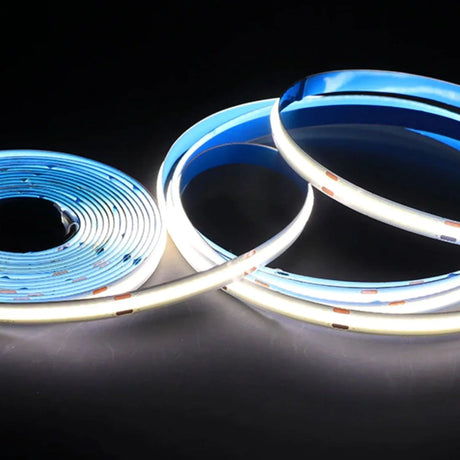
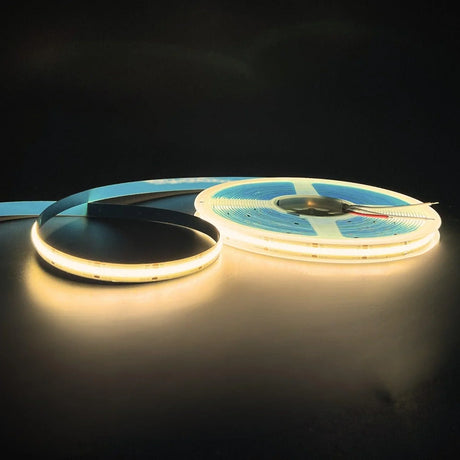
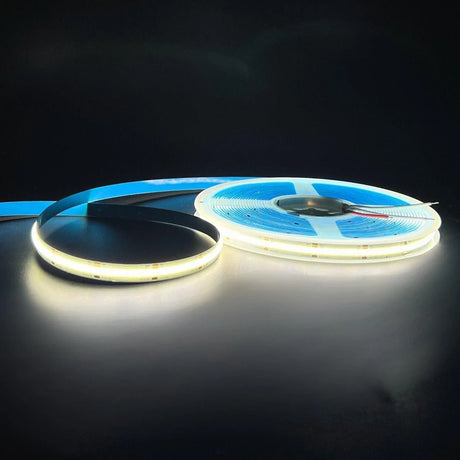
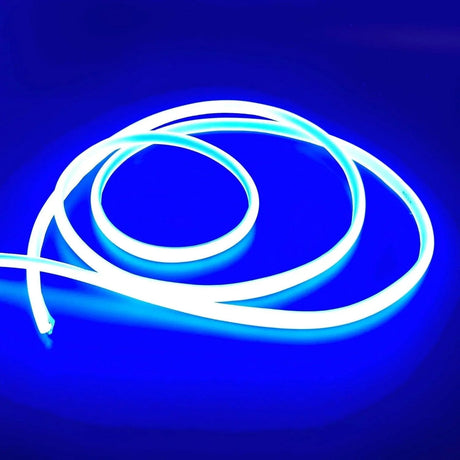
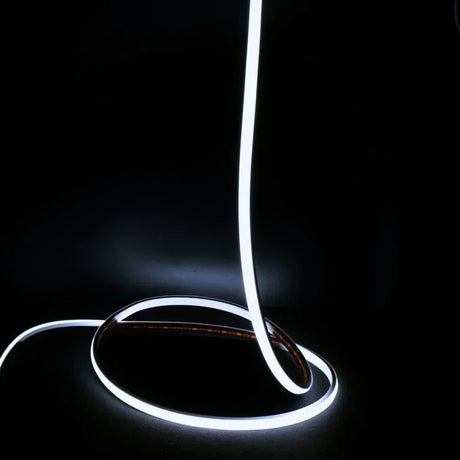
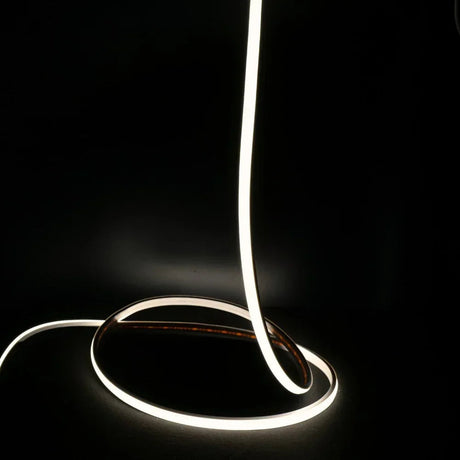
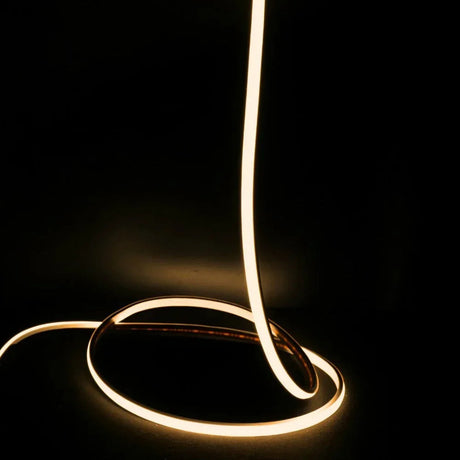
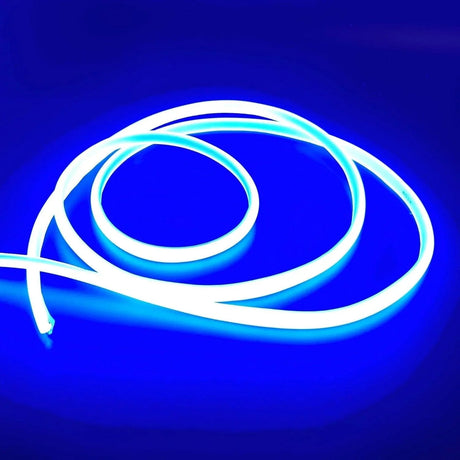
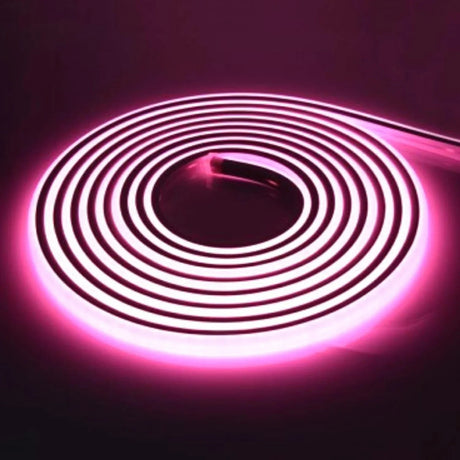
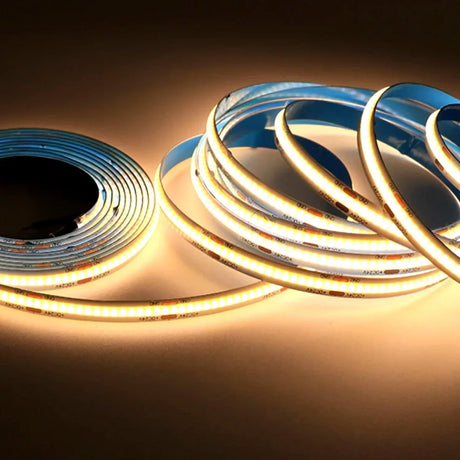
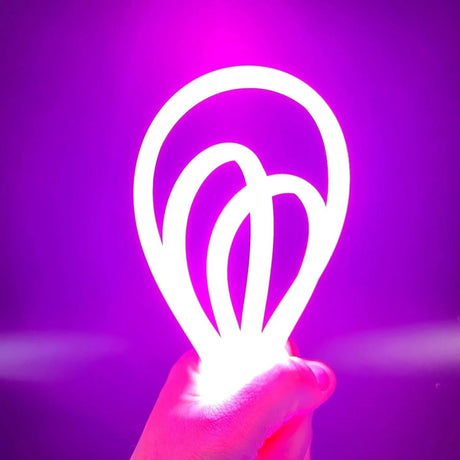
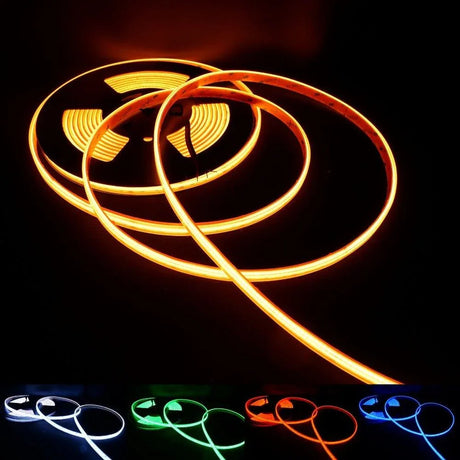
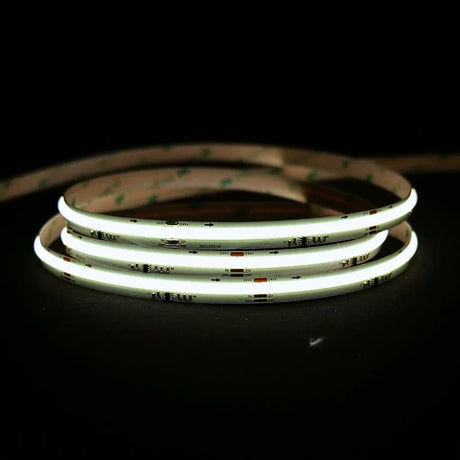
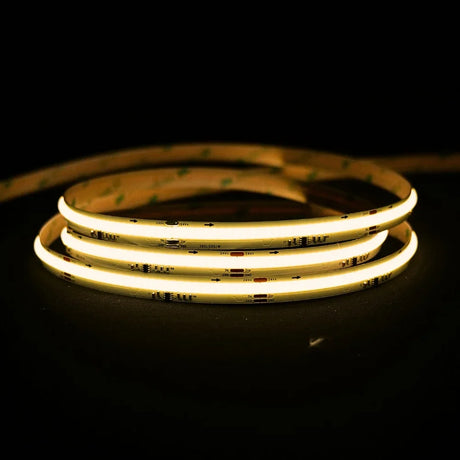
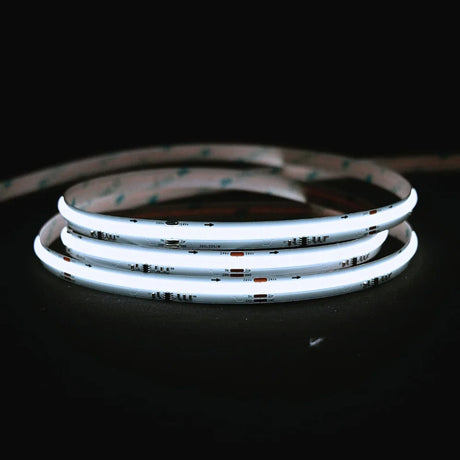
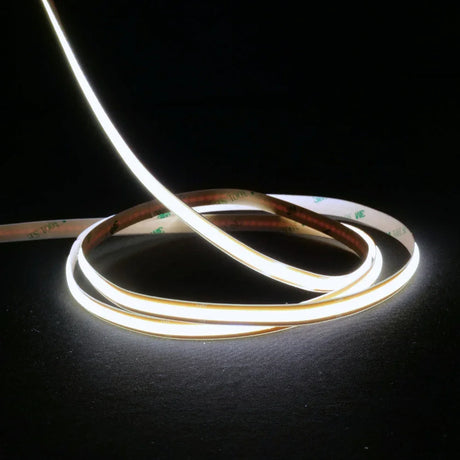
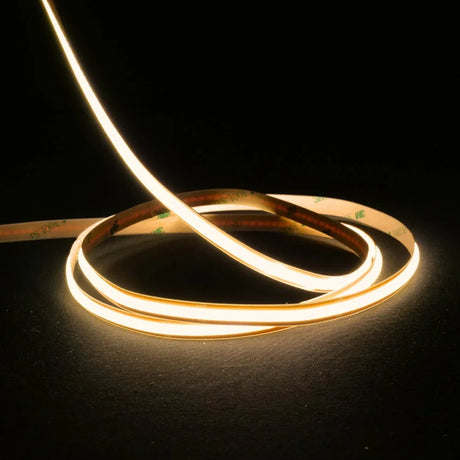
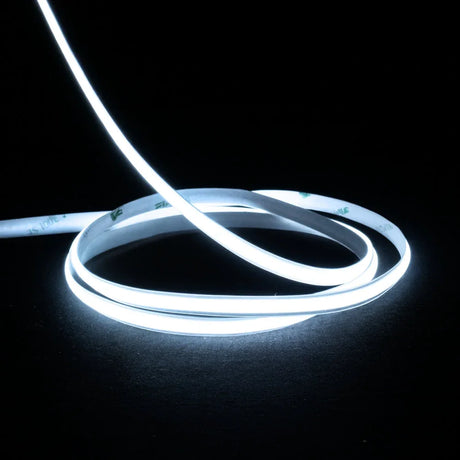
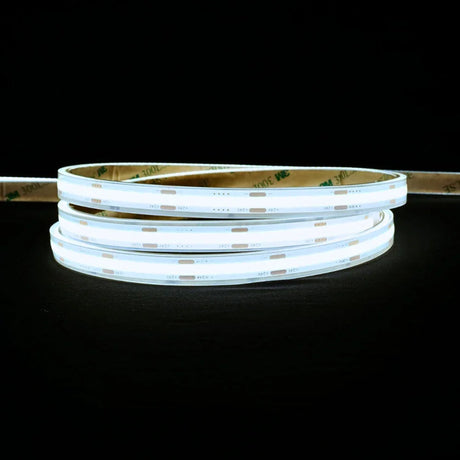
Dot-free light from the first centimetre to the last — that is what COB LED strip delivers. UK LED Lights stocks one of the widest COB ranges in our 2026 catalogue: single colour, RGB, RGBW, and RGB CCT, in 24V and 48V, with runs up to 30 metres from a single power point and minimal visible voltage drop under normal conditions. If you have spent time comparing LED strip options, this is a strong place to start.
Our COB strip collection covers 24V runs up to 20 metres, 48V extra-long runs up to 30 metres, and FreeCut strips you can trim at any point — not just at fixed intervals. Available in IP20 for dry interiors, IP67 for permanent outdoor installations, and IP68 for full submersion. Need a bespoke length? Our technical team cuts to your exact measurement — call 01952 370008 or email sales@ukledlights.co.uk.
24V & 48V · Single Colour · RGB · RGBW · RGB CCT · FreeCut · IP20 · IP67 · IP68 · 8mm–15mm widths · CRI90+ · Up to 30m run · Bespoke lengths · Free UK delivery
Quick decision guide:
-
Kitchen under-cabinet or shelf lighting: Single colour 24V COB strip in IP20, warm white 3000K — cut to fit, mount inside a slim aluminium profile.
-
Garden border or patio perimeter: Single colour 48V COB strip in IP67 — 30-metre run from one driver, no mid-point injection needed.
-
Home cinema or gaming room colour effects: RGB COB 24V in IP20 — pair with a WiFi controller for Alexa or Google Home voice control.
-
Commercial corridor or retail display over 20 metres: 48V extra-long COB strip — single-feed, consistent brightness end to end.
-
Bathroom niche or wet room: Single colour 24V in IP67 minimum — IP68 if the strip will be exposed to direct water contact.
-
Pond, fountain, or water feature: IP68 fully submersible COB strip — rated for continuous underwater operation.
Who COB strip is for: Anyone who wants a clean, professional line of light without visible dots — homeowners, interior designers, kitchen fitters, electricians, hospitality fit-out teams, and commercial lighting specifiers. If you are mounting strip inside an aluminium profile, COB is the only technology that delivers a truly even, dot-free result.
Who COB strip is NOT for: If you need the lowest possible upfront cost and do not mind visible LED dots, standard SMD strip is cheaper. If you need a single strip to do both colour effects and high-output white light in a commercial setting, consider our RGB CCT COB strip range rather than plain single colour.
Common buying mistakes to avoid:
-
Choosing IP65 for outdoor use: IP65 covers surface splashes only — it does not withstand sustained UK rainfall, frost-thaw cycling, or ground-level moisture. IP67 is the minimum for any permanent outdoor COB strip installation under BS7671 guidance.
-
Using a dimmable driver with RGB strip: RGB and RGBW COB strip requires a non-dimmable constant-voltage driver paired with a dedicated controller. Dimmable drivers cause flicker, colour shifting, and premature LED failure.
-
Running strip while still on the reel: Heat cannot dissipate from coiled strip. The adhesive softens, the LEDs overheat, and you risk permanent damage or fire. Always uncoil and mount before powering on.
-
Powering 48V strip with a 24V driver: The strip will be extremely dim or will not illuminate at all. Always match driver voltage to strip voltage exactly.
- What makes COB LED strip different from standard SMD strip?
- Which voltage — 24V or 48V COB strip?
- How far can you run COB strip without voltage drop?
- What colour options are available in COB LED strip?
- Which IP rating do you need — IP20, IP67, or IP68?
- What strip widths are available and which profiles do they fit?
- How do you install COB LED strip correctly?
- What driver and controller does COB strip need?
- Can COB strip be cut to custom lengths?
- Where does COB strip work best — room by room?
- How do you dim COB strip without flickering?
- Why buy COB LED strip from UK LED Lights?
What makes COB LED strip different from standard SMD strip?
COB (Chip on Board) LED strip positions hundreds of micro LED chips directly onto the flexible circuit board in a continuous line, producing a completely smooth, unbroken light output with zero visible dots. Standard SMD strip mounts individual LED packages at set intervals, creating a pattern of bright spots separated by darker gaps — visible to the eye and reflected clearly on glossy surfaces.
Place a length of SMD 5050 strip next to any COB strip and the difference is obvious within seconds. The SMD version shows a repeating dot pattern — each chip is a distinct pinpoint of light. COB strip produces one unbroken ribbon of even illumination, edge to edge, with no hotspots and no dark patches between chips.
Three situations where this matters most:
-
Inside aluminium profiles: A milky diffuser cover reduces SMD dot visibility by perhaps 60–70 percent, but does not eliminate it entirely. COB strip inside the same profile produces a perfectly uniform glow through the diffuser. If you are spending money on quality profiles for a kitchen, bathroom, or commercial fit-out, pairing them with SMD strip undermines the investment.
-
Reflective surfaces: Gloss kitchen worktops, mirror splashbacks, polished concrete floors, and glass display cases all reflect individual SMD dots back at the viewer. COB strip reflects as a single, clean line of light — the difference between a finished professional installation and one that looks half-done.
-
Close viewing distances: Under-shelf lighting in a living room, display cabinet illumination, headboard cove lighting, and retail product displays all place the strip within arm's reach of the viewer. At that distance, SMD dots are very difficult to overlook. COB strip looks smooth and intentional.
COB technology also distributes heat more evenly across the full board surface rather than concentrating it at individual chip locations. This reduces peak surface temperatures, extends 3M adhesive bond life, and lowers the risk of localised overheating in enclosed profiles — particularly relevant in kitchen installations where ambient temperatures are already elevated from cooking.
| Feature |
COB LED Strip |
SMD LED Strip (5050/2835) |
| Light output pattern |
Continuous, dot-free unbroken line |
Visible individual dots with gaps |
| Beam angle |
180 degrees |
120 degrees |
| Heat distribution |
Even across full board |
Concentrated at each chip |
| Appearance in profiles |
Perfectly uniform glow |
Dot pattern visible through diffuser |
| Reflective surface performance |
Clean single line reflection |
Dotted reflection pattern |
| Flexibility |
Higher — thinner substrate |
Moderate — thicker chip packages |
| Typical CRI |
90+ |
80–90 |
| Cost per metre |
Higher |
Lower |
| Best application |
Profiles, kitchens, commercial, close-range |
Budget installs, hidden locations, colour effects |
Which voltage should you choose — 24V or 48V COB strip?
Choose 24V COB strip for residential and short commercial runs up to 20 metres from a single power point. Choose 48V extra-long COB strip for runs up to 30 metres without any visible voltage drop from one-side power. The 48V advantage is simple physics — at identical wattage over the same cable length, 48V loses voltage at approximately half the rate of 24V.
Most home installations — kitchen cabinets, bedroom coves, living room shelving, bathroom niches — fall comfortably within the 24V range. Twenty metres covers a full kitchen perimeter, a complete bedroom ceiling cove, or an entire living room shelf run with room to spare. The 24V ecosystem also offers one of the widest selections of drivers, controllers, connectors, and accessories.
48V becomes the practical choice when you are lighting distances that 24V cannot reach without adding mid-point power injection — which means extra cables, extra drivers, and extra installation complexity. Consider these real-world 2026 project examples:
-
Hotel corridor: 28 metres of continuous cove lighting along a first-floor hallway. 48V handles this from a single driver at one end. 24V would require at least two injection points and two cable runs.
-
Restaurant perimeter: 25 metres of under-counter display lighting running the full dining room perimeter. 48V delivers consistent brightness from the first metre to the twenty-fifth.
-
Retail shopfront: 22 metres of window display lighting across a double-width frontage. 48V, one driver, one clean installation.
-
Open-plan kitchen-diner: 18 metres of combined under-cabinet, kickboard, and island lighting. 24V handles this comfortably, but if the total run exceeds 20 metres including cabling, 48V removes the risk entirely.
| Specification |
24V COB Strip |
48V COB Strip |
| Maximum one-side continuous run |
Up to 20 metres |
Up to 30 metres |
| Voltage drop rate |
Standard |
Approximately half of 24V rate |
| Ideal project type |
Residential, short commercial |
Long commercial, hospitality, retail |
| FreeCut option |
Yes — cut at any point along the strip |
Cut at marked intervals |
| Driver selection |
Widest range available |
Specialist 48V range |
| IP ratings available |
IP20, IP67, IP68 |
IP20, IP67 |
| Colour options |
Single colour, RGB, RGBW, RGB CCT |
Single colour |
| SELV classification |
Yes — within 120V DC threshold |
Yes — within 120V DC threshold |
Both 24V and 48V fall within the SELV voltage threshold under BS7671 (120V DC ripple-free maximum), provided they are supplied from a suitably isolated, safety-rated driver. SELV is a system classification that depends on correct installation — not simply the voltage number. A qualified electrician should verify compliance for any permanently wired installation. For guidance on your specific project, call our technical team on 01952 370008.
How far can you run COB LED strip without voltage drop?
UK LED Lights 24V COB strip delivers up to 20 metres of consistent brightness from a single power point with typically no visible voltage drop. Our 48V extra-long COB strip extends this to 30 metres from one-side power — one of the longest single-feed COB runs available from any UK supplier in 2026. Both ratings assume correct driver sizing and appropriate cable gauge between driver and strip.
Voltage drop is the gradual reduction in available voltage along the length of any electrical conductor. In LED strip, it shows as the far end of the run appearing noticeably dimmer than the end nearest the driver. The effect becomes visible to most people when brightness drops by approximately 10 percent or more from start to finish.
Three factors determine when voltage drop becomes a problem:
-
Strip voltage: Higher voltage strips experience proportionally less drop over the same distance. 48V drops at roughly half the rate of 24V — this is why our extra-long range uses 48V for maximum reach.
-
Strip wattage per metre: Higher-wattage strip draws more current, which increases drop. A 5W/m strip can run further than a 14W/m strip on the same voltage before drop becomes visible.
-
Cable gauge between driver and strip: Thinner cable adds resistance. Use 0.75mm minimum for runs under 10 metres. For runs over 10 metres, step up to 1.0mm or 1.5mm cable to compensate.
If your project requires a run longer than 30 metres, split the installation into two or more sections, each powered from a separate driver or from a mid-point power injection tap. Wiring in parallel — multiple strips fed back to a single driver — is always preferable to wiring in series, which multiplies voltage drop across every connection. Our technical team can help you plan multi-section installations — email sales@ukledlights.co.uk with your project dimensions and we will specify the correct driver configuration.
What colour options are available in COB LED strip?
UK LED Lights stocks COB strip in single colour whites (warm 2700K–3000K, natural 4000K, cool 6000K), plus a full colour-changing range: RGB, RGB plus warm white 3000K (RGBWW), RGBW plus natural white 4000K, and RGB CCT with tuneable white from 2700K through to 6500K. All colour-changing COB variants run on 24V and support up to 10 metres continuous without voltage drop.
Choosing the right colour type depends on what you need the light to do:
-
Single colour warm white (2700K–3000K): The most popular choice for homes. Produces a soft, warm glow similar to traditional incandescent bulbs. Ideal for kitchens, living rooms, bedrooms, and hospitality spaces where comfort and relaxation are the priority.
-
Single colour natural white (4000K): A neutral, balanced white that sits between warm and cool. Preferred for bathrooms, home offices, retail displays, and task lighting where colour accuracy matters — food preparation surfaces, makeup mirrors, and product displays all benefit from 4000K.
-
Single colour cool white (6000K): A crisp, bright white with a slight blue undertone. Used in garages, workshops, commercial kitchens, and industrial spaces where maximum visibility is more important than ambience.
-
RGB COB strip (24V): Red, green, and blue colour-changing via a dedicated controller. Produces millions of colour combinations for mood lighting, home cinema, gaming rooms, and decorative effects. Note: RGB alone cannot produce clean white light — it generates a cold, violet-tinged approximation that looks unnatural.
-
RGBW COB strip (24V): Adds a dedicated white LED channel (either warm 3000K or natural 4000K) alongside the RGB channels. This solves the RGB white problem — you get full colour effects plus clean, accurate white light from the same strip. The most popular choice for rooms that need both mood lighting and practical white illumination.
-
RGB CCT COB strip (24V): The most versatile option in the 2026 range. Combines RGB colour channels with a tuneable white channel that adjusts from warm 2700K through to cool 6500K. One strip handles colour effects for evening ambience and shifts to cool white for morning task lighting — controlled from an app, remote, or voice assistant.
| Colour Type |
White Light |
Colour Effects |
Best For |
Width |
| Single colour |
Fixed temperature |
No |
Task, accent, cove lighting |
8–10mm |
| RGB |
No clean white |
Full RGB spectrum |
Mood, gaming, decorative only |
8–10mm |
| RGBW |
One fixed white |
Full RGB spectrum |
Rooms needing colour + white |
12mm (IP20) |
| RGB CCT |
Tuneable 2700K–6500K |
Full RGB spectrum |
Maximum versatility |
12mm (IP20) |
Which IP rating do you need — IP20, IP67, or IP68?
IP20 is for dry interior locations only — bedrooms, living rooms, offices, and commercial spaces with no moisture exposure. IP67 handles permanent outdoor UK weather including sustained rain, frost, and ground-level damp. IP68 is rated for continuous submersion in water. Do not use IP65 for permanent outdoor installations in UK conditions — it covers surface splashes only and does not meet the requirements for weather-exposed locations under BS7671.
The IP (Ingress Protection) rating tells you exactly how much dust and water the strip can withstand. The first digit covers solid particle protection, the second covers liquid protection. For LED strip, the liquid rating is what matters most in the UK climate.
-
IP20 (non-waterproof): Protected against solid objects over 12mm — essentially finger-proof, but zero water protection. Use only in dry interior environments. This is the default choice for kitchens (inside profiles away from direct water), bedrooms, living rooms, wardrobes, under-shelf lighting, and commercial offices. IP20 strip is thinner, more flexible, and easier to install than waterproof versions.
-
IP67 (waterproof — temporary immersion): Protected against dust ingress and temporary immersion in water up to 1 metre depth for 30 minutes. This is the correct rating for permanent outdoor installations in UK weather — garden borders, patio perimeters, decking, driveways, exterior architectural features, and bathroom wet zones. IP67 uses a silicone sleeve or coating that seals the entire strip surface against rain, frost, and condensation.
-
IP68 (waterproof — continuous submersion): Protected against continuous immersion beyond 1 metre. Required for ponds, fountains, swimming pool perimeters, water features, and any location where the strip will be permanently submerged or exposed to pressurised water. IP68 COB strip from UK LED Lights uses full silicone encapsulation — approximately 15mm wide due to the protective casing.
A note on IP65: Many UK retailers advertise IP65 strip as "outdoor rated." This is misleading for the UK climate. IP65 protects against water jets from a nozzle — equivalent to a garden hose spray. It does not protect against sustained rainfall pooling on the strip surface, frost-thaw cycling that forces moisture through seals, or ground-level damp that wicks along the strip by capillary action. For any outdoor installation that will remain in place through a British winter, IP67 is the minimum safe rating. Our technical sales team can advise on the correct rating for your specific location — call 01952 370008.
What strip widths are available and which profiles do they fit?
COB strip widths range from 8mm to 15mm depending on the colour type and IP rating. Single colour and RGB strips measure 8mm to 10mm. RGBWW and RGB CCT in IP20 are 12mm wide due to the additional colour channels. IP68 waterproof versions measure approximately 15mm because of the full silicone encapsulation. Always check your aluminium profile channel width before ordering — a strip that is too wide will not seat correctly and may overheat.
Standard aluminium LED profiles typically accept strips up to 10mm or 12mm wide depending on the profile model. Wider profiles designed for surface mounting or recessing into plasterboard accept 15mm strip comfortably.
-
8mm COB strip: Fits the narrowest profiles and the tightest installation spaces. Available in select single colour and RGB variants. Ideal for slim under-cabinet profiles, furniture edge lighting, and compact display cases.
-
10mm COB strip: The most common width. Fits the majority of standard aluminium LED profiles with room to spare. Available across the full single colour and RGB range.
-
12mm COB strip: Used for RGBWW and RGB CCT variants in IP20 — the extra width accommodates the additional LED channels needed for combined colour and tuneable white. Requires a profile with a 12mm or wider channel.
-
15mm COB strip (approximate): IP68 fully waterproof versions. The full silicone encapsulation adds width. These are typically surface-mounted or installed in wider recessed profiles. Not suitable for slim furniture profiles.
If you have a specific project where strip width is critical — for example, fitting into an existing channel, a furniture groove, or a bespoke joinery detail — contact our technical team at sales@ukledlights.co.uk with the channel dimensions and we will confirm which strip fits.
How do you install COB LED strip correctly?
Clean the surface with isopropyl alcohol, mount inside an aluminium profile for heat dissipation, peel the 3M adhesive backing in short sections, press firmly for ten seconds per section, wire in parallel for runs over five metres, connect to a correctly sized constant-voltage driver, and test before making any connections permanent. Never power COB strip while coiled — heat damage is immediate and irreversible.
Follow these steps for a professional-quality 2026 COB strip installation:
-
Calculate total wattage and choose your driver: Multiply strip wattage per metre by the total run length, then add a minimum 20 percent headroom. Example: 10 metres of 10W/m strip = 100W total. Add 20 percent = 120W minimum driver. For RGB and RGBW strip, select a non-dimmable constant-voltage driver and pair it with a separate LED controller. Using a dimmable driver with RGB strip causes flicker and colour shift.
-
Plan your layout and measure carefully: Mark the exact run length for each section. Identify where the LED driver will be located — ideally within 2 metres of the strip start to minimise cable voltage drop. For runs over 5 metres, plan parallel wiring back to the driver rather than daisy-chaining strips end to end. Mark cut points on the strip before removing it from the reel.
-
Prepare the mounting surface: Wipe the entire surface with isopropyl alcohol to remove dust, grease, and residue. This applies to aluminium profile channels, wooden shelves, MDF panels, and any other substrate. The 3M VHB adhesive on the back of the strip creates a permanent bond on clean, dry, degreased surfaces — but will fail within weeks on dusty, oily, or freshly painted surfaces that have not been prepared.
-
Mount inside an aluminium profile: Aluminium profiles serve two critical purposes — they act as a heatsink that draws heat away from the LED chips, and they protect the strip from physical damage. Peel the adhesive backing in 30cm sections (not all at once) and press the strip firmly into the profile channel. Hold each section for ten seconds. Do not stretch or force the strip around tight bends — use dedicated corner connectors instead.
-
Wire the driver and connect: Connect mains input to the driver terminals (brown for live, blue for neutral, green-yellow for earth per BS7671 colour coding). Connect the driver low-voltage output to the strip — red to positive, black to negative. For RGB or RGBW, connect via the controller between driver and strip. Use 0.75mm cable minimum for runs under 10 metres, 1.0mm or 1.5mm for longer distances.
-
Mount on bare metal warning: Never mount COB strip directly onto an uninsulated metal surface without the aluminium profile as an intermediary. The strip PCB has exposed copper traces on the underside — direct contact with a conductive metal surface (steel shelf brackets, metal ducting, aluminium window frames) can cause a short circuit that damages the strip and creates a safety hazard.
-
Test the full installation: Power on and visually check for consistent brightness from the first metre to the last. On RGB or RGBW strip, cycle through all colour channels to verify each one activates evenly. If the far end appears dimmer, check cable gauge, add a power injection point, or switch to 48V strip. If any section flickers, recheck all connections and verify the dimmer is trailing-edge (not leading-edge).
What driver and controller does COB LED strip need?
Single colour COB strip needs a constant-voltage LED driver matched to the strip voltage (24V or 48V) and rated at a minimum of 120 percent of the total strip wattage. RGB, RGBW, and RGB CCT COB strip needs a non-dimmable constant-voltage driver paired with a separate dedicated controller. Using a dimmable driver with colour-changing strip causes visible flicker, colour shifting, and premature component failure.
Choosing the right driver is the most common point of failure in DIY LED strip installations. Undersized drivers overheat and trip thermal protection. Oversized drivers waste money but cause no harm. The 20 percent headroom rule exists because strip wattage ratings are measured at optimal temperature — in real-world installations, initial current draw on cold start can briefly exceed the rated wattage.
-
For single colour dimmable installations: Use a triac dimmable LED driver paired with a trailing-edge wall dimmer. Leading-edge dimmers frequently cause visible flicker with LED drivers — replacing a leading-edge unit with a trailing-edge model typically costs around fifteen pounds and solves the problem immediately. This is the single most common cause of LED strip flickering reported to our technical team.
-
For single colour non-dimmable: Use a standard constant-voltage LED driver matched to the strip voltage. The simplest, most reliable configuration.
-
For RGB and RGBW strip: Use a non-dimmable constant-voltage driver feeding a separate RGB or RGBW controller. The controller handles colour mixing, dimming, and effects. UK LED Lights stocks Miboxer, Skydance, and GLEDOPTO controllers with WiFi, Bluetooth, RF remote, and smart home integration options.
-
For RGB CCT strip: Use a 5-channel controller — three channels for RGB and two for the tuneable white. Not all controllers support 5-channel output, so verify compatibility before purchasing. Our Skydance 5-in-1 controllers handle this configuration.
Driver sizing example for a typical 2026 kitchen project: 8 metres of under-cabinet COB strip at 14W/m = 112W total. Add 20 percent headroom = 134.4W minimum. Choose a 150W driver. Budget approximately £25–£40 for a quality constant-voltage driver at this wattage — see our full LED driver range.
Can COB LED strip be cut to custom lengths?
Yes. UK LED Lights 24V FreeCut COB strip can be cut at any point along its entire length — no fixed cut marks, no minimum segment size. Standard 24V and 48V COB strip cuts at marked intervals, typically every 50mm or 100mm depending on the product. We also offer a bespoke cutting service — send your exact measurements to sales@ukledlights.co.uk and we will cut and prepare your strips before dispatch.
FreeCut technology is particularly valuable for projects where precision matters — fitting strip into an alcove that measures 847mm, or running exactly 3,215mm along a kitchen worktop. Standard strip forces you to round to the nearest cut mark, leaving a small dark gap at the end or cutting too short. FreeCut eliminates this compromise entirely.
When cutting any COB strip:
-
Use sharp scissors or a craft knife: Clean, straight cuts prevent damage to the copper contact pads you will need if reconnecting sections.
-
Cut on the marked line (standard strip) or anywhere (FreeCut): On standard strip, the cut marks are printed on the surface at regular intervals. Cutting between marks damages the circuit and renders that section unusable.
-
Seal exposed ends: After cutting, the exposed copper pads at the cut end should be sealed with an end cap or covered with electrical tape to prevent short circuits, particularly in damp environments.
-
Reconnect using solderless connectors or solder: Solderless clip connectors are faster and require no tools. Soldered connections are more reliable long-term and recommended for permanent installations. Both options are available in our COB strip accessories range.
Where does COB strip work best — room by room?
COB LED strip works in virtually any interior or exterior location where you need clean, even, dot-free illumination. The most popular UK installations in 2026 are kitchen under-cabinet lighting, bathroom cove lighting, bedroom headboard features, living room shelf accents, commercial retail displays, and outdoor garden borders — each with specific voltage, colour, and IP requirements.
-
Kitchen: Under-cabinet task lighting in warm white 3000K or natural white 4000K, IP20, mounted inside slim aluminium profiles. The most requested residential COB installation. Pair with a triac dimmable driver for adjustable brightness during cooking and dining. Typical run: 4–8 metres.
-
Bathroom: Cove lighting behind mirrors, under vanity units, or inside shower niches. Use IP67 minimum in wet zones (Zone 1 and Zone 2 under BS7671). Warm white 2700K creates a relaxed spa-like atmosphere. Typical run: 2–5 metres.
-
Bedroom: Headboard cove, wardrobe interior, or floating shelf accent lighting. IP20 in warm white 2700K for the most restful ambience. RGB or RGBW for mood lighting that shifts from colour effects to practical white. Typical run: 3–6 metres.
-
Living room: Shelf lighting, TV backlight, ceiling cove, or alcove feature lighting. Single colour for permanent accent, RGB CCT for tuneable ambience that adapts from energising cool white during the day to warm relaxation lighting in the evening. Typical run: 5–15 metres.
-
Garden and outdoor: Border lighting, path edging, deck perimeters, patio features, and architectural uplighting. 48V IP67 for runs over 20 metres. 24V IP67 for shorter sections. Always mount in outdoor-rated profiles with sealed end caps. Typical run: 10–30 metres.
-
Commercial: Retail display cabinets, restaurant cove lighting, hotel corridor runs, office indirect lighting, and museum display cases. 48V for long commercial runs. CRI90+ for accurate colour rendering on displayed products. Typical run: 15–30 metres.
How do you dim COB LED strip without flickering?
Use a trailing-edge dimmer for single colour strip — not a leading-edge dimmer. Leading-edge dimmers are the number one cause of LED strip flickering in UK homes. Swapping to a trailing-edge model costs approximately fifteen pounds and typically resolves the flicker immediately. For RGB, RGBW, and RGB CCT strip, dimming is handled through the dedicated controller — not through a mains wall dimmer.
The reason leading-edge dimmers cause problems is technical but the fix is simple. Leading-edge dimmers were designed for incandescent and halogen bulbs that draw high wattage — they chop the front edge of each AC wave cycle to reduce power. LED drivers draw far less power, and many leading-edge dimmers cannot regulate the tiny current accurately, causing rapid on-off cycling that appears as visible flicker.
Trailing-edge dimmers chop the back of the wave cycle instead, which most LED drivers handle smoothly. The result is clean, flicker-free dimming from full brightness down to approximately 5–10 percent depending on the driver.
If you experience flickering after installation, check these in order:
-
Dimmer type: Replace leading-edge with trailing-edge. This fixes approximately 80 percent of domestic LED flickering complaints.
-
Driver compatibility: Not all drivers are compatible with all dimmers. Check the driver specification sheet for a trailing-edge dimmer compatibility list, or contact our team.
-
Loose connections: A wire that is not firmly seated in its terminal creates an intermittent contact that flickers. Re-strip the cable ends and retighten.
-
Driver undersize: A driver running at or above its maximum rated wattage can enter thermal protection cycling — briefly shutting down then restarting. Upgrade to a higher-wattage driver with at least 20 percent headroom.
-
Mains voltage fluctuation: In older UK properties, mains voltage can fluctuate by several percent. A quality driver with wide input voltage tolerance (200–240V AC) handles this; budget drivers with narrow tolerance (220–240V) may not.
Why buy COB LED strip from UK LED Lights?
UK LED Lights is a specialist LED lighting supplier based in Telford, Shropshire, stocking one of the widest COB LED strip ranges available from any UK retailer in 2026. We hold physical UK stock, offer free delivery across mainland UK, cut bespoke lengths to your exact measurements, and provide direct technical support from our own team — not an outsourced call centre reading from a script.
-
UK stock, UK dispatch: Every product ships from our Telford warehouse — Unit D4, Stafford Park 4, TF3 3BA. No dropshipping from overseas, no six-week wait times, no customs surprises.
-
Free UK delivery: Standard delivery free on all orders to mainland UK addresses.
-
Bespoke custom lengths: Tell us the exact measurement and we cut it for you before dispatch. No waste, no guesswork, no on-site cutting with scissors.
-
Technical team on hand: Call 01952 370008 (Monday–Friday, 9am–5pm) or email sales@ukledlights.co.uk with your project details. We specify the right strip, driver, controller, and accessories for your installation — not just the strip alone.
-
5-year warranty on single colour COB strip: UK LED Lights single colour COB strip carries a 5-year warranty — one of the longest in the UK LED strip market in 2026. That is confidence in the product backed by a company you can reach on the phone.
-
COB strip was the fastest-growing category in our range through 2025 — adopted by kitchen fitters, architects, and high-end residential installers across the UK.
-
We hold 5-year warranty stock on all single-colour COB strip — the only UK supplier offering that length of cover on dot-free strip.
-
Trade and bulk pricing: Working on a commercial project, a multi-room renovation, or a hospitality fit-out? Contact us for project pricing on larger orders.
-
Full ecosystem: Strip, drivers, controllers, profiles, accessories, and neon flex — everything from one supplier, tested to work together, delivered in one shipment.
UK LED Lights Ltd · Company No: 12301805 · Unit D4, Stafford Park 4, Telford, Shropshire, TF3 3BA · 01952 370008 · sales@ukledlights.co.uk
How does COB LED strip compare to SMD LED strip?
Understanding the differences between COB and SMD strip technology helps you make the right purchasing decision first time — avoiding returns, compatibility issues, and wasted installation time.
| Feature |
COB LED Strip |
SMD LED Strip (2835/5050) |
| Light output pattern |
Continuous dot-free line |
Visible individual dots with dark gaps |
| Beam angle |
180 degrees |
120 degrees typical |
| Typical CRI |
90+ across all options |
80-90 depending on grade |
| Heat distribution |
Even across full PCB width |
Concentrated at chip locations |
| Diffuser requirement |
Optional — already dot-free |
Essential for any visible installation |
| Profile appearance |
Uniform architectural glow |
Dot pattern partially visible through milky diffuser |
| Cost per metre |
Higher — typically 30-50% more |
Lower — budget-friendly option |
| Best application |
Visible runs, kitchens, profiles, commercial |
Hidden locations, budget installs, behind pelmets |
| Colour options (2026) |
Single colour, RGB, RGBW, RGB CCT |
Single colour, RGB |
| Maximum run (24V) |
Up to 20 metres |
Up to 10 metres typical |
If the strip or its reflection will be visible to anyone in the room, COB is the correct specification for 2026 installations. If the strip is entirely hidden and budget is the primary concern, SMD strip remains a practical option. For advice on which technology suits your project, call 01952 370008.
When should you choose a different product instead of COB strip?
COB strip is the top choice for visible installations — but it is not the right product for every project. Here are the exceptions.
-
Budget is the only priority and the strip is completely hidden: Standard SMD 2835 strip costs 30-50% less per metre. If nobody will ever see the strip — behind a pelmet, above a wardrobe top, inside a sealed void — SMD delivers adequate light at lower cost.
-
You need a thick, visible neon-style light line: COB strip inside a profile produces a slim architectural line. For a bold, round, neon-tube-style glow, LED neon flex is purpose-built for that aesthetic.
-
You need flexible strip that bends around tight curves without a profile: COB strip is more flexible than SMD but still best installed in straight runs. For curves below 30mm radius, silicone neon flex covers or mini neon flex handle the geometry better.
-
Your project is purely temporary or disposable: For a one-time event, party, or seasonal display that will be removed after use, lower-cost SMD strip or mains-voltage plug-in strip makes more economic sense.
If you are unsure whether COB strip suits your project, call 01952 370008 — our technical team will recommend the correct alternative if this is not the right match.
Recommended setup for a 5-metre kitchen under-cabinet COB strip installation
-
Strip: 24V COB single colour warm white 3000K, 10W/m, IP20 — dot-free output, CRI 90+
-
Driver: 24V 100W triac dimmable constant voltage (50W load + 20% headroom = 60W minimum, 100W allows future expansion)
-
Profile: Slim surface-mount aluminium with milky diffuser, 10mm channel width
-
Dimmer: Trailing-edge triac wall dimmer for smooth brightness control — approximately £15
-
Connectors: 2-pin solderless clips for strip-to-cable joins, open end caps for cable exit
-
Total cost guide: Approximately £40-60 for strip + £25-35 for driver + £15-25 for profile per metre + £15 for dimmer
COB strip installations vary by run length, mounting location, and dimming preference — we will tailor the driver, profile, and controller to your project. Call 01952 370008 or email sales@ukledlights.co.uk for a free COB strip specification.
Frequently Asked Questions
Is COB LED strip safe to leave on overnight?
-
Yes, when correctly installed. COB strip operates at low voltage (24V or 48V DC) from a safety-rated driver, keeping surface temperatures well within safe limits.
-
Mount inside an aluminium profile for proper heat dissipation — this is the most important safety step.
-
Never leave strip powered while coiled on the reel — heat builds up rapidly in coiled strip with no airflow, risking adhesive failure, LED damage, and in extreme cases, fire.
-
Never mount directly on bare uninsulated metal surfaces — exposed copper traces on the strip PCB can short-circuit against conductive metals.
Does COB LED strip work with Alexa and Google Home?
-
Yes, with a compatible WiFi controller. Pair your COB strip with a WiFi-enabled controller from Miboxer, Skydance, or GLEDOPTO for voice control through Alexa, Google Home, or Apple HomeKit.
-
Single colour strip supports on/off and dimming via voice commands.
-
RGB and RGBW strip supports full colour selection, scene presets, scheduling, and dimming via voice or app.
-
No hub required for most WiFi controllers — they connect directly to your home WiFi network.
What is the difference between RGBW and RGB CCT COB strip?
-
RGBW has red, green, blue, and one fixed white channel — either warm white 3000K or natural white 4000K depending on the product.
-
RGB CCT has red, green, blue, plus a tuneable white channel that adjusts continuously from warm 2700K to cool 6500K.
-
Choose RGBW if you know which white temperature you want and it will not change.
-
Choose RGB CCT if you want the flexibility to shift white temperature throughout the day — cool white for morning focus, warm white for evening relaxation.
Why does RGB COB strip not produce clean white light?
-
RGB blends red, green, and blue LEDs to approximate white, but the result is a cold, violet-tinged output that looks unnatural compared to a dedicated white LED chip.
-
RGBW and RGB CCT solve this by adding a separate white LED channel that produces clean, accurate white independently of the RGB colours.
-
If you need both colour effects and usable white light, always choose RGBW or RGB CCT — never plain RGB alone.
Can COB strip be used in a bathroom?
-
Yes — with the correct IP rating for the zone. UK bathrooms are divided into zones under BS7671 wiring regulations.
-
Zone 0 (inside the bath or shower tray): IP68 required — full submersion rating.
-
Zone 1 (above the bath/shower to 2.25m height): IP67 minimum.
-
Zone 2 (0.6m beyond Zone 1): IP67 recommended, IP20 acceptable if protected within a sealed profile.
-
Outside all zones: IP20 is acceptable for areas not exposed to direct water splash.
How long does COB LED strip last?
-
Typical rated lifespan is 30,000 to 50,000 hours depending on the product, operating temperature, and installation quality.
-
At 8 hours per day, that equates to approximately 10 to 17 years of daily use before output drops to 70 percent of initial brightness (L70 standard).
-
Proper heat management — mounting inside an aluminium profile — is the single biggest factor in achieving the full rated lifespan. Strip mounted on wood or plaster without a heatsink degrades significantly faster.
Is IP65 suitable for outdoor COB strip in the UK?
-
No — IP65 is not recommended for permanent outdoor installations in UK weather conditions. IP65 protects against directed water jets (hose spray equivalent) but not sustained rainfall pooling, frost-thaw cycling, or ground-level moisture wicking.
-
IP67 is the minimum for any COB strip exposed to the elements year-round in the UK.
-
IP68 is required for any installation submerged in water or exposed to continuous water contact.
Do you offer trade or bulk pricing on COB strip?
-
Yes. Contact our sales team on 01952 370008 or email sales@ukledlights.co.uk with your project details and quantities.
-
We supply electricians, interior designers, kitchen installers, hospitality fit-out companies, and commercial lighting specifiers across the UK.
-
Project pricing available for orders above standard retail quantities — we will quote based on total meterage and specification.
What cable should I use between the driver and COB strip?
-
0.75mm twin cable is suitable for runs under 10 metres between driver and strip start.
-
1.0mm or 1.5mm cable for runs over 10 metres to reduce voltage drop in the connecting cable itself.
-
Do not use CAT6 or ethernet cable for LED strip power connections — the wire gauge is too thin for the current draw and can overheat.
-
Always wire in parallel when connecting multiple strip sections to one driver — never daisy-chain in series, which multiplies voltage drop across every joint.
Can I connect multiple COB strips to one driver?
-
Yes — provided the total wattage of all connected strips does not exceed the driver output rating (minus the 20 percent headroom).
-
Wire each strip run back to the driver in parallel, not in series. Parallel wiring means each strip receives the full driver voltage independently.
-
Example: Three runs of 3 metres at 10W/m = 90W total. Add 20 percent = 108W. A single 120W or 150W driver handles all three runs wired in parallel.
Can COB LED strip be used outdoors in the UK?
-
Yes — with IP67 minimum. IP67 COB strip uses a full silicone encapsulation sleeve rated for sustained UK rainfall, frost-thaw cycling, and ground-level moisture.
-
Do not use IP65 for permanent outdoor installations — it protects against surface splashes only and degrades within months in British weather conditions.
-
IP68 is required for any COB strip submerged in water — ponds, fountains, or water features.
What is the difference between FreeCut and standard COB strip?
-
FreeCut COB strip can be cut at any point along its entire length — no fixed cut marks and no minimum segment size. This allows exact measurement matching to the millimetre.
-
Standard COB strip cuts at marked intervals, typically every 50mm or 100mm depending on the product.
-
Choose FreeCut when precision matters — alcoves, display cabinets, and exact cabinet runs where rounding to the nearest cut mark leaves a visible gap.
Does COB strip need an aluminium profile?
-
An aluminium profile is strongly recommended for every COB strip installation. The profile acts as a heatsink, extends strip lifespan, protects the circuit board from physical damage, and holds a diffuser that eliminates any remaining bright-line effect.
-
Without a profile, strip adhesive weakens faster due to unmanaged heat, and the strip is vulnerable to knocks, dust, and moisture.
-
In kitchens specifically, the profile protects strip from cooking grease and elevated ambient temperatures.
Can I mix warm white and cool white COB strip in one installation?
-
Yes — run separate circuits for each colour temperature, each with its own driver and dimmer. This allows independent brightness control per zone.
-
Alternatively, use RGB CCT COB strip with a 5-channel controller — one strip produces tuneable white from 2700K to 6500K, adjusted from an app or remote.
-
Do not connect different colour-temperature strips in series on the same driver — they must be wired in parallel on separate channels.
Why does my COB strip look dimmer at one end?
-
This is voltage drop — the gradual reduction in voltage along the strip length, causing reduced brightness at the far end.
-
Check your cable gauge: Use 0.75mm minimum for runs under 10 metres, 1.0mm or 1.5mm for longer distances between driver and strip.
-
Wire in parallel rather than series to equalise voltage across multiple runs.
-
Consider upgrading to 48V strip for runs over 20 metres — voltage drop occurs at half the rate of 24V.
Is COB LED strip safe to use in children's bedrooms?
-
Yes — COB strip operates at 24V or 48V DC, both within the SELV voltage threshold under BS7671 when supplied from a suitably isolated driver.
-
Mount inside an aluminium profile with a diffuser cover to prevent direct contact with the strip and to soften the light output.
-
Use 2700K warm white in sleeping zones to support natural melatonin production and healthy sleep patterns.
-
Never leave strip powered while coiled — always mount and secure before connecting to power.
What is the CRI rating on UK LED Lights COB strip?
-
All COB strip in the UK LED Lights 2026 range is rated CRI90+, meaning colours appear accurate and natural under the light.
-
CRI90+ is the professional standard for kitchens (food colour accuracy), bathrooms (skin-tone rendering), and retail displays (product colour fidelity).
-
Strip rated below CRI90 produces noticeable colour distortion — reds appear dull, greens shift towards grey, and wood finishes lose their warmth.
Can COB strip be used behind a glass splashback?
-
Yes — use IP67-rated COB strip behind any glass splashback near a hob or sink, because steam and condensation from cooking will reach the strip over time.
-
Mount inside a slim profile between the wall and the glass for an even backlit panel effect.
-
Match the colour temperature to your under-cabinet strip for visual consistency across the kitchen.
How do I troubleshoot a COB strip section that has stopped working?
-
Check the driver first: Verify mains power is reaching the driver input using a multimeter, then confirm 24V or 48V DC is present at the output terminals.
-
Inspect all connections: A loose push-fit connector or a cold solder joint is the most common cause of a dead section. Re-strip cable ends and retighten.
-
Check for short circuits: If the strip is mounted on bare metal without insulation, exposed copper traces on the PCB underside may have shorted against the surface.
-
If a single section is dark but the rest works, the strip may have been damaged during cutting — always cut at marked lines only (or anywhere on FreeCut strip).
Browse our full COB LED strip range above, or contact our technical team for help specifying the right strip, driver, and controller for your project.
01952 370008 · sales@ukledlights.co.uk · COB LED Strip · LED Drivers · Controllers · LED Profiles · Accessories
Last reviewed: March 2026 — UK LED Lights technical team, Telford, Shropshire. Specifications current as of 2026.
🏭 UK LED specialist, Telford, Shropshire · ☎️ 01952 370008 · 🚚 Free UK delivery